
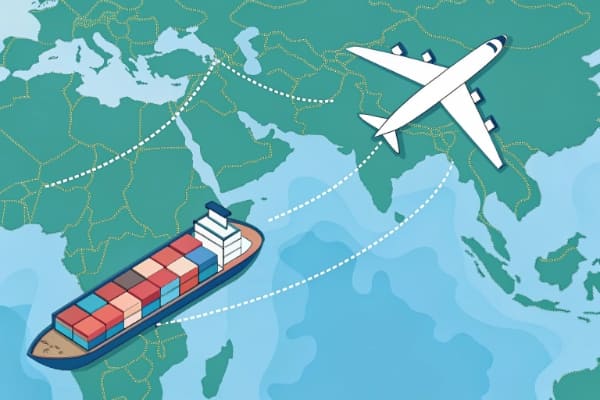
Struggling to figure out the best way to ship your goods from China to the UAE? It can feel confusing, but this guide makes it simple for you.
The best way to ship from China to the UAE depends on your budget, speed, and shipment size. For large orders over 500 kg, sea freight1 is cheapest (20-30 days). For urgent goods, air freight2 is faster (3-7 days). For small parcels, express courier3s are quickest (2-5 days).
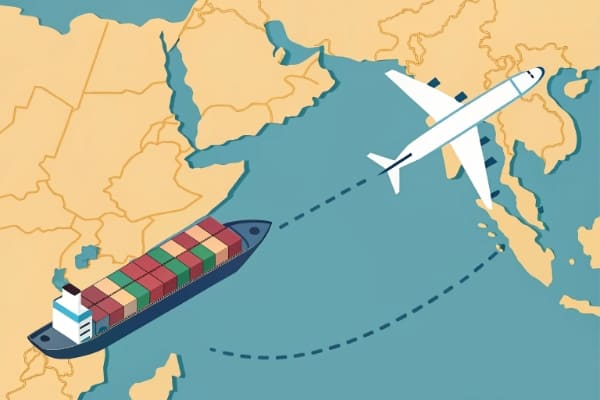
Getting your products from a factory in China to your warehouse or customer in the UAE might seem like a huge challenge. You have to think about costs, timing, paperwork, and customs. It’s a lot to handle, especially when you’re busy running your business. But it doesn't have to be a headache. Once you understand the main options and steps, the whole process becomes much clearer. Let's break it down so you can choose the right path for your business and ship with confidence.
What Shipping Methods Are Available?
You have products ready in China, but you're not sure how to get them to the UAE. Choosing the wrong shipping method could mean overpaying or missing important deadlines.
The three main shipping methods from China to the UAE4 are sea freight1, air freight2, and express courier3. Sea freight is best for large, non-urgent shipments. Air freight is faster for valuable goods. Express is quickest for small packages and is door-to-door.

When we help clients ship to the UAE, the first question is always about finding the right balance between cost, speed, and size. Each shipping method serves a different purpose, and picking the right one is key to a smooth supply chain5.
Sea Freight
This is the workhorse of international trade. It's the most cost-effective option for large, heavy, or bulky shipments. If your order is over 500 kg or several cubic meters, sea freight1 is almost always the answer. You can choose between a Full Container Load (FCL), where you book a whole container for yourself, or a Less than Container Load (LCL), where you share container space with other importers. The main trade lane runs from major Chinese ports like Shanghai and Shenzhen to Dubai's Jebel Ali Port.
Air Freight
When speed is more important than cost, air freight2 is the way to go. It's ideal for high-value, lightweight, or time-sensitive products. Think electronics, fashion items, or urgent replacement parts. We typically recommend air freight2 for shipments between 100 kg and 500 kg. Cargo flies from major Chinese airports like Guangzhou (CAN) or Shanghai (PVG) to Dubai (DXB) or Abu Dhabi (AUH).
Express Courier
For small parcels under 100 kg, nothing beats express courier3s like DHL, FedEx, or UPS. This is the fastest and simplest option. It's an all-in-one, door-to-door service that includes customs clearance6. It's perfect for sending samples, documents, or small e-commerce orders directly to customers.
| Shipping Method | Best For | Typical Cost | Transit Time |
|---|---|---|---|
| Sea Freight | Shipments > 500 kg | Low | 20-30 days |
| Air Freight | Shipments 100-500 kg | High | 3-7 days |
| Express Courier | Shipments < 100 kg | Very High (per kg) | 2-5 days |
How Long Does Shipping to UAE Take?
You need your products in the UAE by a specific date for a product launch or to restock inventory. Unexpected delays can disrupt your entire business and disappoint your customers.
Shipping from China to the UAE takes about 20-30 days by sea freight1, 3-7 days by air freight2, and 2-5 days by express courier3. These times are for transit only and do not include production, customs clearance6, or final inland delivery.
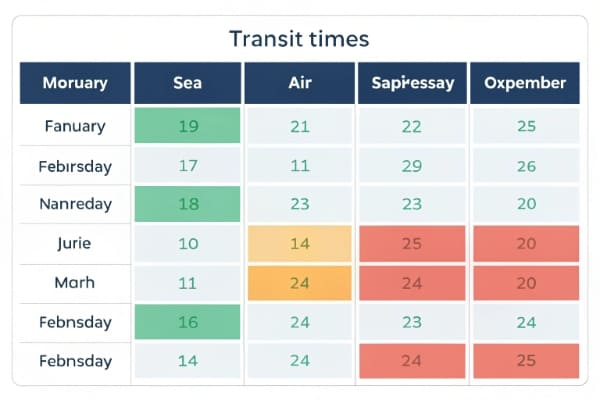
Understanding transit time7s helps you plan your inventory and manage expectations. It's important to remember that these are estimates. The total time from when you place an order to when you receive it includes production, inland transport in China, customs, and final delivery in the UAE.
Sea Freight Transit Time
A container ship traveling from a Chinese port like Shenzhen to Jebel Ali Port in Dubai typically takes 20 to 30 days. LCL shipments8 might take a few days longer because the container needs to be loaded and unloaded with goods from multiple shippers. Factors like weather, port congestion, and customs inspections can also add to the timeline.
Air Freight Transit Time
Air freight is much faster, with typical transit from airport to airport taking 3 to 7 days. This includes the time it takes to get your cargo processed at the origin airport and ready for pickup at the destination. The actual flight is often less than a day, but the ground handling on both ends makes up the rest of the time.
Express Courier Transit Time
Express shipping is the fastest option, with door-to-door delivery usually taking 2 to 5 days. The reason it's so quick is that companies like DHL and FedEx have their own integrated networks, planes, and customs brokers, which streamlines the entire process from pickup to delivery. I had a client who needed urgent branded gifts for a conference in Dubai. We used an express service, and the goods went from the factory in Guangzhou to their hotel in Dubai in just three days. Sea freight would have missed the event entirely.
What Is the Shipping Process Step by Step?
The international shipping process can seem like a black box with many hidden steps. If you miss one step or fill out a form incorrectly, it can cause major delays and extra costs.
The shipping process involves getting a quote, booking the shipment, preparing documents, and arranging for pickup. Your goods then go through export customs in China, transit, import customs in the UAE, and finally, delivery. A freight forwarder9 can manage all these steps for you.
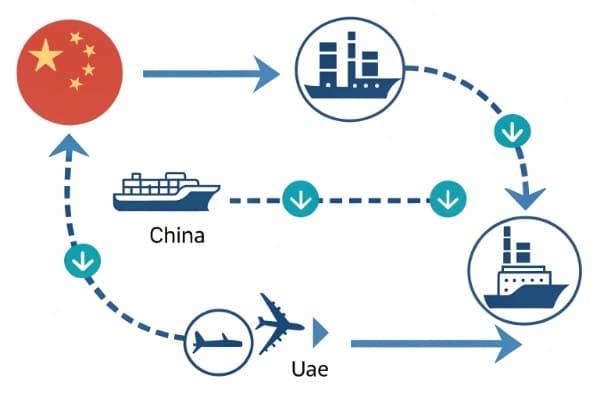
As your sourcing partner, we handle this entire process so you don't have to. But it's helpful to understand what happens behind the scenes. Here is a breakdown of the journey your goods take from the factory floor in China to your doorstep in the UAE.
Step 1: Get a Quote and Book Your Shipment
First, you provide us with details about your cargo: what it is, its weight, its dimensions, and where it's located. We then get competitive quotes for sea, air, or express freight. Once you approve a quote, we book the space on the vessel or aircraft.
Step 2: Cargo Pickup and Export Preparation
We arrange for a truck to pick up your finished goods from the factory. The goods are then transported to the port or airport. At our warehouse, we can consolidate goods from multiple suppliers, check the quality, and ensure the packaging is secure for international transit.
Step 3: Export Customs Clearance in China
Before your goods can leave China, they must clear export customs. This involves submitting the necessary documents, like the commercial invoice10 and packing list11. We handle all this paperwork to ensure a smooth exit.
Step 4: Freight Transit
This is the main journey. Your container is loaded onto a ship, or your cargo is loaded onto a plane, and it travels from China to the UAE.
Step 5: Import Customs Clearance in the UAE
Once the shipment arrives at a port like Jebel Ali or an airport like DXB, it must clear UAE customs. This is a critical step. We work with our local partners in the UAE to submit all required documents and pay the necessary import duties12 (typically 5%) and VAT (5%).
Step 6: Final Delivery
After clearing customs, your goods are ready for the final leg of their journey. We arrange for them to be picked up and delivered by truck to your warehouse, office, or designated address anywhere in the UAE.
What Documents Are Required for UAE Imports?
Dealing with the paperwork for international shipping can be overwhelming. One mistake on a form or a missing document can get your entire shipment stuck in customs for weeks.
To import from China to the UAE, you need a Commercial Invoice, a Packing List, and a Bill of Lading (for sea) or Air Waybill (for air). A Certificate of Origin is also essential to prove where the goods were made and clear customs.
Accurate and complete documentation is the single most important factor for a smooth customs clearance6 process. Delays almost always come down to a problem with the paperwork. As your partner, we prepare and double-check every document for you. Here are the key ones you need to know about.
Commercial Invoice
This is the bill for the goods you are importing. It must include the details of the seller (your supplier) and the buyer (you), a description of the goods, the quantity, the value of each item, and the total value. UAE customs uses this document to determine the import duties12 and taxes you owe. It is critical that the value declared is accurate.
Packing List
The packing list11 provides details about the contents of your shipment. It lists each item, the net and gross weight, and the dimensions of each carton. Customs officials use this list to identify and inspect the cargo if they choose to. It must match the commercial invoice10 exactly.
Bill of Lading (B/L) or Air Waybill (AWB)
This document is your contract with the carrier (the shipping line or airline). A Bill of Lading is used for sea freight1, and an Air Waybill is for air freight2. It serves as a receipt for your goods and is the title document, meaning whoever holds it can claim the cargo upon arrival.
Certificate of Origin (CO)
The Certificate of Origin is a document that certifies that your goods were manufactured in China. It is issued by a chamber of commerce in China. This document is required by UAE customs to verify the source of the goods and apply the correct trade policies.
Getting these documents right, especially the HS codes for your products, prevents costly delays and potential fines.
Can You Ship Door-to-Door or to Amazon FBA13?
You don't want the hassle of dealing with customs brokers or arranging for local delivery in a different country. Managing all the final steps of logistics in the UAE is a huge headache.
Yes, you can absolutely ship door-to-door (DDP) from China to the UAE. This service includes everything from factory pickup to final delivery. We also specialize in shipping directly to Amazon FBA13 warehouses in the UAE, managing all the prep and labeling requirements.

For most of our clients, especially brand owners and e-commerce sellers, a simple and all-inclusive shipping solution is the goal. You want your products to just show up where they need to be, without you having to become a logistics expert. That’s exactly what door-to-door and FBA fulfillment services are for.
Door-to-Door (DDP) Shipping
DDP stands for "Delivered Duty Paid." This is the most hands-off shipping option available. When you choose DDP, we manage the entire process for you. This includes:
- Picking up the goods from your supplier in China.
- Handling export customs clearance6.
- Managing the sea or air freight2.
- Clearing import customs in the UAE.
- Paying all import duties12 and taxes on your behalf.
- Arranging final delivery to your office, warehouse, or home.
You get one simple, all-inclusive price. There are no surprise fees or logistical puzzles to solve.
Shipping to Amazon FBA13 in the UAE
The UAE is a growing market for Amazon sellers. However, sending inventory to an Amazon FBA13 warehouse has very strict rules. If your shipment isn't prepared correctly, Amazon can refuse it. We handle this for you. We understand Amazon's requirements, from FNSKU labeling on each product to placing the correct FBA carton labels on the master boxes. We also coordinate the final delivery appointment with the Amazon fulfillment center. This ensures your inventory gets checked in quickly so you can start selling. We also recommend cargo insurance14 to protect your investment during transit, which is especially important for valuable FBA shipments.
Conclusion
Shipping from China to the UAE is straightforward when you understand your options and work with a reliable partner. We can help you navigate sea, air, and express with ease.
Learn about sea freight, the most cost-effective shipping method for large shipments, and its benefits. ↩
Discover the advantages of air freight for urgent and high-value shipments. ↩
Find out why express couriers are the fastest option for small parcels and how they simplify shipping. ↩
Explore this resource to understand the various shipping methods and choose the best one for your needs. ↩
Understand the role of shipping in the supply chain and its effect on business operations. ↩
Learn about the customs clearance process to avoid potential delays and fines. ↩
Understand the expected transit times for different shipping methods to plan your inventory effectively. ↩
Find out about Less than Container Load (LCL) shipments and their advantages for smaller loads. ↩
Understand the role of a freight forwarder in managing your shipping logistics. ↩
Explore the significance of a commercial invoice in international shipping and customs. ↩
Find out how to create an accurate packing list to facilitate customs inspections. ↩
Learn about the import duties and taxes you need to consider when shipping to the UAE. ↩
Get insights on shipping to Amazon FBA and the requirements for successful delivery. ↩
Discover the importance of cargo insurance to protect your investment during transit. ↩