
Shipping your products from China to Australia for Amazon FBA can feel overwhelming. But it doesn’t have to be. Knowing the right methods and processes can make a big difference.
The best way to ship items from China to Australia for FBA is to choose between air or ocean freight. Air freight is faster, while ocean freight is more cost-effective.1
Shipping from China to Australia involves a few key steps. First, you need to decide on the shipping method that fits your timeline and budget. Then, it is essential to understand costs associated with shipping. You should also know the required labels and packaging. Finally, customs can be tricky, but with the right approach, you can avoid delays.
What Is the Best Shipping Method to Australia FBA?
Choosing the best shipping method can be crucial for your Amazon FBA success. I often recommend air freight for fast delivery, which usually takes about 7 to 15 days2. This option is great when you need your products quickly. On the other hand, ocean freight may take 25 to 35 days or more3, but it is often the better choice for cost savings.
For Amazon FBA from China to Australia, air freight is best for speed, while ocean freight is preferred for budget-friendly options.

When considering air freight, I usually suggest partnering with a reliable freight forwarder. They can help manage the process and ensure timely delivery. Ocean freight is popular for bulk shipments. It allows you to take advantage of lower shipping costs. However, be prepared for longer transit times. Additionally, shipping from major Chinese ports like Shenzhen, Shanghai, or Ningbo4 will help you find optimal routes to Australia.
How Much Does FBA Shipping from China to Australia Cost?
Understanding the costs involved in shipping is key. The total cost of shipping can vary based on multiple factors5. Air freight is generally more expensive but faster. The cost may range from AUD 5 to AUD 10 per kilogram6. On the flip side, ocean freight can often be cheaper, typically costing between AUD 2 to AUD 5 per kilogram7, but it takes longer.
Shipping costs from China to Australia for FBA can range from AUD 2 to AUD 10 per kilogram, depending on the method chosen.
It’s important to account for additional fees as well. Customs duties, taxes, and shipping insurance can add to your overall expenses. For shipments over AUD 1,000, remember that Australian GST at 10% will be applied.8 Opting for DDP (Delivered Duty Paid) shipping can help simplify this process. DDP takes care of all customs duties9 and ensures a smooth delivery to your FBA warehouse.
How Long Does It Take to Ship to Australia FBA?
Timing is crucial when planning your shipments. Air freight typically takes between 7 to 15 days, depending on the carrier and route. This quick turnaround is perfect for getting products to Amazon FBA warehouses fast. With ocean freight, you’re looking at a longer timeline of around 25 to 35 days or more.
Shipping time from China to Australia can range from 7-15 days by air freight to 25-35 days by ocean freight.
Keep in mind that these times do not include any delays that may occur during customs clearance. To avoid unwanted surprises, planning ahead is crucial. Set up your shipping plan in Seller Central first. It’s best to send all products to a single FBA warehouse if possible. This approach helps streamline your logistics and reduces complexity.
What Labels and Packaging Are Required for FBA?
When shipping to Amazon FBA, adhering to their packaging and labeling requirements is vital. If you don’t follow these guidelines, your products may be rejected10. Amazon requires specific labeling, including FNSKU labels for each unit, and proper carton and pallet labels.11
To avoid rejection, stick to Amazon FBA's strict packaging and labeling guidelines.
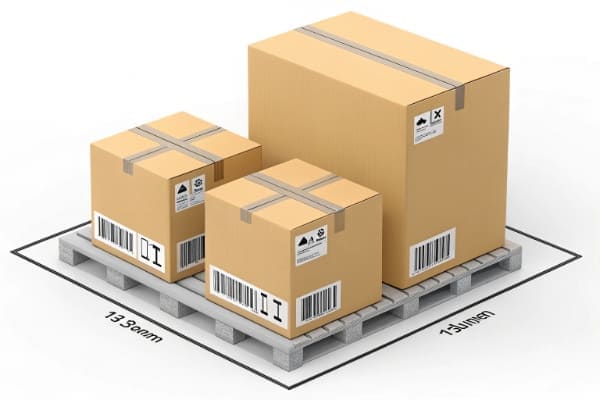
It's advisable to invest time in understanding these requirements. Each product must be packaged correctly to ensure it arrives safely. I often recommend implementing quality inspections at the supplier using third-party services like QIMA. This way, you can ensure that everything meets Amazon’s standards before shipping.
Can You Use DDP Shipping for Australia Amazon FBA?
Yes, using DDP shipping for Australia Amazon FBA is a great option. With DDP, all customs duties and taxes are handled upfront. This means fewer headaches upon arrival in Australia. It’s especially useful for businesses looking to streamline their logistics.
DDP shipping simplifies logistics by managing all customs, duties, and delivery for FBA shipments in Australia.
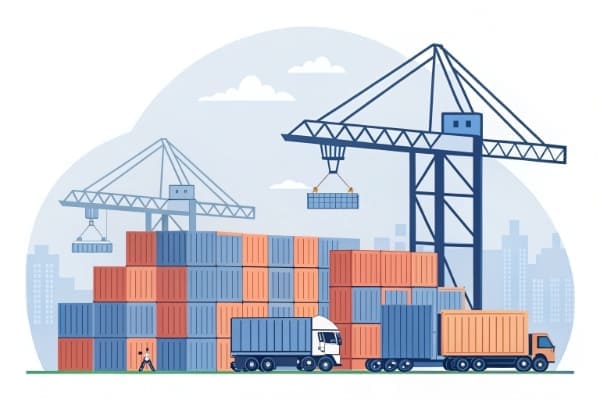
By using DDP, you can focus on growing your business rather than worrying about customs clearance issues. Just remember that DDP shipping can increase your upfront costs. However, the peace of mind it provides can be well worth it when it comes to efficient delivery.
How to Avoid Customs Delays for FBA Shipments?
Customs delays can be a big headache for any seller. To minimize these delays, I recommend being proactive. Start by ensuring all documentation is accurate and complete. Label your packages correctly and check compliance with Australian regulations, especially when it comes to product safety.
To prevent customs delays, ensure accurate documentation, proper labeling, and compliance with Australian regulations.12

Another tip is to work with experienced freight forwarders who specialize in Amazon FBA. They understand the customs process and can help you navigate it smoothly. If you are importing for the first time, consider using indirect shipping via a third-party logistics provider (3PL). This allows you to inspect and consolidate SKUs before sending them to FBA. It is a safe way to prepare your products for sale.
Conclusion
Shipping from China to Australia’s FBA requires careful planning and execution for a seamless experience.
Selling on other Amazon marketplaces? Follow our step-by-step guide to shipping products to Amazon FBA from China for costs, transit times and customs tips.
"Air Freight: A Market Study with Implications for Landlocked Countries", https://www.worldbank.org/en/topic/transport/publication/air-freight-study. A transport economics or international freight source should substantiate the general modal trade-off that air cargo offers shorter transit times while maritime shipping generally has lower unit transport costs; this supports the comparison at a general level rather than proving every China–Australia shipment will follow the same pattern. Evidence role: general_support; source type: institution. Supports: Air freight is typically faster than ocean freight, while ocean freight is usually more cost-effective.. Scope note: Contextual support only; actual speed and cost depend on shipment size, route, carrier, season, and service level. ↩
"Instant Freight Transit Time Calculator | Air, Ocean & Trucking", https://www.freightos.com/freight-resources/transit-time-calculator/. A neutral freight transit-time reference or official trade-logistics source should show that air cargo between China and Australia is commonly measured in days rather than weeks, with published estimates around this range; the source would provide contextual transit-time support, not a guaranteed delivery time. Evidence role: statistic; source type: other. Supports: Air freight from China to Australia usually takes about 7 to 15 days.. Scope note: Transit times vary by origin, destination, carrier schedules, consolidation, customs clearance, and peak-season congestion. ↩
"Instant Freight Transit Time Calculator | Air, Ocean & Trucking", https://www.freightos.com/freight-resources/transit-time-calculator/. A port, shipping schedule, or maritime logistics source should support that containerized sea freight from China to Australia commonly takes several weeks, with estimates in the 25–35 day range on some routes; this is route-context evidence rather than a universal timetable. Evidence role: statistic; source type: institution. Supports: Ocean freight from China to Australia may take 25 to 35 days or more.. Scope note: Ocean transit times depend on port pair, direct versus transshipment service, sailing frequency, port congestion, and inland delivery time. ↩
"List of busiest container ports - Wikipedia", https://en.wikipedia.org/wiki/List_of_busiest_container_ports. Port throughput statistics from a maritime authority or international shipping institution should confirm that Shanghai, Ningbo-Zhoushan, and Shenzhen are among China’s major container ports; this supports their significance as export gateways but does not by itself prove they are optimal for every shipment to Australia. Evidence role: statistic; source type: institution. Supports: Shenzhen, Shanghai, and Ningbo are major Chinese ports relevant to shipping routes to Australia.. Scope note: Port size does not guarantee the best route or price for a particular seller, which also depends on supplier location, carrier service, and warehouse destination. ↩
"[PDF] The Determinants of Bulk Truck Rates - Washington State University", https://wpcdn.web.wsu.edu/cahnrs/uploads/sites/5/The-Determinants-of-Bulk-Truck-Rates.pdf. A freight-pricing source from a government trade body, university logistics text, or international transport institution should explain that freight charges vary with shipment weight or volume, mode, route, fuel costs, service level, customs handling, and ancillary fees. Evidence role: mechanism; source type: education. Supports: The total cost of shipping can vary based on multiple factors.. Scope note: Such a source would explain pricing determinants generally and may not provide current China–Australia FBA rates. ↩
"Shipping from China to Australia [Updated April 2026 ] - Freightos", https://www.freightos.com/shipping-routes/shipping-from-china-to-australia/. A freight-rate benchmark or current market-rate reference should support that China–Australia air freight quotations can fall around AUD 5–10 per kilogram under certain market conditions; the citation should note that spot rates fluctuate and are not fixed tariff values. Evidence role: statistic; source type: other. Supports: Air freight from China to Australia may cost around AUD 5 to AUD 10 per kilogram.. Scope note: Rates change by date, chargeable weight, commodity, fuel surcharge, carrier capacity, and whether the quote includes pickup, customs, or final delivery. ↩
"Shipping from China to Australia [Updated April 2026 ] - Freightos", https://www.freightos.com/shipping-routes/shipping-from-china-to-australia/. A freight-rate benchmark or market-rate source should support that sea freight costs can be lower than air freight and may be expressed around AUD 2–5 per kilogram for some China–Australia shipments; the source would be indicative rather than definitive because ocean freight is often priced by container or cubic metre. Evidence role: statistic; source type: other. Supports: Ocean freight from China to Australia can cost around AUD 2 to AUD 5 per kilogram.. Scope note: Ocean freight is commonly quoted by container, cubic metre, or chargeable volume, so a per-kilogram range may not apply cleanly to all shipments. ↩
"GST and other taxes when importing - Australian Border Force", https://www.abf.gov.au/importing-exporting-and-manufacturing/importing/cost-of-importing-goods/gst-and-other-taxes. Australian Border Force or Australian Taxation Office guidance should confirm that imported goods above the low-value threshold may be subject to GST and that the GST rate is 10%; this supports the tax rule but not the full landed-cost calculation for every product category. Evidence role: definition; source type: government. Supports: Shipments over AUD 1,000 imported into Australia may be subject to 10% GST.. Scope note: Other charges, concessions, tariff classifications, and low-value imported goods rules may affect the final amount payable. ↩
"Know Your Incoterms - International Trade Administration", https://www.trade.gov/know-your-incoterms. The International Chamber of Commerce definition of Delivered Duty Paid should support that, under DDP Incoterms, the seller bears responsibility for delivery to the named destination and for import duties and taxes; this establishes the Incoterms meaning rather than confirming any individual freight forwarder’s service scope. Evidence role: definition; source type: institution. Supports: DDP shipping assigns responsibility for customs duties and import formalities to the seller or shipping provider offering the DDP service.. Scope note: Commercial DDP services may exclude some costs by contract, and Amazon-specific restrictions may still apply. ↩
"FBA Shipment Denied Due to “Label Issue” Even Though Sent via ...", https://sellercentral.amazon.com/seller-forums/discussions/t/28fe9deb-6e5e-4e6b-a39f-ec78514337dd. Amazon’s FBA shipment preparation and packaging guidance should support that noncompliant labeling, packaging, or shipment preparation can result in refusal, rejection, or additional handling actions at fulfillment centers. Evidence role: case_reference; source type: other. Supports: Products that do not follow Amazon FBA packaging and labeling requirements may be rejected.. Scope note: Amazon policies vary by marketplace, product category, and shipment workflow, so the citation should refer specifically to Amazon Australia or general FBA policy where applicable. ↩
"1 Unit per box - do i need box labels? - Amazon Seller Central", https://sellercentral.amazon.com/seller-forums/discussions/t/ff17f2d1a471748e9e14d4bc7e9ec04c. Amazon Seller Central documentation should support that FBA inventory requires scannable unit identifiers such as FNSKU labels when manufacturer barcodes are not used, and that shipments require box or pallet labels as applicable. Evidence role: definition; source type: other. Supports: Amazon FBA requires appropriate unit, carton, and pallet labeling, including FNSKU labels in relevant cases.. Scope note: Label requirements can differ depending on barcode settings, commingling eligibility, product category, palletization, and marketplace-specific FBA workflows. ↩
"Australia - Import Requirements and Documentation", https://www.trade.gov/country-commercial-guides/australia-import-requirements-and-documentation. Australian Border Force import guidance should support that accurate import declarations, required documents, correct goods descriptions, and compliance with Australian border requirements are central to customs clearance; this supports delay reduction as a compliance principle rather than guaranteeing clearance without delay. Evidence role: expert_consensus; source type: government. Supports: Accurate documentation, proper labeling, and compliance with Australian regulations help reduce the risk of customs delays.. Scope note: Even compliant shipments can be delayed by inspections, biosecurity holds, port congestion, or incomplete information from other parties. ↩