
Sea freight shipping can be complex. There are many required documents that ensure a smooth process. Without the right paperwork, delays and issues may arise.
To ship goods via sea freight, you need specific documents. These include the commercial invoice, packing list, bill of lading, certificate of origin, and customs documents1.
Let's dive into what these documents are and why they matter.
What Are the Essential Documents Required for Sea Freight Shipping?
Shipping goods can feel overwhelming. It’s easy to get lost in the details. However, knowing the essential documents helps ease the stress. Each document serves a purpose. They ensure compliance, protect your interests, and help avoid delays.
The core documents required for sea freight shipping include:
- Commercial Invoice
- Packing List
- Bill of Lading (B/L)
- Certificate of Origin
- Customs Documentation
- Insurance Certificate
- Shipper’s Letter of Instruction
- Additional Permits or Certifications
These documents work together to facilitate the shipment process smoothly.
The commercial invoice is crucial. It details the transaction and is needed for customs valuation2. The packing list complements it. It shows what is included in the shipment and helps match the physical cargo to the documentation3.
The bill of lading acts as a receipt for the goods4. It also serves as a contract between the shipper and the carrier5. The certificate of origin proves where the goods were made. This can be vital for customs purposes.
In the next sections, we will explore each document in detail.
What Is a Commercial Invoice and Why Is It Important?
A commercial invoice is a vital document used in international shipping. It outlines the sale and provides essential details to customs authorities. This document states the value of the goods, their description, and the terms of sale.
The commercial invoice is key for customs valuation and duty assessment. Customs officials use it to determine the amount of duties and taxes owed on imported goods.

When creating a commercial invoice, include information like:
- Seller's and buyer's details
- Description of the goods
- Quantity and unit price
- Total value
- Payment terms
Accuracy is crucial. Any errors can lead to delays or additional costs.
What Information Should Be Included in a Packing List?
The packing list is another important document in sea freight shipping. It provides detailed information about the shipment. It helps the receiver check the goods against what was shipped.
What should be on the packing list?
Include the following:
- Seller’s and buyer’s information
- Invoice number
- Description of each item
- Quantity and weight
- Dimensions
- Marks and numbers for identification

This document is essential for customs clearance. Customs officials may refer to it to verify the contents of the shipment. Additionally, it helps prevent discrepancies between what was ordered and what was received.
What Is a Bill of Lading (B/L) in Sea Freight?
The bill of lading is a crucial document in sea freight shipping. It serves multiple purposes. First, it acts as a receipt for the goods being shipped. Second, it is a contract between the shipper and the carrier. Finally, it is a document of title that allows the transfer of ownership6.
The bill of lading is vital for cargo release upon arrival7. Without it, you may face challenges retrieving your goods.
A bill of lading typically includes:
- Shipper and consignee details
- Vessel name and voyage number
- Description of the goods
- Weight and measurement
- Freight charges
Be sure to check the accuracy of this document. Mistakes can lead to delays or loss of cargo.
What Is a Certificate of Origin and When Is It Required?
The certificate of origin is an important document in international trade. It proves where the goods were manufactured. This document is often required for preferential tariff treatment8.
Why is it needed? Many countries impose tariffs based on the origin of the goods9. A certificate of origin can help reduce these costs.

The certificate should include:
- Exporter’s name and address
- Manufacturer’s name and address
- Description of the goods
- Origin declaration
- Signatures and stamps
In some cases, you may need an official certificate from a chamber of commerce or trade association.
What Customs Documents Are Needed for Sea Freight Import?
Customs documents are essential for clearing goods when they arrive at their destination. These documents ensure compliance with local laws and regulations.
Common customs documents include:
- Import Declaration: A form that provides detailed information about the imported goods.
- Commercial Invoice: Used for customs valuation.
- Packing List: To verify the contents of the shipment.
- Certificate of Origin: To determine applicable tariffs.
These documents should be accurate and complete to avoid delays, fines, or penalties.
What Documents Are Required for DDP Sea Freight Shipping?
DDP stands for "Delivered Duty Paid."10 In this shipping method, the seller is responsible for all costs and risks until the goods reach the buyer's location11.
The documents required for DDP shipping include:
- Commercial Invoice
- Packing List
- Bill of Lading
- Customs Declaration
- Insurance Certificate
- Certificate of Origin (if applicable)
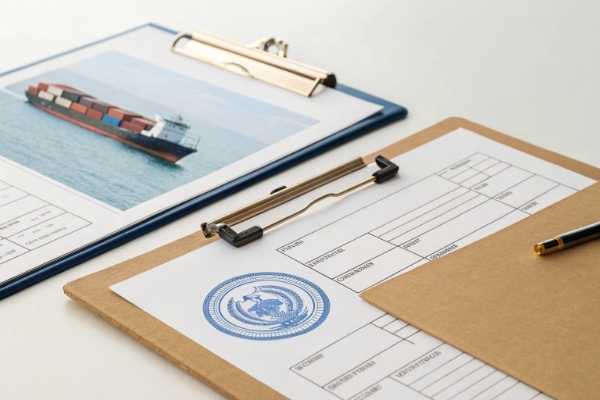
Having these documents in order ensures a smooth delivery process. The seller takes on the responsibility, which can be beneficial for the buyer.
What Documents Are Needed for Dangerous Goods Shipments?
Shipping dangerous goods requires special attention. These items can pose risks to health, safety, or the environment.
Key documents needed for dangerous goods shipments include:
- Dangerous Goods Declaration12: This is a must. It provides details on the hazardous nature of the cargo.
- Bill of Lading: It indicates that the goods are hazardous.
- Packing List: To verify the contents of the shipment.
- Insurance Certificate: Required for coverage of hazardous materials.
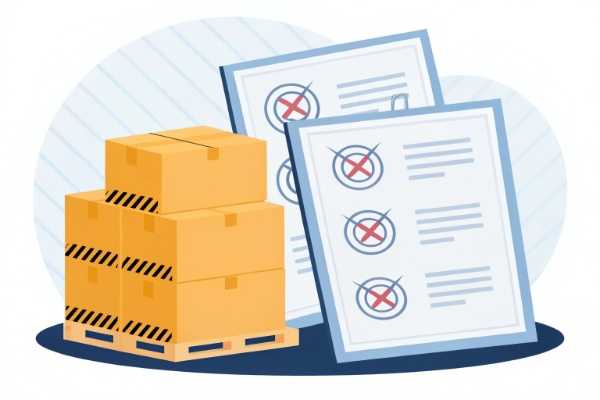
Proper documentation is crucial. It ensures compliance with regulations and safety standards.
What Happens If Sea Freight Documents Are Incorrect or Missing?
If the shipping documents are incorrect or missing, problems can arise. Delays are common. Customs may hold the shipment until the issues are resolved. This can lead to additional costs and frustration.
In some cases, missing documents can result in fines or penalties. It is essential to double-check all paperwork to avoid such situations.
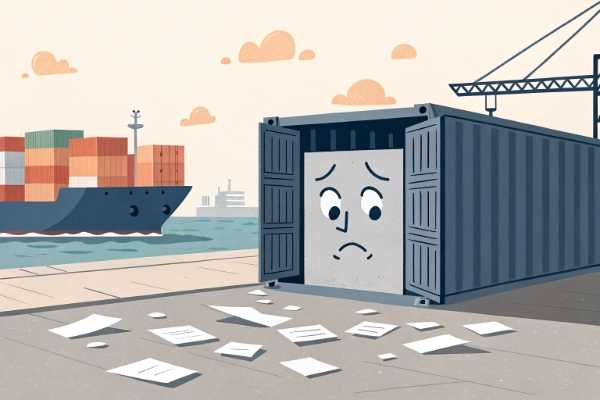
To minimize risks, work with a reliable freight forwarder. They can help ensure that all documents are accurate and complete.
How Can Importers Prepare Sea Freight Documents Correctly?
Preparing sea freight documents correctly is vital. Here are some tips:
- Understand the Requirements: Know what documents are needed for your shipment.
- Collect Accurate Information: Make sure all details are correct, including names, addresses, and descriptions.
- Use Standardized Formats: Follow industry standards for documentation.
- Double-Check Everything: Review all documents before submission.
- Work with Experts: Consider hiring a freight forwarder to help manage the logistics and documentation.

By taking these steps, you can ensure a smoother shipping process and avoid common pitfalls.
Conclusion
Proper documentation is crucial for successful sea freight shipping. Understanding the required documents helps avoid delays and ensures compliance.
"Common Export Documents", https://www.trade.gov/common-export-documents. International trade documentation guidance identifies commercial invoices, packing lists, bills of lading or other transport documents, certificates of origin, and customs declarations as common documents used to support cross-border shipment and clearance. Evidence role: general_support; source type: institution. Supports: Sea freight shipments commonly require documents such as a commercial invoice, packing list, bill of lading, certificate of origin, and customs documents.. Scope note: Document requirements vary by country, commodity, trade agreement, and shipping terms, so the source supports these as common rather than universally mandatory documents. ↩
"What value should be on the commercial invoice submitted to ...", https://www.help.cbp.gov/s/article/Article-1162?language=en_US. Customs valuation rules and import guidance commonly use the transaction value of imported goods, documented through commercial sales records such as invoices, as the basis for assessing customs value. Evidence role: mechanism; source type: government. Supports: The commercial invoice provides information used for customs valuation.. Scope note: The source will support the valuation role of invoices generally; national customs administrations may require additional documents or adjustments depending on the transaction. ↩
"Packing List", https://www.trade.gov/packing-list. Export-documentation guidance describes the packing list as a document that itemizes package contents and shipping details, enabling parties to compare the goods received or inspected with the shipment documentation. Evidence role: definition; source type: government. Supports: A packing list identifies shipment contents and helps reconcile cargo with the related documents.. Scope note: The source is likely to describe common business and customs use of packing lists rather than prove that every customs inspection relies on them. ↩
"Ohio Admin. Code 4901:2-19-09 - Receipt or bill of lading", https://www.law.cornell.edu/regulations/ohio/Ohio-Admin-Code-4901-2-19-09. Legal and maritime references define a bill of lading as a transport document that can evidence the carrier’s receipt of goods for shipment. Evidence role: definition; source type: encyclopedia. Supports: A bill of lading functions as a receipt for goods accepted by the carrier.. Scope note: Specific legal effects depend on the bill type, governing law, and whether the document is negotiable or non-negotiable. ↩
"The U.S. Government Bill of Lading and Related Practices and ...", https://docs.rwu.edu/cgi/viewcontent.cgi?article=2767&context=law_ma_jmlc. Maritime transport references state that a bill of lading ordinarily evidences the contract of carriage between the shipper and the carrier, in addition to acknowledging receipt of the cargo. Evidence role: definition; source type: education. Supports: A bill of lading serves as, or evidences, the contract of carriage between shipper and carrier.. Scope note: Some authorities distinguish between the bill of lading as the contract itself and as evidence of a contract formed earlier through booking arrangements. ↩
"7-104. Negotiable and Nonnegotiable Document of Title.", https://www.law.cornell.edu/ucc/7/7-104. Commercial law and maritime sources explain that negotiable bills of lading may operate as documents of title, enabling transfer of rights to claim the goods by endorsement or delivery under applicable law. Evidence role: definition; source type: education. Supports: A bill of lading can function as a document of title allowing transfer of rights in the goods.. Scope note: The support applies most directly to negotiable bills of lading; sea waybills and non-negotiable bills generally do not transfer title in the same way. ↩
"Ocean House Bill of Lading Frequently Asked Questions", https://www.cbp.gov/trade/automated/ace-faq/ohbol-faq. Carrier and maritime-documentation guidance indicates that delivery of goods at destination is commonly controlled through presentation or surrender of the relevant bill of lading or use of an authorized release procedure. Evidence role: mechanism; source type: institution. Supports: A bill of lading is commonly required or used to authorize cargo release at destination.. Scope note: Release procedures differ for original bills of lading, sea waybills, telex releases, and electronic bills of lading, so the support is contextual rather than universal. ↩
"FTA Certificates of Origin", https://www.trade.gov/fta-certificates-origin. Trade-agreement and customs guidance explains that proof of origin is commonly required to claim preferential tariff treatment under free trade agreements or preference schemes. Evidence role: mechanism; source type: government. Supports: A certificate or proof of origin is often required to obtain preferential tariff treatment.. Scope note: The type of proof may be a formal certificate of origin, an origin declaration, or importer knowledge depending on the agreement and jurisdiction. ↩
"WTO | Rules of origin - Technical Information", https://www.wto.org/english/tratop_e/roi_e/roi_info_e.htm. The World Trade Organization and customs authorities describe rules of origin as criteria used to determine a product’s economic nationality for applying tariffs, trade preferences, and other trade-policy measures. Evidence role: expert_consensus; source type: institution. Supports: Countries use goods’ origin to determine tariff treatment.. Scope note: The source supports origin as a tariff-relevant criterion, but tariff rates may also depend on product classification, customs value, and specific trade measures. ↩
"Incoterms® 2020: DAP or DDP? - ICC Academy", https://academy.iccwbo.org/incoterms/article/incoterms-2020-dap-or-ddp/. The International Chamber of Commerce’s Incoterms rules define DDP as Delivered Duty Paid, an Incoterm under which the seller has extensive obligations to deliver goods to the named place after import clearance and payment of duties where applicable. Evidence role: definition; source type: institution. Supports: DDP means Delivered Duty Paid and is an Incoterms delivery rule.. Scope note: The exact allocation of costs, risk, and import formalities depends on the contracted Incoterms version and any additional terms agreed by the parties. ↩
"Know Your Incoterms", https://www.trade.gov/know-your-incoterms. Incoterms explanations of DDP state that the seller bears responsibility for delivery to the named place of destination, including import clearance and duties where required, with risk transferring according to the DDP rule. Evidence role: definition; source type: institution. Supports: Under DDP, the seller assumes broad cost, delivery, import-clearance, and risk obligations until the agreed destination point.. Scope note: This should be cited with the named-place concept; saying “buyer’s location” may overstate the rule if the contract names another destination point. ↩
"The International Maritime Dangerous Goods (IMDG) Code", https://www.imo.org/en/ourwork/safety/pages/dangerousgoods-default.aspx. International maritime dangerous-goods rules require shippers to provide documentation describing dangerous goods, including information needed for classification, packaging, marking, and safe transport under the IMDG Code framework. Evidence role: mechanism; source type: institution. Supports: Dangerous-goods sea shipments require a declaration or transport document identifying the hazardous nature of the cargo.. Scope note: The exact name and format of the declaration may vary by jurisdiction, carrier practice, and whether multimodal dangerous-goods documentation is used. ↩