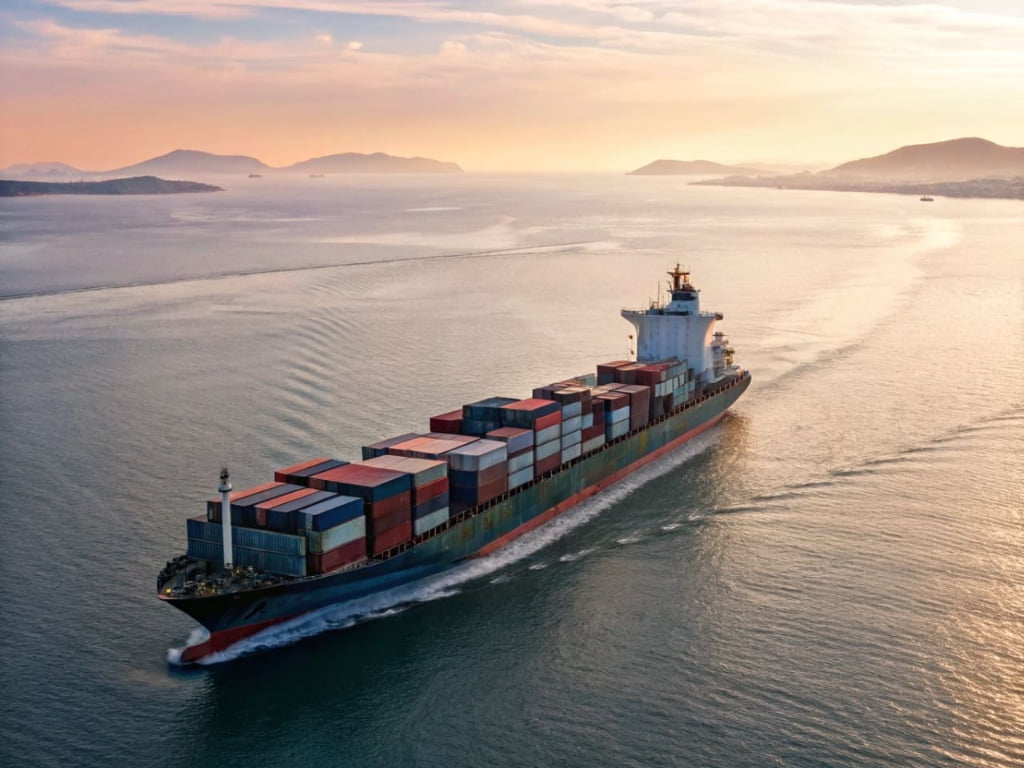
<p>Struggling with complex shipping from China to Qatar? The details can be overwhelming, leading to costly delays. We break down the entire process for you, making it simple.</p> <p><strong><a href="https://toncentlink.com/what-is-ddp-sea-freight-from-china-to-the-usa-complete-2025-guide/" target="_blank" rel="noopener noreferrer">Ocean freight from China to Qatar</a><sup id="fnref-1"><a href="#fn-1" class="footnote-ref">1</a></sup> is the process of shipping goods by sea, typically taking 22-35 days. It involves booking a container, <a href="https://toncentlink.com/what-is-ddp-sea-freight-from-china-to-the-usa-complete-2025-guide/" target="_blank" rel="noopener noreferrer">customs clearance</a><sup id="fnref-2"><a href="#fn-2" class="footnote-ref">2</a></sup> in both countries, and sea transit to <a href="https://en.wikipedia.org/wiki/Hamad_Port" target="_blank" rel="noopener noreferrer">Hamad Port</a><sup id="fnref-3"><a href="#fn-3" class="footnote-ref">3</a></sup>. Costs vary but expect $900-$2,550 for a 20ft container.</strong></p> <p><img decoding="async" src="https://toncentlink.com/wp-content/uploads/2026/01/ocean-freight-container-ship-sailing-from-china-to-1.jpg" alt="Ocean freight container ship sailing from China to Qatar"></p> <p>Shipping goods across continents sounds complicated, and to be honest, it can be if you don't know the steps. I’ve worked with many clients, like David from a promotional products company in the US, who were initially nervous about their first shipment to the Middle East. They worried about documents, hidden fees, and delays. But once we walked them through the process, they saw it was a manageable and logical system. My goal here is to give you that same clarity. Let's dive into how you can get your products from a factory in China to your warehouse in Qatar smoothly.</p> <h2>What Is Ocean Freight from China to Qatar and When Should Businesses Use It?</h2> <p>Is air freight too expensive for your bulk order? Shipping large volumes can drain your budget. Ocean freight is your cost-effective solution for heavy, non-urgent goods.</p> <p><strong>Ocean freight is the transport of goods by sea, usually in containers. Businesses should use it for large, heavy, or non-urgent shipments to Qatar to save on costs compared to air freight. It's ideal for stock replenishment and project cargo.</strong></p> <p><img decoding="async" src="https://toncentlink.com/wp-content/uploads/2026/01/fcl_and_lcl_containers_at_a_port.jpg" alt="FCL and LCL containers at a port"></p> <p>When you're importing from China, you basically have two choices: air or sea. The right choice depends entirely on your needs. I once had a client who wanted to ship 5,000 custom-branded water bottles for an event. They initially requested an air freight quote and were shocked by the cost. Because the bottles were heavy and they had a two-month lead time, I suggested ocean freight. The savings were massive.</p> <p>The key is to understand the two main types of ocean freight:</p> <ul> <li><strong>FCL (Full Container Load)<sup id="fnref-4"><a href="#fn-4" class="footnote-ref">4</a></sup>:</strong> You rent an entire container (20ft or 40ft) for your goods alone. This is faster and safer because the container is sealed at the factory and only opened at your destination.</li> <li><strong>LCL (Less than Container Load)<sup id="fnref-5"><a href="#fn-5" class="footnote-ref">5</a></sup>:</strong> You share container space with other importers. This is great for smaller shipments that don't fill a whole container. It's cheaper for low volumes but can take a bit longer due to the consolidation and de-consolidation process at both ends.</li> </ul> <p>Here’s a simple table to help you decide:</p> <table> <thead> <tr> <th style="text-align: left;">Factor</th> <th style="text-align: left;">Use Ocean Freight When...</th> <th style="text-align: left;">Use Air Freight When...</th> </tr> </thead> <tbody> <tr> <td style="text-align: left;"><strong>Cost</strong></td> <td style="text-align: left;">You need the most budget-friendly option.</td> <td style="text-align: left;">Speed is more important than cost.</td> </tr> <tr> <td style="text-align: left;"><strong>Volume</strong></td> <td style="text-align: left;">Your shipment is large or heavy (over 2 CBM).</td> <td style="text-align: left;">Your shipment is small and light.</td> </tr> <tr> <td style="text-align: left;"><strong>Urgency</strong></td> <td style="text-align: left;">You have a flexible timeline (over 30 days).</td> <td style="text-align: left;">You need the goods urgently (within 1-2 weeks).</td> </tr> <tr> <td style="text-align: left;"><strong>Product Type</strong></td> <td style="text-align: left;">Shipping bulk items, raw materials, or stock.</td> <td style="text-align: left;">Shipping high-value, perishable, or sample items.</td> </tr> </tbody> </table> <p>For most businesses importing promotional products or merchandise to Qatar, ocean freight offers the best balance of cost and reliability.</p> <h2>What Is the Full Ocean Freight Process to Qatar?</h2> <p>Worried about missing a step in the shipping process? A single mistake with documents or customs can cause major delays. Follow our step-by-step guide to ensure a smooth journey.</p> <p><strong>The process starts with booking your shipment and preparing documents like the Bill of Lading. Then comes cargo pickup, export customs in China, sea transit, and finally, <a href="https://toncentlink.com/333-2/" target="_blank" rel="noopener noreferrer">import customs clearance</a><sup id="fnref-6"><a href="#fn-6" class="footnote-ref">6</a></sup>e](<a href="https://toncentlink.com/what-is-ddp-sea-freight-from-china-to-the-usa-complete-2025-guide/)%%%FOOTNOTE_REF_2" target="_blank" rel="noopener noreferrer">https://toncentlink.com/what-is-ddp-sea-freight-from-china-to-the-usa-complete-2025-guide/)%%%FOOTNOTE_REF_2</a>%%% and delivery in Qatar. A good freight forwarder<sup id="fnref-7"><a href="#fn-7" class="footnote-ref">7</a></sup> manages this all for you.</strong></p> <p><img decoding="async" src="https://toncentlink.com/wp-content/uploads/2026/01/shipping-documents-like-bill-of-lading-and-commerc.jpg" alt="Shipping documents like Bill of Lading and Commercial Invoice"></p> <p>The ocean freight process can be broken down into a series of clear steps. Think of it as a relay race where your freight forwarder<sup id="fnref-7"><a href="#fn-7" class="footnote-ref">7</a></sup> carries the baton from start to finish. We handle this every day, ensuring each handover is seamless. Here is the typical journey your goods will take from a factory in China to your door in Qatar.</p> <h3>The 6 Key Steps of Ocean Freight</h3> <ol> <li><strong>Booking & Document Prep:</strong> First, you or your forwarder book space on a vessel with a shipping line (like Maersk or COSCO). At this stage, we collect all necessary information about your cargo. We also prepare the essential documents to prevent any customs issues later.</li> <li><strong>Cargo Pickup & Consolidation:</strong> We arrange for a truck to pick up your finished goods from the factory. If you’re shipping LCL, your goods are taken to a warehouse to be consolidated into a shared container with other shipments.</li> <li><strong>Export Customs Clearance in China:</strong> Before the ship can leave, the cargo must be cleared by Chinese customs. Your forwarder submits the required documents, like the commercial invoice and packing list, to prove the goods are eligible for export.</li> <li><strong>Sea Transit to Qatar:</strong> The container is loaded onto the vessel, which then sails from the Chinese port (e.g., Shenzhen) to <a href="https://en.wikipedia.org/wiki/Hamad_Port" target="_blank" rel="noopener noreferrer">Hamad Port</a><sup id="fnref-3"><a href="#fn-3" class="footnote-ref">3</a></sup> in Qatar. This is the longest part of the journey.</li> <li><strong>Import Customs Clearance in Qatar:</strong> Upon arrival at <a href="https://en.wikipedia.org/wiki/Hamad_Port" target="_blank" rel="noopener noreferrer">Hamad Port</a><sup id="fnref-3"><a href="#fn-3" class="footnote-ref">3</a></sup>, the goods must be cleared by Qatari customs. This involves submitting documents, paying duties and taxes (typically 5% duty + 5% VAT), and sometimes a physical inspection.</li> <li><strong>Final Delivery:</strong> Once cleared, the container is picked up from the port. If it's an FCL shipment, it's trucked directly to your warehouse. If it's LCL, it's taken to a warehouse to be de-consolidated, and then your specific goods are delivered to you.</li> </ol> <h2>Which Shipping Routes and Ports Are Used for Qatar Sea Freight?</h2> <p>Confused about which Chinese port to ship from? Choosing the wrong port adds time and cost to your delivery. We always ship from the best-located ports for fast, reliable delivery.</p> <p><strong>Shipments depart from major Chinese ports like Shanghai, Shenzhen, Ningbo, and Guangzhou. All sea freight arrives at <a href="https://en.wikipedia.org/wiki/Hamad_Port" target="_blank" rel="noopener noreferrer">Hamad Port</a><sup id="fnref-3"><a href="#fn-3" class="footnote-ref">3</a></sup>, Qatar's primary commercial seaport. The route chosen depends on your factory's location and carrier schedules.</strong></p> <p><img decoding="async" src="https://toncentlink.com/wp-content/uploads/2026/01/map_showing_shipping_route_from_china_to_qatar_.jpg" alt="Map showing shipping route from China to Qatar"></p> <p>The starting point of your shipment in China matters. We always choose a port that is close to your supplier's factory to save on domestic trucking costs and time. For example, if your supplier is in the Pearl River Delta, we'll use a port like Shenzhen or Guangzhou. If they are near Shanghai, that becomes our origin port.</p> <h3>Main Ports and Routes</h3> <ul> <li><strong>Departure Ports in China:</strong> The four main hubs are Shanghai, Shenzhen, Ningbo, and Guangzhou. Each has massive capacity and frequent sailings to the Middle East.</li> <li><strong>Arrival Port in Qatar:</strong> All commercial cargo ships sail to <strong><a href="https://en.wikipedia.org/wiki/Hamad_Port" target="_blank" rel="noopener noreferrer">Hamad Port</a><sup id="fnref-3"><a href="#fn-3" class="footnote-ref">3</a></sup></strong>, located south of Doha. It's a massive, modern port that handles virtually all of Qatar's container traffic.</li> <li><strong>The Shipping Route:</strong> Traditionally, ships sail from China, through the South China Sea, across the Indian Ocean, and into the Persian Gulf to reach Qatar. However, recent disruptions in the Red Sea have forced many carriers to reroute. This new route goes around Africa's Cape of Good Hope, which can add <strong>14 to 21 days</strong> to the total transit time. We always check the latest carrier routes to give you an accurate delivery estimate.</li> </ul> <p>Here’s a quick guide to the main Chinese ports we use:</p> <table> <thead> <tr> <th style="text-align: left;">Chinese Port</th> <th style="text-align: left;">Best For...</th> </tr> </thead> <tbody> <tr> <td style="text-align: left;"><strong>Shanghai</strong></td> <td style="text-align: left;">Wide range of products, large vessel capacity.</td> </tr> <tr> <td style="text-align: left;"><strong>Shenzhen</strong></td> <td style="text-align: left;">Electronics, tech gadgets, and goods from the Guangdong province.</td> </tr> <tr> <td style="text-align: left;"><strong>Ningbo</strong></td> <td style="text-align: left;">General merchandise, stationery, and hardware. Close to Yiwu market.</td> </tr> <tr> <td style="text-align: left;"><strong>Guangzhou</strong></td> <td style="text-align: left;">Apparel, furniture, and goods from the Pearl River Delta.</td> </tr> </tbody> </table> <p>Choosing the right port is part of our job as your sourcing partner<sup id="fnref-8"><a href="#fn-8" class="footnote-ref">8</a></sup>, ensuring your supply chain is as efficient as possible.</p> <h2>How Long Does Ocean Freight from China to Qatar Take?</h2> <p>Anxious about long <a href="https://toncentlink.com/what-is-ddp-sea-freight-from-china-to-the-usa-complete-2025-guide/" target="_blank" rel="noopener noreferrer">transit times</a><sup id="fnref-9"><a href="#fn-9" class="footnote-ref">9</a></sup> for your shipment? Waiting for goods can disrupt your business operations. We provide clear timelines so you can plan with absolute confidence.</p> <p><strong>Port-to-port sea freight from China to Qatar typically takes 22 to 35 days for a direct FCL shipment. LCL shipments may take an extra 5 to 7 days for consolidation and de-consolidation. Door-to-door service adds more time for ground transport.</strong></p> <p><img decoding="async" src="https://toncentlink.com/wp-content/uploads/2026/01/calendar-showing-shipping-transit-time-.jpg" alt="Calendar showing shipping transit time"></p> <p>"When will my goods arrive?" is the most common question I get from clients. And it's a fair one—your entire sales and marketing plan depends on it. The total transit time is more than just the time spent at sea. It includes the entire door-to-door journey. For a recent project involving branded merchandise for an event in Doha, we built a 45-day buffer into the timeline to account for every step, which kept the client calm and informed.</p> <p>Let's break down the timing.</p> <h3>Estimated Transit Times (Port-to-Port)</h3> <p>These are average times for FCL shipments and can vary based on the carrier and specific route.</p> <table> <thead> <tr> <th style="text-align: left;">From (China)</th> <th style="text-align: left;">To (Qatar)</th> <th style="text-align: left;">Estimated Transit Time</th> </tr> </thead> <tbody> <tr> <td style="text-align: left;">Shenzhen</td> <td style="text-align: left;"><a href="https://en.wikipedia.org/wiki/Hamad_Port" target="_blank" rel="noopener noreferrer">Hamad Port</a><sup id="fnref-3"><a href="#fn-3" class="footnote-ref">3</a></sup></td> <td style="text-align: left;">22 - 28 days</td> </tr> <tr> <td style="text-align: left;">Guangzhou</td> <td style="text-align: left;"><a href="https://en.wikipedia.org/wiki/Hamad_Port" target="_blank" rel="noopener noreferrer">Hamad Port</a><sup id="fnref-3"><a href="#fn-3" class="footnote-ref">3</a></sup></td> <td style="text-align: left;">23 - 29 days</td> </tr> <tr> <td style="text-align: left;">Shanghai</td> <td style="text-align: left;"><a href="https://en.wikipedia.org/wiki/Hamad_Port" target="_blank" rel="noopener noreferrer">Hamad Port</a><sup id="fnref-3"><a href="#fn-3" class="footnote-ref">3</a></sup></td> <td style="text-align: left;">25 - 30 days</td> </tr> <tr> <td style="text-align: left;">Ningbo</td> <td style="text-align: left;"><a href="https://en.wikipedia.org/wiki/Hamad_Port" target="_blank" rel="noopener noreferrer">Hamad Port</a><sup id="fnref-3"><a href="#fn-3" class="footnote-ref">3</a></sup></td> <td style="text-align: left;">24 - 30 days</td> </tr> </tbody> </table> <h3>Factors That Affect Total Time</h3> <ul> <li><strong>FCL vs. LCL:</strong> As mentioned, LCL takes about a week longer because your goods need to be grouped with others at the origin and separated at the destination.</li> <li><strong>Customs Clearance:</strong> Efficient <a href="https://toncentlink.com/what-is-ddp-sea-freight-from-china-to-the-usa-complete-2025-guide/" target="_blank" rel="noopener noreferrer">customs clearance</a><sup id="fnref-2"><a href="#fn-2" class="footnote-ref">2</a></sup> takes 2-4 days in Qatar. But if documents are missing or incorrect, it can cause significant delays.</li> <li><strong>Port Congestion:</strong> During peak seasons like before Chinese New Year, ports can get very busy, which can add a few days to the schedule.</li> <li><strong>Route Changes:</strong> The current rerouting around the Cape of Good Hope is the biggest factor right now, adding 2-3 weeks to the journey. We always confirm the route before booking.</li> </ul> <p>A reliable forwarder gives you a realistic door-to-door timeline, not just the port-to-port estimate.</p> <h2>What Are the Ocean Freight Costs to Qatar and What Affects Them?</h2> <p>Worried about hidden shipping fees<sup id="fnref-10"><a href="#fn-10" class="footnote-ref">10</a></sup>? Unexpected costs can ruin your profit margins. You need to understand the full cost breakdown to avoid surprises and budget accurately for your imports.</p> <p><strong>The cost for a 20ft container (FCL) from China to Qatar usually falls between $900 and $2,550. This is affected by the season, carrier, fuel prices, and surcharges. Always request a detailed quote that covers all potential charges.</strong></p> <p><img decoding="async" src="https://toncentlink.com/wp-content/uploads/2026/01/calculator-and-container-ship-to-represent-shippin.jpg" alt="Calculator and container ship to represent shipping costs"></p> <p>Pricing for ocean freight is not static; it changes based on supply and demand. I've seen rates double during peak season, so planning ahead is crucial. The key to avoiding surprises is to get an all-inclusive quote that breaks down every charge. A cheap base rate often comes with a long list of extra fees at the destination. We pride ourselves on providing transparent, door-to-door quotes so you know your total landed cost upfront.</p> <h3>Main Factors Influencing Your Freight Cost</h3> <ul> <li><strong>Container Type (FCL/LCL):</strong> FCL has a flat rate per container, while LCL is priced per cubic meter (CBM) or by weight.</li> <li><strong>Seasonality:</strong> Shipping demand spikes before major holidays like Chinese New Year (Jan/Feb) and the pre-Christmas shopping season (Aug-Oct). During this "peak season," carriers add a Peak Season Surcharge (PSS), and rates can jump 15-20%.</li> <li><strong>Carrier and Route:</strong> Different shipping lines (Maersk, MSC, COSCO) have different prices and service levels. Routes that are being rerouted due to global events will also cost more.</li> <li><strong>Fuel Prices:</strong> Carriers charge a Bunker Adjustment Factor (BAF) to cover fluctuating fuel costs. This is a variable surcharge that can change monthly.</li> <li><strong>Local Charges:</strong> Your total cost includes more than just the sea journey. You also have to pay for terminal handling (THC), documentation fees, and <a href="https://toncentlink.com/what-is-ddp-sea-freight-from-china-to-the-usa-complete-2025-guide/" target="_blank" rel="noopener noreferrer">customs clearance</a><sup id="fnref-2"><a href="#fn-2" class="footnote-ref">2</a></sup> fees at both the origin and destination ports.</li> <li><strong>Duties and Taxes:</strong> For Qatar, be prepared to pay a standard customs duty of 5% and a Value Added Tax (VAT) of 5% on the total CIF value (Cost of goods + Insurance + Freight).</li> </ul> <h2>How to Choose a Reliable Ocean Freight Forwarder to Qatar?</h2> <p>Afraid of choosing the wrong shipping partner? A bad forwarder can lead to delays, damaged goods, and surprise costs. You need to know what to look for to find a partner you can truly trust.</p> <p><strong>Choose a forwarder with experience on the China-Qatar route, transparent pricing, and a strong local network. They should handle all documents, customs, and offer services like insurance and real-time tracking. Always check for good reviews and clear communication.</strong></p> <p><img decoding="async" src="https://toncentlink.com/wp-content/uploads/2026/01/a-person-shaking-hands-with-a-freight-forwarder-s.jpg" alt="Two people shaking hands in front of a logistics background"></p> <p>Your freight forwarder<sup id="fnref-7"><a href="#fn-7" class="footnote-ref">7</a></sup> is the most important partner in your import journey. They are your team on the ground, managing every detail. I’ve heard horror stories from clients who came to us after a bad experience elsewhere—hidden fees, lost cargo, and zero communication. A professional forwarder prevents these headaches and acts as an extension of your own business. They don't just move boxes; they provide solutions and peace of mind.</p> <h3>Checklist for a Great Freight Forwarder</h3> <p>When you are vetting a potential partner, make sure they check all these boxes:</p> <ul> <li><strong>Expertise in the Qatar Market:</strong> Do they understand Qatar's customs regulations? Do they know which items are prohibited (like pork products and e-cigarettes) or restricted (like alcohol)? This local knowledge is priceless.</li> <li><strong>One-Stop Service:</strong> A good forwarder should offer a complete solution: sourcing, quality control, cargo pickup, warehousing, booking, insurance, <a href="https://toncentlink.com/what-is-ddp-sea-freight-from-china-to-the-usa-complete-2025-guide/" target="_blank" rel="noopener noreferrer">customs clearance</a><sup id="fnref-2"><a href="#fn-2" class="footnote-ref">2</a></sup>, and final delivery. This saves you from managing multiple vendors.</li> <li><strong>Transparent Pricing:</strong> Ask for a detailed, all-in quote. If a price seems too good to be true, it probably is. There should be no hidden fees.</li> <li><strong>Clear Communication:</strong> Are they responsive? Do they provide regular updates and speak your language fluently? You should never have to wonder where your shipment is.</li> <li><strong>Strong Network:</strong> They need reliable agents in both China and Qatar to handle your shipment smoothly at both ends.</li> <li><strong>Technology and Tracking:</strong> Do they provide an online portal where you can track your shipment's status in real time? This transparency is a sign of a modern, customer-focused company.</li> </ul> <p>At Toncentlink, we built our business to be this all-in-one partner for companies importing from China.</p> <h2>What Documents Are Required for Sea Freight to Qatar?</h2><p>Paperwork can be a real headache. You worry that one missing or incorrect document will cause your shipment to get stuck at customs. I will list the essential documents you need.</p><p><strong>For smooth customs clearance<sup id="fnref-7"><a href="#fn-7" class="footnote-ref">7</a></sup> in Qatar, you absolutely must have a Commercial Invoice<sup id="fnref-8"><a href="#fn-8" class="footnote-ref">8</a></sup>, a Packing List<sup id="fnref-9"><a href="#fn-9" class="footnote-ref">9</a></sup>, a Bill of Lading<sup id="fnref-4"><a href="#fn-4" class="footnote-ref">4</a></sup> (B/L), and a Certificate of Origin<sup id="fnref-10"><a href="#fn-10" class="footnote-ref">10</a></sup>. These documents are non-negotiable and prove the shipment's value, contents, and ownership.</strong></p><p><img decoding="async" src="https://toncentlink.com/wp-content/uploads/2026/01/essential-shipping-documents-laid-out-on-a-table-1.jpg" alt="Essential shipping documents laid out on a table"></p><p>Getting your documentation right is probably the most critical part of international shipping. I’ve seen shipments delayed for weeks over a simple typo. The Qatari customs authorities are very strict, so precision is key. You need to ensure every detail on these documents matches perfectly.</p><p>Here are the core documents and why they matter:</p><h3>Key Shipping Documents for Qatar</h3><table> <thead> <tr> <th style="text-align: left;">Document</th> <th style="text-align: left;">Purpose</th> <th style="text-align: left;">My Pro Tip</th> </tr> </thead> <tbody> <tr> <td style="text-align: left;"><strong>Commercial Invoice<sup id="fnref-8"><a href="#fn-8" class="footnote-ref">8</a></sup></strong></td> <td style="text-align: left;">Declares the value of the goods. Used by customs to calculate duties and taxes.</td> <td style="text-align: left;">The value must be accurate. Qatar applies a 5% GCC tariff on the CIF (Cost, Insurance, Freight) value, so undervaluing goods can lead to fines.</td> </tr> <tr> <td style="text-align: left;"><strong>Packing List<sup id="fnref-9"><a href="#fn-9" class="footnote-ref">9</a></sup></strong></td> <td style="text-align: left;">Details the contents of your shipment, including quantity, weight, and dimensions of each box.</td> <td style="text-align: left;">Make it as detailed as possible. This helps customs officials if they decide to physically inspect your cargo, speeding up the process.</td> </tr> <tr> <td style="text-align: left;"><strong>Bill of Lading<sup id="fnref-4"><a href="#fn-4" class="footnote-ref">4</a></sup> (B/L)</strong></td> <td style="text-align: left;">Acts as the title of the goods, a receipt from the carrier, and a contract of carriage.</td> <td style="text-align: left;">This is a critical legal document. Ensure the consignee's name is exactly as it appears on their Qatar import license.</td> </tr> <tr> <td style="text-align: left;"><strong>Certificate of Origin<sup id="fnref-10"><a href="#fn-10" class="footnote-ref">10</a></sup> (CO)</strong></td> <td style="text-align: left;">Certifies that the goods were manufactured in China. Often required for customs.</td> <td style="text-align: left;">This must be issued by a recognized chamber of commerce in China. Your forwarder can help you obtain a certified one.</td> </tr> </tbody> </table><p>In addition to these, every importer in Qatar needs an <strong><a href="https://toncentlink.com/what-is-ddp-sea-freight-from-china-to-the-usa-complete-2025-guide/" target="_blank" rel="noopener noreferrer">Import License</a><sup id="fnref-11"><a href="#fn-11" class="footnote-ref">11</a></sup></strong>. Without this, you cannot legally bring commercial goods into the country. Make sure your business or your consignee has this license ready before the shipment arrives. For certain products, you may also need additional permits or certificates, so always check with your <a href="https://sinolinkers.com/sv" target="_blank" rel="noopener noreferrer">freight forwarder</a><sup id="fnref-3"><a href="#fn-3" class="footnote-ref">3</a></sup> about requirements specific to your goods.</p><h2>Conclusion</h2> <p>Shipping from China to Qatar is simple with the right partner. Understanding the process, costs, and timeline helps you make smart, confident choices for your business's success.</p> <hr><div class="footnotes"><hr><ol><li id="fn-1"><p>Explore this link to understand the ocean freight process and its benefits for shipping goods. <a href="#fnref-1" class="footnote-backref">↩</a></p></li><li id="fn-2"><p>Learn about customs clearance to avoid delays and ensure smooth shipping. <a href="#fnref-2" class="footnote-backref">↩</a></p></li><li id="fn-3"><p>Discover the importance of Hamad Port for maritime trade in Qatar. <a href="#fnref-3" class="footnote-backref">↩</a></p></li><li id="fn-4"><p>Understand FCL shipping to determine if it's the right choice for your cargo. <a href="#fnref-4" class="footnote-backref">↩</a></p></li><li id="fn-5"><p>Find out when LCL is a cost-effective option for smaller shipments. <a href="#fnref-5" class="footnote-backref">↩</a></p></li><li id="fn-6"><p>Understand the import customs process to ensure smooth delivery of goods. <a href="#fnref-6" class="footnote-backref">↩</a></p></li><li id="fn-7"><p>Learn how to select a trustworthy freight forwarder to avoid shipping issues. <a href="#fnref-7" class="footnote-backref">↩</a></p></li><li id="fn-8"><p>Find tips on selecting a sourcing partner to streamline your shipping process. <a href="#fnref-8" class="footnote-backref">↩</a></p></li><li id="fn-9"><p>Get accurate transit time estimates to plan your shipments effectively. <a href="#fnref-9" class="footnote-backref">↩</a></p></li><li id="fn-10"><p>Discover potential hidden fees to avoid unexpected costs in your shipping. <a href="#fnref-10" class="footnote-backref">↩</a></p></li></ol></div>
Shipping
How Does Ocean Freight from China to Qatar Work? Process, Transit Time & Cost