
Importing products can be daunting. The process requires careful planning and knowledge. Many businesses struggle with the complexities of global supply chains. How can you ensure a smooth import experience from China to Germany?
The best way to import products involves understanding the necessary documents, customs duties, and the right shipping methods. Proper planning can help you navigate these challenges and reduce costs.
Navigating the import process is essential for success. There are many steps involved, and each one is crucial. Understanding what is required will help streamline your operations. In this post, I will guide you through the key aspects of importing products from China to Germany in 2026.
What Documents Are Required to Import into Germany?
Importing into Germany requires several documents. First, you need a commercial invoice1. This document details the transaction. It includes the seller's and buyer's information, product description, and price. Next, you will need a packing list. This lists what is in the shipment.
Additionally, a bill of lading2 is essential. This document acts as a receipt for the goods. It also serves as a contract between you and the shipping company. Other necessary documents include import licenses, certificates of origin, and any relevant testing certificates for your products.
To ensure compliance, you should have all required documents in order. Missing documents can lead to customs delays or fines3.

Understanding the documentation needed is just the first step. If you overlook details, it could cause significant issues. Therefore, double-check each document before shipping. This will save you time and money in the long run.
How Much Import Duty and VAT Will You Pay in Germany?
When importing products, you must consider import duties and VAT. In Germany, the standard VAT is 19%4. This tax applies to most goods. The import duty varies based on the product classification. Each product has an HS code5, which determines its duty rate.
To calculate the total cost, consider the landed cost. This includes the product price, shipping costs, customs duties, and VAT. You can find duty rates in the EU TARIC database6.
Planning ahead can help avoid unexpected costs. Knowing the import duty and VAT rates will help you budget effectively.

Being aware of these costs is crucial. It allows you to set clear pricing for your products. Also, it helps you avoid any surprises when the goods arrive. Accurate calculations ensure you maintain profitability.
What Products Are Restricted or Prohibited in Germany?
Certain products are restricted or prohibited from importation into Germany. Commonly restricted items include firearms, certain chemicals, and counterfeit goods7. Additionally, some food products may require special permits8.
You should also consider product compliance with EU regulations. Items like electronics, toys, and cosmetics must meet strict quality standards9. For example, CE marking10 indicates compliance with EU safety requirements.
Familiarizing yourself with these restrictions is crucial. Importing prohibited items can lead to severe penalties.

Understanding product restrictions can save you from costly mistakes. Research regulations related to your specific products before placing orders. This knowledge protects your business and keeps your imports compliant.
Should You Use Air Freight, Sea Freight, Rail Freight, or Express Shipping?
Choosing the right shipping method is vital. Each option has its advantages. Air freight is fast but can be costly11. It is ideal for high-value or time-sensitive shipments.
Sea freight is more economical for larger shipments. It is slower but can accommodate various goods. Rail freight offers a middle ground in terms of cost and speed12, but it may have limited routes.
Express shipping is also available for urgent deliveries. This option is generally more expensive but ensures quick arrival.
Evaluate your needs based on budget, timeline, and product type. Choosing the right freight option can significantly impact your supply chain efficiency.
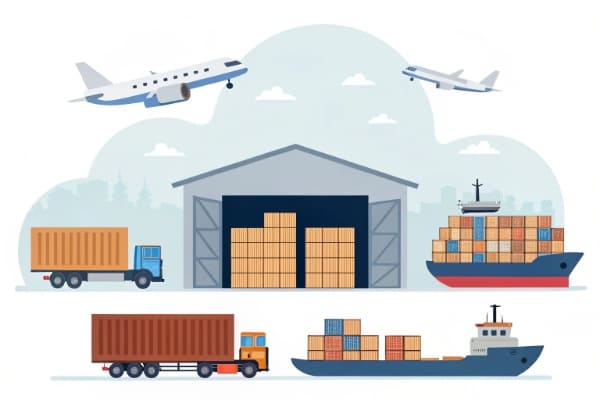
Selecting the appropriate shipping method requires careful consideration. Think about your budget, delivery time, and product type. This choice will affect your overall import experience.
How Can You Avoid Customs Delays and Hidden Fees?
Customs delays can be frustrating. To avoid them, ensure all documentation is complete and accurate. Collaborate with a trusted customs broker who can help you navigate the regulations.
Additionally, consider using a certified freight forwarder familiar with China–EU routes. They can optimize transit time and facilitate customs clearance.
Implementing quality control measures can also help. Conduct pre-shipment inspections and factory audits to ensure product compliance. This will reduce the chances of returns and customs holds.
By taking these steps, you can minimize delays and unexpected costs. A proactive approach will enhance your overall importing experience.

Avoiding customs delays requires careful planning. By ensuring all documents are correct, you can prevent many issues. Work closely with experienced professionals to streamline your process.
How to Find a Trusted China Freight Forwarder for Germany?
Finding a reliable freight forwarder is essential for smooth importation. Look for companies that specialize in China–EU shipping routes. They should have a strong network of contacts and expertise in customs regulations.
Check for certifications and positive reviews from other clients. This will indicate their reliability and ability to handle your shipments. Establish a solid rapport with your freight forwarder. Effective communication is key to successful collaboration.
Investing time in finding a trusted partner can lead to long-term benefits. A good freight forwarder can greatly enhance your import experience.
Choosing a freight forwarder is a significant step. A trusted partner can streamline your logistics and save you time and money. Take the time to research and connect with potential candidates.
Conclusion
Importing products from China to Germany in 2026 requires careful planning and execution. Understanding regulations, costs, and logistics will set you up for success.
"EU - Import Requirements and Documentation", https://www.trade.gov/country-commercial-guides/eu-import-requirements-and-documentation. German customs guidance and EU customs procedures identify commercial documentation as a core basis for import declarations, including valuation and goods description. Evidence role: general_support; source type: government. Supports: A commercial invoice is needed when importing goods into Germany because it details the transaction, parties, product description, and price.. Scope note: The exact documents required can vary by product, origin, transport mode, and customs procedure. ↩
"Carriage of goods by sea - Wikipedia", https://en.wikipedia.org/wiki/Carriage_of_goods_by_sea. Standard trade and transport references describe a bill of lading as evidence of receipt of goods and as a contract of carriage between the shipper and carrier. Evidence role: definition; source type: encyclopedia. Supports: A bill of lading functions as a receipt for goods and as a contract with the carrier.. Scope note: The legal effect can differ by jurisdiction and by whether the document is negotiable or non-negotiable. ↩
"Penalties Program - U.S. Customs and Border Protection", https://www.cbp.gov/trade/programs-administration/penalties. EU customs rules require accurate declarations and supporting documents, and customs authorities may delay release, request corrections, or impose penalties for non-compliance. Evidence role: general_support; source type: government. Supports: Missing or incorrect import documents can result in customs delays or fines.. Scope note: Penalty amounts and procedures depend on the member state, the type of error, and whether intent or negligence is found. ↩
"Has Germany's temporary VAT rates cut as part of the COVID-19 ...", https://pmc.ncbi.nlm.nih.gov/articles/PMC8964451/. Official German and EU tax sources list Germany’s standard VAT rate at 19%, which is generally applied to taxable supplies and imports unless a reduced rate or exemption applies. Evidence role: statistic; source type: government. Supports: Germany’s standard VAT rate is 19% and applies to most goods.. Scope note: Some goods and services qualify for reduced rates or exemptions, so the 19% rate does not apply universally. ↩
"Determining Duty Rates", https://www.cbp.gov/trade/programs-administration/determining-duty-rates. The Harmonized System classifies traded goods, and customs tariff schedules use these classifications to determine applicable duty treatment. Evidence role: definition; source type: institution. Supports: Each imported product is classified under an HS code that is used to determine its duty rate.. Scope note: The HS code is necessary for classification, but the final duty can also depend on origin, trade measures, valuation, and preferential agreements. ↩
"EU - Import Tariffs - International Trade Administration", https://www.trade.gov/country-commercial-guides/eu-import-tariffs. The European Commission’s TARIC system provides integrated EU tariff information, including customs duty measures and other trade measures by commodity code. Evidence role: definition; source type: institution. Supports: Importers can use the EU TARIC database to look up duty rates and tariff measures.. Scope note: TARIC identifies applicable EU measures, but importers may still need product-specific legal interpretation or customs advice. ↩
"[PDF] Country specific list of prohibited and restricted articles", https://www.upu.int/UPU/media/upu/files/postalSolutions/programmesAndServices/postalSupplyChain/customs/prohibitedArticles/ListOfProhibitedArticles.pdf. German customs and EU import-control materials list prohibitions and restrictions covering weapons, dangerous substances, and counterfeit or intellectual-property-infringing goods. Evidence role: general_support; source type: government. Supports: Firearms, certain chemicals, and counterfeit goods are commonly restricted or prohibited for import into Germany.. Scope note: Specific restrictions depend on the product, licensing status, and applicable EU or German law. ↩
"[PDF] Germany Food and Agricultural Import Regulations and Standards", https://apps.fas.usda.gov/newgainapi/api/Report/DownloadReportByFileName?fileName=Food+and+Agricultural+Import+Regulations+and+Standards+-+Narrative_Berlin_Germany_8-20-2009.pdf. EU and German food-import rules require certain products of animal or plant origin to meet health, veterinary, phytosanitary, or certification requirements before entry. Evidence role: general_support; source type: government. Supports: Some food products imported into Germany require special permits or certificates.. Scope note: Permit and certificate requirements vary significantly by food category, origin country, and risk classification. ↩
"Shopping in the EU is getting a whole lot safer. In 2025, we saw ...", https://www.facebook.com/EuropeanCommission/posts/shopping-in-the-eu-is-getting-a-whole-lot-safer-in-2025-we-saw-numerous-alerts-o/1343335851164874/. EU product-safety legislation sets sector-specific requirements for categories such as electrical equipment, toys, and cosmetics placed on the EU market. Evidence role: expert_consensus; source type: institution. Supports: Electronics, toys, and cosmetics imported into Germany must comply with EU product-safety or quality requirements.. Scope note: The applicable legal framework differs by product category; cosmetics, for example, are regulated under cosmetics rules rather than the same conformity route as many CE-marked goods. ↩
"CE marking - Wikipedia", https://en.wikipedia.org/wiki/CE_marking. European Commission guidance explains that CE marking indicates a manufacturer’s declaration that a product covered by relevant EU legislation conforms to applicable EU health, safety, and environmental requirements. Evidence role: definition; source type: institution. Supports: CE marking indicates compliance with applicable EU safety requirements for covered products.. Scope note: CE marking applies only to product categories covered by CE legislation and is not a general quality mark for all products. ↩
"Air Freight: A Market Study with Implications for Landlocked Countries", https://www.worldbank.org/en/topic/transport/publication/air-freight-study. International transport and logistics references generally characterize air freight as faster than sea transport but with higher per-unit shipping costs. Evidence role: general_support; source type: institution. Supports: Air freight is typically faster but more expensive than other freight options.. Scope note: Actual cost and transit-time differences vary by route, commodity, weight, capacity, and market conditions. ↩
"China-Europe freight transportation under the first wave of COVID ...", https://pmc.ncbi.nlm.nih.gov/articles/PMC9682051/. Studies of China–Europe rail freight commonly describe rail as occupying an intermediate position between maritime shipping and air freight in transit time and cost. Evidence role: general_support; source type: paper. Supports: China–Europe rail freight can offer a compromise between sea freight and air freight in cost and transit time.. Scope note: This is a contextual comparison; the middle-ground position depends on route availability, terminal access, cargo type, and current freight rates. ↩