
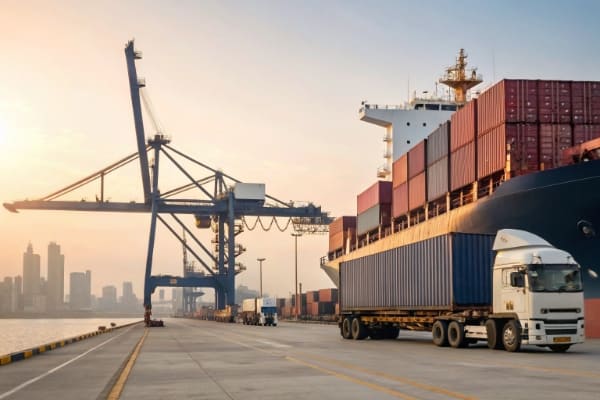
Shipping products from China to Qatar can seem tricky. Many factors affect the cost, time, and customs process. Understanding these elements is crucial for smooth operations.
The best way to ship products from China to Qatar depends on your needs. Sea freight is often the cheapest option for large shipments, while air freight is faster for smaller packages.1
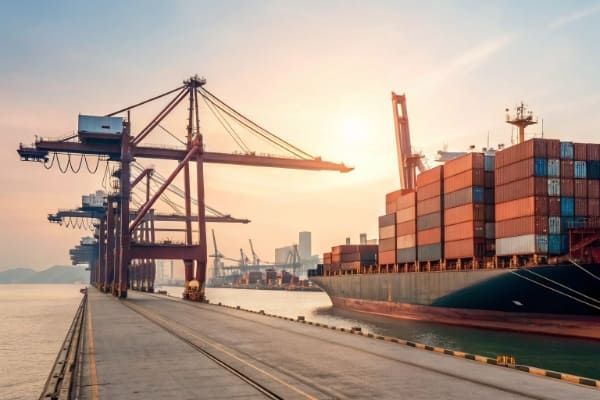
When considering how to ship products from China to Qatar, it is essential to weigh the options carefully. Different methods have distinct advantages and challenges. This guide aims to help you navigate through shipping costs, timeframes, and customs requirements to find the best solution.
What Is the Cheapest Way to Ship from China to Qatar?
Shipping costs can significantly impact your budget. If you want the most economical option, sea freight is your best bet for heavy or large-volume shipments2. Full Container Load (FCL) and Less than Container Load (LCL) services offer flexibility based on your needs.3
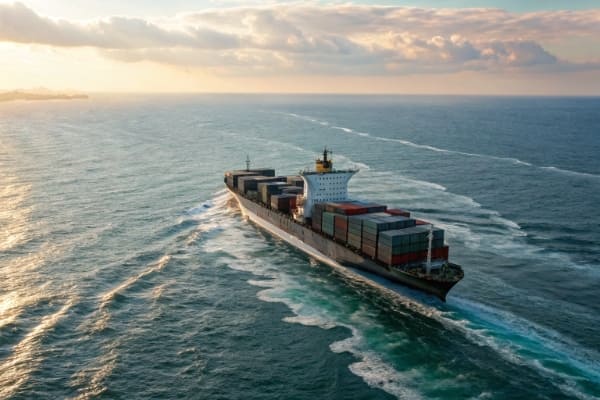
Sea freight is the most cost-effective choice for large shipments. It balances cost and capacity, making it ideal for businesses looking to save on shipping expenses.
For smaller items, express couriers like DHL or FedEx may be more practical. While they offer quicker delivery, their rates per kilogram are considerably higher than sea freight4. The choice ultimately depends on your product size and urgency.
When I first started shipping to Qatar, I initially underestimated the importance of weighing costs against volume. My decision to switch to sea freight for bulk orders resulted in substantial savings, enabling me to invest more in marketing rather than logistics.
How Much Does Shipping from China to Qatar Cost in 2026?
In 2026, the cost of shipping from China to Qatar varies depending on several factors, including the shipping method, weight, and destination5. For sea freight, you can expect costs ranging from $500 to $1,500 for a standard 20-foot container6. LCL shipments may cost around $100 to $300 per cubic meter7.
Shipping costs can fluctuate8, so it's vital to obtain quotes from freight forwarders to get up-to-date pricing. Navigating these costs can help manage your overall budget effectively.

Air freight typically ranges from $5 to $10 per kilogram9, making it significantly more expensive for larger shipments. It is essential to compare the total shipping cost against the product's value to ensure profitability.
After some experience, I always keep an eye on market changes that can affect shipping prices. Regularly checking multiple quotes has allowed me to find the best options while keeping my costs in check.
How Long Does Shipping from China to Qatar Take?
Transit times can greatly influence your supply chain. Sea freight usually takes about 20 to 45 days10, depending on the route and shipping line. For air freight or express services, delivery can occur within 3 to 5 days door-to-door11.
The shipping time you choose will depend on your urgency and budget. Air freight is faster but at a higher cost, while sea freight is slower but more cost-effective.

Understanding your timeline is essential for aligning your inventory needs and customer expectations. I have learned to plan ahead and factor in potential delays, especially with sea freight.
Should You Choose Air Freight or Sea Freight to Qatar?
Choosing between air and sea freight involves considering your product type, volume, and urgency. Sea freight is often preferred for large shipments due to its affordability. However, if you're shipping high-value, time-sensitive products, air freight is usually the best option.
Air freight is ideal for smaller, high-value products that require quick delivery. Sea freight is best for bulk items where cost efficiency is the priority.
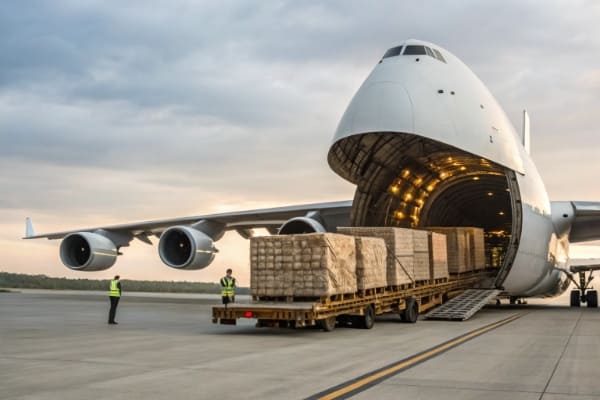
In my experience, I’ve found that mixing freight methods can also be beneficial. For example, shipping essentials via air and bulk supplies via sea has helped streamline my operations and maintain customer satisfaction.
How Does DDP Shipping from China to Qatar Work?
DDP (Delivered Duty Paid) shipping simplifies the customs process.12 This method bundles freight, insurance, customs clearance, and local delivery into one fixed quote. DDP reduces the risk for importers by clarifying costs upfront.
With DDP shipping, you have a clear understanding of your total costs before dispatch. It's a great option for those who want a hassle-free experience.
Keep in mind that DDP typically requires higher minimum shipment volumes. If you are shipping temperature-sensitive or high-value goods, DDP is often the safest route.
When I started using DDP for my shipments, I found that it significantly reduced my stress and unexpected costs. Knowing everything was taken care of made a huge difference in my planning.
How to Choose a Reliable Freight Forwarder from China to Qatar?
Choosing the right freight forwarder is crucial for your shipping process. Look for a forwarder with experience in shipping to Qatar and a good understanding of local customs regulations. Assess their service offerings, including tracking capabilities, customer support, and transparency about costs.
A reliable freight forwarder should provide end-to-end tracking and handle customs clearance efficiently. This will save you time and ensure your shipments arrive on schedule.

I usually recommend checking reviews and seeking recommendations from others in your industry. Finding a trustworthy partner can turn a complicated shipping process into a streamlined experience.
In my journey, I learned the hard way that not all freight forwarders are created equal. Choosing someone who understands both the shipping and customs process has saved me from significant headaches.
Conclusion
Shipping products from China to Qatar can be efficient and cost-effective with the right knowledge and resources.
"[PDF] MOVING WITH AFRICA - International Trade Administration", https://www.trade.gov/sites/default/files/2024-05/Moving%20with%20Africa%20Market%20Intelligence%20Report.pdf. Authoritative freight and logistics references commonly distinguish ocean freight as lower-cost for high-volume cargo and air freight as faster but more expensive, supporting the general trade-off described here. Evidence role: general_support; source type: institution. Supports: Sea freight is usually cheaper for large shipments, while air freight is faster for smaller packages.. Scope note: This supports the typical cost-speed relationship, not a guaranteed cheapest or fastest option for every China–Qatar shipment. ↩
"[PDF] Unclassified TAD/TC/WP(2008)10/FINAL Working Party of the Trade ...", https://one.oecd.org/document/TAD/TC/WP(2008)10/FINAL/en/pdf. International transport references describe maritime shipping as the dominant and cost-efficient mode for moving large volumes of goods over long distances, which contextualizes why heavy or bulky China–Qatar shipments are often routed by sea. Evidence role: expert_consensus; source type: institution. Supports: Sea freight is generally the most economical choice for heavy or large-volume shipments.. Scope note: The source would support the general mode-choice principle rather than a specific quote for a particular shipment. ↩
"Trade.gov - ETCA - Export Trade Certificate - Shipping", https://legacy.trade.gov/mas/ian/etca/tg_ian_002138.asp. Logistics education materials define FCL as using an entire container and LCL as consolidating smaller consignments, supporting the claim that the two services accommodate different shipment volumes. Evidence role: definition; source type: education. Supports: FCL and LCL services provide different options depending on shipment volume and requirements.. Scope note: This evidence explains the service categories, not the pricing or availability on every China–Qatar lane. ↩
"Air Freight: A Market Study with Implications for Landlocked Countries", https://www.worldbank.org/en/topic/transport/publication/air-freight-study. Freight transport references generally report that air cargo and express parcel services command higher per-unit transport costs than ocean freight, especially as shipment weight increases. Evidence role: general_support; source type: institution. Supports: Express or air-based services usually cost more per kilogram than sea freight.. Scope note: Exact price differences vary by route, fuel costs, service level, and shipment dimensions. ↩
"[PDF] A Basic Guide to Exporting - International Trade Administration", https://legacy.trade.gov/guide_to_exporting.pdf. Freight-pricing guidance identifies transport mode, shipment weight or volume, route, and destination charges as major determinants of international shipping cost, supporting the listed cost drivers. Evidence role: mechanism; source type: government. Supports: Shipping costs from China to Qatar depend on factors such as transport method, weight, and destination.. Scope note: This supports the pricing factors in general and does not verify any specific China–Qatar rate. ↩
"Freight Rates per 40-foot Container for East Bound and West Bound ...", https://www.bts.gov/browse-statistical-products-and-data/info-gallery/freight-rates-40-foot-container-east-bound-and. A container freight-rate index or market-rate database can provide contemporaneous benchmark prices for container shipping and help contextualize whether the stated 20-foot-container range is plausible. Evidence role: statistic; source type: other. Supports: Sea freight from China to Qatar may fall in the stated estimated range for a standard 20-foot container under certain market conditions.. Scope note: Benchmark indexes may use major trade lanes or forty-foot-equivalent units and may not directly quote the China–Qatar lane or all surcharges. ↩
"International logistics cost from China to Qatar - Freight Forwarder", https://goodhopefreight.com/freight/international-logistics-cost-from-china-to-qatar.html. Published LCL rate references or freight-market data can document typical per-cubic-meter pricing and show whether the cited range aligns with market quotes for consolidated ocean cargo. Evidence role: statistic; source type: other. Supports: LCL shipments may be priced around $100 to $300 per cubic meter under some China–Qatar market conditions.. Scope note: LCL rates often exclude origin, destination, customs, documentation, and minimum-charge fees, so the range may not represent total landed cost. ↩
"[PDF] A Metric of Global Maritime Supply Chain Disruptions.", https://openknowledge.worldbank.org/bitstreams/f56eba44-aa9c-4f28-80af-d216fffd804d/download. International maritime transport reports document that freight rates are volatile and can be affected by fuel prices, port congestion, capacity changes, and geopolitical disruptions, supporting the warning that shipping costs fluctuate. Evidence role: general_support; source type: institution. Supports: Shipping costs can fluctuate over time, making updated quotes important.. Scope note: Such reports usually describe global or regional trends rather than a guaranteed movement on the China–Qatar route. ↩
"Air Freight Cost per Kg 2026 Rates by Route - Suaid Global", https://suaidglobal.com/insights/air-freight-cost-per-kg/. Air-cargo rate benchmarks or logistics market reports can provide current per-kilogram air-freight price ranges and indicate whether the stated estimate is consistent with market conditions. Evidence role: statistic; source type: other. Supports: Air freight from China to Qatar may typically be quoted around $5 to $10 per kilogram depending on market conditions.. Scope note: Air-freight prices vary by chargeable weight, fuel surcharge, service level, season, and airport pair, so a broad range may not apply to all shipments. ↩
"Instant Freight Transit Time Calculator | Air, Ocean & Trucking", https://www.freightos.com/freight-resources/transit-time-calculator/. Carrier schedules, port-pair transit references, or maritime route data can substantiate typical ocean transit-time ranges between Chinese ports and Qatar, supporting the estimated 20–45 day timeframe. Evidence role: statistic; source type: other. Supports: Sea freight from China to Qatar usually takes about 20 to 45 days.. Scope note: Actual transit time depends on origin port, transshipment, sailing frequency, port congestion, and customs clearance. ↩
"How Does Air Freight from China to Qatar Work? Process, Time ...", https://toncentlink.com/how-does-air-freight-from-china-to-qatar-work-process-time-cost-explained/. Air-cargo and express-shipping service references can support the general expectation that international air shipments may be delivered within several days, including pickup, line haul, customs processing, and final delivery. Evidence role: general_support; source type: other. Supports: Air freight or express services from China to Qatar can sometimes deliver within 3 to 5 days door-to-door.. Scope note: Door-to-door delivery time is service- and customs-dependent and may be longer during peak periods or for regulated goods. ↩
"Know Your Incoterms - International Trade Administration", https://www.trade.gov/know-your-incoterms. Incoterms references define Delivered Duty Paid as placing responsibility for import clearance, duties, taxes, and delivery at the named destination on the seller, which explains why it can simplify customs obligations for the buyer. Evidence role: definition; source type: institution. Supports: DDP shipping can simplify the buyer’s customs burden because the seller assumes import-clearance and duty-payment responsibilities.. Scope note: DDP shifts responsibilities by contract but does not eliminate customs inspections, documentation requirements, or regulatory compliance. ↩