
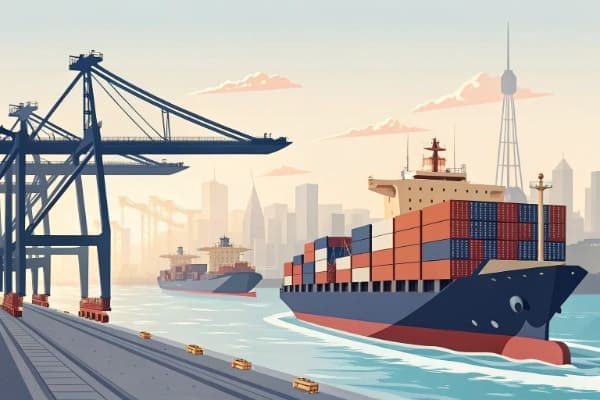
Importing from China to New Zealand feels complicated. Hidden fees and customs can be a nightmare. DDP shipping solves this by handling everything for you, door-to-door.
DDP (Delivered Duty Paid) shipping from China to New Zealand means the seller is responsible for all costs.1 This includes freight, insurance, customs duties, and taxes2. The goods are delivered directly to your door, with no extra work or hidden fees for you.
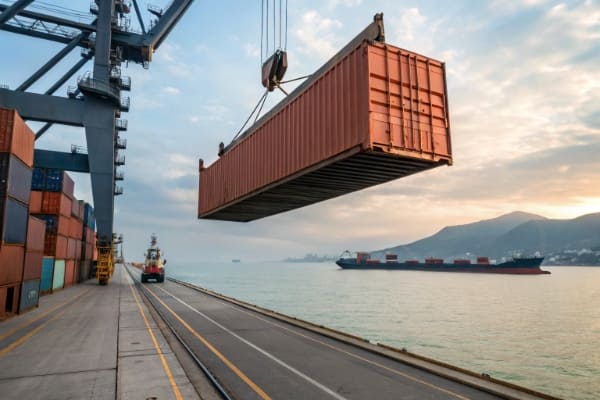
That simple explanation sounds great, right? But I know you're a business owner, and the details matter. You probably want to know exactly what "everything" includes. When I first started helping clients with this, they had the same questions. Let's break it all down so you can feel completely confident about your next shipment. This method has saved my clients countless headaches, and I want you to have the same peace of mind.
What Does DDP Shipping Include?
You see an "all-inclusive" price but feel skeptical. What's really covered? Hidden costs could still bite you. DDP clarifies exactly what you're paying for from start to finish.
DDP shipping includes all costs to get goods from the China factory to your New Zealand address. This covers export fees, international freight, insurance, import customs clearance, duties, GST, and final local delivery3. It's a true door-to-door service.
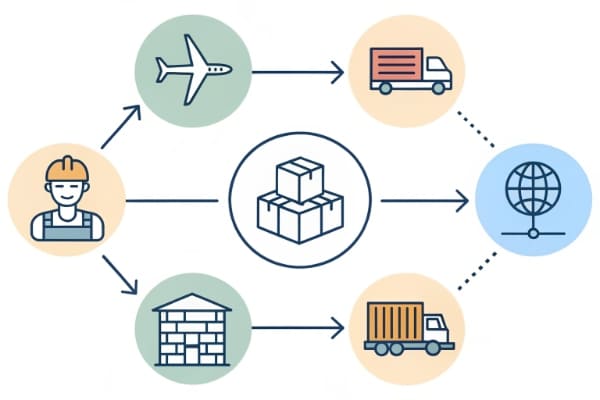
When we say DDP is an all-in-one solution, we mean it. It’s designed to be the simplest way for you to get goods from our factory floor in China to your front door in New Zealand. You get one single quote that covers the entire journey. This removes the guesswork and protects your budget. I remember a client who was terrified of importing after getting hit with unexpected port charges on their first shipment with another company. After switching to DDP with us, they could finally budget accurately.
Let’s look at the specific services wrapped into a DDP shipment.
Key Components of a DDP Service
| Service Stage | What's Included | Your Responsibility |
|---|---|---|
| Export in China | - Picking up goods from the factory <br>- Trucking to the port/airport <br>- Export customs declaration | Provide accurate product information. |
| International Freight | - Air freight or sea freight costs <br>- Fuel surcharges <br>- Basic transit insurance | None. The seller manages the carrier. |
| Import in New Zealand | - All import customs clearance paperwork <br>- Payment of import duties <br>- Payment of Goods and Services Tax (GST)4 | None. The seller's agent handles this. |
| Final Delivery | - Transfer from the port/airport to a local depot <br>- Final delivery to your specified address via courier | Be available to receive the goods. |
As you can see, the seller, or a partner like us, manages every single step. You are not required to hire a customs broker, deal with the shipping line, or worry about paying taxes directly to the government. It’s all bundled into the price you were quoted.
How Does the DDP Process Work?
Knowing what's included is one thing. Understanding the step-by-step journey is another. A lack of clarity can cause anxiety. Let's map out the process so you know what to expect.
The DDP process starts when your supplier in China prepares the goods.5 They handle everything from pickup and export to freight and New Zealand customs. You simply provide a delivery address and wait for the shipment to arrive at your door, with tracking updates along the way.
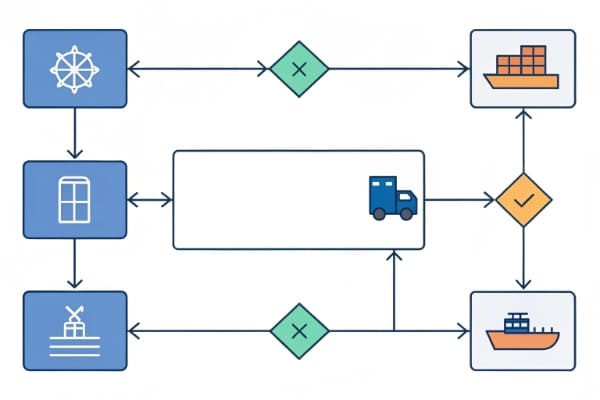
The beauty of the DDP process is its simplicity from your perspective. While we are managing a complex chain of events behind the scenes, your experience is smooth and straightforward. I always tell my clients that their main job is to focus on selling the products we're delivering. Let us handle the logistics. The entire process can be broken down into a few clear phases.
The Journey of a DDP Shipment
Quoting and Booking: The process begins when you send us the details of your cargo. We need to know the product type, its value, and its weight and dimensions. Based on this, we provide a single, all-inclusive DDP price per kilogram (for air) or per cubic meter (for sea). Once you approve the quote, we book the shipment.
Pickup and Export from China: We coordinate with the factory to pick up the finished goods. Our team then handles all the necessary export paperwork to clear Chinese customs. This is a critical step that, if done incorrectly, can cause major delays. We make sure it's done right.
International Transit: Your goods are then loaded onto a plane or a ship. Air freight is faster, typically taking 3-7 days door-to-door.6 Sea freight is more economical for larger shipments but takes longer, usually 25-55 days.7 Throughout this stage, we provide you with tracking information so you can monitor your shipment's progress.
Arrival and Customs Clearance in New Zealand: Once the shipment arrives in New Zealand, our local partners take over. They handle the entire import customs clearance process. This includes submitting the necessary declarations and, most importantly, paying the duties and GST on your behalf.
Final Local Delivery: After clearing customs, the goods are handed off to a local courier service for the final leg of the journey. They will deliver the shipment directly to the address you provided, whether it's your warehouse, office, or home.
Who Handles Customs and GST in New Zealand?
Dealing with customs and taxes is often the biggest headache for importers. The paperwork is confusing and mistakes are costly. DDP shipping removes this burden from your shoulders completely.
In a DDP shipment to New Zealand, the seller is responsible for handling all customs clearance and paying the Goods and Services Tax (GST) and any applicable duties. The buyer has no direct interaction with New Zealand Customs for that shipment.8
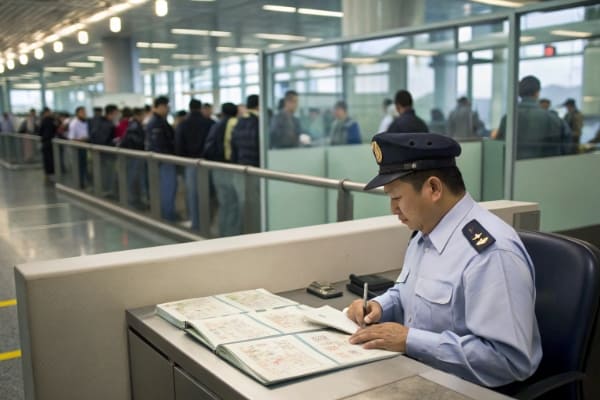
This is perhaps the single biggest advantage of DDP. You don't have to worry about calculating duties, filling out forms, or responding to inquiries from New Zealand Customs. The seller, through their designated logistics partner, acts as the importer for clearance purposes. We handle it all. The duties and GST are pre-calculated and built into the DDP price you pay us. This means no surprise bills when your goods arrive.
I've heard horror stories from new importers who chose other shipping methods. They were excited their goods had landed, only to receive a call from the courier demanding hundreds or thousands of dollars in taxes before delivery. This can crush your cash flow and profitability. DDP prevents that scenario entirely.
DDP vs. Other Incoterms
| Feature | DDP (Delivered Duty Paid) | DAP (Delivered at Place) |
|---|---|---|
| Who Pays for Transport? | Seller, door-to-door | Seller, to the destination country |
| Who Handles Import Clearance? | Seller | Buyer |
| Who Pays Duties & GST? | Seller | Buyer |
| Risk for Buyer | Lowest | Medium |
This structure makes DDP ideal for e-commerce sellers. You can calculate your exact landed cost per item before it even ships. This allows you to set your retail prices with confidence, knowing your margins are secure. There are no variables or hidden costs waiting for you at the destination.
What Goods Can Be Shipped via DDP?
You have a great product idea but wonder if it's eligible for DDP. Shipping restricted items can lead to seizures and losses. Knowing the rules upfront is critical for success.
Most general merchandise, like promotional products, apparel, electronics, and home goods, can be shipped via DDP. However, restricted items like hazardous materials, certain foods, or heavily regulated products may require special handling or may not be eligible9.

We use DDP to ship a huge variety of products for our clients. Think custom drinkware, branded bags, corporate apparel, tech accessories, and office supplies. For most standard promotional merchandise, DDP is a perfect fit. However, it's important to be aware of New Zealand's specific import regulations. Not everything is allowed, and some items require special permits.
It's crucial to understand that while DDP means the seller handles the shipping and customs paperwork, the buyer is still responsible for ensuring the product itself is compliant with New Zealand law. This includes product safety standards, labeling requirements, and biosecurity rules10. We always work with our clients during the sourcing phase to ensure their products will meet these standards.
Common Product Categories for DDP
| Category | Examples | DDP Suitability |
|---|---|---|
| General Merchandise | Apparel, bags, keychains, pens, notebooks | Excellent |
| Consumer Electronics | USB drives, power banks, speakers | Good (Battery regulations apply) |
| Home & Office | Mugs, water bottles, small decor | Excellent |
| Restricted Goods | Food products, plants, cosmetics, chemicals | Not suitable for standard DDP |
For example, if we are shipping power banks for you, we must ensure they have the proper safety certifications and are packed according to air freight regulations for lithium batteries11. If we are shipping t-shirts, you need to make sure the care labels are correct for the New Zealand market. This partnership between you (the product expert) and us (the logistics expert) is key to a smooth process.
Why Choose DDP Shipping to New Zealand?
Is DDP always the best choice? You want the most cost-effective and efficient shipping method. Choosing the wrong one can hurt your margins. Let's look at when DDP makes the most sense.
Choose DDP for simplicity, cost predictability, and reduced risk. It's ideal for e-commerce sellers, businesses new to importing, or anyone wanting a hassle-free, door-to-door service without dealing with customs, duties, or surprise fees.

While DDP might sometimes seem slightly more expensive upfront than other options like FOB (Free on Board), you have to consider the total landed cost. With DDP, the price you're quoted is the final price. With other methods, the initial shipping cost is just the beginning. You still have to add on the costs of customs brokerage, duties, taxes, and local delivery, which can be difficult to predict.
From my experience, DDP delivers the most value in several key areas.
Top Reasons to Use DDP
### Simplicity and Convenience You have one point of contact and one invoice for the entire process. This frees up your time to focus on marketing, sales, and running your business instead of becoming a logistics expert.
### Complete Cost Predictability Knowing your exact landed cost per unit is a massive advantage. It allows for precise budgeting and confident pricing strategies. This is especially vital for e-commerce businesses where margins are tight and every cent counts.
### Minimized Risk The seller bears all the risks during transit. If there are shipping delays, port issues, or customs problems, it's our responsibility to solve them. Your financial exposure ends once you've paid the DDP invoice.
### Simplified Cash Flow You pay for everything in one go. You won't be caught off guard by a sudden, large bill for duties and taxes that needs to be paid immediately to release your goods. This makes financial planning much smoother. For smaller or high-value air freight shipments, DDP is often the most economical choice overall, as the bundled service is more efficient than arranging each piece separately.
Conclusion
DDP shipping from China to New Zealand simplifies importing by offering a predictable, all-inclusive, door-to-door service. It removes risk and lets you focus on growing your business.
"Know Your Incoterms - International Trade Administration", https://www.trade.gov/know-your-incoterms. The source defines Delivered Duty Paid under Incoterms as a term in which the seller bears the principal obligations for delivery, including import clearance and payment of duties and taxes. Evidence role: definition; source type: institution. Supports: DDP shipping means the seller is responsible for the major delivery costs and import formalities.. Scope note: Incoterms define legal responsibilities between buyer and seller, not the service quality or pricing of any specific logistics provider. ↩
"Know Your Incoterms - International Trade Administration", https://www.trade.gov/know-your-incoterms. The source explains that under DDP the seller is responsible for arranging carriage and paying import duties and taxes required to deliver the goods to the named destination. Evidence role: definition; source type: institution. Supports: DDP can include freight, customs duties, and import taxes as seller-paid costs.. Scope note: Insurance obligations can depend on the sales contract; Incoterms DDP allocates delivery risk and costs but does not require a specific insurance product in all cases. ↩
"Duty and allowances - New Zealand Customs", https://www.customs.govt.nz/sending-and-receiving/duty-and-gst/duty-and-allowances. New Zealand Customs explains that imported goods may require an import entry and payment of applicable Customs charges, duties, and GST before release, supporting the relevance of these items in a DDP landed-cost quotation. Evidence role: general_support; source type: government. Supports: DDP services to New Zealand commonly account for customs clearance, duty, GST, and delivery charges.. Scope note: The source establishes New Zealand import requirements generally; it does not state that every DDP provider will bundle these charges in the same way. ↩
"Supplying low value imported goods - Inland Revenue", https://www.ird.govt.nz/gst/gst-for-overseas-businesses/gst-on-low-value-imported-goods. New Zealand Inland Revenue and Customs guidance explains that GST applies to many imported goods and is collected as part of the import process, supporting the article’s reference to GST as a cost in New Zealand imports. Evidence role: definition; source type: government. Supports: GST is a relevant tax for goods imported into New Zealand.. Scope note: GST treatment can differ for low-value goods, exemptions, and specific import arrangements. ↩
"Know Your Incoterms - International Trade Administration", https://www.trade.gov/know-your-incoterms. Incoterms guidance describes DDP as a seller-controlled delivery term in which the seller arranges delivery to the named destination and completes export and import formalities, which contextualizes why the process begins with the supplier preparing and dispatching the goods. Evidence role: mechanism; source type: institution. Supports: Under DDP, the supplier or seller manages the shipment process from origin preparation through delivery.. Scope note: The source supports the allocation of responsibilities, not the operational sequence used by a particular supplier or freight forwarder. ↩
"Instant Freight Transit Time Calculator | Air, Ocean & Trucking", https://www.freightos.com/freight-resources/transit-time-calculator/. Neutral freight or postal-industry references commonly describe air cargo as substantially faster than ocean freight because it uses scheduled aircraft networks and shorter transport legs. Evidence role: general_support; source type: institution. Supports: Air freight is generally faster than sea freight and can be used for short transit-time shipments.. Scope note: The exact 3–7 day door-to-door range depends on origin, destination, customs clearance, flight capacity, and final-mile delivery, so the source may support the comparative speed more directly than the precise range. ↩
"[PDF] Transportation Costs and International Trade Over Time", https://business.purdue.edu/faculty/hummelsd/papers/hummels%20jep%20rewrite%20final%20with%20tables.pdf. Transport economics sources generally note that ocean freight has lower unit costs for bulk or large-volume cargo but longer transit times than air freight, supporting the cost-time tradeoff described here. Evidence role: general_support; source type: education. Supports: Sea freight is typically cheaper for larger cargo volumes but slower than air freight.. Scope note: The specific 25–55 day range for China-to-New Zealand shipments depends on routing, sailing schedules, transshipment, port congestion, and customs processing. ↩
"DDP Incoterms | Delivered Duty Paid Explained - Guided Imports", https://guidedimports.com/blog/what-does-ddp-mean-incoterms/. Incoterms DDP assigns import clearance and payment of import duties and taxes to the seller, supporting the statement that the buyer is not normally the party managing Customs interactions under this term. Evidence role: definition; source type: institution. Supports: Under DDP, the seller is responsible for import clearance rather than the buyer.. Scope note: In practice, New Zealand Customs or a broker may still require buyer information, permits, or compliance documents depending on the goods and importer-of-record arrangement. ↩
"New Zealand - Prohibited and Restricted Imports", https://www.trade.gov/country-commercial-guides/new-zealand-prohibited-and-restricted-imports. New Zealand border-agency guidance identifies controlled, restricted, and prohibited imports, including food, hazardous substances, and other regulated goods, supporting the need for special handling or eligibility checks. Evidence role: general_support; source type: government. Supports: Some goods imported into New Zealand are restricted, controlled, or subject to special requirements.. Scope note: Eligibility depends on the exact product, composition, quantity, and intended use; the source does not determine whether a specific shipment can move under DDP. ↩
"[PDF] Report Name: Food and Agricultural Import Regulations and Standards ...", https://apps.fas.usda.gov/newgainapi/api/Report/DownloadReportByFileName?fileName=Food+and+Agricultural+Import+Regulations+and+Standards+Country+Report_Wellington_New+Zealand_06-30-2021.pdf. New Zealand’s Ministry for Primary Industries explains that imported goods can be subject to biosecurity requirements to prevent pests and diseases entering the country, supporting the article’s compliance warning. Evidence role: general_support; source type: government. Supports: Importers must consider New Zealand biosecurity requirements for relevant goods.. Scope note: Biosecurity obligations are product-specific and may not apply to every category of general merchandise. ↩
"[PDF] technical instructions for the safe transport of - ICAO", https://www.icao.int/sites/default/files/DangerousGoods/RevisionsIncorporatedIn2025_2026EditionOfTechnicalInstructionsForTheSafeTransportOfDangerousGoodsByAir.pdf. International air-transport dangerous-goods rules classify lithium batteries as regulated articles and prescribe packaging, marking, documentation, and state-of-charge conditions for air carriage. Evidence role: mechanism; source type: institution. Supports: Power banks and other lithium-battery products require compliant packaging and documentation for air freight.. Scope note: Requirements vary by battery type, watt-hour rating, whether batteries are standalone or packed with equipment, and the current edition of the dangerous-goods regulations. ↩