
Shipping products internationally can be daunting. If you want to send goods from China to New Zealand, understanding the process is key.
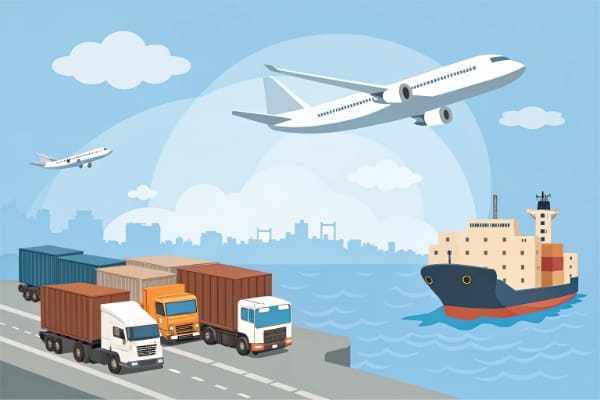
There are two main shipping methods: air freight and sea freight.1 Air freight is faster but more expensive, while sea freight is cost-effective for larger shipments.2
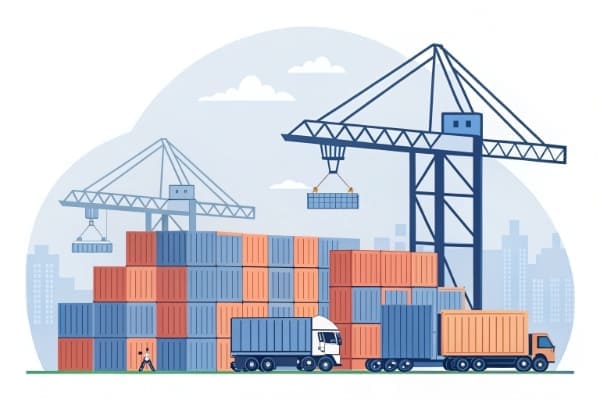
Shipping can be complex, but I’m here to make it easier for you. Let’s dive into the available shipping methods.
What Shipping Methods Are Available?
When shipping from China to New Zealand, you primarily have two options: air freight and sea freight.
Air freight is ideal for urgent shipments. It usually takes about 4 to 5 days.3 However, it can be costly. Express shipping is even faster, taking just 1 to 3 days4 but at a higher cost per kilogram.
On the other hand, sea freight is a great option for large shipments. It takes around 10 to 15 days to reach New Zealand’s main ports.5 The two main types of sea freight are Less than Container Load (LCL) and Full Container Load (FCL).6 LCL is suitable for smaller shipments, while FCL is more cost-effective for larger loads.
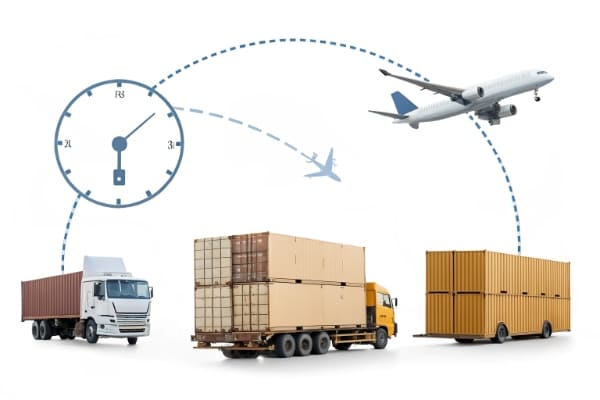
How Long Does Shipping to New Zealand Take?
The shipping time from China to New Zealand varies by method. Air freight takes approximately 4 to 5 days for urgent shipments. It’s the fastest way to get your goods delivered, but you pay a premium.
Sea freight, however, provides a more economical choice if time is less of a concern. LCL and FCL can take 10 to 15 days from main ports like Shanghai, Shenzhen, or Guangzhou.
Knowing these timeframes helps you plan your inventory and manage customer expectations.
What Is the Shipping Process Step by Step?
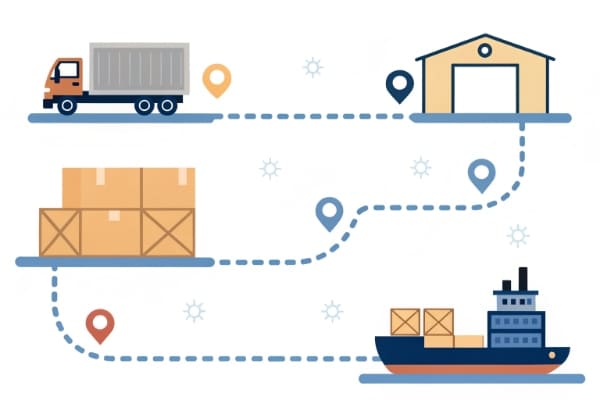
Understanding the shipping process is crucial. Here’s a step-by-step guide to shipping from China to New Zealand:
- Select a Shipping Method: Choose between air freight and sea freight based on your urgency and budget.
- Choose a Freight Forwarder: Partner with an experienced freight forwarder. They help with customs clearance and tracking.
- Prepare Your Shipment: Gather all necessary documents.
- Book Your Shipment: Once everything is ready, book your shipment with your forwarder.
- Customs Clearance: Your freight forwarder will manage customs clearance at both ends.
- Delivery to Destination: Finally, your shipment will reach the designated port in New Zealand.
This process may seem straightforward, but working with an experienced partner can make it smoother.
What Documents Are Required for Import?
When importing goods into New Zealand, certain documents are essential. Key documents include:
- Commercial Invoice: This provides the details of the transaction.
- Packing List: It lists the contents of the shipment, including weights and dimensions.
- Bill of Lading: This document acts as a receipt for the cargo and is crucial for customs clearance.
New Zealand requires that imports over NZ$1000 be accompanied by these documents.7 Additionally, be aware that 15% GST is applied to these shipments.8 Duties on many items are often zero under the Free Trade Agreement (FTA) between China and New Zealand.

Can You Ship Door-to-Door or to Amazon FBA?
Shipping options can vary. You can choose between door-to-door services and shipping directly to Amazon FBA.
Door-to-door shipping provides a convenient solution where a freight forwarder handles everything. They will collect your goods, manage customs, and deliver them directly to your specified address.
If you’re an e-commerce seller, shipping to Amazon FBA requires careful planning. Ensure that your goods comply with Amazon’s packaging and labeling requirements. This process can also be managed by your freight forwarder.
Conclusion
Understanding the shipping process from China to New Zealand helps you avoid pitfalls and streamline your operations.
"How Does Air Freight from China to New Zealand Work? - Toncentlink", https://toncentlink.com/how-does-air-freight-from-china-to-new-zealand-work/. A neutral logistics or trade source can support that international cargo between China and New Zealand is commonly moved by air cargo or ocean container freight; this is a general categorization rather than proof that no other niche methods exist. Evidence role: general_support; source type: institution. Supports: The main practical international shipping methods from China to New Zealand are air freight and sea freight.. Scope note: Other specialized modes or multimodal routings may exist, but air and sea are the primary practical modes for this trade lane. ↩
"[PDF] Fathoming Shipping Costs: An Exploration - World Bank Document", https://documents1.worldbank.org/curated/en/099436104042241280/pdf/IDU0c20d2ae90046304ca009ab508217e50747bd.pdf. Industry-neutral transport references generally describe air freight as faster and more costly per unit weight than maritime freight, while sea freight has lower unit costs for bulk or containerized cargo; this supports the comparison at a general level, not a quote for a specific shipment. Evidence role: expert_consensus; source type: institution. Supports: Air freight is generally faster but more expensive, while sea freight is usually more economical for larger shipments.. Scope note: Actual costs depend on weight, volume, route, fuel surcharges, season, and carrier capacity. ↩
"Instant Freight Transit Time Calculator | Air, Ocean & Trucking", https://www.freightos.com/freight-resources/transit-time-calculator/. Air-cargo guidance and freight transit references can contextualize typical international air-freight delivery windows in the range of several days; the support is approximate because route schedules, customs clearance, and consolidation can change the actual China–New Zealand transit time. Evidence role: statistic; source type: institution. Supports: Air freight from China to New Zealand usually takes about 4 to 5 days.. Scope note: This evidence would support an estimated timeframe, not a guaranteed transit time for every carrier or shipment. ↩
"Ocean Freight from China to New Zealand: What's the Process ...", https://toncentlink.com/ocean-freight-from-china-to-new-zealand-whats-the-process-transit-time-cost/. Express-carrier service guides commonly describe international express parcels as operating on one-to-three-business-day delivery windows for selected origin-destination pairs; this supports the concept but may not verify every China–New Zealand lane or customs scenario. Evidence role: statistic; source type: other. Supports: Express shipping from China to New Zealand can take about 1 to 3 days.. Scope note: Express delivery estimates vary by city pair, service level, cutoff time, customs processing, and product restrictions. ↩
"Ocean Freight from China to New Zealand: What's the Process ...", https://toncentlink.com/ocean-freight-from-china-to-new-zealand-whats-the-process-transit-time-cost/. Ocean schedule or port-rotation data can support that direct or near-direct container services between major Chinese ports and New Zealand ports are often measured in roughly two weeks; this is contextual because vessel schedules, transshipment, port congestion, and sailing frequency affect actual transit times. Evidence role: statistic; source type: other. Supports: Sea freight from China to New Zealand main ports can take around 10 to 15 days.. Scope note: The estimate may apply only to particular port pairs and services, and may not include inland pickup, customs clearance, or final delivery. ↩
"What is the difference between FCL and LCL shipment? Explained ...", http://forwarder-university.com/lcl-fcl/. Freight-transport references define LCL as consolidated cargo sharing container space and FCL as use of a full container by one shipper, supporting the article’s distinction between the two sea-freight service types. Evidence role: definition; source type: education. Supports: The two common containerized sea-freight options are Less than Container Load and Full Container Load.. ↩
"What to do when bringing items into New Zealand", https://www.customs.govt.nz/sending-and-receiving/online-shopping/what-to-do-when-bringing-items-into-new-zealand. New Zealand Customs guidance can substantiate that imported goods valued above NZ$1,000 generally require formal import-entry information and supporting commercial documents for clearance; this supports the regulatory threshold but not necessarily the exact document set for every commodity. Evidence role: general_support; source type: government. Supports: New Zealand imports over NZ$1,000 require formal documentation for customs clearance.. Scope note: Document requirements may vary by goods type, biosecurity status, tariff classification, and whether permits or additional declarations are required. ↩
"Non-resident businesses and GST - Inland Revenue", https://www.ird.govt.nz/international-tax/business/non-resident-businesses-and-gst. Official New Zealand tax and customs sources state that GST is charged at 15% on most imported goods, supporting the tax-rate claim for imports above the relevant collection threshold. Evidence role: statistic; source type: government. Supports: A 15% GST is applied to many imported shipments into New Zealand.. Scope note: Some exemptions, valuation rules, and low-value goods rules may affect whether and how GST is collected in a particular case. ↩