
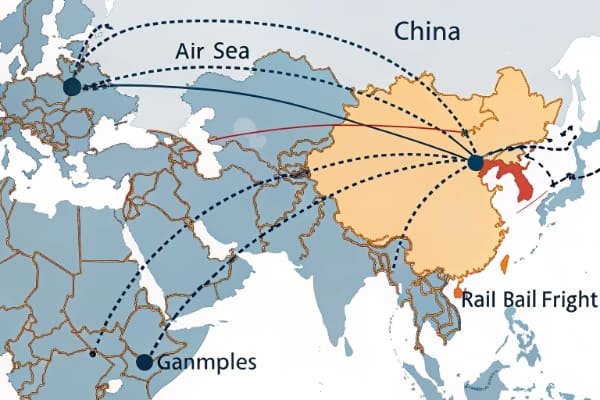
Shipping from China to Germany1 feels complicated and risky. You worry about high costs, long delays, and confusing customs rules, which can hurt your business and bottom line.
The main ways to ship from China to Germany are by air, sea, or rail. Air freight is fastest (3-7 days) for urgent goods. Sea freight is cheapest (20-40 days) for bulk cargo. Rail freight (14-25 days) offers a great balance between speed and cost.
Choosing the right shipping method is the first big decision you'll make. This choice directly impacts your total cost, delivery time2, and the efficiency of your entire supply chain3. It’s not just about getting from point A to point B; it’s about doing it in a way that makes sense for your specific products and business goals. Let's break down each option so you can see which one fits your needs best and avoid costly mistakes.
What Shipping Methods Are Available for Germany?
You see different shipping options but don't know which is right for your products. Choosing the wrong one can mean overpaying for speed you don't need or missing deadlines.
The three primary shipping methods4 from China to Germany are air freight5, sea freight6, and rail freight7. Air is for speed, sea is for low cost and large volume, and rail provides a middle ground. Each has unique advantages depending on your budget and timeline.
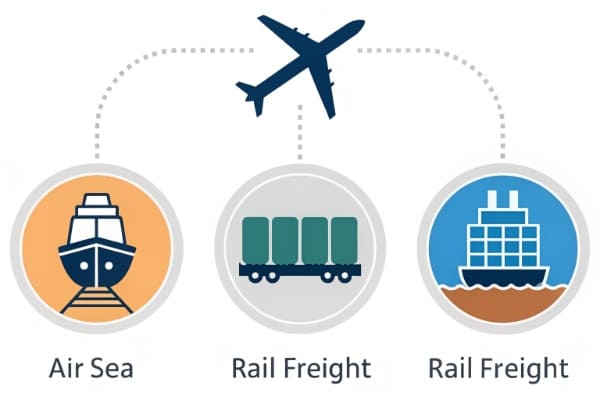
To make the best choice, you need to look at the details of each method. It’s not just about the main transit; it’s about what kind of goods are best suited for each option and where they will arrive in Germany. We handle all three for our clients, and the right choice always depends on their priorities. For example, a client rushing to get high-value electronics for a product launch will need air freight5, while another shipping a full container of promotional t-shirts will almost always choose the sea.
Here is a simple breakdown to help you compare:
| Shipping Method | Best For | Average Speed | Relative Cost | Key German Hubs |
|---|---|---|---|---|
| Air Freight | Urgent, high-value, or lightweight goods | 3-7 Days | High | Frankfurt (FRA), Munich (MUC) |
| Sea Freight | Bulk, heavy, or non-urgent goods | 20-40 Days | Low | Hamburg, Bremerhaven |
| Rail Freight | Goods needing a balance of speed and cost | 14-25 Days | Medium | Duisburg, Hamburg |
Rail freight, using the China-Europe Railway Express, has become a very popular alternative. It's often 50% cheaper than air freight5 but significantly faster than sea freight6. It's also a more environmentally friendly choice, as it emits much less CO2 than air travel.
How Long Does Shipping to Germany Actually Take?
You need a reliable delivery date for your marketing campaign or to restock your inventory. Unpredictable shipping times can ruin your plans and leave your customers waiting, which damages your brand's reputation.
Shipping from China to Germany1 typically takes 3-7 days by air, 20-40 days by sea, and 14-25 days by rail. These are port-to-port or airport-to-airport estimates. You must add extra time for customs clearance8 and inland transport for a true door-to-door delivery window.
The total transit time is more than just the time on a plane or ship. Many first-time importers forget to account for all the other steps involved. The journey starts long before the cargo is in transit and ends days after it arrives in Germany. I remember a client who needed promotional mugs for a trade show in Berlin. They only calculated the sea freight6 time and nearly missed their event. We had to switch to a faster option last minute.
To plan properly, you need to consider the full door-to-door timeline:
- Cargo Pickup (1-3 days): Transporting your goods from the factory in China to the port or airport.
- Export & Handling (2-4 days): This includes export customs clearance8 in China and loading the cargo.
- Main Transit (3-40 days): This is the actual journey by air, sea, or rail. The time varies hugely by method.
- Import & Customs (2-5 days): Upon arrival in Germany, your goods must be unloaded and cleared through German customs. This can be quick or slow depending on your paperwork.
- Final Delivery (1-3 days): Transporting your goods from the German port or airport to your final destination, like your warehouse or an Amazon FBA9 center.
As you can see, a 30-day sea journey can easily become a 45-day door-to-door delivery. Always build a buffer into your timeline.
What Is the Shipping Process Step by Step?
The international shipping process can feel like a black box. You hand over your goods and hope for the best, but a single missed step can cause major delays and unexpected costs.
The shipping process involves booking freight, moving goods from the factory to the port, clearing China export customs, main transit (air/sea/rail), clearing Germany import customs10, and final delivery. A good sourcing partner11 like us manages all these steps for you.
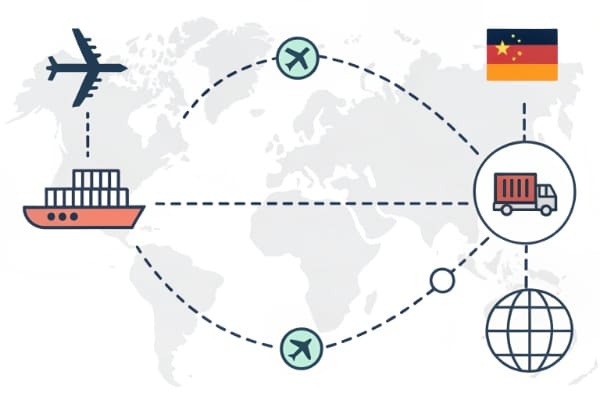
Navigating this process alone is tough, especially if you're not familiar with logistics12 in China or Germany. We act as our clients' team on the ground, making sure every step is handled correctly and on time. Breaking it down makes it much easier to understand where your goods are and what needs to happen next. Think of it as a relay race where each runner needs to pass the baton perfectly.
Here is the typical journey your products will take:
- Booking Your Shipment: You provide your partner with details about your cargo (what it is, its size, and weight). We then book space on a plane, ship, or train.
- Cargo Collection: We arrange for a truck to pick up the finished goods from your supplier's factory.
- Export Customs Clearance in China: We prepare the necessary documents and clear your goods for export from China. This is a standard procedure.
- Loading and Main Transit: Your cargo is loaded. If it's a small sea shipment (LCL), it's consolidated with other goods into one container. Then it begins its journey to Germany.
- Arrival and Unloading in Germany: The cargo arrives at the designated German airport, seaport, or rail terminal and is unloaded.
- Import Customs Clearance in Germany: This is a critical step. We submit all required documents to German customs and arrange for the payment of import duties and VAT.
- Final Delivery: Once cleared, the goods are loaded onto a truck for the final leg of the journey to your warehouse, office, or an Amazon FBA9 center.
What Documents Are Required for Importing into Germany?
You've heard horror stories about goods getting stuck at the border for weeks. Missing or incorrect paperwork is the number one cause of customs delays, leading to storage fees and angry customers.
You'll need a Commercial Invoice13, a Packing List14, and a Bill of Lading15 (for sea/rail) or Air Waybill (for air). You also must declare the correct HS code16 for your product. Depending on the item, a Certificate of Origin17 or other compliance certificates may be required.
Getting your documents right is not just a suggestion; it's a requirement. German customs officials are very thorough. A small mistake on the commercial invoice or the wrong HS code16 can bring your entire shipment to a halt. We spend a lot of time with our clients making sure every piece of paper is perfect before the shipment even leaves China. It's the best way to prevent headaches later.
Here are the key documents and why they matter:
| Document Name | What It Is | Why It's Important |
|---|---|---|
| Commercial Invoice13 | A bill from the seller to the buyer detailing the goods and their value. | Used by customs to determine the value of the goods and calculate duties and VAT. |
| Packing List14 | An itemized list of the shipment's contents, including weights and dimensions. | Helps customs officials verify the cargo without having to open every single box. |
| Bill of Lading15 / Air Waybill | The contract between the shipper and the carrier. | Acts as a receipt for the goods and a title document needed to claim them on arrival. |
| HS Code | A universal code that classifies your product for customs purposes. | Determines the exact import duty rate. An incorrect code can lead to fines. |
| Certificate of Origin17 (CO) | A document that certifies the country where the goods were manufactured. | Sometimes required for specific products or to claim preferential tariff treatment. |
Remember, Germany charges a standard 19% VAT on the total value of the goods plus shipping and duty (the CIF value). The good news is that for shipments valued under €150, no customs duties are charged, though VAT is still due.
Can You Ship Directly to Amazon FBA9 or Your Door?
You don't have a warehouse in Germany to receive a large shipment. Trying to manage customs clearance8 and final delivery yourself from another country can be a logistical nightmare.
Absolutely. Door-to-door (DDP) shipping is a standard service where we handle everything from the factory in China to your final address in Germany. We also specialize in shipping directly to Amazon FBA9 fulfillment centers, managing all of Amazon's strict labeling and delivery rules.
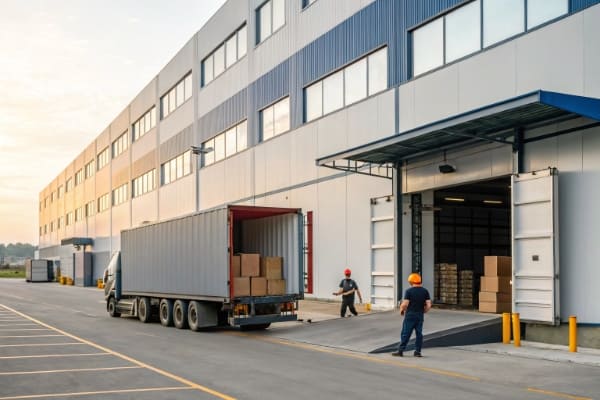
These services are designed for businesses just like yours. Our goal is to make global sourcing feel as simple as buying something locally. By handling the entire process, we remove all the logistical burdens from you, so you can focus on selling your products, not worrying about how they'll get there. This is especially true for Amazon sellers, where one small mistake in labeling can cause Amazon to reject your entire shipment.
We often recommend DDP (Delivered Duty Paid) shipping for our clients. Under this Incoterm, we handle everything: transportation, insurance, customs clearance8, and payment of all duties and taxes. The price we quote is the final, all-in cost to get the goods to your doorstep. There are no surprise fees or hidden charges.
For Amazon sellers, the process is similar but with extra steps. We are very familiar with Amazon's requirements. This includes:
- FNSKU Labeling: Applying Amazon's unique barcode to each individual product.
- Carton Labeling: Placing the correct shipping labels on the outside of each master carton.
- Palletizing: Building and wrapping pallets according to Amazon's strict standards if required.
- Booking a Delivery Appointment: Scheduling a delivery slot with the designated Amazon FBA9 fulfillment center in Germany.
We manage this entire checklist to ensure your inventory is accepted quickly and becomes available for sale without any issues.
Conclusion
Shipping from China to Germany1 is straightforward when you understand your options. By choosing the right method—air, sea, or rail—you can build an efficient and cost-effective supply chain3.
Explore this resource to understand the complexities and best practices for shipping from China to Germany. ↩
Find strategies to ensure reliable delivery times and avoid disruptions in your supply chain. ↩
Discover strategies to optimize your supply chain for efficient international shipping. ↩
Explore various shipping methods to determine the best fit for your business needs. ↩
Learn about air freight, the fastest shipping method, and how it can benefit your urgent shipping needs. ↩
Discover the cost-effective benefits of sea freight for bulk shipping and how it can save you money. ↩
Understand the advantages of rail freight as a middle ground between speed and cost for shipping. ↩
Get insights into customs clearance processes and how to avoid delays in your shipments. ↩
Get insights on shipping directly to Amazon FBA and the requirements for successful delivery. ↩
Learn about the import customs process in Germany to ensure smooth delivery of your goods. ↩
Find tips on selecting a reliable sourcing partner to manage your shipping needs effectively. ↩
Learn about essential logistics considerations to streamline your international shipping process. ↩
Understand the importance of a Commercial Invoice in the shipping process and customs clearance. ↩
Explore the essential elements of a Packing List to ensure compliance and smooth customs processing. ↩
Discover the role of a Bill of Lading in shipping and how it serves as a contract and receipt. ↩
Learn about HS codes and their importance in determining import duties for your products. ↩
Understand the significance of a Certificate of Origin in international trade and customs. ↩