
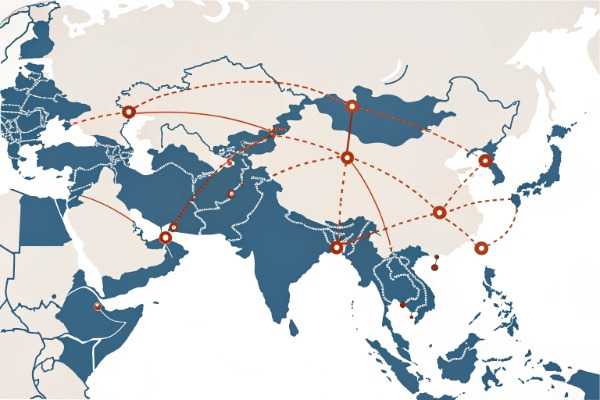
The growing demand for efficient logistics has led to the rise of rail freight between China and Europe1. In this post, I will explore the major rail routes and their significance in global trade.
China-Europe rail freight routes are vital for connecting markets, allowing efficient transport of goods between these regions. Understanding these routes can help businesses make informed shipping decisions.
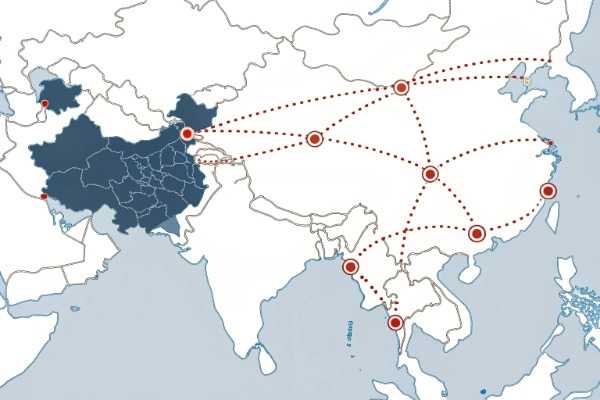
Choosing the right rail corridor can be a daunting task. Each route has its unique characteristics, and understanding them is crucial for effective logistics management. Let's break down the major routes and their implications for your business.
What Are the Major China-Europe Rail Freight Routes?
The major rail freight routes between China and Europe are diverse, each catering to different geographical needs and logistical demands. The Western Corridor, Central Corridor, and Eastern Corridor are significant players in this space. The Western Corridor primarily exits China through Alashankou or Khorgos, traverses Kazakhstan, and commonly continues through Russia, Belarus, and Poland into Europe.2
On the other hand, the Central Corridor leaves China via Erenhot/Erlianhot, transiting through Mongolia and Russia before connecting with European rail networks3. Lastly, the Eastern Corridor employs northeastern Chinese gateways like Manzhouli or Suifenhe and aligns with Russia’s Trans-Siberian Railway towards Europe4. Each of these routes offers unique benefits and challenges, impacting transit times and costs.
Which Chinese Cities Are Major Rail Freight Hubs?
Several Chinese cities serve as critical rail freight hubs. These include Xi’an, Chengdu, Chongqing, Zhengzhou, Yiwu, and Wuhan5. Each city plays a significant role in logistics and trade. For instance, Xi’an is known for its extensive rail network and efficient connections to Europe.
Chengdu and Chongqing are also vital as they have become essential nodes for logistics, facilitating the movement of goods to various European destinations. These hubs optimize the supply chain, ensuring products get to market quickly and efficiently.
Which European Cities and Countries Are Connected by Rail?
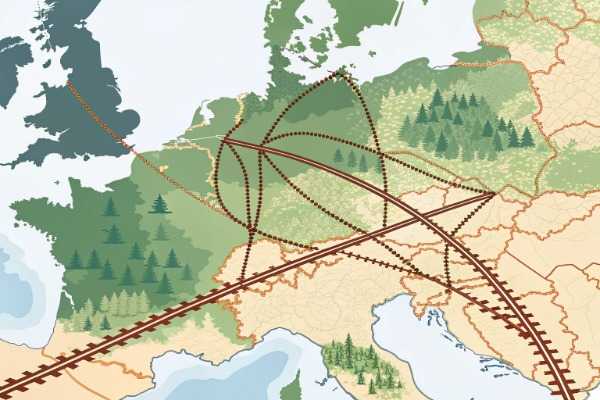
As for European destinations, major cities include Duisburg, Łódź, Warsaw, Hamburg, Madrid, Milan, and Budapest. These cities are pivotal in the rail freight network, forming a bridge between Asia and Europe. Duisburg in Germany is often cited as the leading rail freight terminus due to its strategic location and logistics infrastructure.6
Furthermore, cities like Warsaw and Łódź in Poland serve as significant logistical hubs that connect the broad-gauge Eurasian network with the standard-gauge EU rail system7. Understanding these connections can help businesses strategize their shipping routes effectively.
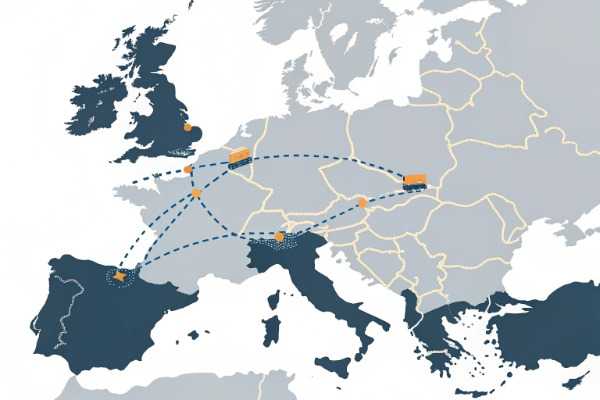
What Is the Northern Rail Corridor?
The Northern Rail Corridor is a crucial route that facilitates trade between China and Europe. It connects China through Alashankou and Khorgos, crossing Kazakhstan, and continues through Russia, Belarus, and into Poland. This corridor is vital for its speed and efficiency.
Transport through the Northern Corridor typically takes about 15 to 22 days from inland China to Central or Western Europe.8 The corridor's strategic importance cannot be overstated as it connects significant economic zones in both regions, encouraging trade and investment.9

What Is the Central Rail Corridor?
The Central Rail Corridor operates differently than the Northern Rail Corridor. It leaves China via Erenhot/Erlianhot, transits Mongolia and Russia, and connects with European rail networks. This route is essential for its unique geographical advantages and is often preferred for specific types of goods.
While it may take longer than the Northern Corridor, the Central Corridor offers a distinct route for shipments that might not be viable through other corridors. It's essential for businesses to weigh their options based on cargo type and delivery deadlines.

What Is the Southern Rail Corridor?
The Southern Rail Corridor, also known as the Trans-Caspian Middle Corridor10, is another significant route. This corridor moves from China through Kazakhstan, crosses the Caspian Sea to Azerbaijan, and continues through Georgia and Türkiye before reaching Europe11.
This route generally involves more logistical handoffs, including rail, port handling, and vessel transport, making schedules more variable.12 Despite its complexities, it offers an alternative route that avoids transit through Russia, which can be beneficial depending on geopolitical considerations.

How Do China-Europe Rail Routes Differ in Cost and Transit Time?
China-Europe rail routes vary significantly in terms of cost and transit time. Typical rail transit from inland China to Central or Western Europe is around 15 to 22 days. For example, routes like Xi’an to Warsaw often take about 16 to 18 days. However, costs can differ based on the route chosen and the type of goods being shipped.
Rail freight requires gauge-change or transshipment operations at breaks between China’s standard-gauge network and the broad-gauge systems in Kazakhstan, Mongolia, Russia, and Belarus. This can add to the overall transit time and cost, making it essential for businesses to consider these factors when planning shipments.

Which China-Europe Rail Route Is Best for Your Shipment?
Selecting the right rail route for your shipment is crucial. Various factors need to be considered, such as geopolitical exposure, border capacity, equipment availability, cargo value, delivery deadlines, and even final-mile distribution.
While the quoted freight rate is an essential aspect, it should not be the only consideration. An effective route selection will balance all these elements, ensuring that shipments arrive on time and within budget.

Conclusion
Understanding the major China-Europe rail freight routes can guide businesses in making informed shipping decisions. Each route has unique benefits that can align with specific logistical needs.
"China-Europe rail freight growth: long-lasting trend or flash ...", https://www.uirr.com/web-news/china-europe-rail-freight-growth-long-lasting-trend-or-flash-pan. A railway or international transport institution source should document the growth of China-Europe rail freight services or volumes over time, supporting the statement that the mode has expanded in significance. Evidence role: statistic; source type: institution. Supports: Rail freight between China and Europe has risen in response to demand for efficient logistics.. Scope note: Growth may vary by year, route, and data source, so the citation should not be read as proving uniform expansion across all corridors. ↩
"Eurasian Land Bridge - Wikipedia", https://en.wikipedia.org/wiki/Eurasian_Landbridge. An international corridor map or transport-agency source should identify Alashankou and Khorgos as China-Kazakhstan rail gateways and show the onward Eurasian routing through Kazakhstan, Russia, Belarus, and Poland. Evidence role: general_support; source type: institution. Supports: The Western Corridor exits China via Alashankou or Khorgos and generally runs through Kazakhstan, Russia, Belarus, and Poland into Europe.. Scope note: Specific train services may use different terminals or intermediate routings, so the source would support the corridor pattern rather than every shipment itinerary. ↩
"Cross-Border Accessibility and Spatial Effects of China-Mongolia-Russia ...", https://pmc.ncbi.nlm.nih.gov/articles/PMC9408398/. A neutral rail-corridor reference should show Erenhot/Erlianhot as the China-Mongolia rail border point and describe the route continuing through Mongolia and Russia toward European rail networks. Evidence role: general_support; source type: institution. Supports: The Central Corridor leaves China via Erenhot/Erlianhot and continues through Mongolia and Russia toward Europe.. Scope note: The source would verify the physical corridor, not the commercial suitability of the route for particular cargoes. ↩
"Trans-Siberian Railway - Wikipedia", https://en.wikipedia.org/wiki/Trans-Siberian_Railway. A transport corridor source should identify Manzhouli and Suifenhe as northeastern China-Russia rail gateways and relate them to routes using Russia’s Trans-Siberian Railway system toward Europe. Evidence role: general_support; source type: institution. Supports: The Eastern Corridor uses northeastern gateways such as Manzhouli or Suifenhe and connects with the Trans-Siberian Railway toward Europe.. Scope note: The citation would support the corridor geography, while individual train services may differ in routing and destination. ↩
"China Railway Express", https://baike.baidu.com/en/item/China%20Railway%20Express/1001776. An official railway, municipal, or international logistics source should list these cities among major Chinese departure or consolidation hubs for China-Europe freight trains. Evidence role: case_reference; source type: institution. Supports: Xi’an, Chengdu, Chongqing, Zhengzhou, Yiwu, and Wuhan are major Chinese rail freight hubs for China-Europe services.. Scope note: Hub rankings can change over time, and the citation may support their importance without establishing a definitive hierarchy among them. ↩
"Chongqing–Xinjiang–Europe railway - Wikipedia", https://en.wikipedia.org/wiki/Chongqing%E2%80%93Xinjiang%E2%80%93Europe_railway. A port authority, academic, or institutional logistics source should support Duisburg’s role as a major China-Europe rail freight destination and explain its intermodal infrastructure and location in the European logistics network. Evidence role: case_reference; source type: institution. Supports: Duisburg is commonly identified as a leading European terminus for China-Europe rail freight because of its location and logistics infrastructure.. Scope note: The term “leading” may depend on the metric used, such as train frequency, container volume, or terminal capacity. ↩
"Break of gauge - Wikipedia", https://en.wikipedia.org/wiki/Break_of_gauge. A European rail or logistics source should describe Poland’s role in transshipment between the 1,520 mm broad-gauge Eurasian network and the 1,435 mm standard-gauge EU network, with Warsaw or Łódź appearing as relevant logistics nodes. Evidence role: mechanism; source type: institution. Supports: Warsaw and Łódź are significant Polish logistics hubs in the China-Europe rail network, within the broader gauge-interface system between Eurasian and EU railways.. Scope note: The gauge break is most directly associated with border transshipment points such as Małaszewicze; evidence for Warsaw and Łódź may be contextual rather than proof that all gauge-change activity occurs there. ↩
"China-Europe rail freight market update: delays and alternatives", https://www.facebook.com/groups/363590320375458/posts/25593950410246101/. A transport institution, railway operator dataset, or corridor study should provide representative transit-time ranges for China-Europe rail services, supporting the stated 15–22 day estimate for inland China to Central or Western Europe. Evidence role: statistic; source type: institution. Supports: Northern Corridor rail freight typically takes about 15 to 22 days from inland China to Central or Western Europe.. Scope note: Transit times are service-dependent and can be affected by border congestion, customs procedures, weather, and geopolitical disruptions. ↩
"The Middle Trade and Transport Corridor: Policies and Investments ...", https://www.worldbank.org/en/region/eca/publication/middle-trade-and-transport-corridor. A regional development or trade-corridor study should explain how China-Europe rail corridors link production and consumption centers and contribute to trade connectivity between Asia and Europe. Evidence role: general_support; source type: research. Supports: The Northern Corridor is strategically important because it links major economic zones and supports trade connectivity between China and Europe.. Scope note: Such a source would support the corridor’s strategic relevance in general terms, not necessarily quantify direct causation for trade or investment growth. ↩
"Trans-Caspian International Transport Route", https://en.wikipedia.org/wiki/Trans-Caspian_International_Transport_Route. An international transport institution source should identify the Trans-Caspian International Transport Route, commonly called the Middle Corridor, as a corridor linking China or Central Asia with Europe across the Caspian region. Evidence role: definition; source type: institution. Supports: The Southern Rail Corridor is also known as the Trans-Caspian Middle Corridor.. Scope note: Terminology varies across institutions, and some sources may distinguish the broader Middle Corridor from particular rail-service segments originating in China. ↩
"Trans-Caspian International Transport Route", https://en.wikipedia.org/wiki/Trans-Caspian_International_Transport_Route. A corridor map or international transport report should show the Middle Corridor route running through Kazakhstan, crossing the Caspian Sea to Azerbaijan, and continuing via Georgia and Türkiye toward Europe. Evidence role: general_support; source type: institution. Supports: The Trans-Caspian Middle Corridor moves from China through Kazakhstan, crosses the Caspian Sea to Azerbaijan, and continues through Georgia and Türkiye before reaching Europe.. Scope note: Actual routings can include alternative ports, feeder services, or branch lines, so the citation would support the standard corridor geography rather than every operational variant. ↩
"The Middle Trade and Transport Corridor", https://www.worldbank.org/en/region/eca/publication/middle-trade-and-transport-corridor. A logistics or transport-institution analysis should describe the Middle Corridor’s multimodal structure, including rail, Caspian Sea ferry or vessel segments, and port handling, and discuss how these interfaces can affect reliability or transit-time variability. Evidence role: mechanism; source type: research. Supports: The Trans-Caspian route involves multiple modal handoffs, which can make schedules more variable than more direct rail corridors.. Scope note: The source may explain the mechanism for variability without providing route-specific delay statistics for all shipments. ↩