
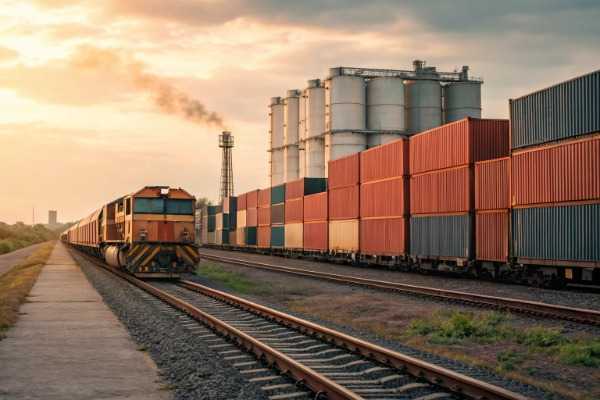
Rail freight is an essential part of global trade, especially between China and Europe. It's important to understand the costs involved. The price of rail freight can be surprising, but knowledge can help you navigate it better.
China–Europe rail freight averaged about USD 3,240 per FEU for much of 2024. Rail rates on this corridor were reported as 59% lower than average sea-freight rates in 2024.1

Rail freight pricing can be complex. Various factors come into play. It's essential to consider these variables. Understanding them can lead to better budgeting and decision-making when importing goods.
What Factors Affect China-Europe Rail Freight Costs?
Many factors influence rail freight costs. First, the distance between the origin and destination impacts the price. Longer distances usually mean higher costs.2 Additionally, the type of cargo plays a significant role. Different goods have different handling requirements, affecting pricing.3
Transport mode also matters. Rail freight can be cheaper than air freight, but more expensive than sea freight, especially during peak times.4
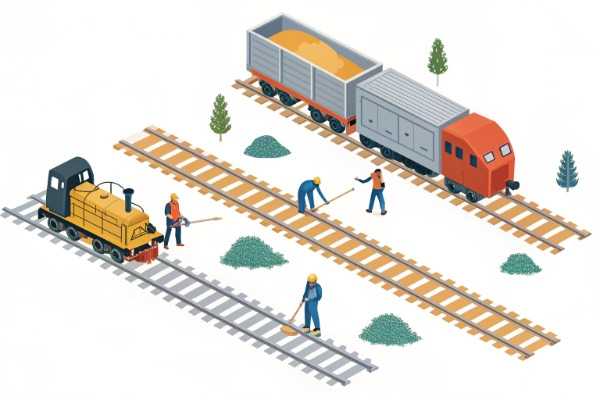
Other elements include the choice of rail corridor and available train capacity. If demand is high and supply is low, prices will soar.5 Moreover, the size of your shipment matters. Larger shipments can be more cost-effective due to economies of scale.
Cargo characteristics can heavily influence rates. Fragile goods may need special handling, which can increase costs. Understanding these factors is key to anticipating rail freight expenses.
How Is China-Europe Rail Freight Pricing Calculated?
Pricing for rail freight is not straightforward. Multiple components come together to form the total cost. First, there's the terminal-to-terminal rail rate. This is the base cost for transporting your goods.
However, other charges need to be considered. These include origin trucking, terminal handling, customs clearance, and final delivery.6
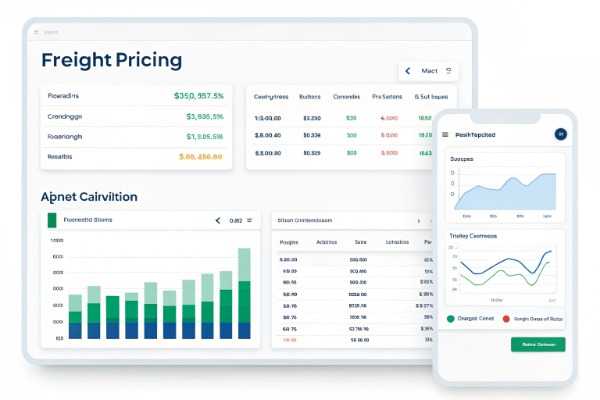
Each of these components can add significantly to the overall cost. Importers should budget for these additional fees when planning shipments. Ignoring them can lead to unexpected expenses.
Rail freight pricing can also vary based on current market conditions. In tight capacity situations, rates can increase dramatically. For instance, reported China–Europe rail rates have ranged around USD 8,000–9,000 per FEU during higher-rate periods.7
How Does Cargo Volume and Weight Affect Rail Freight Costs?
When it comes to rail freight, volume and weight are crucial. Full Container Load (FCL) shipping generally offers better pricing for bulky and dense cargo.8 This is because it allows you to maximize the use of the container space.
Less than Container Load (LCL) shipping may not be as competitive, particularly once consolidation and handling fees are factored in.9
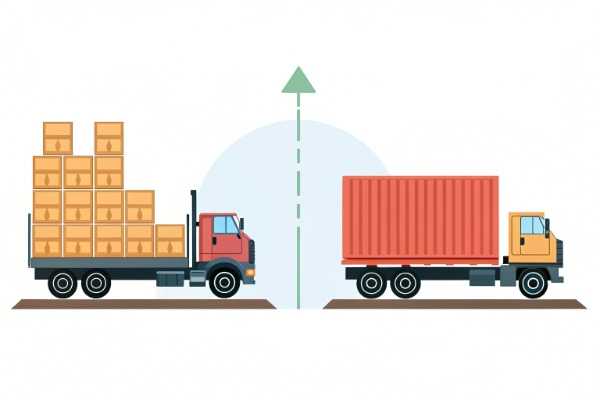
Choosing between a 20-foot and a 40-foot container depends on your cargo's characteristics. A 20-foot container works better for heavy items, while a 40-foot high-cube container is more suitable for lighter, bulkier goods.10 The cost per cubic meter improves with the right choice.
Understanding the weight and volume of your cargo can help you choose the best shipping method and container size, potentially lowering your costs.
How Do Different Rail Routes Affect Shipping Costs?
Rail routes can significantly impact shipping costs. Different corridors have distinct pricing structures based on local conditions and demand. For example, rail transport between China and Turkey via the Central Asia–West Asia corridor has been quoted at roughly USD 5,000–7,000 per TEU.11
Further delivery to Poland or Germany can add an extra USD 1,000–2,000.12
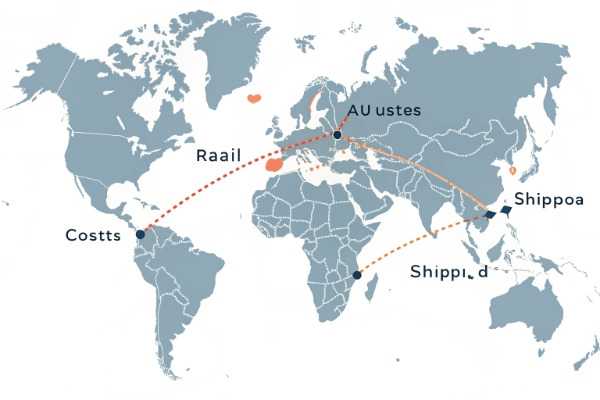
The choice of corridor can also affect transit times and reliability. Some routes may experience delays due to weather or border crossings. Importers should choose their routes carefully, balancing cost and time efficiency.
Being mindful of these factors can help you make informed decisions and save money in the long run.
What Additional Fees Should Importers Consider?
In addition to rail rates, many other fees can arise. These costs can quickly add up if not carefully monitored. Common additional fees include:
- Origin trucking costs: Getting your cargo to the rail terminal.
- Terminal handling charges: Fees for loading and unloading cargo.
- Customs clearance fees: Costs associated with processing your shipment through customs.
- Border interchange fees: Charges incurred when crossing international borders.
- Final delivery costs: Getting your goods from the terminal to your final destination.
It's crucial to factor these into your budget. A usable rail-freight budget needs to cover all stages of transport.

The complexity of these additional charges makes it vital to work with a trusted logistics partner who can provide transparency.
How Does Rail Freight Cost Compare with Sea Freight and Air Freight?
When evaluating shipping options, it's important to compare rail, sea, and air freight costs. Rail freight is often seen as a cost-effective middle ground. It’s cheaper than air freight but can be pricier than sea freight, especially during high-demand periods.
For medium-urgency cargo, rail freight is usually the best choice. It strikes a balance between speed and cost.
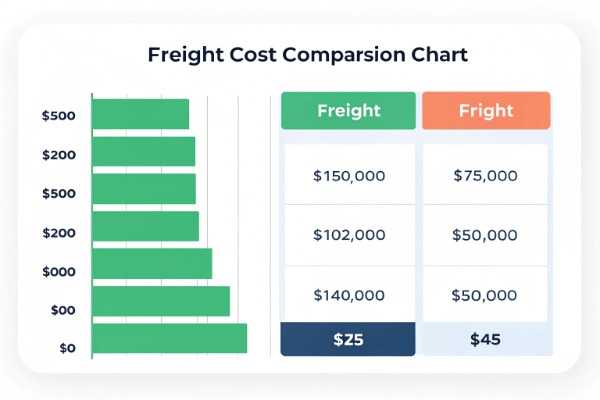
Air freight is fast but can be significantly more expensive. Sea freight, while the cheapest, takes much longer and may not be ideal for urgent shipments. Rail freight provides a suitable alternative for importers looking for a balance between cost and efficiency.
Ultimately, the best choice depends on your specific needs, budget, and timeline.
How Can Importers Reduce China-Europe Rail Freight Costs?
Reducing rail freight costs is possible with the right strategies. Here are some tips to consider:
- Consolidate shipments: Combine smaller shipments to maximize container usage.
- Choose the right container: Select a container size that matches your cargo density.
- Plan shipments in advance: Booking in advance can help you secure better rates.
- Negotiate with providers: Always ask for quotes from multiple providers to find competitive pricing.
- Consider multiple routes: Evaluate different rail corridors and their associated costs.
By implementing these tactics, you can significantly lower your rail freight expenses.
Staying informed and proactive can lead to cost savings and a smoother import process.
How Can You Get an Accurate Rail Freight Quote from China to Europe?
Getting an accurate rail freight quote is essential for budgeting. To ensure you receive precise pricing, follow these steps:
- Provide detailed information: Share specific details about your cargo, including type, weight, and dimensions.
- Specify your shipping timeline: Indicate when you need the shipment delivered.
- Ask about additional fees: Inquire about all potential extra charges that may apply.
- Request quotes from multiple providers: This will give you a clearer picture of the market rates.
A comprehensive quote should include all aspects of transport, from pickup to final delivery.
Taking these steps can help you receive a transparent and competitive quote, leading to more effective budgeting for your import needs.
Conclusion
Understanding the costs associated with China-Europe rail freight is vital for importers. By considering various factors and budgeting for additional fees, you can manage your expenses effectively.
"Eurasian Railway Corridor: Overview of 2024 Trends in Rail Freight from ...", https://www.searates.com/blog/post/eurasian-railway-corridor-overview-of-2024-trends-in-rail-freight-from-china-to-europe. A 2024 container-freight rate index or market dataset comparing China–Europe rail and ocean rates supports the stated FEU average and relative discount for the reported corridor. Evidence role: statistic; source type: other. Supports: China–Europe rail freight averaged about USD 3,240 per FEU for much of 2024 and was reported as 59% below average sea-freight rates.. Scope note: Rate indices usually reflect selected lanes, carrier panels, and reporting periods, so they contextualize market averages rather than proving the price of any individual shipment. ↩
"Shrinking Economic Distance: Understanding How Markets and ...", https://www.worldbank.org/en/topic/infrastructure/publication/shrinking-economic-distance-understanding-how-markets-and-places-can-lower-transport-costs-in-developing-countries. Transport-economics literature explains that freight costs generally rise with distance because fuel, labor, equipment time, and infrastructure charges accumulate over longer hauls. Evidence role: mechanism; source type: education. Supports: Longer rail freight distances usually increase transport costs.. Scope note: The relationship is not perfectly linear because rail tariffs may include fixed terminal charges, volume discounts, and corridor-specific subsidies or surcharges. ↩
"47.305-9 Commodity description and freight classification.", https://www.acquisition.gov/far/47.305-9. Rail freight tariff and dangerous-goods guidance shows that cargo characteristics such as hazardous status, temperature sensitivity, fragility, and loading requirements can create special handling costs. Evidence role: mechanism; source type: government. Supports: Cargo type and handling requirements can affect rail freight pricing.. Scope note: The source would support the general mechanism, while actual surcharges vary by railway, country, terminal, and commodity class. ↩
"ITF Transport Outlook 2023 | OECD", https://www.oecd.org/en/publications/2023/05/itf-transport-outlook-2023_4466cd78/full-report/component-8.html. International transport studies comparing modal costs generally place rail between air and ocean freight in cost and transit-time trade-offs for intercontinental container movements. Evidence role: expert_consensus; source type: institution. Supports: Rail freight is generally cheaper than air freight but often more expensive than sea freight, particularly under certain market conditions.. Scope note: The relationship depends on lane, capacity, fuel prices, seasonality, and service level, so the source supports a general pattern rather than a universal pricing rule. ↩
"A model for pricing freight rail transport access costs", https://arxiv.org/html/2504.04257v1. Economic and freight-market literature describes how constrained transport capacity combined with increased demand tends to raise freight rates through supply-and-demand pricing. Evidence role: mechanism; source type: education. Supports: High demand and limited rail capacity can increase freight prices.. Scope note: The source would support the pricing mechanism, but the magnitude of any rate increase depends on contracts, market concentration, subsidies, and available substitute modes. ↩
"Metadata Glossary - DataBank - World Bank", https://databank.worldbank.org/metadataglossary/doing-business/series/TRD.ACRS.BRDR.EXPT.COST.CD.DB0615. Trade-logistics guidance on door-to-door freight costing identifies inland pickup, terminal handling, customs formalities, and destination delivery as common components beyond the main line-haul charge. Evidence role: definition; source type: institution. Supports: Rail freight pricing often includes additional charges beyond the terminal-to-terminal rail rate, including trucking, terminal handling, customs clearance, and final delivery.. Scope note: The source would document typical cost categories; whether each charge applies depends on the Incoterm, route, shipment type, and service contract. ↩
"Rail freight costs between Europe and China - Facebook", https://www.facebook.com/groups/usstocksvip/posts/1109922286082770/. A historical freight-rate report or index for the China–Europe rail corridor can substantiate that spot or quoted FEU rates reached approximately USD 8,000–9,000 during high-rate periods. Evidence role: statistic; source type: other. Supports: China–Europe rail rates have been reported at around USD 8,000–9,000 per FEU during higher-rate periods.. Scope note: Such figures usually reflect quoted or indexed market rates for particular lanes and dates, not a comprehensive average across all origins, destinations, and contracts. ↩
"What is FCL?: A Key Factor in Modern Logistics", https://dclcorp.com/blog/shipping/fcl-full-container-load/. Container-shipping guidance and logistics research explain that FCL pricing can reduce unit costs when cargo sufficiently fills container volume or payload capacity, because the shipper pays for the container rather than small consolidated lots. Evidence role: mechanism; source type: research. Supports: FCL shipping often offers better unit pricing for cargo that can efficiently use container space or payload.. Scope note: The source would support the general cost mechanism; FCL may not be cheaper when shipment volume is low, lanes are imbalanced, or minimum charges dominate. ↩
"LCL Charges & Fees 2026: CFS, BL & Docs | Suaid Global", https://suaidglobal.com/insights/lcl-charges-fees-explained/. Logistics cost literature on consolidation notes that LCL shipments often include additional consolidation, deconsolidation, documentation, and handling charges that can reduce their cost advantage for some cargoes. Evidence role: mechanism; source type: research. Supports: LCL shipping can become less cost-competitive when consolidation and handling fees are included.. Scope note: This supports the cost logic but not a universal conclusion, since LCL can remain economical for small shipments that do not justify a full container. ↩
"Shipping 20ft and 40ft Sea Containers: Specs & Weight | Freightos", https://www.freightos.com/freight-resources/20ft-40ft-container/. Container specifications show that 20-foot containers offer lower cubic capacity but substantial payload capacity, while 40-foot high-cube containers provide much greater volume, supporting the distinction between dense and bulky cargo uses. Evidence role: definition; source type: institution. Supports: 20-foot containers are often suited to dense heavy cargo, while 40-foot high-cube containers are often suited to lighter bulky cargo.. Scope note: Container suitability also depends on carrier payload limits, road and rail weight regulations, axle-load constraints, and cargo securing requirements. ↩
"China's Belt and Road Initiative and Turkey's Middle Corridor", https://mei.edu/publication/chinas-belt-and-road-initiative-and-turkeys-middle-corridor-question-compatibility/. A corridor-specific freight-rate report or logistics market bulletin can support that quoted China–Turkey rail rates via Central Asia and West Asia have fallen in the approximate USD 5,000–7,000 per TEU range. Evidence role: statistic; source type: other. Supports: China–Turkey rail transport via the Central Asia–West Asia corridor has been quoted at about USD 5,000–7,000 per TEU.. Scope note: Quoted rates are time-sensitive and may vary by origin, Turkish destination, routing, service provider, equipment availability, and included surcharges. ↩
"[PDF] the development of intermodal freight transport in poland from 2007 to ...", https://rosap.ntl.bts.gov/view/dot/61411/dot_61411_DS1.pdf. European inland-freight rate data or intermodal cost reports can substantiate that onward delivery from a rail hub to Poland or Germany may add approximately USD 1,000–2,000 depending on distance and service scope. Evidence role: statistic; source type: other. Supports: Onward delivery to Poland or Germany can add about USD 1,000–2,000 to rail freight costs.. Scope note: The figure is contextual because onward costs vary with terminal location, fuel surcharges, truck or rail mode, customs status, and final delivery distance. ↩