
When it comes to shipping goods, choosing the right method can make a significant difference in cost and efficiency. Understanding the nuances of air freight and sea freight can help you make an informed decision.
Air freight is faster but comes at a higher cost, while sea freight is budget-friendly but takes longer.1 Which one suits your needs best?
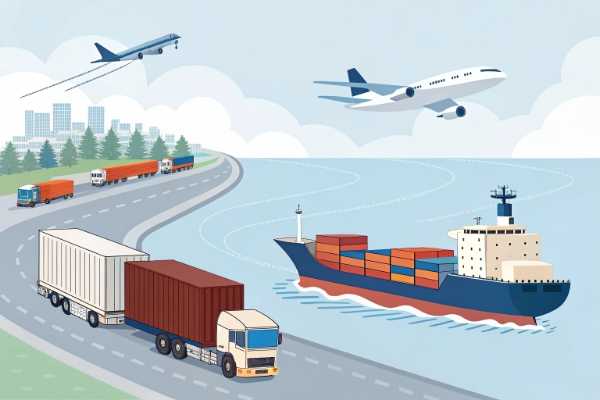
The choice between air and sea freight can impact your supply chain.2 Each method has its strengths and weaknesses. Examining their characteristics will help you choose wisely.
What Are the Main Differences Between Air Freight and Sea Freight?
Air freight and sea freight are two distinct shipping methods. They serve different purposes and have unique advantages. Air freight is ideal for time-sensitive deliveries.3 It offers speed and efficiency. In contrast, sea freight is more suited for bulk shipments4. It provides lower costs for larger volumes5. When I first started in this industry, I quickly learned that the essence of shipping lies in understanding these differences.
Air freight typically involves cargo transported via airplanes. This method is faster but comes with higher costs. Sea freight, on the other hand, involves shipping goods via cargo ships. This process is slower but more economical, especially for larger shipments. Knowing these basics can guide your choice.
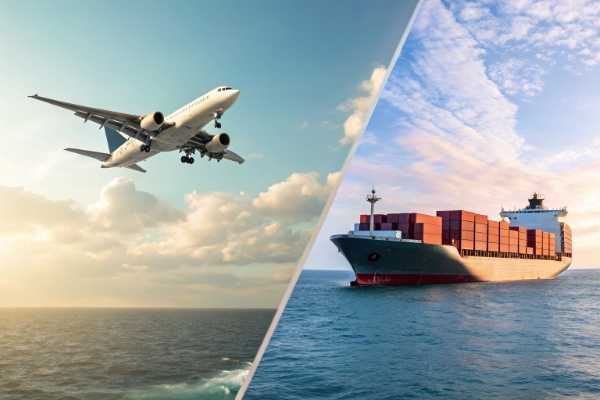
How Do Air Freight and Sea Freight Compare in Cost and Transit Time?
Cost and transit time are crucial factors in deciding between air and sea freight. Air freight is usually more expensive due to the speed of delivery. However, it is the best choice when time is critical. For example, I recall a situation where we had to ship urgent supplies for an event. Air freight saved the day.
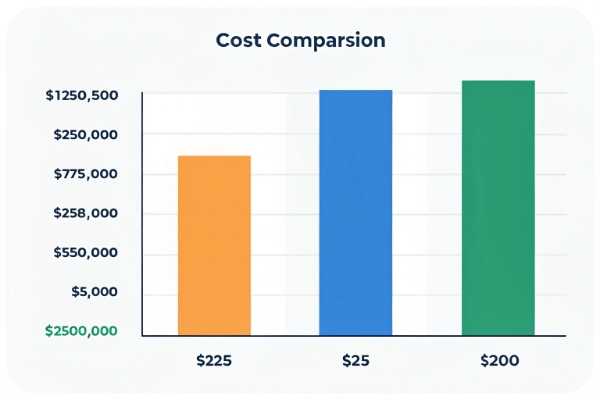
Sea freight, however, is generally much cheaper. This is particularly true for large or bulky shipments. If you can afford to wait, sea freight is the way to go. It's also worth noting that air freight may involve additional costs. For instance, dimensional-weight pricing can lead to higher charges for lightweight cargo6. Understanding these factors can help you avoid surprises in your shipping budget.
Which Types of Goods Are Best Suited for Air Freight or Sea Freight?
Certain types of goods align better with specific shipping methods. Air freight is often preferred for high-value, small-volume, or security-sensitive goods.7 Products like electronics or pharmaceuticals are great examples.8 They benefit from quick transport and heightened security.
Conversely, sea freight suits high-volume or oversized shipments better. Items like furniture or industrial equipment are typically shipped this way. I often see companies use sea freight for bulk orders, especially when they are not in a rush.
Perishable or temperature-sensitive goods are also more suited for air freight.9 They require fast delivery to maintain freshness. Choosing the right method based on the type of goods can enhance your shipping strategy.
What Are the Advantages and Disadvantages of Air Freight vs Sea Freight?
Understanding the pros and cons of each method can simplify your decision-making process. Air freight boasts advantages like speed, reliability, and reduced theft risk. However, its main disadvantage is cost. It can become expensive for larger shipments or low-density cargo.
On the other hand, sea freight offers greater cargo capacity, lower costs, and a reduced carbon footprint10. The downside is its slower transit times. I often advise businesses to consider their priorities. If speed is critical, air freight is best. But if cost is a concern and time is flexible, sea freight wins.

How Do You Calculate the Total Shipping Cost for Each Method?
Calculating the total shipping cost involves more than just the freight rate. You must also consider additional fees such as customs clearance, insurance, and handling charges. For air freight, dimensional-weight pricing can significantly affect costs. It's essential to factor in these variables for accurate budgeting.
In contrast, sea freight costs often include port charges and container fees. Depending on the shipment's nature, using a freight forwarder can also simplify this process. They can help you navigate the costs effectively. I learned early on that understanding the total landed cost helps in making better shipping choices.
How Do You Decide Between Air Freight and Sea Freight for Your Shipment?
Deciding between air and sea freight depends on various factors. Start by assessing your priorities. If speed is your main concern, air freight is the way to go. Keep in mind that for many shipments, the total landed cost is more important than the freight rate alone.
Consider aspects like inventory carrying costs and stockout risks. If your product is time-sensitive, faster transport may justify higher costs. Conversely, for bulk shipments, sea freight usually offers better value.
It's essential to evaluate each product's type, order value, and delivery deadline. Often, a mixed strategy can be the most practical approach. I’ve seen businesses thrive by combining both methods, optimizing their supply chains effectively.

Conclusion
Choosing between air freight and sea freight depends on speed, cost, and the type of goods. Balancing these factors will guide your decision.
"Air Freight vs Sea Freight: Cost, Shipping, Carbon Footprint & More", https://www.freightos.com/freight-resources/air-freight-vs-ocean-freight-making-the-decision/. A comparative logistics or trade-transport source can support the general pattern that air transport offers shorter transit times at substantially higher freight rates than maritime transport, while ocean shipping is slower and generally less costly per unit of cargo. Evidence role: general_support; source type: institution. Supports: Air freight is generally faster and more expensive, while sea freight is generally cheaper and slower.. Scope note: The relationship varies by route, shipment size, season, fuel prices, and service level, so the source would support the broad comparison rather than a universal price or time ratio. ↩
"The Importance of Supply Chain Management in Logistics", https://www.apu.apus.edu/area-of-study/business-and-management/resources/the-importance-of-supply-chain-management-in-logistics/. Supply-chain management literature can support that transportation-mode decisions affect logistics performance through lead time, cost, service reliability, and inventory requirements. Evidence role: expert_consensus; source type: paper. Supports: Choosing between air and sea freight can affect supply-chain performance.. Scope note: Such evidence usually establishes the supply-chain relevance of transport-mode choice in general rather than proving the impact for every individual shipment. ↩
"The value of time and the impact on the air freight product portfolio", https://www.sciencedirect.com/science/article/abs/pii/S0969699723000248. Air-cargo industry and logistics references can support that air freight is commonly used for shipments requiring short transit times, including urgent, high-value, or time-critical goods. Evidence role: general_support; source type: institution. Supports: Air freight is commonly suited to time-sensitive deliveries.. Scope note: The source would support typical use cases, not prove that air freight is ideal in all time-sensitive situations regardless of cost, route availability, or customs delays. ↩
"[PDF] Port Performance Freight Statistics: 2025 Annual Report", https://www.bts.gov/sites/bts.dot.gov/files/2025-03/BTS_Port-Performance-2025_Annual-Report_for%20web_20250224-1232.pdf. Maritime-transport sources can support that ocean shipping handles large volumes of cargo and is the dominant mode for bulk and containerized international trade by weight or volume. Evidence role: statistic; source type: institution. Supports: Sea freight is well suited to bulk shipments.. Scope note: This supports sea freight’s general suitability for bulk shipments, but individual suitability still depends on route, cargo type, handling constraints, and delivery deadline. ↩
"Economies of Scale and Alliances in Container Shipping", https://economics.mit.edu/sites/default/files/inline-files/jmp_0.pdf. Transport economics sources can support that maritime shipping generally benefits from economies of scale and lower unit transport costs for large-volume cargo compared with air freight. Evidence role: mechanism; source type: paper. Supports: Sea freight often provides lower unit costs for larger-volume shipments.. Scope note: The support is contextual because actual costs depend on container utilization, port charges, trade lane imbalance, and market rates. ↩
"Air Cargo Tariffs and Rules: What You Need to Know - IATA", https://www.iata.org/en/publications/newsletters/iata-knowledge-hub/air-cargo-tariffs-and-rules-what-you-need-to-know/. Carrier or regulatory descriptions of volumetric weight can support that air freight charges may be based on the greater of actual weight and dimensional weight, causing bulky lightweight cargo to be billed at a higher chargeable weight. Evidence role: mechanism; source type: institution. Supports: Dimensional-weight pricing can increase air-freight charges for lightweight but bulky cargo.. Scope note: The calculation factors and thresholds vary by carrier and market, so the source would support the pricing mechanism rather than a specific charge. ↩
"What Types of Cargo are Transported by Air? - IATA", https://www.iata.org/en/publications/newsletters/iata-knowledge-hub/what-types-of-cargo-are-transported-by-air/. Air-cargo guidance and logistics research can support that air transport is frequently used for high-value, low-weight, and time- or security-sensitive commodities because shorter transit times and controlled handling can reduce exposure during transport. Evidence role: general_support; source type: institution. Supports: Air freight is commonly selected for high-value, small-volume, or security-sensitive goods.. Scope note: The evidence would describe common logistics practice; it would not establish that air freight is always the lowest-risk or most economical mode for every high-value shipment. ↩
"Time- and Temperature-Controlled Transport: Supply Chain ...", https://pmc.ncbi.nlm.nih.gov/articles/PMC5821242/. Air-cargo and pharmaceutical-logistics sources can support that electronics and pharmaceuticals are prominent air-freight commodities because they are often high value, time sensitive, or require controlled handling. Evidence role: case_reference; source type: institution. Supports: Electronics and pharmaceuticals are examples of goods often moved by air freight.. Scope note: This supports the examples as common categories, not that all electronics or pharmaceutical shipments should move by air. ↩
"Economic Impact of Temperature Control during Food ... - PMC - NIH", https://pmc.ncbi.nlm.nih.gov/articles/PMC8834265/. Cold-chain logistics sources can support that perishables and temperature-sensitive goods may require rapid transit and controlled handling to preserve quality and safety, making air freight a common option for some such shipments. Evidence role: mechanism; source type: research. Supports: Perishable or temperature-sensitive goods may be suited to air freight because fast transport helps preserve product condition.. Scope note: The support is conditional because refrigerated ocean containers and specialized cold-chain services can also be appropriate when transit-time and temperature-control requirements are met. ↩
"Freight Transportation | MIT Climate Portal", https://climate.mit.edu/explainers/freight-transportation. International transport-emissions sources can support that maritime shipping generally has much lower greenhouse-gas emissions per tonne-kilometre than air freight and can carry very large cargo volumes at relatively low unit cost. Evidence role: statistic; source type: institution. Supports: Sea freight generally offers greater capacity, lower unit costs, and lower emissions intensity than air freight.. Scope note: The carbon-footprint comparison depends on vessel type, load factor, distance, routing, fuel, and port operations, so the source should be used for general modal comparison rather than shipment-specific emissions. ↩