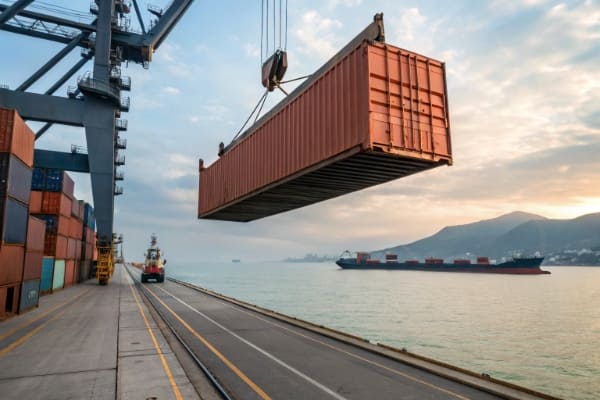
<p>Shipping products from China to Australia can seem complex. Many businesses face challenges like high costs, long transit times, and customs issues. With the right information, shipping can be straightforward and efficient.</p> <p><strong>In this guide, I will break down the shipping process, covering costs, timeframes, and customs requirements for 2026.</strong> </p> <p><img decoding="async" src="https://toncentlink.com/wp-content/uploads/2026/04/a-cargo-ship-and-airplane-with-boxes-moving-from-a-1.jpg" alt="alt with keywords"></p> <p>Shipping options vary greatly. Understanding your options helps you choose the best way to move your products. From air freight to sea freight, the method you choose can impact your bottom line.</p> <h2>What Is the Cheapest Way to Ship from China to Australia?</h2> <p>Shipping costs can add up quickly. I often hear from clients looking for the best rates. The cheapest way often depends on your shipment size and urgency. </p> <p>For full container loads (FCL), <a href="https://documents1.worldbank.org/curated/en/099436104042241280/pdf/IDU0c20d2ae90046304ca009ab508217e50747bd.pdf" target="_blank" rel="noopener noreferrer">sea freight is usually the most cost-effective method</a><sup id="fnref-1"><a href="#fn-1" class="footnote-ref">1</a></sup>. The cost for a 20ft container typically ranges from <a href="https://tradingeconomics.com/commodity/containerized-freight-index" target="_blank" rel="noopener noreferrer">1,000 to 1,800 USD</a><sup id="fnref-2"><a href="#fn-2" class="footnote-ref">2</a></sup>. For a 40ft container, expect to pay <a href="https://www.bts.gov/browse-statistical-products-and-data/info-gallery/freight-rates-40-foot-container-east-bound-and" target="_blank" rel="noopener noreferrer">60 to 80% more</a><sup id="fnref-3"><a href="#fn-3" class="footnote-ref">3</a></sup>. </p> <p>If you have smaller shipments, less than container load (LCL) might be your best bet. Prices range from <a href="https://www.freightos.com/shipping-routes/shipping-from-china-to-australia/" target="_blank" rel="noopener noreferrer">13 to 45 USD per cubic meter</a><sup id="fnref-4"><a href="#fn-4" class="footnote-ref">4</a></sup>, but keep in mind these figures do not include destination charges or customs fees.</p> <p><img decoding="async" src="https://toncentlink.com/wp-content/uploads/2026/04/reducing-shipping-costs.jpg" alt="alt with keywords"></p> <p>When assessing costs, consider that <a href="https://www.worldbank.org/en/topic/transport/publication/air-freight-study" target="_blank" rel="noopener noreferrer">air freight is generally more expensive</a><sup id="fnref-5"><a href="#fn-5" class="footnote-ref">5</a></sup>. It falls between <a href="https://www.freightos.com/shipping-routes/shipping-from-china-to-australia/" target="_blank" rel="noopener noreferrer">4.5 and 6.1 USD per kilogram</a><sup id="fnref-6"><a href="#fn-6" class="footnote-ref">6</a></sup>. Express services can run even higher, from 6 to 15 USD per kilogram, depending on the carrier and service level. </p> <p>Now that we have the costs in mind, let’s examine the other factors in shipping from China to Australia.</p> <h2>How Much Does Shipping from China to Australia Cost in 2025?</h2> <p>Looking at shipping costs for 2025 provides insight into current trends. Sea freight rates have fluctuated recently. For example, the cost for a 20ft FCL container remains between 1,000 and 1,800 USD. Meanwhile, LCL options still range from 13 to 45 USD per cubic meter. </p> <p>Keep in mind that costs can vary based on <a href="https://www.fmc.gov/articles/fmc-monitoring-and-review-of-surcharges-and-fees/" target="_blank" rel="noopener noreferrer">peak seasons and fuel adjustments</a><sup id="fnref-7"><a href="#fn-7" class="footnote-ref">7</a></sup>. These surcharges can <a href="https://www.shapiro.com/resources/what-is-a-peak-season-surcharge-pss/" target="_blank" rel="noopener noreferrer">add 15 to 30% to standard rates</a><sup id="fnref-8"><a href="#fn-8" class="footnote-ref">8</a></sup>. Understanding these fluctuations can help you budget more effectively.</p> <p>For air freight, the costs remain similar. Rates from 4.5 to 6.1 USD per kilogram are typical. However, if you choose express services, be prepared for higher fees, which can reach up to 15 USD per kilogram.</p> <p><img decoding="async" src="https://toncentlink.com/wp-content/uploads/2026/04/shipping-methods-from-china-to-australia-1.jpg" alt="alt with keywords"></p> <p>Customs fees and GST (Goods and Services Tax) also play a role in your total shipping costs. <a href="https://www.ato.gov.au/businesses-and-organisations/gst-excise-and-indirect-taxes/gst/in-detail/rules-for-specific-transactions/international-transactions/gst-and-imported-goods" target="_blank" rel="noopener noreferrer">Australia charges a 10% GST on imported goods</a><sup id="fnref-9"><a href="#fn-9" class="footnote-ref">9</a></sup>. This tax is often included in DDP (Delivered Duty Paid) pricing, which simplifies your budgeting.</p> <h2>How Long Does Shipping from China to Australia Take?</h2> <p>Transit times can vary significantly based on the shipping method chosen. Sea freight is the slowest option, typically taking <a href="https://www.freightos.com/freight-resources/transit-time-calculator/" target="_blank" rel="noopener noreferrer">16 to 35 days</a><sup id="fnref-10"><a href="#fn-10" class="footnote-ref">10</a></sup>. This timeframe depends on the specific port pairs and the carrier schedules.</p> <p>Air freight and express options, on the other hand, can deliver much faster. Air freight generally takes <a href="https://www.freightos.com/freight-resources/transit-time-calculator/" target="_blank" rel="noopener noreferrer">3 to 15 days</a><sup id="fnref-11"><a href="#fn-11" class="footnote-ref">11</a></sup>. For those needing rapid delivery, premium express services can achieve door-to-door times of just 1 to 3 days for small parcels.</p> <p><img decoding="async" src="https://toncentlink.com/wp-content/uploads/2026/04/shipping_duration.jpg" alt="alt with keywords"></p> <p>When planning your shipments, keep in mind that peak seasons can delay transit times. It's wise to account for these potential delays when scheduling your orders.</p> <h2>Should You Choose Air Freight or Sea Freight?</h2> <p>The choice between air freight and sea freight ultimately depends on your priorities. If speed is your main concern, air freight is the clear winner. It allows for faster delivery, which is crucial for time-sensitive products.</p> <p>However, if cost is a significant factor, sea freight is often the best route. Despite longer transit times, the savings can be substantial, especially for larger shipments. </p> <p><img decoding="async" src="https://toncentlink.com/wp-content/uploads/2026/04/comparison-of-a-cargo-ship-airplane-and-express-1.jpg" alt="alt with keywords"></p> <p>Consider your product type as well. For heavy and bulky items, sea freight is typically more economical. On the other hand, light and high-value items may justify the higher costs of air freight.</p> <h2>How Does DDP Shipping from China to Australia Work?</h2> <p>DDP shipping simplifies the process of importing goods. <a href="https://legacy.export.gov/article?id=Delivery-Methods-ecommerce" target="_blank" rel="noopener noreferrer">With DDP, the seller takes responsibility for all shipping costs, including duties and taxes, until the goods reach the buyer's address</a><sup id="fnref-12"><a href="#fn-12" class="footnote-ref">12</a></sup>.</p> <p>This pricing model reduces hidden costs, which can include terminal handling and customs brokerage fees. By using DDP, you often receive a single quoted price that includes all expenses.</p> <p><img decoding="async" src="https://toncentlink.com/wp-content/uploads/2026/04/shipping-for-fba.jpg" alt="alt with keywords"></p> <p>For small parcels and e-commerce shipments, DDP can be especially beneficial. It incorporates Australia's GST and customs fees, providing a clearer picture of total costs.</p> <p>When considering DDP, ensure your freight forwarder is experienced. This can help avoid any unexpected issues during customs clearance.</p> <h2>How to Find a Reliable Freight Forwarder in China?</h2> <p>Finding a trustworthy freight forwarder is crucial for smooth shipping. Start by researching potential partners. Look for reviews and feedback from other businesses. </p> <p>A good freight forwarder should have experience with shipping to Australia and a solid understanding of customs requirements. They should also be transparent about pricing and services offered.</p> <p><img decoding="async" src="https://toncentlink.com/wp-content/uploads/2026/04/required-documents.jpg" alt="alt with keywords"></p> <p>Once you have a list of candidates, reach out to them. Ask about their experience, services, and any additional fees. A professional freight forwarder should be able to provide clear answers and guidance for your shipping needs.</p> <h2>What Shipping Methods Are Available?</h2><p>When shipping goods, you have a couple of main methods: air freight and sea freight. Each has its pros and cons.</p><p><strong>Air freight takes 3-10 days. It's fast but costs more. Sea freight can take 20-45 days but is cheaper, especially for large shipments.</strong></p><p><img decoding="async" src="https://toncentlink.com/wp-content/uploads/2026/04/air-and-sea-freight.jpg" alt="Air and Sea Freight"></p><p>Air freight is great for urgent deliveries. If you need something quickly, this is your best choice. Sea freight is better when you want to save money and do not mind a longer wait. </p><p>You can also use freight forwarders to handle all shipping needs. <a href="https://www.trade.gov/special-documents" target="_blank" rel="noopener noreferrer">They manage the documentation, customs clearance, and the shipping process.</a><sup id="fnref-3"><a href="#fn-3" class="footnote-ref">3</a></sup> This makes the process smoother for everyone involved. </p><h2>Conclusion</h2> <p>Shipping products from China to Australia involves navigating costs, timeframes, and customs. By understanding your options and choosing the right freight forwarder, you can streamline the process and avoid hidden fees.</p> <hr><div class="footnotes"><hr><ol><li id="fn-1"><p>"[PDF] Fathoming Shipping Costs: An Exploration - World Bank Document", https://documents1.worldbank.org/curated/en/099436104042241280/pdf/IDU0c20d2ae90046304ca009ab508217e50747bd.pdf. Comparative freight-transport studies generally find ocean shipping to have lower unit costs than air transport for large-volume cargo, supporting the cost-effectiveness claim for FCL shipments. Evidence role: expert_consensus; source type: research. Supports: For full container loads, sea freight is usually the most cost-effective shipping method from China to Australia.. Scope note: This supports the general cost hierarchy, not a specific China–Australia quote for any given week. <a href="#fnref-1" class="footnote-backref">↩</a></p></li><li id="fn-2"><p>"Containerized Freight Index - Price - Chart - Historical Data - News", https://tradingeconomics.com/commodity/containerized-freight-index. Container freight-rate indexes or maritime market reports can substantiate whether China–Australia 20-foot-equivalent container spot rates were reported near this range during the relevant period. Evidence role: statistic; source type: research. Supports: The cost for a 20ft container from China to Australia typically ranges from USD 1,000 to USD 1,800.. Scope note: Spot rates change frequently and may exclude origin, destination, documentation, and equipment-related charges. <a href="#fnref-2" class="footnote-backref">↩</a></p></li><li id="fn-3"><p>"Freight Rates per 40-foot Container for East Bound and West Bound ...", https://www.bts.gov/browse-statistical-products-and-data/info-gallery/freight-rates-40-foot-container-east-bound-and. Published container-rate benchmarks can be used to compare 20-foot and 40-foot container prices and verify whether 40-foot rates commonly exceed 20-foot rates by roughly this proportion. Evidence role: statistic; source type: research. Supports: A 40ft container from China to Australia usually costs 60% to 80% more than a 20ft container.. Scope note: The ratio varies by lane, carrier, equipment availability, and whether rates are quoted per TEU, FEU, or container. <a href="#fnref-3" class="footnote-backref">↩</a></p></li><li id="fn-4"><p>"Shipping from China to Australia [Updated April 2026 ] - Freightos", https://www.freightos.com/shipping-routes/shipping-from-china-to-australia/. LCL freight-rate databases or logistics market reports can support whether China–Australia LCL ocean freight rates have been quoted in this per-cubic-meter range. Evidence role: statistic; source type: research. Supports: LCL shipping from China to Australia can range from USD 13 to USD 45 per cubic meter.. Scope note: LCL quotes often vary by consolidator and may exclude minimum charges, destination handling, customs brokerage, and delivery fees. <a href="#fnref-4" class="footnote-backref">↩</a></p></li><li id="fn-5"><p>"Air Freight: A Market Study with Implications for Landlocked ...", https://www.worldbank.org/en/topic/transport/publication/air-freight-study. International freight-transport sources commonly describe air cargo as faster but substantially more costly than maritime transport on a per-unit basis, supporting the modal cost comparison. Evidence role: expert_consensus; source type: institution. Supports: Air freight from China to Australia is generally more expensive than sea freight.. Scope note: This is contextual support and does not establish the article’s exact per-kilogram prices. <a href="#fnref-5" class="footnote-backref">↩</a></p></li><li id="fn-6"><p>"Shipping from China to Australia [Updated April 2026 ] - Freightos", https://www.freightos.com/shipping-routes/shipping-from-china-to-australia/. Air-cargo rate benchmarks for Asia-Pacific lanes can support whether China–Australia air freight rates were commonly quoted around USD 4.5–6.1 per kilogram. Evidence role: statistic; source type: research. Supports: Air freight from China to Australia typically costs USD 4.5 to USD 6.1 per kilogram.. Scope note: Air freight rates depend on chargeable weight, airport pair, fuel/security surcharges, capacity, and seasonality. <a href="#fnref-6" class="footnote-backref">↩</a></p></li><li id="fn-7"><p>"FMC Monitoring and Review of Surcharges and Fees", https://www.fmc.gov/articles/fmc-monitoring-and-review-of-surcharges-and-fees/. Carrier tariff rules and shipping-market analyses document that freight rates can include seasonal and bunker or fuel-related surcharges, supporting the statement that these factors affect total costs. Evidence role: mechanism; source type: institution. Supports: Shipping costs can vary based on peak seasons and fuel adjustments.. Scope note: This supports the existence of such surcharges, not the article’s later estimate of their exact percentage impact. <a href="#fnref-7" class="footnote-backref">↩</a></p></li><li id="fn-8"><p>"What Is a Peak Season Surcharge (PSS)? - Shapiro", https://www.shapiro.com/resources/what-is-a-peak-season-surcharge-pss/. Freight tariff examples or market reports can indicate whether peak-season and fuel-related surcharges have added roughly 15–30% to base rates in some shipping periods. Evidence role: statistic; source type: research. Supports: Peak-season and fuel surcharges can add 15% to 30% to standard shipping rates.. Scope note: The percentage is highly lane- and date-specific, so evidence may show illustrative rather than universal applicability. <a href="#fnref-8" class="footnote-backref">↩</a></p></li><li id="fn-9"><p>"GST and imported goods | Australian Taxation Office", https://www.ato.gov.au/businesses-and-organisations/gst-excise-and-indirect-taxes/gst/in-detail/rules-for-specific-transactions/international-transactions/gst-and-imported-goods. Australian Taxation Office guidance states that taxable importations are generally subject to GST at 10%, supporting the claimed GST rate on imported goods. Evidence role: definition; source type: government. Supports: Australia charges a 10% GST on imported goods.. Scope note: Some importations may be non-taxable, concessional, or affected by valuation and threshold rules. <a href="#fnref-9" class="footnote-backref">↩</a></p></li><li id="fn-10"><p>"Instant Freight Transit Time Calculator | Air, Ocean & Trucking", https://www.freightos.com/freight-resources/transit-time-calculator/. Port-to-port transit schedules and maritime logistics references can support that ocean freight between major Chinese and Australian ports commonly falls within an approximate 16–35 day range. Evidence role: statistic; source type: research. Supports: Sea freight from China to Australia typically takes 16 to 35 days.. Scope note: Actual transit time varies by port pair, direct versus transshipment service, sailing frequency, congestion, and customs clearance. <a href="#fnref-10" class="footnote-backref">↩</a></p></li><li id="fn-11"><p>"Instant Freight Transit Time Calculator | Air, Ocean & Trucking", https://www.freightos.com/freight-resources/transit-time-calculator/. Air-cargo service schedules and logistics benchmarks can substantiate that standard air freight between China and Australia is commonly measured in days rather than weeks and may fall in a 3–15 day range including handling. Evidence role: statistic; source type: research. Supports: Air freight from China to Australia generally takes 3 to 15 days.. Scope note: The range depends on airport pair, consolidation, customs clearance, weekend cutoffs, and whether the estimate is airport-to-airport or door-to-door. <a href="#fnref-11" class="footnote-backref">↩</a></p></li><li id="fn-12"><p>"2.1 Delivery Methods - export.gov", https://legacy.export.gov/article?id=Delivery-Methods-ecommerce. Incoterms definitions state that Delivered Duty Paid places maximum responsibility on the seller, including delivery to the named destination and payment of import duties and taxes where applicable. Evidence role: definition; source type: institution. Supports: Under DDP shipping, the seller is responsible for shipping costs, duties, and taxes until delivery to the buyer’s address.. Scope note: DDP obligations depend on the named place, contract terms, and whether local law permits the seller to act as importer of record. <a href="#fnref-12" class="footnote-backref">↩</a></p></li></ol></div>
Shipping
How to Ship Products from China to Australia? (2026 Cost, Time & Customs Guide)