
Shipping goods internationally can be overwhelming. Choosing the right method impacts cost, delivery time, and overall efficiency. Let’s explore the best options for shipping from China to the UK.
When considering shipping methods, businesses must assess their priorities—cost, speed, or convenience. Each option has its pros and cons, and understanding them can help you make an informed choice.
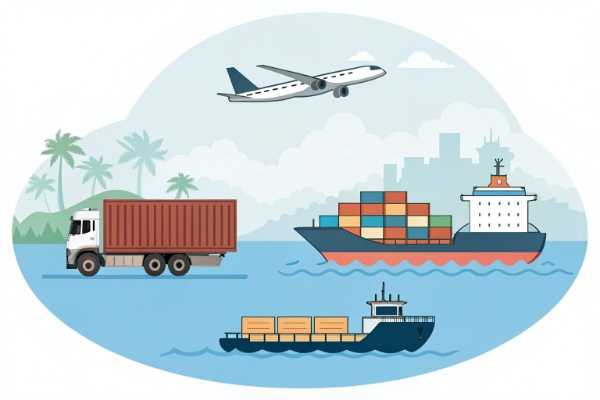
Shipping choices affect your bottom line. Let's look at each method in detail.
Which Shipping Method Is Best for Your Business?
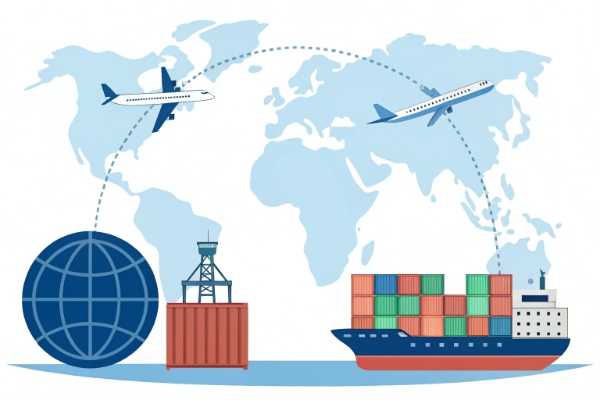
Shipping from China to the UK involves multiple methods: sea, air, rail, and DDP shipping. Each option has unique benefits that cater to different business needs. Sea freight is the cheapest but slowest.1 Air freight is the fastest but can be expensive.2 Rail freight sits in between, offering a balance of speed and cost.3 DDP shipping simplifies the process but comes with its own considerations.
To choose the best method, consider factors like cargo size, urgency, and budget. A clear understanding of your needs will guide your decision.
How Long Does Sea Freight from China to the UK Take?
Sea freight is often the go-to for bulky items. However, it has the longest transit times. Typically, shipments take around 25 to 40 days4. This duration accounts for various factors like port handling, weather, and transit times at sea.
If your shipment is not urgent, sea freight can save you money, especially with large volumes or full container loads5.
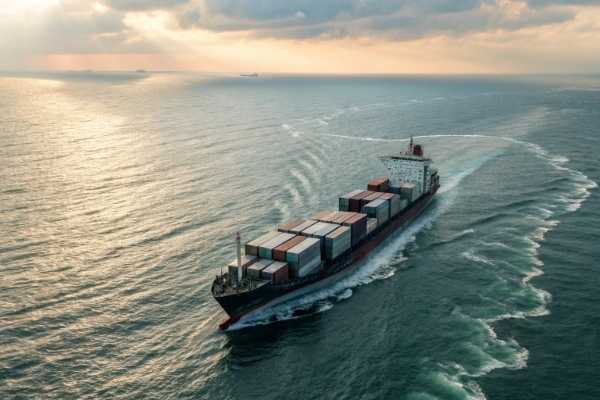
Sea freight might seem slow, but it suits businesses looking to cut costs.
How Fast Is Air Freight?
Air freight is the quickest option available. Shipments can reach the UK from China in as little as 3 to 7 days.6 This speed is crucial for urgent or high-value items.7 Businesses willing to pay more for speed often choose this method.
Consider air freight for time-sensitive shipments or when dealing with high-value items. It provides peace of mind when deadlines are tight.

Air freight’s speed can be a lifesaver, but it may not be the best choice for heavy, low-margin goods.
Is Rail Freight Still a Good Option?
Rail freight has emerged as a practical alternative. It offers faster delivery than sea freight, typically around 15 to 20 days8, and is cheaper than air freight9. Rail is beneficial for medium-volume shipments that need better speed than sea without incurring air rates.
If you have time-sensitive shipments that can’t wait for sea but don’t justify air rates, rail freight could be your answer.

Rail freight strikes a good balance for many businesses, offering both speed and affordability.
What Is DDP Shipping and How Does It Work?
DDP stands for Delivered Duty Paid.10 This shipping method manages customs clearance, duties, and final delivery for you. It simplifies the process and reduces operational complexity, making it ideal for busy businesses.
For companies wanting a straightforward door-to-door service, DDP shipping can alleviate many import headaches.
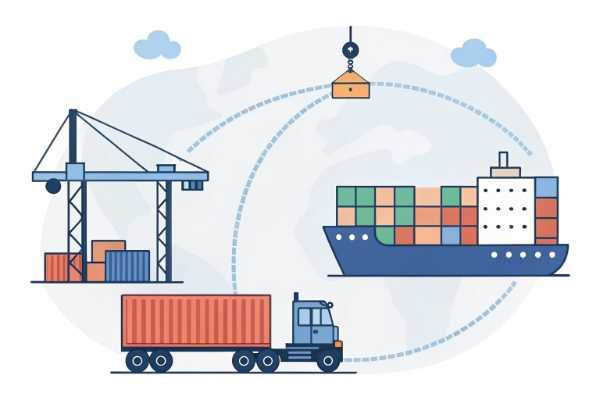
DDP shipping takes the guesswork out of logistics, but you must trust the forwarder's handling capabilities.
FOB vs EXW vs CIF vs DDP: Which Incoterm Should You Choose?
Understanding Incoterms is vital for international shipping. FOB (Free on Board) places responsibility on the seller until the goods are on board the vessel. EXW (Ex Works) means the buyer takes on all risks and costs. CIF (Cost, Insurance, and Freight) involves the seller covering costs until the goods reach the destination port.11
DDP provides the highest level of service, as it covers all aspects of shipping, customs, and delivery.
| Incoterm | Responsibility | Best For |
|---|---|---|
| FOB | Seller until goods are on board | Buyers who can manage shipping |
| EXW | Buyer takes all responsibility | Buyers seeking control |
| CIF | Seller until port delivery | Buyers wanting some support |
| DDP | Seller handles everything | Buyers wanting simplicity |
Understanding these terms can help you navigate your shipping process effectively.
Choosing the right Incoterm aligns your shipping strategy with your business needs.
How Can You Reduce Shipping Delays?
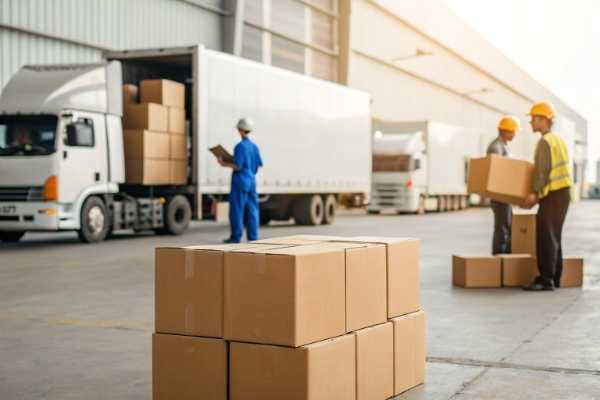
Shipping delays can be frustrating. To minimize them, ensure all documentation is accurate and complete12. Work with reliable forwarders who understand customs regulations. Also, plan shipments well in advance to avoid last-minute issues.
By proactively managing your shipments, you can reduce delays and ensure timely delivery.
Taking charge of your shipping process can help avoid unnecessary delays.
FAQs About Shipping from China to the UK
What is the most cost-effective shipping method? Sea freight is the most cost-effective for large, non-urgent shipments.
Can I track my shipment? Yes, most shipping methods provide tracking options.
Is there a risk of customs complications? Yes, customs can lead to delays. Working with experienced forwarders can help.
How do I choose a shipping partner? Look for partners with a proven track record, clear communication, and a comprehensive service offering.
What are the customs duties for importing goods? Duties depend on the product type and value. Check UK customs regulations for specifics.
Addressing common questions can ease concerns about shipping processes.
Conclusion
Choosing the right shipping method from China to the UK is critical for your business. Evaluate your needs to find the best balance of cost, speed, and convenience.
"Publication: Fathoming Shipping Costs: An Exploration of Recent ...", https://openknowledge.worldbank.org/entities/publication/fb895077-9773-5aad-a5cd-2f17cd794017. Comparative freight-transport references generally describe ocean shipping as lower cost per unit for large international consignments but slower than air and rail alternatives. Evidence role: general_support; source type: institution. Supports: Sea freight is generally the lowest-cost but slowest major shipping option from China to the UK.. Scope note: The source would support the general trade-off; actual rates and transit times vary by route, season, carrier capacity, and cargo type. ↩
"Air Freight: A Market Study with Implications for Landlocked Countries", https://www.worldbank.org/en/topic/transport/publication/air-freight-study. International freight guidance commonly identifies air cargo as the fastest transport mode for long-distance shipments, while noting that its unit costs are typically higher than maritime or rail transport. Evidence role: general_support; source type: government. Supports: Air freight is usually the fastest international shipping option but tends to cost more than sea or rail.. Scope note: This supports the general modal comparison, not a guaranteed price or delivery time for a particular China–UK shipment. ↩
"[PDF] Mode Choice in Freight Transport | OECD", https://www.oecd.org/content/dam/oecd/en/publications/reports/2022/02/mode-choice-in-freight-transport_667ea2c1/3e69ebc4-en.pdf. Studies of China–Europe rail freight describe it as positioned between ocean and air transport in both transit time and cost, making it an intermediate option for some goods. Evidence role: general_support; source type: paper. Supports: Rail freight between China and Europe generally offers an intermediate balance of speed and cost.. Scope note: The evidence is contextual because rail availability, price, and reliability depend on corridor, political conditions, and service frequency. ↩
"A short guide on ocean freight transit times - Maersk", https://www.maersk.com/logistics-explained/transportation-and-freight/2023/09/27/sea-freight-guide. Route and freight references for China–UK container shipping commonly report ocean transit windows of several weeks, broadly consistent with a 25–40 day estimate when port and inland handling are included. Evidence role: statistic; source type: institution. Supports: Sea freight shipments from China to the UK commonly take about 25 to 40 days.. Scope note: The figure is an indicative range rather than a fixed schedule; direct port pair, routing, congestion, and customs handling can materially alter total transit time. ↩
"[PDF] Economies of Scale and Alliances in Container Shipping", https://economics.mit.edu/sites/default/files/inline-files/jmp_0.pdf. Freight-transport guidance explains that ocean container shipping spreads fixed transport costs across large quantities of cargo, which can make full-container or high-volume shipments less costly per unit than faster modes. Evidence role: mechanism; source type: education. Supports: Sea freight can be more economical for large volumes or full container loads.. Scope note: This supports the cost mechanism for large-volume cargo; it does not prove savings for every commodity, shipment size, or market condition. ↩
"Shipping from China to the UK [Updated June 2026 ] | Freightos", https://www.freightos.com/shipping-routes/shipping-from-china-to-the-uk/. Air-cargo route guidance and logistics references commonly give China–UK air-freight delivery windows measured in days, with 3–7 days plausible when airport handling and customs processes are included. Evidence role: statistic; source type: institution. Supports: Air freight from China to the UK can take roughly 3 to 7 days.. Scope note: The range is indicative and may not apply to every airport pair, service level, customs inspection, or peak-season condition. ↩
"Air Freight: A Market Study with Implications for Landlocked Countries", https://www.worldbank.org/en/topic/transport/publication/air-freight-study. Air-cargo literature notes that air freight is commonly used for time-sensitive and high-value goods because rapid transit can reduce stockout risk and time in transit. Evidence role: mechanism; source type: research. Supports: Air freight speed is especially relevant for urgent or high-value goods.. Scope note: The source would support the rationale for using air freight; it does not establish that air freight is cost-effective for every high-value shipment. ↩
"Rail freight transport from China to Europe - Dimerco", https://dimerco.com/services/freight-forwarding/road-and-rail/rail-freight-transport-china-europe/. Reports on China–Europe rail services often cite transit times of roughly two to three weeks for long-distance rail freight, which is consistent with a 15–20 day estimate for some corridors. Evidence role: statistic; source type: institution. Supports: Rail freight from China toward the UK can commonly take around 15 to 20 days.. Scope note: This is contextual support; China–UK rail movements may require terminal transfers, border procedures, or service changes that alter door-to-door timing. ↩
"Rising Sea & Air Costs: Why China-Europe Rail Freight Is the ...", https://ufreight.com/rising-sea-air-costs-why-china-europe-rail-freight-is-the-critical-third-way-for-global-shippers/. Comparative analyses of Eurasian rail freight generally place rail transport below air freight in cost while remaining faster and more expensive than ocean shipping. Evidence role: general_support; source type: paper. Supports: Rail freight is generally cheaper than air freight.. Scope note: This supports the usual modal relationship, not a specific quote for any shipment; exceptional air capacity, cargo type, or rail disruption can change relative costs. ↩
"Know Your Incoterms - International Trade Administration", https://www.trade.gov/know-your-incoterms. The International Chamber of Commerce defines DDP as Delivered Duty Paid, an Incoterms rule under which the seller bears extensive responsibility for delivering goods to the named destination with import duties paid. Evidence role: definition; source type: institution. Supports: DDP means Delivered Duty Paid.. Scope note: The ICC definition concerns allocation of obligations under Incoterms and does not by itself assess whether a particular forwarder’s DDP service is compliant or well managed. ↩
"Know Your Incoterms - International Trade Administration", https://www.trade.gov/know-your-incoterms. Incoterms 2020 materials define FOB, EXW, and CIF by allocating delivery obligations, risk transfer, and cost responsibilities between buyer and seller in international sales contracts. Evidence role: definition; source type: institution. Supports: FOB, EXW, and CIF allocate responsibility and costs between seller and buyer as described.. Scope note: The exact legal effect depends on the named place, contract wording, and applicable law; the cited Incoterms definitions provide the general framework. ↩
"5 Documentation Errors Causing UK Customs Delays (And How ...", https://www.jeavonseurotir.co.uk/infographics/latest_news/documentation-errors-causing-uk-customs-delays/. Customs authorities emphasize that accurate and complete import documentation is necessary for customs clearance and that errors or missing information can delay release of goods. Evidence role: mechanism; source type: government. Supports: Accurate and complete shipping documentation helps reduce customs-related delays.. Scope note: This supports documentation accuracy as a delay-reduction factor; it does not quantify how much delay is avoided in any individual shipment. ↩