
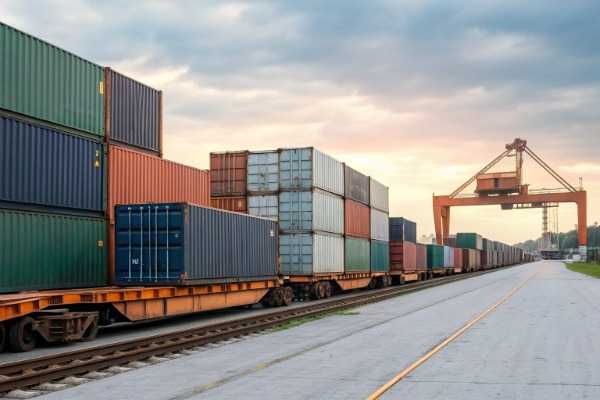
The logistics industry is always looking for ways to move goods efficiently. Rail freight is an option many businesses consider. But is it the best choice for you?
Rail freight offers cost-effective solutions for transporting heavy and bulky cargo over long distances. It can save time and fuel while delivering goods reliably.
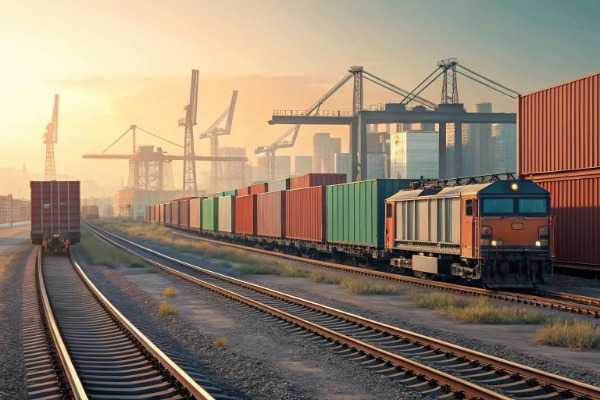
Rail freight has distinct advantages and disadvantages. Understanding these can guide your decision-making in logistics. Let's explore the benefits and drawbacks together.
What Are the Main Advantages of Rail Freight?
Rail freight offers several advantages that make it appealing to businesses. First, it is very cost-effective for moving heavy or bulky goods1. I often see companies cut costs by choosing rail to transport large quantities of freight.
Moreover, a single train can carry a substantial amount of cargo2. This reduces the need for many trucks on the road. Consequently, rail freight also generally has lower fuel consumption and carbon emissions per ton-kilometer compared to road freight3.
Additionally, rail networks have fixed schedules4. They are not affected by highway congestion5. This can lead to improved transit-time reliability. In my experience, businesses value this predictability, especially when managing inventory.
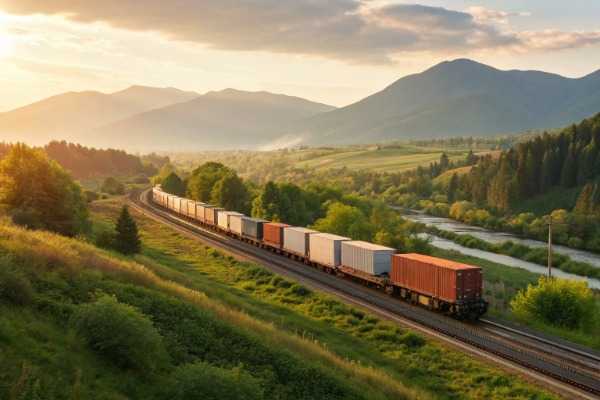
Rail freight is also safer6. It has lower exposure to road accidents and theft compared to trucking. For many businesses, cargo safety is a top priority.
Why Is Rail Freight Faster Than Sea Freight?
When comparing rail freight to sea freight, speed is a critical factor. Rail freight is typically faster than sea freight7 for several reasons. Trains can travel over land quickly, avoiding the lengthy loading and unloading times of ships8.
Moreover, rail networks have direct routes across vast distances. They do not face the delays caused by weather or port congestion that often affect sea freight. In my view, if time is of the essence, rail is a better option than sea.
How Does Rail Freight Compare in Cost with Air and Sea Freight?
Cost is always a concern for businesses. In general, rail freight is more affordable than air freight, especially for heavy or bulky items. Air freight is fast, but the costs can be significantly higher.
Comparing rail to sea freight, rail can be a great option for shorter distances. However, for longer distances, sea freight may become more competitive9. It all depends on the cargo type and delivery timeline. I've seen companies evaluate these costs carefully to find the best option for their needs.
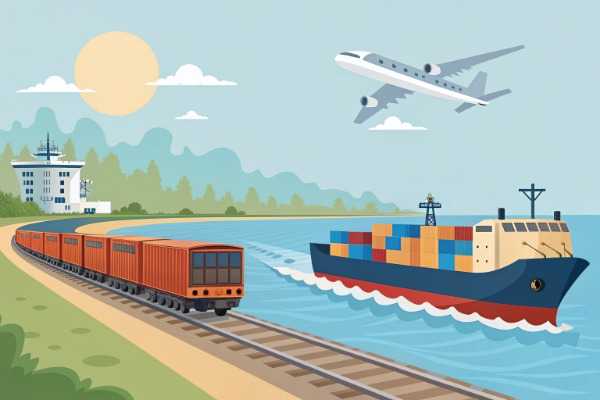
What Are the Main Disadvantages of Rail Freight?
Despite its advantages, rail freight has some drawbacks. It cannot provide door-to-door delivery10. Often, trucks are needed for the first and last miles.
Rail can also be less suitable for urgent shipments. Terminal handling and rail schedules can extend transit times. In my experience, businesses needing immediate delivery often prefer trucking for this reason.
Another issue is that small or irregular shipments may not achieve significant savings. Rail economies of scale depend on volume and distance. If your shipment does not meet these criteria, it may not be the best choice.
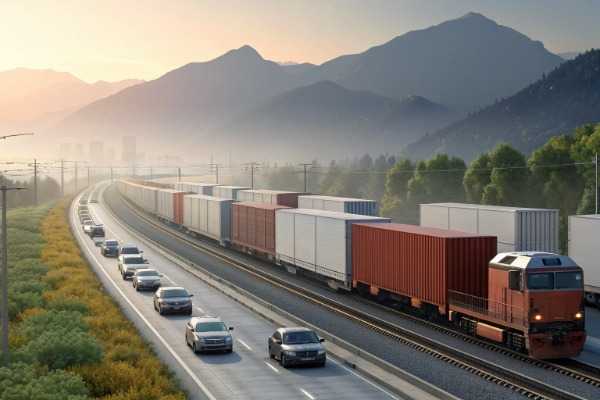
How Do Border Crossings and Customs Affect Rail Freight?
Cross-border rail movements can face challenges. Gauge changes and varying railway standards can lead to delays11. Border inspections can also slow down shipments.
I have observed that companies must be prepared for these potential delays. It is essential to factor these into your logistics planning. Understanding customs procedures and railway systems can help mitigate issues.
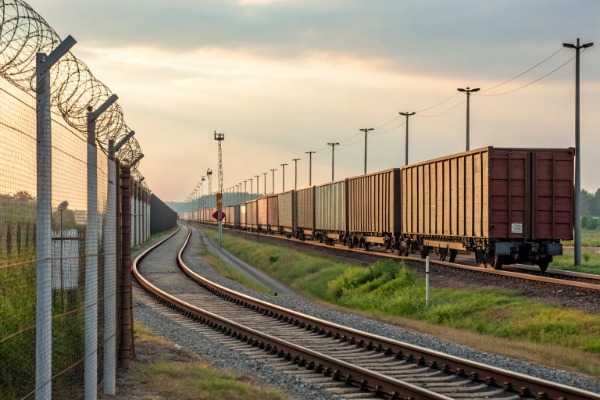
What Types of Cargo Benefit Most from Rail Freight?
Rail freight works best for specific types of cargo. Bulk goods, such as coal or minerals, are ideal candidates. Heavy machinery and large quantities of consumer goods also fit well.
I often recommend rail for companies moving large volumes. It allows them to take advantage of cost savings while ensuring reliable transportation. But smaller or lighter items might not see the same benefits.
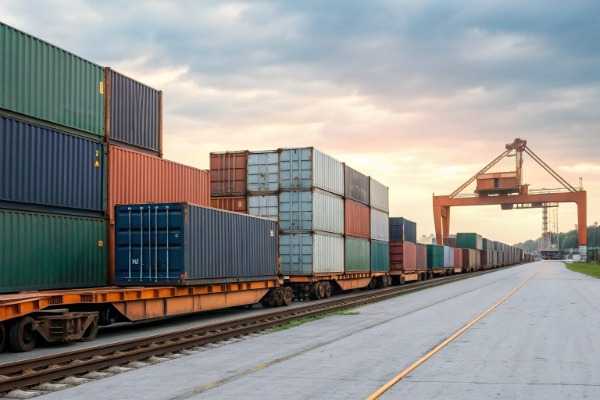
When Is Rail Freight Better Than Sea Freight or Air Freight?
Rail freight is often better when shipments are predictable. If you can plan ahead, rail can offer great cost savings and reliability. It is also valuable for transporting goods over land where speed is not the primary concern.
However, for high-value or time-sensitive goods, air freight may be preferable. Sea freight is better for bulk items over long distances. In my experience, companies weigh these options carefully to find the right solution.
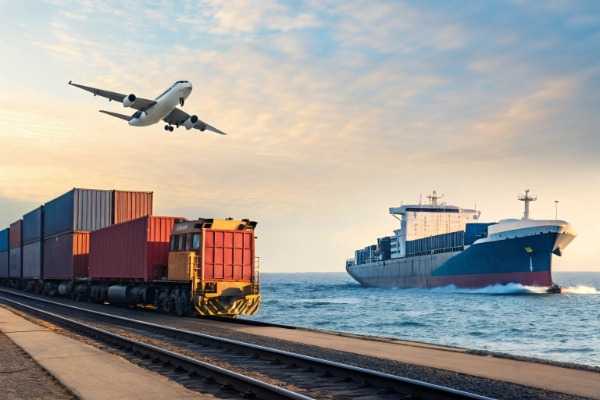
How Do You Decide If Rail Freight Is Right for Your Business?
Choosing rail freight involves considering several factors. First, assess the type and volume of your cargo. If you have heavy, bulky items, rail could be beneficial.
Next, consider your timeline. If speed is critical, rail might not always be the best choice. Also, think about your delivery locations and required flexibility. Rail is less adaptable than trucking for last-minute changes.
Finally, weigh the costs. Understand the trade-offs between rail, air, and sea freight. Evaluating these aspects will help you decide if rail freight is the right fit for your business.
Conclusion
Rail freight offers significant advantages, but it also has drawbacks. Evaluating your specific needs will help you make the right choice.
"Freight Rail Overview | FRA - Federal Railroad Administration", https://railroads.dot.gov/rail-network-development/freight-rail-overview. A neutral transport economics source should support that rail freight commonly has lower unit costs for dense, heavy, or high-volume cargo over medium-to-long distances because fixed train and terminal costs are spread across large payloads. Evidence role: general_support; source type: government. Supports: Rail freight is cost-effective for moving heavy or bulky goods.. Scope note: The cost advantage depends on route availability, shipment volume, terminal access, and first/last-mile trucking costs. ↩
"Comparative Evaluation of Rail and Truck Fuel Efficiency on ...", https://railroads.dot.gov/sites/fra.dot.gov/files/fra_net/2925/Comparative_Evaluation_Rail_Truck_Fuel_Efficiency.pdf. An authoritative rail or transport reference should document typical freight train carrying capacity and show that one train can move cargo volumes equivalent to many truckloads. Evidence role: statistic; source type: government. Supports: A single freight train can carry a substantial amount of cargo, reducing the number of truck movements required.. Scope note: Exact capacity varies by train length, wagon type, axle load limits, commodity, and national rail regulations. ↩
"Transport - Energy System - IEA", https://www.iea.org/energy-system/transport. A government or international transport-emissions source should show that rail freight generally produces lower energy use and greenhouse-gas emissions per tonne-kilometre than road freight. Evidence role: statistic; source type: institution. Supports: Rail freight generally has lower fuel consumption and carbon emissions per ton-kilometer than road freight.. Scope note: Comparisons vary by fuel mix, train load factor, locomotive technology, trucking efficiency, and whether electric rail is powered by low-carbon electricity. ↩
"5.3 – Rail Transportation and Pipelines", https://transportgeography.org/contents/chapter5/rail-transportation-pipelines/. A transport operations source should explain that freight rail services often operate on planned timetables or scheduled paths, which can support predictable movements when network capacity and terminal operations are stable. Evidence role: mechanism; source type: education. Supports: Rail networks use fixed or planned schedules that can support transit-time predictability.. Scope note: Scheduled operation does not guarantee on-time arrival because rail congestion, terminal delays, weather, labor disruption, and cross-border procedures can still affect service. ↩
"Freight and Congestion - FHWA Office of Operations", https://ops.fhwa.dot.gov/freight/freight_analysis/freight_story/congestion.htm. A transport planning source should support the limited point that rail freight operates on separate rail infrastructure and is therefore not directly delayed by road traffic congestion. Evidence role: mechanism; source type: government. Supports: Rail freight is not directly affected by highway congestion because it runs on rail infrastructure rather than roads.. Scope note: Rail freight can still be delayed by rail-network congestion, terminal congestion, maintenance windows, and operational disruptions. ↩
"Freight Transportation Safety | BTS Data Inventory", https://data.bts.gov/stories/s/Freight-Transportation-Safety/vu39-vtqh/. A transport safety statistics source should compare accident or casualty rates by freight mode and indicate whether rail freight has lower crash exposure than road freight on a ton-mile or tonne-kilometre basis. Evidence role: statistic; source type: government. Supports: Rail freight can be safer than trucking when measured by accident exposure or casualty rates per unit of freight moved.. Scope note: Safety metrics differ by country and measure; rail accidents can be severe even if rates per unit of freight movement are lower. ↩
"[PDF] The Rail Freight Challenge for Emerging Economies", https://documents1.worldbank.org/curated/en/590151546248249963/pdf/133233-PUB-PUBLIC.pdf. A logistics or international transport source should support that overland rail corridors can offer shorter transit times than maritime shipping on some routes, especially between inland origins and destinations. Evidence role: general_support; source type: institution. Supports: Rail freight is typically faster than sea freight on certain overland or intercontinental corridors.. Scope note: This is route-specific; ocean shipping may be faster or more practical for some port-to-port lanes and is often the only viable option across oceans. ↩
"Publication: Why Cargo Dwell Time Matters in Trade", https://openknowledge.worldbank.org/entities/publication/5f915f45-f27c-559c-9f6e-31abe18b7c6c. A port or maritime transport source should document that maritime freight involves port calls, vessel loading and unloading, and terminal handling processes that can add dwell time to total transit time. Evidence role: mechanism; source type: institution. Supports: Sea freight can involve lengthy loading, unloading, and port-handling processes that affect total transit time.. Scope note: Rail freight also requires terminal handling, and containerized ports can be efficient; the comparison depends on terminal performance and route design. ↩
"Maritime Transportation Costs in the Grains and Oilseeds Sector | OECD", https://www.oecd.org/en/publications/maritime-transportation-costs-in-the-grains-and-oilseeds-sector_b1cdf6b7-en.html. A transport economics source should support that maritime shipping often offers very low unit costs for large volumes over long distances due to vessel scale economies. Evidence role: mechanism; source type: education. Supports: For longer distances and large-volume movements, sea freight may be more cost-competitive than rail.. Scope note: This supports the general cost mechanism, not a specific quote for any given shipment lane; inland drayage, port fees, and timing requirements can change the result. ↩
"First-Mile/Last-Mile Service - Federal Register", https://www.federalregister.gov/documents/2021/09/08/2021-19362/first-milelast-mile-service. A freight transport source should explain that rail freight usually requires access to rail terminals or sidings and often depends on road transport for pickup and delivery beyond the rail network. Evidence role: mechanism; source type: government. Supports: Rail freight often cannot provide door-to-door delivery without additional trucking for first- and last-mile movements.. Scope note: Some shippers with private sidings or industrial rail access may receive direct rail service, so the limitation is not universal. ↩
"Break of gauge - Wikipedia", https://en.wikipedia.org/wiki/Break_of_gauge. An international rail transport source should document that differences in track gauge, signaling, electrification, or operating standards at borders can require transshipment, bogie exchange, or locomotive changes, adding time to rail freight movements. Evidence role: mechanism; source type: institution. Supports: Gauge changes and differing railway standards can cause delays in cross-border rail freight.. Scope note: The effect is corridor-specific; some regions use standardized gauges or technical interoperability measures that reduce these delays. ↩