
Importing products can be a complex process, especially when navigating regulations and logistics. If you're aiming to import goods from China to Qatar in 2026, understanding the steps can save you time and money.
To import products into Qatar, you need specific documents and compliance with local regulations. This ensures your shipments clear customs smoothly and without delays.

The importation process can feel overwhelming, but with careful planning and the right partners, you can streamline your operations. Start with a clear understanding of what you need to bring your products into Qatar successfully.
What Documents Are Required to Import into Qatar?
Navigating the documentation for importing into Qatar is crucial. The process is document-heavy and usually requires electronic filing1. Start by using a licensed customs broker or freight forwarder. Their expertise can take much of the burden off your shoulders.
Every shipment requires a detailed original invoice, packing list, bill of lading or air waybill, and an original certificate of origin.2 Each document plays a vital role. For instance, the HS code must appear on both the invoice and the certificate of origin3. Consistency across documents and cartons helps prevent issues during clearance.
Import licenses are another critical aspect.4 They are typically issued to Qatari nationals or partners in local companies.5 Therefore, if you’re not based in Qatar, teaming up with a local partner can ease this process. Remember, missing the required customs documents can lead to rejection at customs6. Your shipment could be returned to the origin without clearance, creating additional costs and delays.
What Import Duties and Taxes Will You Pay in Qatar?
Understanding the financial implications of importing is essential for budgeting. In Qatar, import duties and taxes can significantly impact your overall costs. Import duties vary depending on the product category. Generally, rates can range from 0% to 5% for most goods.7
It's also essential to account for value-added tax (VAT), which is currently set at 5%8. This tax applies to goods and services in Qatar. Calculating these costs upfront will help you determine the landed cost of your products, allowing for better pricing strategies.

By being informed about the duties and taxes, you avoid surprises during the import process. This knowledge empowers you to make better decisions and choose the right products to import.
What Products Are Restricted or Prohibited in Qatar?
Before shipping, it’s crucial to check the eligibility of your products. Qatar has strict regulations on certain items. Restricted or prohibited products include alcohol, pork products, narcotics, weapons, radioactive goods, and counterfeit items.9 Importing these goods can lead to severe penalties.
To ensure compliance, review Qatar’s import regulations before proceeding with shipments. Understanding these restrictions can prevent costly mistakes and legal issues.

Being proactive in checking product eligibility is vital. This step protects your business and ensures a smooth import experience.
Should You Use Air Freight, Sea Freight, or Express Shipping?
Choosing the right shipping method can make a significant difference in your import experience. Sea freight is often the most cost-efficient option for bulk or heavy cargo.10 If you have time-sensitive products or high-value items, air freight is a better choice. It’s quicker but tends to be more expensive11, making it ideal for urgent shipments.
You can also consider express shipping for smaller packages or urgent needs. This option provides fast delivery but often comes at a premium cost. DDP (Delivered Duty Paid) shipping can simplify your landed-cost planning.12 It bundles freight, clearance, duties, and final delivery into one service, reducing the complexity of managing logistics.
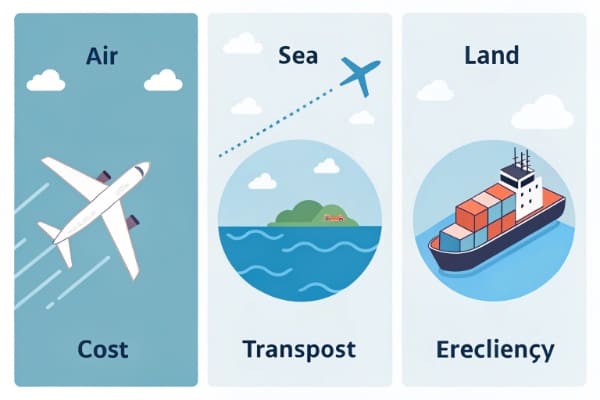
Ultimately, your decision should be based on the value of the cargo, the urgency of the shipment, and its size. Understanding your options helps you make informed decisions.
How Can You Avoid Shipping Delays and Hidden Charges?
Shipping delays can be frustrating and costly. To avoid them, ensure that all documentation is complete and accurate. A pre-shipment compliance review is essential, especially for regulated categories like electronics, chemicals, food, cosmetics, and medical goods. This review helps identify potential issues before they arise, ensuring that your shipment complies with all regulations.
Also, communicate clearly with your freight forwarder. They can provide insights into potential delays and hidden charges. Being transparent about your needs and expectations can help them better serve you.

Avoiding hidden charges requires diligence and clear communication. With the right approach, you can minimize surprises and ensure timely delivery.
How to Find a Trusted China Freight Forwarder for Qatar?
Finding a reliable freight forwarder in China is crucial for a successful import process. Start by researching companies with experience in shipping to Qatar. Look for customer reviews and testimonials to gauge their reliability.
Assess their service offerings. A good freight forwarder should handle documentation, customs clearance, and logistics. They should also have a solid understanding of the regulations specific to Qatar. This expertise can save you time and prevent potential issues during shipping.

Establishing a good relationship with your freight forwarder can lead to smoother operations and better rates. Consider engaging in discussions about your specific needs. This dialogue can help them tailor their services to fit your business model.
Conclusion
Importing products from China to Qatar in 2026 requires careful planning, understanding regulations, and choosing the right partners. With the right approach, you can streamline your operations and ensure successful imports.
"Customs declaration - General Authority of Customs", https://www.customs.gov.qa/English/Procedures/Pages/Customs-declaration.aspx. Qatar’s customs modernization materials describe electronic customs declaration and clearance procedures through its customs systems, supporting the contextual claim that import filing is commonly electronic. Evidence role: general_support; source type: government. Supports: Import clearance in Qatar is commonly handled through electronic filing or electronic customs systems.. Scope note: This supports the prevalence of electronic customs processing rather than proving that every import document in every case must be filed electronically. ↩
"Qatar - Import Requirements and Documentation", https://www.trade.gov/country-commercial-guides/qatar-import-requirements-and-documentation. Qatar customs import guidance identifies core shipment documents such as the commercial invoice, certificate of origin, packing list, and transport document for customs clearance. Evidence role: general_support; source type: government. Supports: Shipments imported into Qatar commonly require an invoice, packing list, bill of lading or air waybill, and certificate of origin.. Scope note: Document requirements can vary by commodity, shipment mode, and any applicable permit or conformity-control regime. ↩
"Qatar - Import Requirements and Documentation", https://www.trade.gov/country-commercial-guides/qatar-import-requirements-and-documentation. Official customs and trade-document guidance uses Harmonized System codes to classify goods for tariff and origin purposes, supporting the need for consistent HS-code identification on import documentation. Evidence role: mechanism; source type: government. Supports: HS codes are used on customs documentation and should be consistent across import documents such as invoices and certificates of origin.. Scope note: A source may establish HS-code use in customs classification generally; Qatar-specific document-placement rules should be verified against current customs instructions. ↩
"Qatar - Import Requirements and Documentation", https://www.trade.gov/country-commercial-guides/qatar-import-requirements-and-documentation. Qatar business and trade-registration guidance indicates that import activity is tied to local commercial registration and licensing arrangements, supporting the role of import licensing in market entry. Evidence role: general_support; source type: government. Supports: Import licensing or local registration is an important requirement for importing goods into Qatar.. Scope note: The exact licensing pathway may differ by product category and by whether the importer is a Qatari company, branch, or locally registered entity. ↩
"Qatar - Establishing an Office - export.gov", https://legacy.export.gov/article?id=Qatar-Establishing-an-Office. Qatar commercial registration and foreign-investment rules describe local registration and ownership structures for commercial activity, providing context for why import permissions are commonly held through Qatari or locally established entities. Evidence role: historical_context; source type: government. Supports: Import licenses in Qatar are commonly connected to Qatari nationals or locally registered companies and partners.. Scope note: This is contextual support for common licensing structures, not direct proof that all import licenses are issued only to Qatari nationals or local partners. ↩
"The Qatar Import Regulations for U.S. Shippers - Ship Smart.", https://internationalshippingusa.com/Shipping-Goods-to-Qatar-from-USA.aspx. Customs clearance rules generally require complete and accurate declarations and supporting documents before release of goods, supporting the claim that missing documents can prevent clearance. Evidence role: mechanism; source type: government. Supports: Missing required customs documents can cause goods to be rejected, held, or denied clearance by customs.. Scope note: The specific enforcement outcome may be hold, request for correction, penalty, refusal, or re-export depending on the case and customs authority decision. ↩
"Qatar - Import Tariffs - International Trade Administration", https://www.trade.gov/country-commercial-guides/qatar-import-tariffs. Qatar tariff schedules and GCC customs information describe applied customs duty rates by HS classification, including a common 5 percent customs duty for many imported goods and exemptions or lower rates for some categories. Evidence role: statistic; source type: government. Supports: Most imported goods into Qatar may be subject to customs duty rates around 0% to 5%, depending on classification and exemptions.. Scope note: The exact duty depends on HS classification, origin, exemptions, and special product rules, so the range should not be treated as universal. ↩
"General Tax Authority - GTA", https://gta.gov.qa/en/. The GCC VAT framework provides for a standard 5 percent VAT rate among participating Gulf Cooperation Council states, which is relevant background for discussing VAT expectations in Qatar. Evidence role: historical_context; source type: institution. Supports: A 5% VAT rate is associated with the GCC VAT framework and may be relevant to Qatar tax planning if implemented domestically.. Scope note: This does not by itself prove that Qatar has implemented VAT at 5%; the article should verify Qatar’s current domestic VAT status from an official tax source. ↩
"[PDF] Prohibited Items - Texas A&M University at Qatar", https://www.qatar.tamu.edu/assets/img/images/documents/prohibited-items.pdf. Qatar customs and postal import-restriction guidance lists categories of prohibited or controlled goods, including narcotics, weapons, alcohol-related items, pork products, and counterfeit goods. Evidence role: general_support; source type: government. Supports: Qatar restricts or prohibits categories such as alcohol, pork products, narcotics, weapons, radioactive goods, and counterfeit items.. Scope note: Restrictions may differ by import channel and some goods may be controlled rather than absolutely prohibited if permits are obtained. ↩
"[PDF] Fathoming Shipping Costs: An Exploration - World Bank Document", https://documents1.worldbank.org/curated/en/099436104042241280/pdf/IDU0c20d2ae90046304ca009ab508217e50747bd.pdf. Transport-economics sources commonly find that maritime freight offers lower per-unit transport costs for large-volume or heavy cargo than faster modes such as air freight. Evidence role: expert_consensus; source type: research. Supports: Sea freight is generally more cost-efficient for bulk or heavy cargo than faster shipping modes.. Scope note: Actual cost advantage depends on route, container utilization, fuel prices, port charges, and required delivery time. ↩
"Air Freight: A Market Study with Implications for Landlocked Countries", https://www.worldbank.org/en/topic/transport/publication/air-freight-study. International transport and logistics literature characterizes air freight as faster but substantially more expensive than ocean freight, especially on a weight or volume basis. Evidence role: expert_consensus; source type: institution. Supports: Air freight is generally quicker than sea freight but more expensive.. Scope note: The comparison is general; specific China–Qatar rates and transit times vary by carrier, season, shipment size, and service level. ↩
"Know Your Incoterms - International Trade Administration", https://www.trade.gov/know-your-incoterms. Incoterms materials define Delivered Duty Paid as an arrangement in which the seller bears responsibility for delivery to the named destination including import clearance and payment of duties and taxes, supporting its relevance to landed-cost planning. Evidence role: definition; source type: institution. Supports: DDP shipping can simplify landed-cost planning because the seller assumes duties, taxes, clearance, and delivery obligations under the Incoterms rule.. Scope note: DDP allocation of responsibilities does not guarantee that all service providers quote every local charge in a single price, and tax registration issues may affect practical use. ↩