
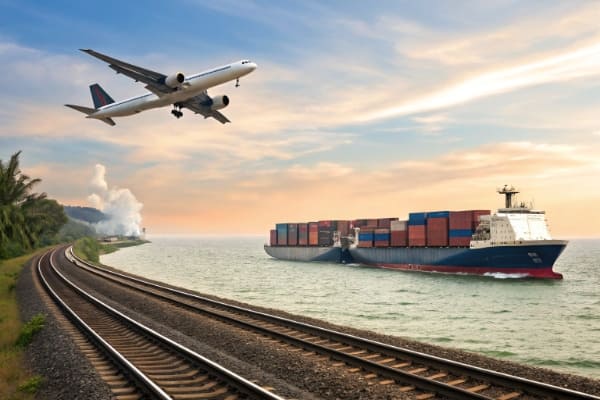
Struggling with complex shipping options from China1? The delays and hidden costs are frustrating. We make the process simple, fast, and transparent for your business.
Choose from air, sea, rail, or express shipping. Air is fastest (5-15 days), sea is cheapest for bulk (25-60 days), and rail offers a balance (18-21 days). A freight forwarder2 can manage the entire process, including customs clearance3 for you.
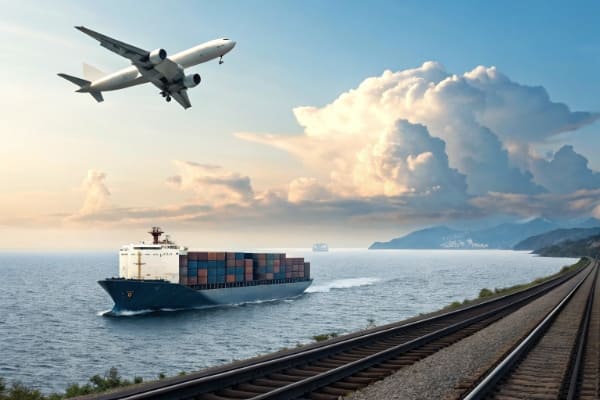
Choosing the right method depends on your budget, timeline, and cargo type. But how do you really know which one is best for you? Let's break down each option so you can make an informed decision and avoid costly mistakes. It's simpler than you think when you know the details.
What are the shipping methods available?
Confused by shipping terms like FCL and LCL4? Choosing the wrong one can waste money. We help you pick the most cost-effective method for your specific needs.
You can use sea freight5 (FCL for full containers, LCL for shared space), air freight6 for speed, rail for a balance of cost and time, or express couriers7 like DHL for small parcels. Each method serves a different purpose for your UK-bound shipments.
When we help clients ship to the UK, the first question is always about their priorities. Is it speed, cost, or a balance of both? Understanding this helps us choose the best transport mode.
Sea Freight: The Most Economical Choice
For large, heavy, or non-urgent shipments, sea freight5 is unbeatable on price. You have two main options. FCL (Full Container Load) means you book an entire container for your goods. LCL (Less than Container Load) means you share container space with other importers, which is great for smaller volumes. Major sea routes run from ports like Shanghai and Shenzhen to UK ports like Felixstowe and Southampton.
Air Freight: The Fastest Option
If your goods are high-value, lightweight, or time-sensitive, air freight6 is the way to go. It's more expensive, but the speed is a huge advantage. Costs are calculated based on "chargeable weight," which is the greater of the actual weight or the volumetric weight (calculated as Length x Width x Height in cm / 6000).
Rail and Express: The Balanced Alternatives
Rail freight is a fantastic middle ground. It's faster than sea but cheaper than air, offering a reliable and eco-friendly option. For small parcels or urgent documents, express couriers7 like DHL, UPS, or FedEx are perfect. They offer door-to-door service and are incredibly fast, though this comes at a premium price.
How long does shipping take to the UK?
Worried your shipment will be late? Unpredictable transit times can disrupt your business schedule. We provide clear timelines so you can plan your inventory with confidence.
Shipping time varies by method. Express is fastest at 1-3 days. Air freight takes 5-15 days. Rail is about 18-21 days, and sea freight5 takes the longest at 25-60 days. Always plan for potential delays, especially around holidays like Chinese New Year8.
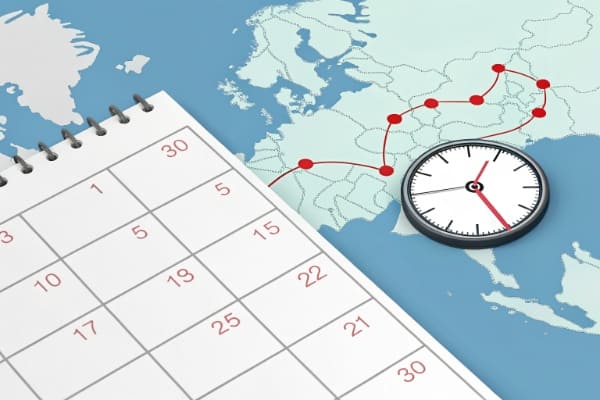
Understanding transit times is key to managing your supply chain effectively. I always tell my clients to build a small buffer into their timeline, especially if their goods are for a specific event or season. Delays can happen due to weather, port congestion, or customs inspections.
Comparing Transit Times
Each shipping method comes with a different time commitment. The estimates below cover the port-to-port or airport-to-airport journey. You also need to account for time on the ground for pickup and final delivery.
| Shipping Method | Average Transit Time | Best For |
|---|---|---|
| Express (Courier) | 1-3 days | Small parcels, urgent documents |
| Air Freight | 5-15 days | High-value, time-sensitive goods |
| Rail Freight | 18-21 days | Balance of speed and cost |
| Sea Freight (FCL/LCL) | 25-60 days | Bulk orders, heavy goods, low-cost items |
The Chinese New Year8 Factor
A crucial point to remember is Chinese New Year8. Most factories and logistics companies in China shut down for at least two weeks. This creates a huge backlog before and after the holiday. To avoid major delays, we always advise clients to plan their shipments well in advance of this period, which usually falls in late January or February.
What is the shipping process9 step by step?
Does the shipping process9 feel overwhelming? It's easy to miss a crucial step. We manage the entire journey, so you don't have to worry about the details.
The process involves getting a quote, booking your shipment, and arranging cargo pickup. Then comes export clearance in China, the actual freight journey, import clearance in the UK, and final delivery. A good freight forwarder2 handles all these steps for you smoothly.
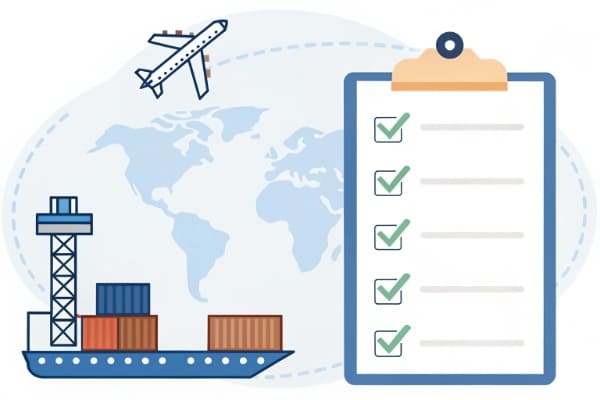
I remember working with a new client who tried to manage their first shipment alone. They missed a customs deadline and their goods were held for weeks. Since then, they've let us handle everything, and their products arrive on time, every time. A clear process managed by an expert makes all the difference.
1. Getting a Quote and Booking
First, you provide details about your cargo (weight, volume, type of goods) to your freight forwarder2. We use this to give you a detailed quote covering all costs. Once you approve, we book the space on the vessel, plane, or train.
2. Cargo Pickup and Export Customs
Next, we arrange for your goods to be picked up from the factory in China. We transport them to the port or airport. Before leaving China, the shipment must clear export customs. We prepare and submit all the necessary paperwork to ensure there are no issues.
3. Freight Transport
This is the main journey where your goods travel from China to the UK via your chosen method. We provide tracking so you can monitor your shipment's progress.
4. UK Customs and Final Delivery
Once the cargo arrives in the UK, it must clear import customs. We handle this by submitting all required documents and paying any duties and taxes on your behalf (if you choose a DDP service). After clearance, we arrange for the final delivery to your warehouse, office, or other specified address.
What documents are required for UK imports?
Afraid of your goods getting stuck at customs? Missing paperwork is a common and costly problem. We ensure all your documents are correct before shipment.
To import into the UK, you need a Commercial Invoice10, Packing List11, Bill of Lading12 (for sea) or Air Waybill (for air), and a Certificate of Origin13. You will also need a UK EORI number14 to clear customs successfully.
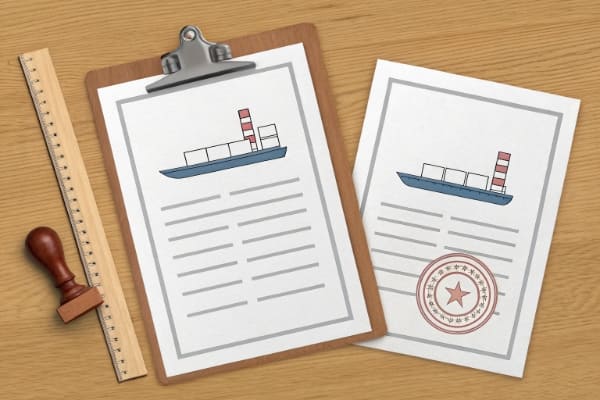
Paperwork is the most common reason for shipping delays. I can't stress this enough: getting your documents right from the start is critical. One small error on a commercial invoice can cause UK customs to hold your entire shipment for inspection, leading to delays and extra fees. We double-check everything to prevent this.
The Essential Paperwork
Here are the key documents you'll need for a smooth customs clearance3 process in the UK.
- Commercial Invoice10: This document lists the buyer, seller, product descriptions, quantities, and the value of the goods. It's used by customs to determine the duties and taxes owed.
- Packing List11: This provides details about the contents of your shipment, including how it's packed, its weight, and its dimensions. It helps customs officials identify and verify the cargo.
- Bill of Lading12 (B/L) or Air Waybill (AWB): This is the contract between you and the carrier. It acts as a receipt for your goods and a document of title. You need it to claim your shipment upon arrival.
- Certificate of Origin13 (CO): This document certifies the country where the goods were manufactured. It can be important for determining tariff rates.
- EORI Number: If you're a business importing into the UK, you must have an Economic Operators Registration and Identification (EORI) number. It's a unique ID used in all customs procedures.
Can you ship to Amazon FBA15 or door-to-door?
Sending goods to an Amazon FBA15 warehouse? The specific requirements can be a headache. We handle FBA prep and direct shipping so you can focus on selling.
Yes, absolutely. We offer full door-to-door services, including Delivered Duty Paid (DDP)16. This means we manage everything from the factory in China to your UK address or an Amazon FBA15 fulfillment center. We handle all customs, duties, and final delivery logistics.
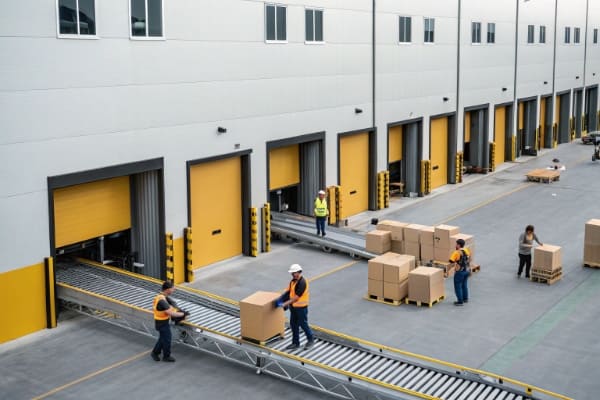
Many of our clients are e-commerce sellers who need their products delivered directly to Amazon's fulfillment centers in the UK. This is a process that requires precision. Amazon has strict rules for labeling, packaging, and delivery appointments. We've built our services to handle these requirements perfectly, so our clients don't have to worry about Amazon rejecting their shipment.
Seamless Door-to-Door Service
Our most popular service is DDP (Delivered Duty Paid). With DDP, we give you one all-inclusive price that covers everything: pickup from the factory, freight, insurance, customs clearance3, duties, taxes, and final delivery to your door. This eliminates surprise costs and simplifies your accounting. You pay one invoice, and we handle the rest.
Expert Amazon FBA15 Shipping
Shipping to Amazon FBA15 involves more than just transport. Your products need specific FNSKU labels, and your cartons need FBA shipping labels. If your goods are on pallets, they must meet Amazon's specific requirements. We can manage all of this for you in our warehouse in China before shipping. We also book the final delivery appointment with the designated Amazon FBA15 center in the UK, ensuring your inventory is received smoothly and becomes available for sale faster.
Conclusion
Shipping from China to the UK is simple with the right partner. By choosing the best method and preparing your documents, you can ensure a smooth, cost-effective process every time.
Explore various shipping options to find the most efficient and cost-effective methods for your business. ↩
Learn how a freight forwarder can simplify your shipping process and save you time and money. ↩
Understanding customs clearance is crucial for smooth shipping; find resources to navigate this process. ↩
Discover the differences between FCL and LCL shipping to choose the best option for your cargo. ↩
Gain insights into sea freight, the most economical shipping method for large shipments. ↩
Explore the advantages of air freight for time-sensitive and high-value goods. ↩
Find out which express courier services offer the fastest delivery for urgent shipments. ↩
Learn how the Chinese New Year impacts shipping schedules and how to plan accordingly. ↩
Get a detailed overview of the shipping process to ensure nothing is overlooked. ↩
Understand the importance of a Commercial Invoice for customs clearance and shipping. ↩
Discover how a Packing List helps in verifying shipment contents and customs processes. ↩
Learn about the role of a Bill of Lading in shipping contracts and cargo claims. ↩
Find out how a Certificate of Origin affects tariff rates and customs clearance. ↩
Understand the necessity of an EORI number for businesses importing into the UK. ↩
Explore the specific requirements for shipping to Amazon FBA and how to meet them. ↩
Learn how DDP simplifies shipping by covering all costs in one invoice. ↩