
Shipping from China to the UAE can be complex. With various methods, costs, and logistics to consider, it’s essential to navigate these waters carefully to avoid pitfalls.
What is the most cost-effective way to ship from China to the UAE? There are several options available, each with its pros and cons. Understanding these can help you make an informed decision.
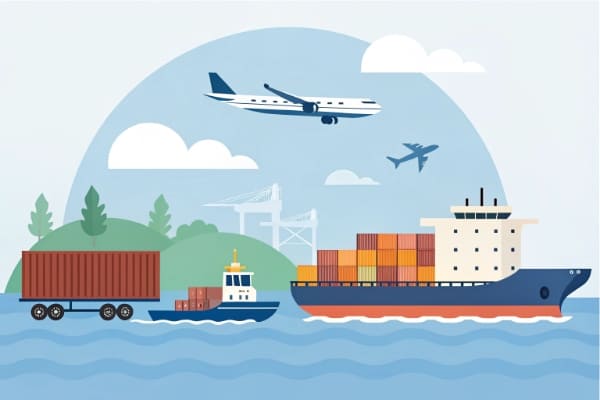
Sea freight is generally the cheapest option for larger shipments.1 It usually takes 20 to 40 days for delivery from China to the UAE2, specifically from ports like Shanghai to Jebel Ali. For smaller shipments, express services such as DHL, FedEx, or UPS offer a faster but more expensive alternative, delivering within 1 to 4 days3.
Shipping methods vary based on your needs. For larger orders, Full Container Load (FCL) is more cost-effective than Less than Container Load (LCL).4 However, express shipping is the best choice for packages under 100 kg5. The right method depends on your budget and urgency.
What Is the Cheapest Shipping Method from China to UAE?
Shipping costs can significantly impact your budget. Everyone wants to save money while ensuring timely delivery. That’s where understanding the cheapest methods comes into play.
The cheapest shipping method from China to the UAE is typically sea freight, especially for larger shipments. This method offers a good balance between cost and delivery time.
When shipping larger quantities, Full Container Load (FCL) is usually more cost-efficient than Less than Container Load (LCL). If you’re looking to send over 500 kg, FCL is the way to go.6 The shipping cost per kilogram decreases significantly when you fill a container.
On the other hand, if you are shipping lighter loads, the express options, while pricier, could save you time. The freight costs for air shipping can be higher, but the speed of delivery often outweighs those costs for urgent shipments.
How Much Does Shipping from China to UAE Cost in 2026?
Knowing the shipping costs upfront helps avoid surprises later on. Prices can fluctuate due to various factors, including market trends and global events.
In 2026, air freight costs from China to the UAE are expected to be around RMB 39–40/kg for shipments of 500 kg or more7. This price reflects a significant increase from historical rates of approximately RMB 20/kg8.

Sea freight rates can vary, but they remain lower than air freight, especially for larger shipments. In addition to shipping costs, don’t forget to factor in customs duties and VAT. The UAE imposes a 5% import duty and a 5% VAT on most goods9, so make sure to prepare all necessary documentation like the commercial invoice and packing list.
How Long Does Shipping from China to UAE Take?
Timing is critical in shipping. Understanding how long it will take can help you plan better for inventory and logistics.
Shipping from China to the UAE via sea freight usually takes 20 to 40 days. For example, a shipment from Shanghai to Jebel Ali typically takes about 25 to 30 days10.

If you need your goods faster, air freight is a better option. The transit time for air freight generally ranges from 3 to 7 days airport-to-airport, or 1 to 3 days for urgent cargo door-to-door. Express services have the quickest turnaround, delivering within 1 to 4 days. However, keep in mind that some factors like airspace restrictions due to regional conflicts can extend delivery times11.
Should You Choose Air Freight or Sea Freight to UAE?
Choosing between air and sea freight can be challenging. Each method serves different purposes and demands.
If cost is your primary concern and time is flexible, sea freight is generally the better option. Conversely, if you need your products quickly, air freight is more suitable.
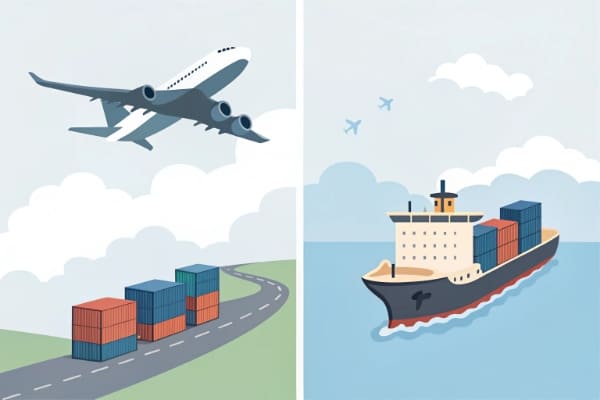
For cargo over 500 kg, FCL sea shipping is more economical. But for shipments under 100 kg, express air services are the most efficient. Be aware that current geopolitical tensions may affect air freight costs, causing a 15% increase and longer delivery times.
Consider the nature of your shipment. Fragile or perishable items may be better suited for air freight despite the higher cost. Always weigh the pros and cons based on your business needs.
How Does DDP Shipping from China to UAE Work?
Delivered Duty Paid (DDP) shipping simplifies the process for you. It allows you to avoid many headaches often associated with customs.
With DDP, the seller assumes all responsibility for shipping costs, including duties and taxes.12 This means that all you have to do is place your order, and the supplier handles everything else.

This method can save you time and effort since the seller will manage customs clearance and ensure compliance with UAE regulations. You'll need essential documents like the bill of lading and the certificate of origin, but the seller generally takes care of these details as part of the DDP arrangement.
However, relying on DDP may increase your overall costs. It's crucial to understand the implications for your pricing and profit margins before choosing this shipping method.
How to Choose a Reliable Freight Forwarder for UAE Shipping?
Selecting a freight forwarder can make or break your shipping experience. A good partner can streamline your logistics and enhance your operation’s efficiency.
Look for a freight forwarder with proven experience in shipping to the UAE. They should provide transparent pricing, handle all required documentation, and offer excellent customer service.

It's essential to check reviews and testimonials from other clients. Look for a forwarder who understands the complexities of UAE customs. Common mistakes like incorrect HS codes or under-declared values can lead to delays. A skilled freight forwarder will help you avoid these pitfalls.
Ultimately, your choice of a freight forwarder should align with your specific needs—whether you prioritize cost, speed, or reliability.
Conclusion
Shipping from China to the UAE in 2026 requires careful planning regarding costs, time, and customs. Understanding these elements will help ensure a smooth shipping experience.
Shipping to other Middle East destinations? Explore our DDP shipping to Saudi Arabia guide for cost, transit time and customs details.
"Air Freight: A Market Study with Implications for Landlocked Countries", https://www.worldbank.org/en/topic/transport/publication/air-freight-study. A neutral logistics or trade source should document that ocean freight typically has lower unit transport costs than air freight for bulky or heavy cargo, supporting the cost comparison for larger shipments. Evidence role: general_support; source type: research. Supports: Sea freight is generally the cheapest option for larger shipments.. Scope note: This supports the general cost relationship; actual rates vary by route, season, container availability, fuel prices, and surcharges. ↩
"Instant Freight Transit Time Calculator | Air, Ocean & Trucking", https://www.freightos.com/freight-resources/transit-time-calculator/. A port schedule, freight transit-time database, or neutral logistics reference should show typical ocean transit ranges between major Chinese ports and UAE ports, contextualizing the stated 20–40 day estimate. Evidence role: statistic; source type: other. Supports: Sea freight from China to the UAE usually takes 20 to 40 days.. Scope note: Transit-time estimates depend on port pair, sailing frequency, transshipment, customs clearance, and congestion; a source may verify a typical range rather than every shipment. ↩
"FedEx vs UPS vs DHL Rates: Which Is Cheaper from China in 2026?", https://ddpchain.com/fedex-vs-ups-vs-dhl-rates-china/. Published express-service transit-time information should support that international express parcels from China to the UAE can be delivered within a multi-day window comparable to 1–4 days under expedited service levels. Evidence role: statistic; source type: other. Supports: Express services from China to the UAE can deliver within 1 to 4 days.. Scope note: Carrier delivery times vary by pickup city, destination emirate, service tier, customs processing, and non-working days. ↩
"FCL vs LCL shipping: How to choose the right one - Maersk", https://www.maersk.com/logistics-explained/transportation-and-freight/2023/12/15/understanding-ocean-freight. A logistics textbook, trade guide, or freight-forwarding reference should explain that FCL can have a lower unit cost than LCL when cargo volume is sufficient to utilize most of a container. Evidence role: mechanism; source type: education. Supports: For larger orders, Full Container Load is more cost-effective than Less than Container Load.. Scope note: This is a conditional rule; LCL may be cheaper for small volumes because the shipper pays only for used space. ↩
"International Mail Services & Shipping Rates - USPS", https://www.usps.com/international/mail-shipping-services.htm. A parcel-logistics or air-cargo reference should support that courier or express services are commonly used for small international consignments where speed and door-to-door handling outweigh freight consolidation benefits. Evidence role: general_support; source type: other. Supports: Express shipping is often preferred for packages under 100 kg.. Scope note: The 100 kg threshold is a practical heuristic rather than a universal standard; cost competitiveness depends on dimensions, service level, and destination. ↩
"FCL vs LCL shipping: How to choose the right one - Maersk", https://www.maersk.com/logistics-explained/transportation-and-freight/2023/12/15/understanding-ocean-freight. A freight logistics source should show that, beyond certain weight or volume thresholds, containerized sea freight can become more economical than LCL or air options because fixed container costs are spread across more cargo. Evidence role: mechanism; source type: other. Supports: For shipments over 500 kg, FCL may be the preferred shipping option.. Scope note: The cited source may support the economic mechanism but not the exact 500 kg cutoff, which also depends on cargo volume and rate conditions. ↩
"Ocean and air freight costs for shipping from China to the UAE in 2026", https://goodhopefreight.com/freight/uae2024.html. A current freight-rate index or market report should substantiate the quoted China–UAE air-freight price level for 500 kg-plus shipments and indicate whether the figure is a spot-rate estimate or forecast. Evidence role: statistic; source type: other. Supports: In 2026, air freight costs from China to the UAE are expected to be around RMB 39–40/kg for shipments of 500 kg or more.. Scope note: Freight-rate forecasts are volatile and may differ by origin airport, destination airport, commodity type, chargeable weight, fuel surcharge, and contract terms. ↩
"Ocean and air freight costs for shipping from China to the UAE in 2026", https://goodhopefreight.com/freight/uae2024.html. Historical air-cargo rate data should document prior China–UAE per-kilogram freight levels near RMB 20/kg, providing a baseline for the article’s claimed increase. Evidence role: statistic; source type: other. Supports: Historical China-to-UAE air freight rates were approximately RMB 20/kg.. Scope note: Historical rates depend on the year, airport pair, chargeable weight, and whether surcharges and handling fees are included. ↩
"United Arab Emirates - Import Tariffs", https://www.trade.gov/country-commercial-guides/united-arab-emirates-import-tariffs. UAE government customs and tax guidance should confirm the standard 5% customs duty on many imports and the 5% VAT rate applied to taxable supplies and imports. Evidence role: statistic; source type: government. Supports: The UAE imposes a 5% import duty and a 5% VAT on most goods.. Scope note: Certain goods may be exempt, zero-rated, restricted, or subject to different excise or customs treatment depending on classification and origin. ↩
"Shipping cost calculation for the route from Jebel ali to Shanghai", https://agorafreight.net/shipping-quotes/fcl-from-jebel-ali-to-shanghai/. A carrier schedule, port-pair transit-time reference, or maritime logistics dataset should show typical container transit times from Shanghai to Jebel Ali in the range of about 25–30 days. Evidence role: statistic; source type: other. Supports: A shipment from Shanghai to Jebel Ali typically takes about 25 to 30 days.. Scope note: This verifies a typical sailing-duration estimate, not total door-to-door delivery time including drayage, customs, inspections, or port delays. ↩
"[PDF] DRAFT AFI FRA CONOPS The Free Route operational concept ...", https://www.icao.int/sites/default/files/ESAF/APIRG/APIRG-23/WPs/WP06-Appendices/Appendix-1/Appendix-5-The-AFI-Free-Route-operational-concept_Draft.pdf. A civil aviation authority, international aviation organization, or peer-reviewed transport analysis should show that conflict-related airspace closures or restrictions can cause rerouting, longer flight times, or operational delays. Evidence role: mechanism; source type: institution. Supports: Airspace restrictions due to regional conflicts can extend delivery times.. Scope note: Such evidence supports the general mechanism; it may not prove that a specific China–UAE shipment was delayed unless paired with route-specific notices. ↩
"What is DDP Shipping? Definition, Terms & Incoterms Explained", https://www.finaleinventory.com/blog/guides/what-is-ddp-shipping/. The Incoterms definition of Delivered Duty Paid should be cited to support that, under DDP, the seller bears delivery obligations including import clearance and payment of applicable duties and taxes at the named destination. Evidence role: definition; source type: institution. Supports: With DDP, the seller assumes responsibility for shipping costs, including duties and taxes.. Scope note: DDP obligations can be modified by contract, and local import rules may require the buyer or a local entity to act as importer of record in some jurisdictions. ↩