
Rail freight from China is an important logistics service that connects various regions. It combines efficiency and affordability, making it a popular choice for businesses.
Rail freight from China is a scheduled international container service linking Chinese inland hubs with Europe and nearby regions1, offering a balance between speed and cost2.
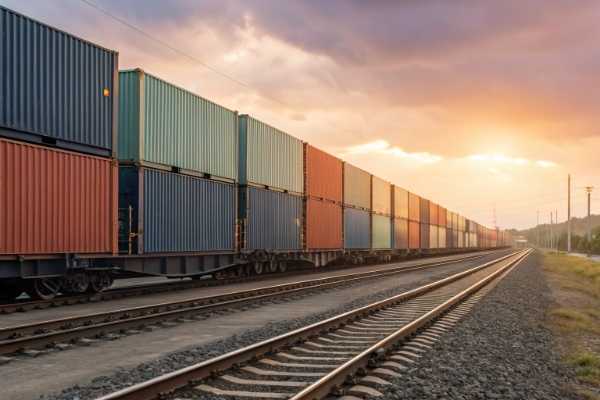
Rail freight has become a reliable option for many businesses. It helps them navigate the complexities of moving goods across borders. In this article, I will explain the ins and outs of rail freight, how it operates, and its key features.
What Is Rail Freight from China?
Rail freight is a transportation method that uses trains to carry goods. It is scheduled and connects Chinese inland hubs directly to Europe and other regions. This method is increasingly popular3 because it combines the speed of air freight and the cost-effectiveness of sea freight4.
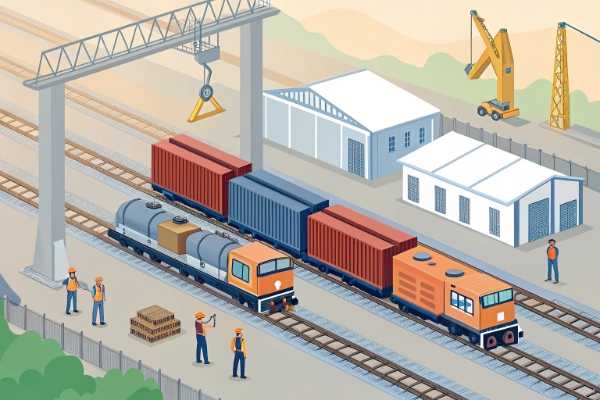
The process begins at the factory where the cargo is picked up. After that, it goes through export customs clearance5. Then, the goods are loaded onto trains that travel across various countries. This route can sometimes involve complex logistics, but it is manageable with proper planning.
How Does Rail Freight Work from China to International Destinations?
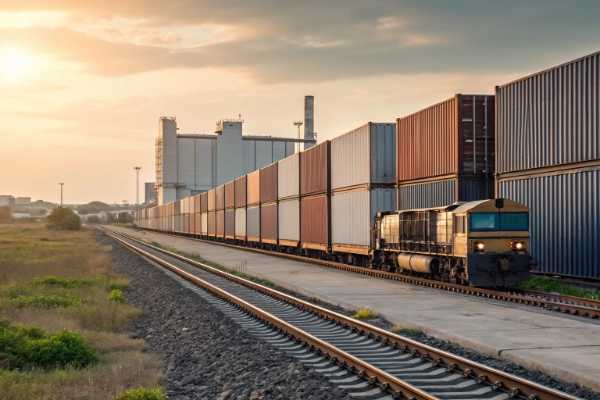
Rail freight operates through a series of steps. First, the cargo is picked up from the factory. After that, it goes through export customs clearance before being loaded onto the train.
Once on the train, the cargo travels along established rail routes. This journey involves border transshipment where the cargo may need to change trains6. This is especially necessary when crossing different railway gauges7. After reaching the destination country, the cargo goes through import customs and is delivered to the final location.
The entire process is highly organized, aiming to minimize delays and maintain reliability. Rail freight is designed for efficiency, and I have seen it work smoothly when planned correctly.
What Are the Main Rail Freight Routes from China?
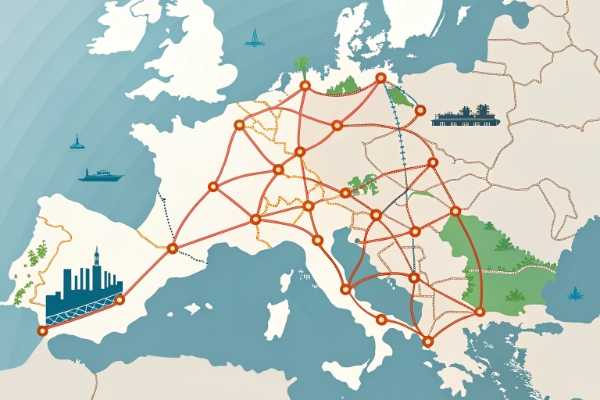
China has several major rail routes that connect to Europe and beyond. These routes generally fall into three main corridors: western, central, and eastern8.
- Western Corridor: This route often connects cities like Chongqing and Xi'an to Germany and France.
- Central Corridor: It includes routes passing through cities like Zhengzhou and Wuhan, heading towards Poland9 and other central European destinations.
- Eastern Corridor: This route links cities like Dalian and Harbin with Russia and further into Europe.
These corridors help facilitate trade and improve supply chain efficiency. The routes vary in terms of duration and cost.
What Types of Goods Are Suitable for Rail Freight?
Rail freight is great for various types of goods. It works particularly well for standardized items. This includes goods with predictable dimensions and clear documentation.
Common cargo types include electronics, machinery, textiles, and automotive parts10. Rail freight can handle both Full Container Load (FCL) and Less than Container Load (LCL) shipments. This flexibility allows businesses to choose the option that best fits their needs.
Moreover, rail freight is ideal for time-sensitive cargo that does not require the immediacy of air freight but is still too urgent for sea freight. This feature makes rail freight an attractive option for many companies.
What Are the Advantages and Disadvantages of Rail Freight?
Rail freight comes with its own set of advantages and disadvantages. Understanding these can help businesses make informed choices.
Advantages:
- Cost-effective: Rail freight is cheaper than air freight while being faster than sea freight.
- Reliable schedules: Trains operate on fixed schedules, reducing uncertainty in delivery times.
- Less congestion: Rail networks are less affected by maritime congestion and weather disruptions.
Disadvantages:
- Limited flexibility: Trains run on set routes, making it less adaptable than trucking.
- Gauge changes: Border crossings may require a gauge change, adding complexity.
- Not suitable for all cargo: Certain types of cargo may not be compatible with rail transport.
Deciding on rail freight requires weighing these factors against the specific needs of your business.
How Does Rail Freight Compare with Sea Freight and Air Freight?
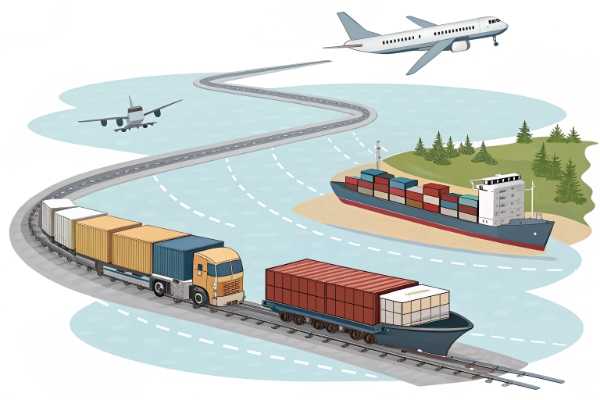
When comparing rail freight with sea and air freight, each mode has its strengths and weaknesses.
- Air Freight: Best for urgent shipments, but significantly more expensive. Ideal for high-value items needing quick delivery.
- Sea Freight: The most economical choice for large volumes, but it is slower. Best for non-time-sensitive cargo.
- Rail Freight: Offers a middle ground. It provides faster shipping than sea freight at a lower cost than air freight.
Choosing the right method depends on transit time, budget, and the nature of the goods being shipped.
How Much Does Rail Freight Cost and How Long Does It Take?
The cost of rail freight varies based on several factors. These include the distance, type of cargo, and specific routes. Generally, rail freight is more affordable than air freight but more expensive than sea freight.
Transit times typically range from 12 to 20 days11, depending on the origin and destination. For businesses with time-sensitive cargo, this duration is often more acceptable than waiting for sea freight.
Understanding the cost structure and timeline is essential for planning shipments.
How Do You Choose Rail Freight for Your Shipment?
Choosing rail freight for your shipment involves several considerations. First, evaluate the nature of your cargo and its urgency. If it is time-sensitive but not urgent, rail freight can be an excellent choice.
Next, consider the routes available. The selected corridor can affect both cost and transit time. It is also helpful to partner with a reliable freight forwarder. They can offer valuable insights into logistics and help manage the process.
Finally, assess the total cost, including customs fees and any additional handling requirements. Making an informed choice will help ensure a smooth shipping experience.
Conclusion
Rail freight from China is a valuable logistics option, balancing speed and cost for international shipments.
"ECE-TRANS-WP5-2022-01e.pdf", https://unece.org/sites/default/files/2022-08/ECE-TRANS-WP5-2022-01e.pdf. An institutional transport source documents that China-Europe freight trains operate as scheduled container rail services connecting inland Chinese cities with terminals in Europe and adjacent Eurasian regions. Evidence role: definition; source type: institution. Supports: Rail freight from China is a scheduled international container service linking Chinese inland hubs with Europe and nearby regions.. Scope note: The source may describe the general network rather than every individual origin-destination pair. ↩
"Middle Trade and Transport Corridor", https://thedocs.worldbank.org/en/doc/6248f697aed4be0f770d319dcaa4ca52-0080062023/original/Middle-Trade-and-Transport-Corridor-World-Bank-FINAL.pdf. A transport economics or logistics study comparing Eurasian rail with ocean and air freight supports the characterization of rail as occupying an intermediate position in transit time and cost. Evidence role: expert_consensus; source type: paper. Supports: Rail freight from China offers a balance between speed and cost.. Scope note: Cost and transit-time comparisons vary by route, market conditions, shipment size, and season. ↩
"China-EU rail freight on the rise again in 2024 - Market Insights - Upply", https://market-insights.upply.com/en/china-eu-rail-freight-on-the-rise-again-in-2024?hs_amp=true. Official or institutional statistics on China-Europe freight train volumes over time support the claim that use of these services has grown. Evidence role: statistic; source type: government. Supports: Rail freight from China has become increasingly popular.. Scope note: Growth in train counts or TEU volumes does not necessarily prove popularity among all business sectors. ↩
"Rail Freight From China (2026) – Time, Rates, Routes & ...", https://ddpchain.com/rail-freight-from-china/. Comparative logistics research supports the more limited point that China-Europe rail freight is generally faster than sea freight and less costly than air freight. Evidence role: expert_consensus; source type: paper. Supports: Rail freight is positioned between air and sea freight in speed and cost.. Scope note: The wording is broad; evidence can support relative positioning but not that rail literally combines the full speed of air freight with the full cost-effectiveness of sea freight. ↩
"Standards on Completion of Customs Declaration Forms ...", http://english.customs.gov.cn/statics/7d65e215-13ed-4a3e-baa1-797f01e5e902.html. Customs guidance from a government or international customs institution explains that goods leaving a country are subject to export declaration or clearance procedures before international transport. Evidence role: mechanism; source type: government. Supports: Cargo in international rail freight from China goes through export customs clearance before departure.. Scope note: Specific documentation and procedures differ by commodity, origin, destination, and customs regime. ↩
"Break of gauge", https://en.wikipedia.org/wiki/Break_of_gauge. Railway technical sources explain that international rail freight may require transshipment or bogie exchange at borders where infrastructure or operating systems differ. Evidence role: mechanism; source type: institution. Supports: International rail freight can involve border transshipment where cargo may need to change trains.. Scope note: Not all border crossings require the same procedure; some corridors use gauge-changing technology, bogie exchange, or container transfer. ↩
"Standard-gauge railway", https://en.wikipedia.org/wiki/Standard-gauge_railway. Rail infrastructure references document that China and most of Europe use standard gauge while several Eurasian transit countries use broad gauge, creating gauge breaks on some China-Europe rail corridors. Evidence role: mechanism; source type: encyclopedia. Supports: Different railway gauges can require operational changes during China-Europe rail freight transport.. Scope note: Gauge differences explain a common source of transshipment but are not the only reason cargo may change trains at borders. ↩
"The eastern corridor of the China-Europe Railway Express has ...", https://www.facebook.com/XinhuaNewsAgency/posts/the-eastern-corridor-of-the-china-europe-railway-express-has-handled-over-40000-/1469733985189131/. An institutional description of the China-Europe Railway Express network identifies western, central, and eastern corridors, supporting the corridor classification used in the article. Evidence role: definition; source type: institution. Supports: Major China-Europe rail freight routes are commonly grouped into western, central, and eastern corridors.. Scope note: Corridor names and boundaries may vary between Chinese, European, and international sources. ↩
"The China-Europe Railway Express has delivered its first ...", https://www.facebook.com/cgtneuropeofficial/posts/the-china-europe-railway-express-has-delivered-its-first-petro-chemical-shipment/1594042389422967/. Transport network documentation identifies Zhengzhou and Wuhan as China-Europe rail freight hubs with services to European terminals, including Polish logistics nodes such as Małaszewicze or Łódź. Evidence role: case_reference; source type: institution. Supports: The central corridor includes services associated with Zhengzhou and Wuhan heading toward Poland and Central Europe.. Scope note: The cited evidence would support representative hub connections, not every train path within the central corridor. ↩
"Rail reliability delivers steady success-China-Europe ...", https://cceeccic.org/386484612.html. Trade or transport studies on China-Europe rail freight list manufactured goods such as electronics, machinery, textiles, and automotive components among common containerized cargo categories. Evidence role: general_support; source type: paper. Supports: Electronics, machinery, textiles, and automotive parts are common cargo types for China-origin rail freight.. Scope note: Cargo composition varies by route, direction, shipper, and reporting period. ↩
"Hitting 10,000 trips in less than 200 days, China-Europe ...", https://english.www.gov.cn/news/202407/29/content_WS66a704dec6d0868f4e8e98d0.html. Published logistics studies or institutional route summaries report typical China-Europe rail freight transit times in the range of roughly two to three weeks for selected routes. Evidence role: statistic; source type: research. Supports: Transit times for China-origin international rail freight commonly fall around 12 to 20 days on many routes.. Scope note: Actual transit times depend on origin, destination, border handling, congestion, customs, and service frequency. ↩