
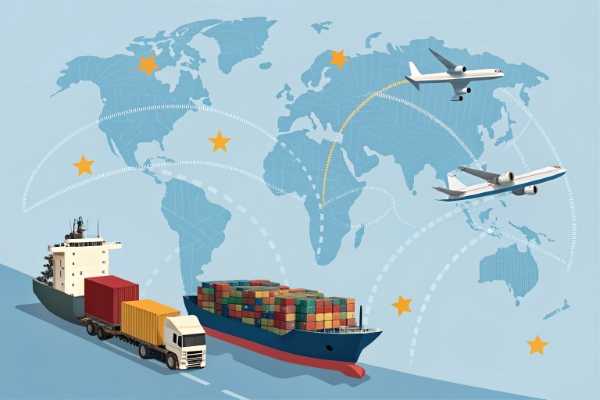
Shipping from China can be confusing. There are many options available. Each method has its pros and cons.
In this article, we will explore various shipping methods available from China. This will help you decide which option suits your business needs best.
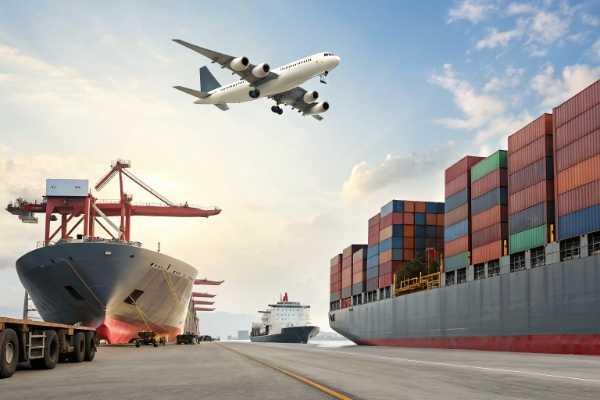
Shipping from China involves several methods. The most common ones include express shipping, air freight, sea freight, and rail freight.1 Each has its unique advantages. Your choice depends on your specific needs.
LOOP START
What Shipping Methods Are Available from China?
Shipping methods from China range from express services to ocean freight. Each method caters to different needs.
Express shipping is ideal for small parcels and time-sensitive orders.2 Air freight is faster but pricier.3 Sea freight is cost-effective for larger shipments4, while rail freight offers a middle ground5.
Let's break down these options.
- Express Shipping: This method is best for urgent deliveries. Companies like DHL and FedEx handle these services. They deliver smaller parcels quickly.
- Air Freight: Air freight is faster than sea freight. It is suited for higher-value cargo that needs quick delivery.
- Sea Freight: This is the cheapest shipping method for large shipments. However, it takes longer to arrive at the destination.
- Rail Freight: Rail options are available for some routes. They can be more cost-efficient than air but faster than sea.
Choosing the right method can save time and money. Knowing the specifics of each method is essential for successful shipping.
LOOP END
How Does Ocean Freight Compare with Air Freight?
When comparing ocean freight and air freight, the differences are clear.
Ocean freight is cheaper for large shipments but slower. Air freight is fast but more expensive. Knowing these differences helps in making informed decisions.
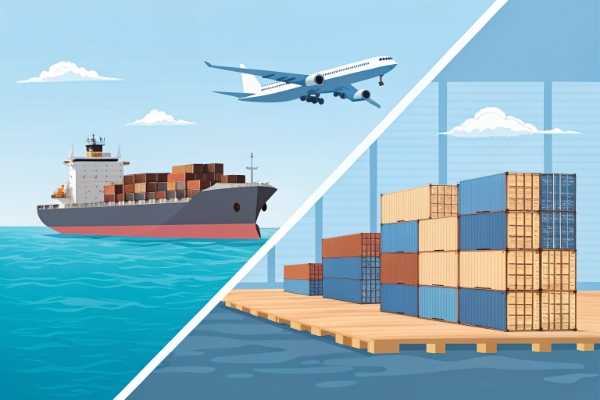
Ocean freight is the go-to option for bulk shipments.6 If you are sending a lot of items, it reduces costs significantly. Shipping can take weeks, depending on the route.7
On the other hand, air freight is suitable for urgent shipments.8 If you have a high-value product or a small order, air freight might be worth the cost.9
Here’s a quick comparison:
| Feature | Ocean Freight | Air Freight |
|---|---|---|
| Cost | Low | High |
| Speed | Slow | Fast |
| Ideal For | Large Shipments | Urgent Deliveries |
In the end, the choice depends on your priorities. If cost is a concern, ocean freight wins. If speed matters most, go for air freight.
LOOP START
When Should You Choose Express Shipping Instead of Freight?
Express shipping has its place in business.
Use express shipping for small parcels, samples, and time-sensitive deliveries. It provides quick service, making it ideal when time is critical.

Express shipping is perfect for urgent needs. If you have a small order or sample, express services get it there quickly. Companies can benefit from faster turnaround times.
However, this method can be costly. If your shipment is larger, freight methods might be more suitable.
In summary, choose express shipping for:
- Small parcels
- Samples
- Urgent deliveries
If your needs fit these categories, express shipping is the way to go.
LOOP END
Is Rail Freight a Good Option for Shipping from China?
Rail freight is an option that should not be overlooked.
It can be a good choice for specific destinations. Rail freight offers a balance between cost and speed, making it attractive for many businesses.
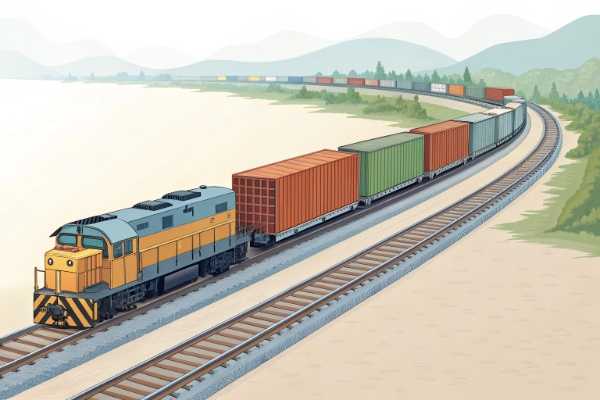
Rail freight works best for routes that have established rail networks.10 It is often cheaper than air freight and faster than ocean freight.
For example, shipping goods to Europe can be efficient via rail.11 Many businesses find it a great compromise.
The main benefits are:
- Cost-effectiveness
- Faster than sea freight
- Good for medium-sized shipments
When considering your shipping options, don’t overlook this method. It could be the right fit for your logistics strategy.
LOOP START
Which Shipping Method Is the Cheapest and Which Is the Fastest?
Cost and speed are crucial in shipping decisions.
Ocean freight is the cheapest method for large shipments. Air freight is the fastest option for urgent deliveries. Each method has its place depending on your needs.

Here’s a simple breakdown:
- Cheapest: Ocean freight wins for bulk. If you are importing a lot of products, this is the way to go.
- Fastest: Air freight is the quickest. It is perfect for time-sensitive cargo.
Choosing the right method is not just about price. You should consider the urgency and nature of the product. If it’s high-value and time-sensitive, air freight makes sense. If cost is your main concern, ocean freight is the way to go.
LOOP END
How Do You Choose the Best Shipping Method for Your Business?
Deciding on a shipping method requires careful thought.
Consider shipment weight, volume, urgency, and product type.12 Don’t focus solely on price. Each factor plays a role in your shipping decision.
To choose the best shipping method, consider these factors:
- Shipment Weight and Volume: Heavier shipments typically benefit from ocean freight.
- Urgency: If your shipment is time-sensitive, air freight or express methods are best.
- Product Type: Fragile or high-value items may require faster shipping for safety.
Additionally, consolidate cargo to minimize costs. Good packaging can also reduce freight fees.
In conclusion, think about all these factors to choose the best shipping method for your business.
Conclusion
Choosing the right shipping method from China can save time and costs. Assess your needs carefully to find the best fit.
"Know Your Incoterms - International Trade Administration", https://www.trade.gov/know-your-incoterms. A neutral overview of international freight transport can substantiate that parcel express, air cargo, maritime container shipping, and rail freight are recognized modes used in cross-border logistics. Evidence role: general_support; source type: institution. Supports: Shipping from China commonly involves express shipping, air freight, sea freight, and rail freight.. Scope note: Such a source would support the classification of shipping modes generally, not their relative suitability for every China-origin shipment. ↩
"Press Release: UPU launches solution to move mail as postal flows ...", https://www.upu.int/en/press-release/2025/press-release-upu-launches-solution-to-move-mail-as-postal-flows-to-us-reach-near-standstill. Carrier-neutral parcel and postal logistics guidance can support that express services are designed for faster delivery of smaller consignments and time-sensitive shipments. Evidence role: definition; source type: institution. Supports: Express shipping is generally suitable for small parcels and time-sensitive orders.. Scope note: The source would describe typical service design; actual suitability depends on shipment size, destination, customs clearance, and price. ↩
"Air Freight vs Sea Freight: Cost, Shipping, Carbon Footprint & More", https://www.freightos.com/freight-resources/air-freight-vs-ocean-freight-making-the-decision/. International transport analyses commonly state that air freight offers shorter transit times than sea freight but has substantially higher unit costs. Evidence role: general_support; source type: institution. Supports: Air freight is generally faster than sea freight but more expensive.. Scope note: The comparison is mode-level and may vary by route, fuel prices, capacity, and shipment characteristics. ↩
"Maximizing efficiency to minimize shipping costs", https://blogs.worldbank.org/en/transport/maximizing-efficiency-to-minimize-shipping-costs. Maritime transport sources can support that ocean shipping has low unit costs and is widely used for moving large volumes of goods internationally. Evidence role: general_support; source type: institution. Supports: Sea freight is generally cost-effective for large shipments.. Scope note: This supports the general economic advantage of sea freight for volume, not a guaranteed lowest price for every shipment. ↩
"Setting the Middle Corridor on track", https://mei.edu/publication/setting-middle-corridor-track/. Studies of Eurasian rail freight describe rail as positioned between maritime and air transport, typically faster than sea shipping and less costly than air freight. Evidence role: expert_consensus; source type: paper. Supports: Rail freight can provide a cost-speed compromise between air and sea freight.. Scope note: This support is strongest for corridors where rail service is established, especially China-Europe routes, and may not apply globally. ↩
"[PDF] International Shipping and World Trade Facts and figures - seors", https://seors.unfccc.int/applications/seors/attachments/get_attachment?code=P3NL79DO7SC1VMXXTMI8WYF2EFRAQN19. Maritime transport statistics and policy sources can support that shipping carries the majority of world merchandise trade by volume, reflecting its suitability for bulk and large-volume cargo. Evidence role: statistic; source type: institution. Supports: Ocean freight is commonly used for bulk or large-volume shipments.. Scope note: Global volume shares support the general role of maritime shipping but do not prove it is optimal for every bulk shipment from China. ↩
"Transit Time Calculator for Sea, Air & Port To Port Shipping | Freightos", https://www.freightos.com/freight-resources/transit-time-calculator/. Port-to-port schedule data or transport guides can substantiate that ocean freight transit times on long intercontinental routes are commonly measured in weeks. Evidence role: general_support; source type: institution. Supports: Ocean freight shipments can take weeks, depending on the route.. Scope note: Exact transit time depends on ports, service frequency, routing, transshipment, congestion, and customs procedures. ↩
"Air Cargo and Logistics", https://portfolio.erau.edu/en/publications/air-cargo-and-logistics/. Air cargo references can support that air transport is used for goods requiring rapid delivery, including urgent, perishable, or high-value shipments. Evidence role: general_support; source type: institution. Supports: Air freight is suitable for urgent shipments.. Scope note: Suitability for urgency is contextual and may be affected by airport access, customs clearance, and available flight capacity. ↩
"The value of time and the impact on the air freight product ...", https://www.sciencedirect.com/science/article/abs/pii/S0969699723000248. Air cargo industry and academic sources can support that air freight is often selected for high-value, low-weight, or time-sensitive goods because speed can offset higher transport costs. Evidence role: mechanism; source type: research. Supports: Air freight may be justified for high-value products or small orders despite higher cost.. Scope note: This explains the economic rationale but does not determine whether air freight is cost-effective for a specific order. ↩
"Freight Rail Overview | FRA - Federal Railroad Administration", https://railroads.dot.gov/rail-network-development/freight-rail-overview. Transport geography and rail freight sources can support that rail service viability depends on fixed rail infrastructure, terminals, and corridor connectivity. Evidence role: mechanism; source type: education. Supports: Rail freight is most viable where established rail networks and terminals exist.. Scope note: This supports the infrastructure dependency of rail freight generally, not the performance of a particular China-origin route. ↩
"Freight train becomes key link between China, Europe", https://english.www.gov.cn/news/202412/02/content_WS674d1c04c6d0868f4e8ed960.html. Research on China-Europe freight trains can support that rail corridors between China and Europe provide an alternative to maritime and air transport with intermediate transit times and costs. Evidence role: case_reference; source type: paper. Supports: Shipping goods from China to Europe can be efficient via rail for some routes and cargoes.. Scope note: The evidence would apply mainly to locations served by China-Europe rail corridors and may not generalize to all European destinations or cargo types. ↩
"[PDF] Analysis of Freight Movement Mode Choice Factors - FDOT", https://www.fdot.gov/docs/default-source/rail/publications/studies/planning/modechoicefactors.pdf. Freight mode-choice literature identifies shipment size, weight, value, urgency, and commodity characteristics as factors influencing the selection of transport mode. Evidence role: expert_consensus; source type: paper. Supports: Shipment weight, volume, urgency, and product type are relevant factors when choosing a shipping method.. Scope note: Mode-choice models identify common determinants; individual business decisions also depend on contracts, route availability, reliability, and customs requirements. ↩