
Shipping from China can feel overwhelming. Many options are available, and making the right choice is crucial for your business. The right shipping method can save you time and money while ensuring your products arrive safely.
When choosing a shipping method from China, consider key factors like cost, speed, reliability, and the type of cargo1.
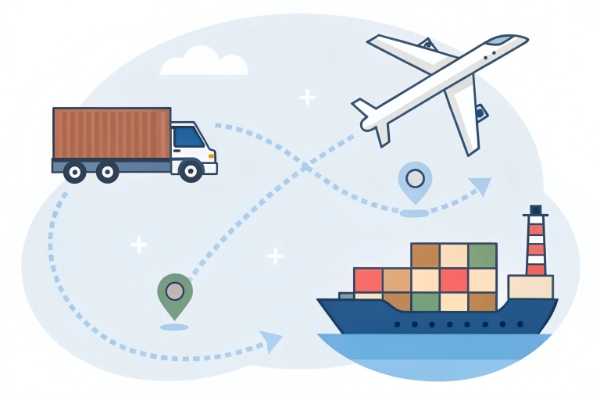
Choosing the best shipping method is essential. It impacts everything from costs and delivery times to customer satisfaction. I have learned that many factors can influence this choice. Understanding these factors helps you make an informed decision.
What Factors Should You Consider When Choosing a Shipping Method from China?
Shipping can make or break your business. Have you ever experienced a delay just before a big launch? I have. It taught me that selecting the right shipping method is vital.
First, think about how quickly you need your products. If you need them soon, air freight is faster2. But, it can be expensive. If time is not an issue, sea freight is often cheaper3.
Next, consider weight and size. Bulky items can be shipped more affordably via sea freight4. On the other hand, lightweight items can be shipped quickly by air.
Lastly, check your budget. Stick to what you can afford. Remember, the cheapest option may not always be the best one.
In summary, consider speed, size, and cost when choosing a shipping method from China.
How Do Cost, Speed, and Reliability Compare Across Shipping Methods?
When comparing shipping methods, I always look at three main aspects: cost, speed, and reliability. Each shipping method has advantages and disadvantages.
Air freight is the fastest. It typically takes days to a week5. However, it is also the most expensive option. If your products are high-value or time-sensitive, air freight may be the best choice despite the cost.
Sea freight is slower, usually taking 2–8 weeks6. But it offers a lower unit cost7, making it ideal for bulky or heavy shipments. If lead time is acceptable, sea freight is often the best option.
Express couriers like DHL, UPS, and FedEx provide door-to-door service8. They simplify customs clearance9 but come with higher rates per kilogram. This option is suitable for small parcels and urgent shipments.
In conclusion, air freight is fast but costly, sea freight is cheap but slow, and express couriers offer convenience at a higher price.
Which Shipping Method Is Best for Different Types of Cargo?
Different types of cargo require different shipping methods. The best choice depends on what you are shipping.
For bulky or heavy items, I recommend sea freight (FCL/LCL). It provides a low unit cost when time is not a concern.
If you are shipping lightweight or high-value items, air freight is the way to go. Speed is essential here, even if it costs more.
For small parcels, express couriers are best. They offer convenience and simplicity, even if the price is higher.
Lastly, if you are shipping to Europe, consider rail. This option balances speed and cost, typically taking 12–20 days10.
In short, choose the shipping method based on your cargo type, weight, and urgency.
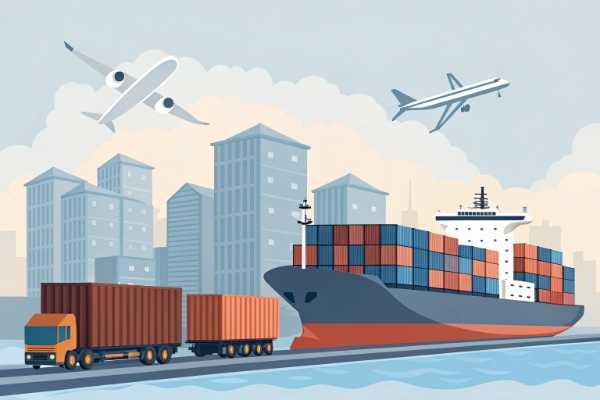
How Do Incoterms Affect Your Shipping Method Choice?
Incoterms play a crucial role in international shipping. They define the responsibilities of buyers and sellers11. I always ensure I understand these terms when choosing a shipping method.
Choose DDP (Delivered Duty Paid) for predictable costs and minimal workload. It simplifies shipping, as the seller handles customs and delivery risks.
If you prefer more control, consider using FOB (Free On Board) or EXW (Ex Works). These options require you to manage logistics and customs yourself.
Matching your Incoterms to your preferences is essential. It helps clarify responsibilities and reduces misunderstandings.
In summary, understand Incoterms to choose the right shipping method and manage risks effectively.
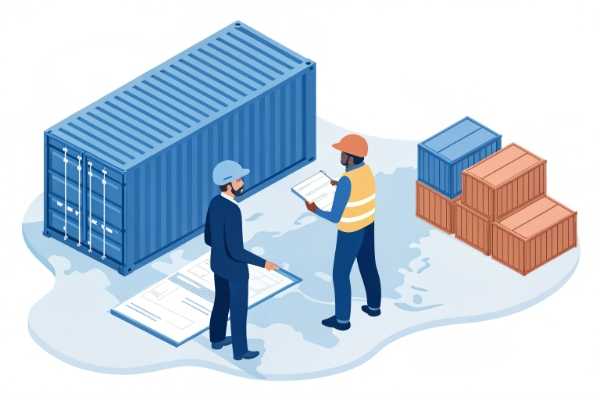
What Common Mistakes Should You Avoid When Choosing a Shipping Method?
Avoiding common mistakes can save you time and money. One mistake I often see is only focusing on the lowest freight rate. Instead, evaluate the total landed cost, including duties and fees.
Another mistake is not considering seasonal factors. For example, shipping before Chinese New Year can lead to delays due to congestion12.
Moreover, overlooking chargeable weight can increase costs. Use compact packing and calculate dimensional weight correctly to optimize shipping fees.
Lastly, don’t forget to consolidate shipments. Grouping smaller shipments can lower costs and enhance efficiency.
To sum it up, avoid focusing solely on freight rates, consider seasonal factors, optimize packaging, and consolidate shipments.
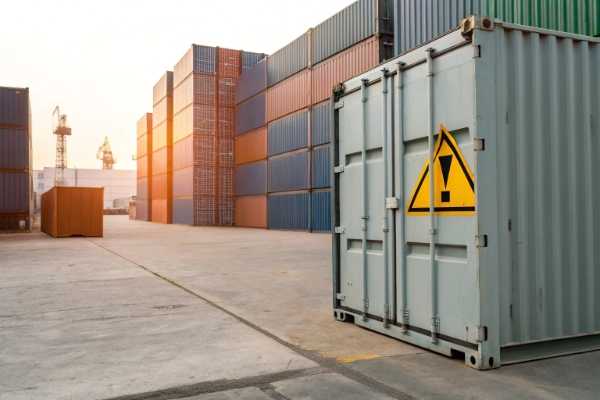
How Can You Select the Most Cost-Effective Shipping Solution for Your Business?
Finding the most cost-effective shipping solution requires careful planning. First, evaluate your needs. Are you shipping bulky products or small parcels? This will influence your choice.
Next, calculate the chargeable weight. This means comparing the dimensional weight to the actual weight. Choose packaging that minimizes this weight.
Also, assess the benefits of DDP versus FOB. DDP may be more suitable for businesses that want predictability. On the other hand, FOB allows for more control over logistics.
Finally, always look for ways to consolidate shipments. This can significantly reduce costs.
In conclusion, determine your shipping needs, optimize packaging, and consider DDP versus FOB to find a cost-effective solution.
Conclusion
Choosing the best shipping method from China requires careful consideration of factors like cost, speed, and reliability.
"[PDF] 2021–2024 QUADRENNIAL SUPPLY CHAIN REVIEW", https://www.trade.gov/sites/default/files/2025-01/20212024-Quadrennial-Supply-Chain-Review.pdf. International trade and logistics guidance commonly treats transport-mode selection as a trade-off among cost, transit time, reliability, and shipment characteristics such as weight, volume, and cargo requirements. Evidence role: expert_consensus; source type: institution. Supports: Choosing a shipping method from China should account for cost, speed, reliability, and cargo type.. Scope note: This supports the general decision framework rather than proving the best choice for any specific shipment from China. ↩
"Know Your Incoterms - International Trade Administration", https://www.trade.gov/know-your-incoterms. Government export guidance and logistics references generally identify air cargo as the faster international freight mode compared with ocean freight, while noting that it is usually used when speed justifies higher transport costs. Evidence role: general_support; source type: government. Supports: Air freight is faster than sea freight for international shipments.. Scope note: Transit times vary by route, capacity, customs clearance, and service level. ↩
"Iceland - Trade Barriers - International Trade Administration", https://www.trade.gov/country-commercial-guides/iceland-trade-barriers. Trade and logistics references describe ocean freight as generally lower cost than air freight for large international shipments because ships carry high volumes and allocate transport cost across greater cargo capacity. Evidence role: general_support; source type: government. Supports: Sea freight is often cheaper than air freight when time is not the main constraint.. Scope note: This is a general cost comparison; actual prices depend on market rates, route, container availability, fuel costs, and surcharges. ↩
"[PDF] Fathoming Shipping Costs: An Exploration - World Bank Document", https://documents1.worldbank.org/curated/en/099436104042241280/pdf/IDU0c20d2ae90046304ca009ab508217e50747bd.pdf. Maritime transport sources note that container shipping is designed for high-volume cargo movements and is typically more economical than air transport for heavy or bulky goods over long distances. Evidence role: mechanism; source type: institution. Supports: Bulky items are often more affordable to ship by sea freight.. Scope note: The support is strongest for non-urgent cargo; special handling, hazardous goods, and destination constraints can change the cost comparison. ↩
"Know Your Incoterms - International Trade Administration", https://www.trade.gov/know-your-incoterms. Air-cargo and trade-logistics references commonly describe international air freight transit times in the range of several days, especially when compared with ocean freight measured in weeks. Evidence role: statistic; source type: institution. Supports: Air freight from China typically takes days to about a week.. Scope note: The stated range is approximate and excludes delays from pickup, export processing, customs clearance, last-mile delivery, or capacity constraints. ↩
"Maritime Services - International Trade Administration", https://www.trade.gov/maritime-services. International shipping references commonly report ocean freight lead times in weeks rather than days, with route distance, port calls, customs processes, and congestion contributing to broad ranges such as several weeks to more than a month. Evidence role: statistic; source type: institution. Supports: Sea freight is slower than air freight and can take about 2–8 weeks.. Scope note: The 2–8 week range is contextual; exact transit time depends on origin and destination ports, sailing schedule, service type, and inland transport. ↩
"[PDF] Unclassified TAD/TC/WP(2008)10/FINAL Working Party of the Trade ...", https://one.oecd.org/document/TAD/TC/WP(2008)10/FINAL/en/pdf. Maritime transport analyses explain that container ships achieve economies of scale by moving large volumes of cargo, which can reduce per-unit transport costs compared with faster modes such as air freight. Evidence role: mechanism; source type: research. Supports: Sea freight offers a lower unit cost for bulky or heavy shipments.. Scope note: The source would support the economic mechanism, not a guaranteed lower price for every shipment or lane. ↩
"Internet Purchases | U.S. Customs and Border Protection", https://www.cbp.gov/trade/basic-import-export/internet-purchases. Customs and postal-logistics references describe express consignment operators as integrated carriers that commonly provide end-to-end pickup, transport, customs presentation, and delivery services for parcels. Evidence role: definition; source type: government. Supports: Express couriers commonly provide door-to-door service.. Scope note: Service coverage and customs handling differ by country, commodity, shipment value, and the courier service purchased. ↩
"E-Commerce | U.S. Customs and Border Protection", https://www.cbp.gov/trade/basic-import-export/e-commerce. Customs authorities describe express consignment systems as allowing courier operators to submit shipment information and manage clearance procedures for qualifying parcels, which can simplify the process for shippers compared with self-managed customs entry. Evidence role: mechanism; source type: government. Supports: Express couriers can simplify customs clearance for small parcels and urgent shipments.. Scope note: This does not mean customs clearance is automatic; documentation, duties, restricted goods rules, and inspections may still apply. ↩
"Realising the Potential of the Middle Corridor - OECD", https://www.oecd.org/en/publications/realising-the-potential-of-the-middle-corridor_635ad854-en/full-report/component-5.html. Institutional and logistics studies of China–Europe rail freight describe transit times that are generally between air and ocean freight, with many services advertised or analyzed in roughly two to three weeks depending on route and terminal handling. Evidence role: statistic; source type: research. Supports: China–Europe rail freight can take about 12–20 days and sit between air and sea freight in speed.. Scope note: The 12–20 day figure varies substantially by origin, destination, border crossings, gauge changes, congestion, and geopolitical disruption. ↩
"Know Your Incoterms - International Trade Administration", https://www.trade.gov/know-your-incoterms. The International Chamber of Commerce explains that Incoterms rules allocate responsibilities, costs, and risks between sellers and buyers in contracts for the sale of goods. Evidence role: definition; source type: institution. Supports: Incoterms define responsibilities of buyers and sellers in international shipping.. Scope note: Incoterms govern delivery obligations in sales contracts but do not replace the contract of carriage, insurance contract, payment terms, or customs law. ↩
"Chinese New Year and its Impact on Global Supply Chain", https://ctl.mit.edu/news/chinese-new-year-and-its-impact-global-supply-chain. Supply-chain and trade-logistics analyses note that the Chinese New Year period can disrupt production, inland transport, and port operations, often creating shipment backlogs and congestion before and after the holiday. Evidence role: historical_context; source type: institution. Supports: Shipping before Chinese New Year can lead to delays because of congestion and seasonal disruption.. Scope note: The degree of delay varies by year, region, carrier capacity, and advance booking practices. ↩