
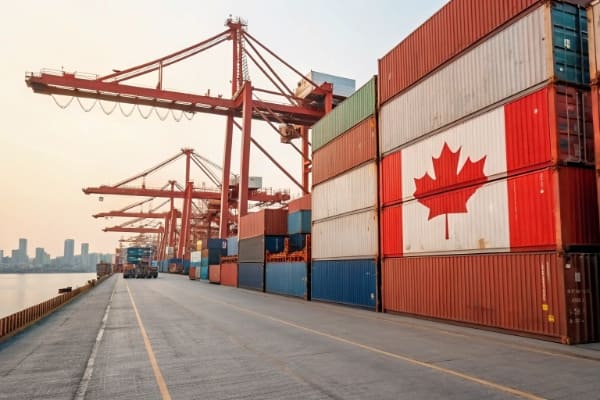
Shipping costs can feel overwhelming, especially when dealing with international logistics. What should importers expect when shipping from China to Canada in 2026?
In 2026, shipping costs from China to Canada have risen significantly compared to previous years1, driven by various factors. Air freight and sea freight costs differ greatly2, and understanding these can help importers make better decisions.

Shipping costs can vary widely based on a lot of factors. The destination, the method of shipping, and even the volume can impact what you end up paying. It is important to understand all of these to keep your logistics in check and your budget intact.
Why Have Shipping Rates to Canada Changed in 2026?
The shipping industry is constantly evolving. In 2026, several factors have led to changes in shipping rates to Canada. Global demand for goods has surged, causing shipping capacity to tighten3. Fuel prices have also fluctuated, affecting operational costs4. Additionally, regulatory changes regarding shipping practices and environmental standards are influencing costs5.
These changes mean that importers should be prepared for higher shipping costs compared to previous years. Understanding the underlying reasons can help businesses plan their budgets and operations better.

When I first started dealing with shipping from China, I noticed that unexpected changes in rates could throw off my entire budget. I learned the importance of staying informed about industry trends. That knowledge has helped me avoid costly surprises and plan for future shipping needs.
What Is the Air Freight Cost from China to Canada?
Air freight is known for its speed but comes with a higher price tag. In 2026, standard air freight costs approximately US$7 per kilogram6. For those who need express shipping, the cost can rise to about US$14.50 per kilogram7.
Air freight is ideal for time-sensitive shipments, high-value items, or perishable goods8. While it is fast, the cost may not fit every budget.

From my experience, air freight is beneficial when timing is crucial. I recall shipping some promotional goods for an event, and air freight was our best option despite the high costs. The quicker delivery made all the difference and ensured our campaign went off without a hitch.
What Is the Sea Freight Cost from China to Canada?
Sea freight is typically the most economical option for larger shipments9. In 2026, a 20-foot container generally costs between US$4,140 and US$5,06010. For a 40-foot container, the cost ranges from US$4,815 to US$5,88511. LCL (Less than Container Load) shipping is another option, and it usually costs around US$160 per cubic meter12.
Sea freight is ideal for bulk shipments and can save importers money compared to air freight. However, it does take longer, so timing should be considered.

I often choose sea freight for larger orders. It allows me to save on shipping expenses while still getting the products I need. Just like when I ordered a large batch of eco-friendly bags last year, the overall savings on shipping were significant.
Which Shipping Method Is the Most Cost-Effective?
Determining the most cost-effective shipping method depends on various factors. For larger shipments, sea freight generally offers the lowest rates. However, for smaller and time-sensitive shipments, air freight may be worth the extra cost. Consolidating cargo is often more economical than sending small parcels individually.
In essence, the best shipping method depends on your specific needs, including budget, shipment size, and delivery timeframe.

I have learned that consolidating shipments often leads to savings. When I consolidated shipments from different suppliers, the reduced shipping costs allowed me to invest more in marketing and branding efforts.
What Extra Charges Should Importers Expect?
When importing goods, it’s crucial to anticipate additional charges. These can include customs duties, taxes, handling fees, and storage costs. Each of these can significantly affect the total cost of shipping.
Being aware of these extra charges can help importers make informed financial decisions and avoid unexpected expenses.

In my journey, I faced challenges with hidden costs. I learned the hard way to account for all potential fees when budgeting for shipments. Now, I always prepare for unexpected charges to avoid financial strain.
How Can You Reduce Shipping Costs from China to Canada?
Reducing shipping costs is a top priority for many importers. Here are several strategies to keep costs down:
- Consolidate shipments: Group orders to take advantage of bulk rates.
- Choose the right shipping method: Consider sea freight for larger orders.
- Negotiate with freight forwarders: Build relationships for better pricing.
- Plan ahead: Avoid rush fees by scheduling shipments in advance.
- Be mindful of weight and size: Smaller, lighter packages may reduce costs.
Implementing these strategies can help businesses save significantly on shipping expenses.

I often use a combination of these strategies to manage my shipping costs effectively. For instance, negotiating with freight forwarders has led to better rates for my regular shipments. It has saved me a lot of money over the years.
Conclusion
Shipping costs from China to Canada have risen in 2026, but understanding the dynamics can help businesses manage their logistics better.
"Shipping from China to Canada [Updated May 2026 ] - Freightos", https://www.freightos.com/shipping-routes/shipping-from-china-to-canada/. A freight-rate index or transport-market report can document whether China–North America shipping rates in 2026 were materially above earlier-year benchmarks. Evidence role: statistic; source type: institution. Supports: Shipping costs from China to Canada have risen significantly compared with previous years.. Scope note: Such evidence may support the broader China–North America lane rather than the exact China-to-Canada route or every shipment type. ↩
"Air Freight: A Market Study with Implications for Landlocked Countries", https://www.worldbank.org/en/topic/transport/publication/air-freight-study. Transport economics sources commonly show that air cargo has substantially higher unit costs than ocean freight because aircraft capacity and operating costs are higher per unit of cargo moved. Evidence role: expert_consensus; source type: education. Supports: Air freight and sea freight costs differ greatly.. Scope note: The exact magnitude of the cost difference varies by route, shipment size, season, and service level. ↩
"[PDF] The impact of container shipping costs on import and consumer prices", https://www.oecd.org/content/dam/oecd/en/publications/reports/2025/08/the-impact-of-container-shipping-costs-on-import-and-consumer-prices_dfc467b3/957f0c0c-en.pdf. Trade and shipping-market reports can show that increases in goods demand can raise vessel utilization and contribute to tighter freight capacity on major trade lanes. Evidence role: mechanism; source type: institution. Supports: Surging global goods demand can tighten shipping capacity and contribute to higher rates.. Scope note: The source may establish the general market mechanism rather than proving demand conditions for every China–Canada shipment in 2026. ↩
"Fuel Dashboard - Open Ag Transport Data - USDA", https://agtransport.usda.gov/stories/s/Fuel-Dashboard/tzmp-vzg4/. Energy and transport sources show that bunker fuel and aviation fuel are major operating-cost components for ocean carriers and airlines, so fuel-price volatility can affect freight charges. Evidence role: mechanism; source type: government. Supports: Fuel-price fluctuations affect shipping operational costs.. Scope note: Fuel prices are one factor among many and do not alone determine the final freight rate quoted to importers. ↩
"Initial IMO Strategy on the reduction of GHG emissions from ships", https://en.wikipedia.org/wiki/Initial_IMO_Strategy_on_the_reduction_of_GHG_emissions_from_ships. International maritime regulations such as IMO decarbonization and emissions measures can require operational changes or new compliance costs for shipping companies. Evidence role: historical_context; source type: institution. Supports: Environmental and shipping-practice regulations can influence shipping costs.. Scope note: This supports the regulatory-cost mechanism generally; the effect on a specific China–Canada freight quote may depend on carrier practices and contract terms. ↩
"2026 Air Freight Rates Per KG: Asia-EU Costs Guide", https://www.freightamigo.com/en/blog/logistics/air-freight-costs-in-2026-prices-rates-per-kg-and-key-insights/. A contemporaneous air-cargo rate index or market report can provide benchmark spot rates for China-to-North America or China-to-Canada air freight near US$7 per kilogram. Evidence role: statistic; source type: other. Supports: Standard air freight from China to Canada costs approximately US$7 per kilogram in 2026.. Scope note: Published air-cargo benchmarks are often lane averages or spot-market snapshots and may not match a specific carrier quote, commodity, or accessorial-charge structure. ↩
"Shipping from China to Canada [Updated May 2026 ] - Freightos", https://www.freightos.com/shipping-routes/shipping-from-china-to-canada/. Express air-courier or expedited-freight pricing data can substantiate that premium international services from China to Canada may cost materially more per kilogram than standard air freight. Evidence role: statistic; source type: other. Supports: Express shipping from China to Canada can cost about US$14.50 per kilogram in 2026.. Scope note: Express rates vary widely by courier, account discount, volumetric weight, fuel surcharge, and delivery speed, so the figure is best treated as an indicative benchmark. ↩
"Air Freight for Urgent and High-Value Shipments - UUL Global", https://uulglobal.com/air-freight-for-urgent-and-high-value-shipments/. Logistics and transport references describe air freight as suitable for cargo where speed, reliability, perishability, or high value-to-weight ratio justifies higher transport costs. Evidence role: expert_consensus; source type: education. Supports: Air freight is especially suitable for time-sensitive, high-value, or perishable shipments.. Scope note: “Ideal” depends on the importer’s cost tolerance, inventory strategy, and shipment characteristics. ↩
"[PDF] Fathoming Shipping Costs: An Exploration - World Bank Document", https://documents1.worldbank.org/curated/en/099436104042241280/pdf/IDU0c20d2ae90046304ca009ab508217e50747bd.pdf. Freight-transport references generally identify ocean shipping as a low unit-cost mode for large-volume international cargo because ships carry high cargo volumes over long distances. Evidence role: expert_consensus; source type: education. Supports: Sea freight is typically the most economical option for larger shipments.. Scope note: Ocean freight may not be cheapest after inventory carrying costs, storage, demurrage, or urgent delivery requirements are considered. ↩
"Container Shipping Cost & Rates Calculator [2026] - Freightos", https://www.freightos.com/freight-resources/container-shipping-cost-calculator-free-tool/. A container-freight benchmark for China-to-Canada or China-to-North America lanes can support the stated 20-foot container cost range as an indicative 2026 market rate. Evidence role: statistic; source type: other. Supports: A 20-foot container from China to Canada generally costs between US$4,140 and US$5,060 in 2026.. Scope note: Container rates are volatile and depend on port pair, contract versus spot pricing, surcharges, inland haulage, and whether the benchmark is for FEU or TEU conversion. ↩
"Container Shipping Cost & Rates Calculator [2026] - Freightos", https://www.freightos.com/freight-resources/container-shipping-cost-calculator-free-tool/. Container spot-rate data for China-to-Canada or China-to-North America routes can corroborate whether 40-foot container rates fell within the stated 2026 range. Evidence role: statistic; source type: other. Supports: A 40-foot container from China to Canada costs about US$4,815 to US$5,885 in 2026.. Scope note: Many public indexes quote forty-foot-equivalent-unit rates for broader regions, so they may provide contextual support rather than a direct port-to-port Canada figure. ↩
"LCL Shipping Freight Rate Calculator - Freightos", https://www.freightos.com/freight-resources/lcl-calculator/. LCL freight-rate benchmarks or forwarding-market data can support an approximate per-cubic-meter charge for China-to-Canada less-than-container-load shipments. Evidence role: statistic; source type: other. Supports: LCL shipping from China to Canada usually costs around US$160 per cubic meter in 2026.. Scope note: LCL pricing often excludes destination charges, customs fees, minimum charges, and volumetric-weight rules, so a per-cubic-meter figure may understate landed logistics costs. ↩