
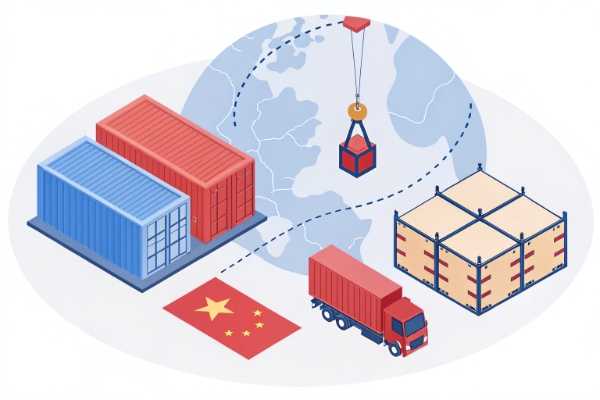
Importing from China to the UK can be confusing. There are many costs you may not expect. Understanding these costs can help you budget better and avoid surprises.
To import from China to the UK, you should consider various costs. These include freight charges, customs duties, VAT, and handling fees. Knowing these helps you estimate the total expenses accurately.
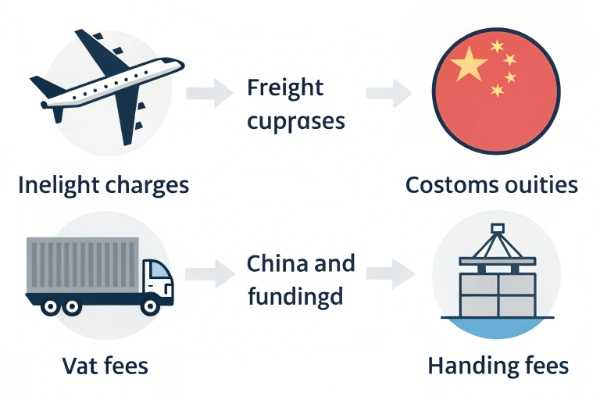
When importing, several factors affect the total cost. Besides the shipping fees that most people think of, there are hidden costs like customs duties and VAT. Understanding these helps you plan your budget effectively.
LOOP START
What Costs Should You Expect When Importing from China?
Importing involves various costs. These include shipping costs, customs duties, VAT, and extra fees for handling or clearance. Each of these can add up quickly.
The total cost of importing from China includes several components such as product price, freight, customs duty, VAT, and other handling charges1. Knowing each component helps you manage your budget well.
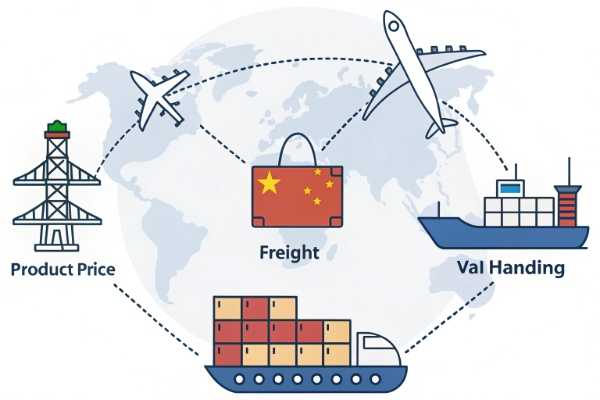
To really understand the costs involved, let's break them down. First, you need to consider the product price itself. This is what you pay the supplier in China. Then, you have shipping costs. This is either through sea freight, air freight, or even rail options. Each has its own pricing structure.
Next comes customs duties, which depend on the HS code of the product2. These can vary widely. VAT is another important cost. In the UK, VAT is generally 20%3. This is applied to the total landed cost, which includes the product's value, freight, duty, and insurance4.
Also, don’t forget about handling fees that you may incur during customs clearance. These can add additional costs. All these factors determine your final budget for importing from China.
LOOP END
How Much Does Sea Freight from China to the UK Cost?
Sea freight is often the most economical choice5. It's ideal for bulk imports. However, costs can vary based on several factors.
The cost of sea freight depends on the size and weight of your shipment. Generally, it's cheaper for larger shipments compared to air freight. You can expect to save significantly by choosing this option for bulk importing.
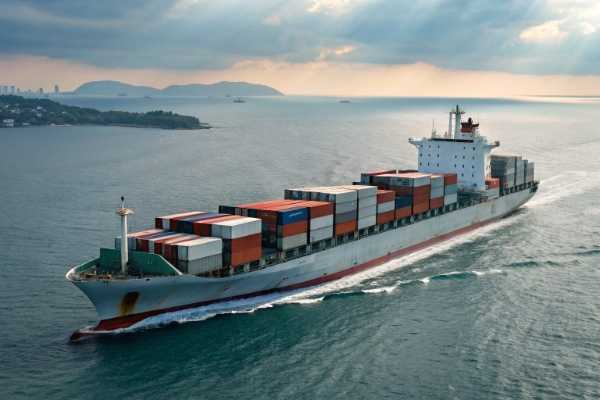
Sea freight charges can change quickly based on market demand, fuel prices, and shipping capacity6. Since sea freight is based on the container size, costs may be calculated on a per cubic meter or per ton basis. Larger shipments usually get better rates.
Additionally, shipping routes and the specific port of departure can influence costs7. For example, shipments from major ports like Shanghai or Shenzhen may have lower rates due to competition and volume.
Overall, it’s essential to get quotes from multiple freight forwarders. This ensures you find the best deal for your sea freight needs.
How Much Does Air Freight Cost?
Air freight is faster but more expensive than sea freight. It's a suitable option for urgent shipments.
Air freight costs vary based on weight and dimensions of the parcel. Typically, air freight costs significantly more per kilogram than sea freight, so it’s crucial to evaluate if speed is worth the extra cost.
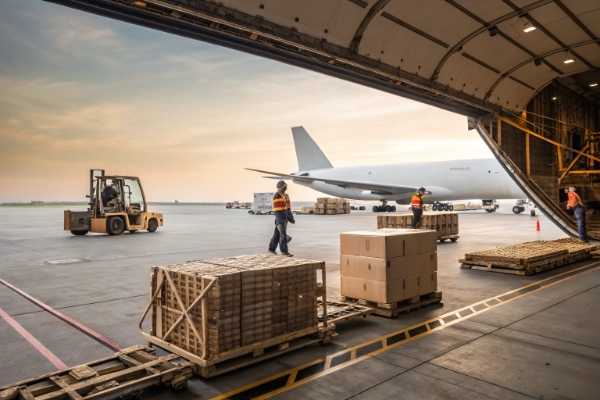
When considering air freight, remember that costs are calculated based on the chargeable weight8. This is either the actual weight or the volumetric weight, whichever is higher9. Therefore, for larger but lighter packages, air freight can become quite costly.
If you need items urgently, air freight is the way to go. But if your shipment can wait, sea freight remains the cost-effective choice.
Also, consider express courier services for small parcels. They offer fast delivery but come at a premium price. Always factor in the urgency of your shipment when deciding between air and sea freight.
How Are UK Import Duties Calculated?
UK import duties depend on the product's HS code. Each product has a unique code that determines its duty rate.
Import duties are calculated based on the customs value of the goods10, which includes the cost of the product, shipping, and insurance. Knowing the HS code helps you understand the applicable duty rates.
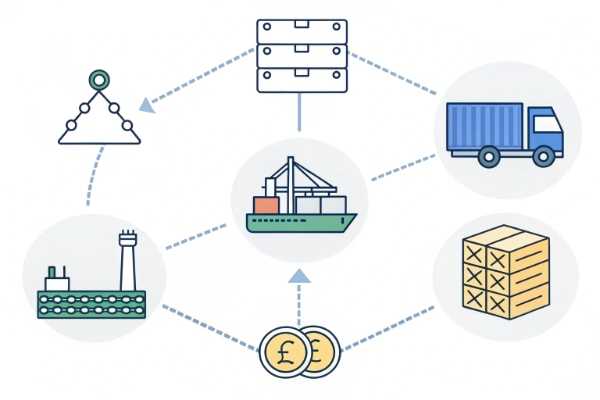
To calculate the import duty, you need the product's HS code. This code determines the rate at which you'll be taxed. For example, some electronics may have higher duties compared to textiles.
You need to check the latest tariff rates on the UK government website or consult with a customs broker. This helps you understand what your specific duties will be.
Import duties can impact your overall budget. Ensure you account for these when calculating the total landed cost.
How Is UK Import VAT Calculated?
UK VAT is usually 20% and applies to the total landed cost.
UK VAT is charged on the entire import value, including product cost, freight, duties, and insurance. This comprehensive inclusion can significantly affect your total import costs.
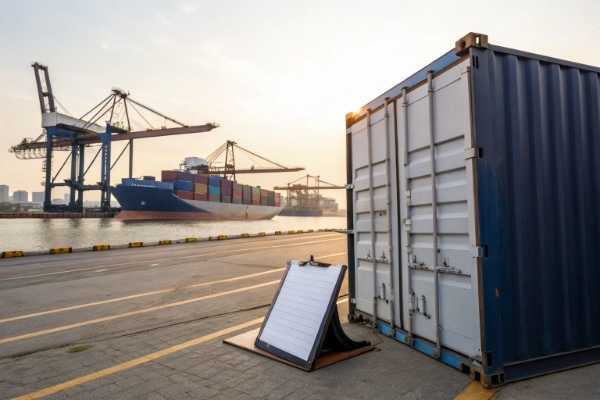
VAT is charged on the total cost of your goods when they enter the UK. This means you must consider it in addition to any customs duties. The calculation can sometimes make import costs confusing, but it's straightforward.
When your goods arrive, the customs authority will assess the VAT based on the total value declared. This includes all shipping-related costs as well.
So, when budgeting for imported goods, always include the VAT. This ensures you do not get caught off guard by the final costs.
What Additional Import Fees Should You Budget For?
Import fees can add up, so it’s essential to budget for them.
In addition to shipping, duties, and VAT, there are handling fees that may arise during customs clearance11. These can vary based on the agent you choose or the shipping method.

Handling fees often cover the costs associated with customs clearance and port handling. These can be a surprise for many first-time importers.
You may also incur storage fees if your goods are held at the port for longer than expected12.
It's wise to consult with your freight forwarder or logistics partner about potential fees. This way, you can prepare your budget accordingly.
Real Example: Total Landed Cost for a UK Import Shipment
Let’s look at a real example to illustrate all these costs.
Imagine you’re importing a shipment worth £10,000 from China. With sea freight costing £1,000, customs duties at 5%, and VAT, you would calculate the total landed cost as follows.
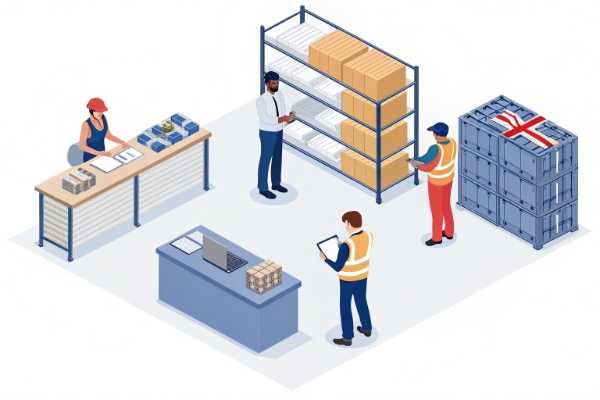
- Product Cost: £10,000
- Sea Freight: £1,000
- Customs Duty (5% of £10,000): £500
- Total before VAT: £10,000 + £1,000 + £500 = £11,500
- VAT (20% of £11,500): £2,300
- Total Landed Cost: £11,500 + £2,300 = £13,800
This breakdown helps you see how each component contributes to the overall cost. Understanding this helps you set better budgets for future imports.
How Can You Reduce Import Costs Legally?
There are several ways to cut down on import costs without breaking any laws.
Consider options like DDP shipping, which includes all costs in one quoted price. This simplifies budgeting and can often save you money overall.

Using a freight forwarder can also help you find better deals. They often have the resources to negotiate better rates for logistics.
Another option is to look for suppliers who offer reduced shipping rates. Sometimes, consolidating shipments can also lower costs.
Additionally, staying informed about seasonal rates and market trends can help you choose the best time to import.
Overall, planning and research can significantly reduce your import costs while keeping you compliant with laws.
Conclusion
Understanding these costs helps you budget more accurately for importing from China to the UK.
"Tax and customs for goods sent from abroad: Tax and duty - GOV.UK", https://www.gov.uk/goods-sent-from-abroad/tax-and-duty. UK import guidance and customs valuation rules show that import budgeting commonly includes the goods value, transport and insurance costs, customs duty, import VAT, and clearance-related charges. Evidence role: general_support; source type: government. Supports: The total cost of importing from China includes product price, freight, customs duty, VAT, and other handling charges.. Scope note: This supports the cost categories in general, not the amount payable for any specific shipment. ↩
"Harmonized System (HS) Codes - International Trade Administration", https://www.trade.gov/harmonized-system-hs-codes. UK tariff guidance explains that commodity codes, based on the Harmonized System, are used to classify imported goods and determine applicable duty rates and import controls. Evidence role: definition; source type: government. Supports: UK import duties depend on the product's HS code.. ↩
"Value-added tax in the United Kingdom - Wikipedia", https://en.wikipedia.org/wiki/Value-added_tax_in_the_United_Kingdom. HMRC guidance identifies the UK standard VAT rate as 20%, which is the rate generally applicable unless goods qualify for a reduced or zero rate. Evidence role: statistic; source type: government. Supports: In the UK, VAT is generally 20%.. Scope note: Some imported goods may be subject to reduced, zero, or exempt VAT treatment depending on classification and circumstances. ↩
"UK Import Duties and Taxes: VAT and Other Fees | DHL Malaysia", https://www.dhl.com/discover/en-my/logistics-advice/essential-guides/all-you-need-to-know-about-uk-import-tax-and-duty. HMRC guidance on import VAT states that VAT is calculated on the customs value of the goods plus duties and certain incidental costs such as transport, insurance, and handling up to the place of destination. Evidence role: mechanism; source type: government. Supports: UK import VAT is applied to a landed-value base that includes the product value, freight, duty, and insurance.. Scope note: The exact taxable base can depend on the declared place of destination and the goods’ customs treatment. ↩
"[PDF] Unclassified TAD/TC/WP(2008)10/FINAL Working Party of the Trade ...", https://one.oecd.org/document/TAD/TC/WP(2008)10/FINAL/en/pdf. International transport literature commonly treats maritime shipping as the lowest-cost mode for large-volume international freight, particularly where transit time is less critical. Evidence role: expert_consensus; source type: institution. Supports: Sea freight is often the most economical choice for bulk imports.. Scope note: This is a general modal-cost comparison; spot freight rates, commodity type, and urgency can make exceptions possible. ↩
"[PDF] Fathoming Shipping Costs: An Exploration - World Bank Document", https://documents1.worldbank.org/curated/en/099436104042241280/pdf/IDU0c20d2ae90046304ca009ab508217e50747bd.pdf. UNCTAD maritime transport analyses identify freight-rate volatility as being influenced by demand conditions, fuel and operating costs, and vessel or container capacity constraints. Evidence role: mechanism; source type: institution. Supports: Sea freight charges can change based on market demand, fuel prices, and shipping capacity.. Scope note: Such sources explain market drivers generally rather than predicting rates for a particular China–UK shipment. ↩
"Container shipping: a systematic literature review of themes ... - PMC", https://pmc.ncbi.nlm.nih.gov/articles/PMC9640906/. Research on container shipping costs finds that route characteristics, port choice, distance, service frequency, and port efficiency can affect ocean freight prices. Evidence role: mechanism; source type: paper. Supports: Shipping routes and the specific port of departure can influence sea freight costs.. Scope note: The evidence supports the general relationship between route and port factors and cost, not a guaranteed lower rate from any named Chinese port. ↩
"Volume Calculator | Aviationcargo - DHL Aviation Cargo", http://aviationcargo.dhl.com/business-tools/volume-calculator. IATA cargo guidance describes chargeable weight as the weight used for air-freight pricing, commonly determined by comparing actual gross weight with volumetric weight. Evidence role: definition; source type: institution. Supports: Air freight costs are calculated based on chargeable weight.. Scope note: Airlines and couriers may apply specific volumetric factors or contractual rules that differ by service. ↩
"Dimensional weight - Wikipedia", https://en.wikipedia.org/wiki/Dimensional_weight. Air-cargo pricing guidance explains that carriers typically charge on the greater of actual gross weight and volumetric, or dimensional, weight. Evidence role: mechanism; source type: institution. Supports: For air freight, chargeable weight is usually the greater of actual weight or volumetric weight.. Scope note: Specific dimensional-weight divisors can vary by carrier, route, and service level. ↩
"Delivery costs to include in the customs value - GOV.UK", https://www.gov.uk/guidance/delivery-costs-to-include-in-the-customs-value. UK customs valuation guidance states that import duty is calculated using the customs value of goods, which is generally based on the transaction value adjusted for costs such as transport and insurance where applicable. Evidence role: mechanism; source type: government. Supports: Import duties are calculated based on the customs value of the goods.. Scope note: Valuation methods can differ if the transaction value method is not applicable or if special valuation rules apply. ↩
"Tax and customs for goods sent from abroad: Tax and duty - GOV.UK", https://www.gov.uk/goods-sent-from-abroad/tax-and-duty. Official and carrier-facing import guidance commonly distinguishes government duties and taxes from private charges for customs clearance, handling, and administration that may be levied by freight agents, couriers, ports, or brokers. Evidence role: general_support; source type: government. Supports: Handling fees may arise during customs clearance in addition to shipping, duties, and VAT.. Scope note: The existence and size of these fees depend on the provider, shipment type, port, and service agreement. ↩
"Demurrage and detention: from operational challenges towards ...", https://pmc.ncbi.nlm.nih.gov/articles/PMC10026217/. Port and customs-freight guidance recognizes demurrage, detention, or storage charges when cargo remains at a terminal or warehouse beyond the allowed free period. Evidence role: definition; source type: institution. Supports: Storage fees may be incurred if goods are held at the port longer than expected.. Scope note: Free-time rules and charges vary by port, terminal, shipping line, and contract terms. ↩