
Struggling with the complexities of importing from China to Qatar? You worry about customs, hidden fees1, and delivery headaches2. DDP shipping3 can solve these problems, but is it right for you?
Yes, DDP shipping3 from China to Qatar is often worth it for its convenience. It bundles all costs—shipping, customs clearance4, duties, and door-to-door delivery—into one price. For example, a 40ft sea container costs $2,050–$2,300, and air freight5 costs $5–$11 per kg.
DDP shipping3 sounds simple, and it can be. It takes the stress of logistics off your shoulders. But to know if it’s truly the best choice for your business, you need to look closer. Let's break down the real costs, potential risks, and how to make it work for you. This guide will help you decide with confidence.
How Much Does DDP Shipping Cost?
Budgeting for international shipping feels like a guessing game. You're afraid that surprise costs will ruin your profit margin. Knowing the real numbers for DDP shipping3 gives you control.
DDP shipping3g costs are all-inclusive. For sea freight6, a full 40ft container (FCL7) from China to Qatar costs between $2,050 and $2,300. If you have less cargo, LCL8 sea freight6 costs $90–$280 per cubic meter (CBM). For faster delivery, air freight5 costs $5–$11 per kg.

Let's dive deeper into what these prices mean for your business. The beauty of DDP (Delivered Duty Paid) is that the price you are quoted covers the entire journey. Your supplier or freight forwarder9 handles everything from the factory in China to your doorstep in Qatar. This includes local transport in China, ocean or air freight5, insurance, customs clearance4 in Qatar, and paying all required duties and taxes. Qatar has a standard 5% VAT10 on most imports, and this is already factored into the DDP price. This makes budgeting incredibly straightforward. I always tell my clients that DDP is perfect for them if they want a single, fixed cost without any surprises. It lets you focus on selling your products, not on managing logistics.
Here is a simple breakdown of the options:
| Shipping Method | Cost Range | Transit Time | Best For |
|---|---|---|---|
| Sea FCL7 | $2,050 – $2,300 per 40ft container | 25–35 days | Large shipments, bulky goods |
| Sea LCL8 | $90 – $280 per CBM | 30–40 days | Smaller shipments (1-15 CBM) |
| Air Freight | $5 – $11 per kg | 15–20 days | Urgent, high-value, or lightweight goods |
What Factors Affect the Price?
You got a shipping quote11, but it seems higher than you expected. You start to wonder if there are hidden fees1 you don't know about. Understanding what drives the price helps you get a fair deal.
The final DDP price is affected by the shipping method (air vs. sea), cargo size and weight, and the type of goods. Fuel surcharges and seasonal demand also play a big role. Sensitive items like products with batteries or liquids will always cost more due to stricter handling and customs rules.
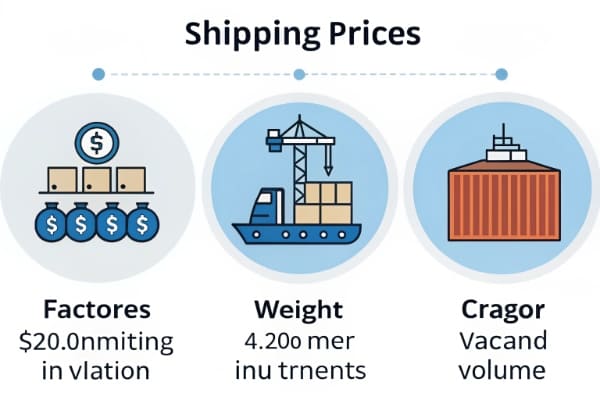
Let's look at these factors more closely. First is the chargeable weight12. Shipping companies will charge you based on either the actual weight or the volumetric weight, whichever is greater. Volumetric weight is calculated from the dimensions of your cargo. I once worked with a client shipping large but lightweight promotional displays. The volumetric weight was three times the actual weight, which significantly increased the cost. Always provide accurate dimensions to your forwarder to get a precise quote.
Another key factor is the product category13. General merchandise is easy to clear through customs. But if you're shipping electronics with batteries, cosmetics with liquids, or certain chemicals, the process becomes more complex. These are considered "sensitive goods14" and require special documentation and handling, which adds to the cost. Prohibited items are an even bigger issue and can get your entire shipment confiscated. Finally, market conditions15 like fuel surcharges and peak season demand can change your price. Shipping before a major holiday like Ramadan will always be more expensive.
What Are the Common Risks of DDP?
DDP shipping3 seems almost too easy, which makes you wonder what could go wrong. You worry about delays, extra charges, or losing control of your shipment. Knowing the risks helps you prepare.
The main risks with DDP shipping3 are customs delays16 and incorrect duty calculations. If your forwarder isn't an expert on Qatar's import rules, your shipment could get stuck. They might also underestimate duties to give you a low quote, then face problems at the border, causing delays.
With DDP, your freight forwarder9 takes on a lot of responsibility. They act as the Importer of Record (IOR), which means they are legally responsible for bringing the goods into Qatar. This is great because you don't need an import license. However, it also means you lose control. If the forwarder makes a mistake with the paperwork or misclassifies your products, you can't step in to fix it. The shipment will be delayed, and you can only wait.
Another risk is a dishonest forwarder. Some may quote an attractive low price by deliberately underestimating the import duties. When Qatar customs assesses the correct, higher duty, the forwarder might refuse to pay the difference and abandon your shipment or try to pass the extra cost on to you. I saw this happen with a shipment of corporate gifts where the forwarder miscalculated the 5% VAT10. It caused a two-week delay while they sorted out the payment. This is why DDP is less suitable for goods with very high duty rates, as the financial risk for the forwarder increases.
How to Avoid Hidden Costs?
You hate getting a final bill that is higher than the original quote. Hidden costs can quickly eat into your profits and cause major frustration. A few simple steps can protect you from these surprises.
To avoid hidden costs, always ask for a detailed, all-inclusive DDP quote that breaks down every charge. Make sure it explicitly includes Qatar's 5% VAT10 and any potential surcharges. Also, get in writing how your forwarder will handle any unexpected customs charges.

A vague quote is a red flag. A professional forwarder should have no problem giving you a transparent breakdown. Here's what I always ask for to protect my clients:
- Confirmation of All-Inclusive Price: Ask them to state in writing that the quote is "all-inclusive door-to-door" and covers all charges until the goods reach your final address in Qatar.
- VAT10 and Duty Confirmation: Ask, "Does this price include the 5% Qatari VAT10 and all import duties for my specific products?" This forces them to confirm they’ve done their research.
- Surcharge Policy: Inquire about their policy on fuel surcharges, peak season surcharges, and any fees for oversized or sensitive cargo. Are they fixed or variable?
- Contingency Plan: The most important question is, "What happens if Qatar customs assesses a higher duty than you anticipated?" A reliable partner will have a clear policy. They should absorb the cost as part of their DDP agreement, not pass it on to you.
Getting these details in a written contract or agreement before you commit is the best way to ensure the price you see is the price you pay.
How to Choose a Reliable Freight Forwarder?
Finding a DDP freight forwarder9 you can trust feels like a huge challenge. If you choose the wrong one, you could lose money, miss deadlines, and face endless stress. Knowing what to look for makes it easy.
Choose a freight forwarder9 with proven DDP shipping3 experience to Qatar. Check their online reviews, ask for references, and make sure they can act as the Importer of Record. A transparent partner who communicates clearly is always better than the one with the cheapest price.

Your forwarder is your partner in this process, so you need to choose wisely. The absolute lowest price is often a warning sign of poor service or hidden fees1. Here are the key things I look for when vetting a new forwarder for my clients.
First, experience with Qatar is non-negotiable. They must understand the local customs regulations, documentation requirements, and prohibited/restricted items list. Ask them for case studies or examples of recent shipments they’ve handled to Doha or other Qatari cities. Second, they must have a strong local partner in Qatar. This local agent is the one who will actually clear your goods through customs and arrange the final delivery. A forwarder without a good local presence is a recipe for disaster. Third, confirm they can legally act as the Importer of Record (IOR). Without this, the DDP service is not possible. Finally, test their communication17. Are they responsive? Do they answer your questions clearly and professionally? I always send a test email with detailed questions. Their response tells me everything I need to know about their service quality.
Conclusion
DDP shipping3 to Qatar simplifies your logistics by bundling all costs and responsibilities into one. By understanding the risks and carefully choosing a reliable forwarder, it can be a highly effective and profitable strategy.
Discover tips to avoid hidden fees that can impact your shipping costs and profit margins. ↩
This resource outlines common delivery issues and how to mitigate them for a smoother experience. ↩
Explore this resource to understand the benefits and workings of DDP shipping, crucial for your import strategy. ↩
Learn about customs clearance to ensure your shipments pass smoothly through borders without delays. ↩
Explore the advantages of air freight for urgent shipments and how it compares to sea freight. ↩
Learn about sea freight options and their benefits for large shipments in this informative guide. ↩
Get clarity on FCL (Full Container Load) shipping and its advantages for bulk shipments. ↩
Understand LCL (Less than Container Load) shipping to optimize costs for smaller shipments. ↩
Discover key factors to consider when selecting a freight forwarder for your shipping needs. ↩
This resource explains VAT and its implications for your shipping costs and budgeting. ↩
Learn how to evaluate shipping quotes to avoid surprises and ensure transparency. ↩
This resource explains chargeable weight and how it affects your shipping costs. ↩
Learn how different product categories can influence shipping expenses and customs processes. ↩
Explore what constitutes sensitive goods and the special handling they require during shipping. ↩
Understand how market fluctuations can impact your shipping costs and planning. ↩
Explore common causes of customs delays and how to prevent them for timely deliveries. ↩
This resource highlights the importance of clear communication with your freight forwarder. ↩