
Typical rail freight from China to Europe takes 12–18 days1. But how can you ensure your shipments are timely?
The average transit time for China-Europe rail freight is typically between 12–18 days for terminal-to-terminal shipments2. Various factors influence this duration, making it essential for importers to understand the logistics involved.
Transit times can vary significantly based on numerous elements. Understanding these will help you anticipate delivery schedules and avoid potential pitfalls. In this article, I will delve into the specifics of rail freight between China and Europe, touching on factors that can influence timelines. I believe this information will assist you in making more informed decisions.
What Is the Average Transit Time for China-Europe Rail Freight?
Rail freight from China to Europe usually takes between 12 and 18 days. This time frame is for terminal-to-terminal shipments. I've found that services from China to Germany often fall between 14 and 18 days. The specific timing can depend on the origin city and how quickly the borders are processed.

Poland is another important destination3. Typically, I see shipments reaching Poland in about 12 to 16 days4. It serves as a major entry point into the EU. On the other hand, shipments to the UK usually take longer5. Expect around 18 to 20 days due to additional distribution steps and the requirement to cross the Channel.
Understanding these averages is essential for planning. It helps in anticipating when your products will arrive and ensures you can meet your own business commitments.
How Long Does Rail Freight Take from China to Different European Countries?
The time it takes for rail freight to travel from China to various European countries can differ widely. Here’s a breakdown of expected transit times:
| Country | Average Transit Time (Days) |
|---|---|
| Germany | 14-18 |
| Poland | 12-16 |
| UK | 18-20 |
| Spain | 20-25 |
| Italy | 20-25 |
As you can see, shipments to western and southern countries like Spain and Italy often take longer, typically around 20 to 25 days6. These longer routes can be affected by various factors. Understanding these timelines is crucial for managing inventory and meeting customer demand.
What Factors Affect China-Europe Rail Freight Transit Time?
Several factors can impact the transit time of rail freight between China and Europe. Key aspects include:
- Origin city: Different cities may have varying infrastructures, which can speed up or slow down the process.
- Border processing7: Time spent at borders for inspections and clearance can vary significantly.
- Weather conditions: Adverse weather can lead to delays in transit.
- Congestion at terminals: Busy terminals may slow down the loading and unloading process.
Understanding these factors allows importers to plan more effectively. I often recommend building in extra time to accommodate potential delays.
How Do Border Crossings and Customs Clearance Affect Transit Time?
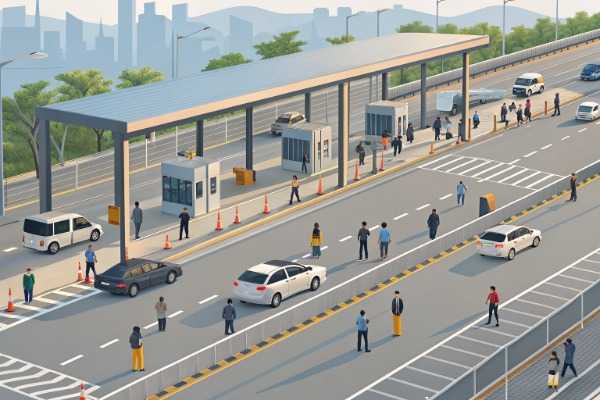
Border crossings and customs clearance are critical stages in the freight process. Each border crossing requires time for inspections and paperwork. This process can be unpredictable. Border gauge changes and container transshipment8 can also affect the reliability of the schedule, even if the running time of the train remains the same.
I often advise shippers to factor in extra time for customs inspections. It's better to prepare for potential delays than to be caught off guard.
How Do Rail Freight Routes Affect Delivery Time?
The chosen rail route can significantly affect delivery time. Direct routes are typically faster, while longer, more complicated routes may add days to the schedule. I have noted that using regular block-train services can enhance predictability9. When cargo is delivered before consolidation cut-offs, it tends to stick more closely to published schedules.
Additionally, some routes may offer better reliability than others. Choosing the right route can save you valuable time and ensure your products reach their destination as planned.
How Does Rail Freight Transit Time Compare with Sea Freight and Air Freight?
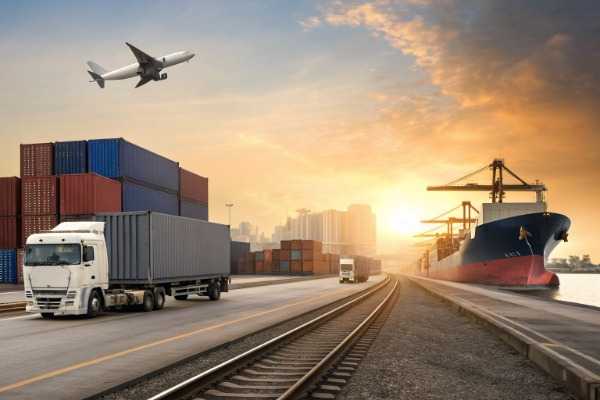
When weighing your options, it's important to compare rail freight with other methods like sea and air. Rail freight typically takes about two to three weeks less than ocean freight10. Ocean freight can often take four to six weeks.
On the other hand, air freight is much quicker, but also more expensive11. It’s ideal for urgent shipments but may not be feasible for all budgets.
Knowing the transit times for each method helps importers choose the best option based on their needs. This decision can significantly affect overall supply chain efficiency.
What Causes Delays in China-Europe Rail Freight?
Delays can arise from various sources. Here are some common reasons:
- Customs inspections: Unexpected holds can delay transit times.
- Weather disruptions: Severe weather may halt or slow down shipments.
- Terminal congestion: Busy terminals can lead to longer loading and unloading times.
- Capacity shortages: High demand periods can lead to a lack of available trains.
As an importer, it helps to stay informed about these potential issues. Planning for delays allows you to maintain smoother operations.
How Can Importers Reduce Rail Freight Delays?
There are several strategies that importers can employ to minimize delays:
- Use a time buffer: Allow extra time for unexpected customs inspections and terminal congestion.
- Book regular block-train services: These are typically more reliable and adhere closely to schedules.
- Communicate with your freight forwarder: Keeping lines of communication open helps in anticipating issues.
- Plan for door-to-door transit separately: Be mindful that customs clearance and final trucking will add to your total lead time.
By implementing these practices, I have seen many importers reduce delays and improve their overall logistics.

Conclusion
Understanding the transit time for China-Europe rail freight is essential for effective planning and logistics. By being informed about average times and potential delays, you can optimize your supply chain.
"Informal document WP.5/GE.2 (2015) No. 5", https://unece.org/DAM/trans/doc/2015/wp5-eatl/id15-05e.pdf. Published descriptions of China–Europe Railway Express services commonly report terminal-to-terminal journey times in the range of roughly two weeks, supporting the stated 12–18 day benchmark for many services. Evidence role: statistic; source type: institution. Supports: Typical rail freight from China to Europe takes 12–18 days.. Scope note: Actual durations vary by route, terminal pairing, border conditions, and whether the timing is terminal-to-terminal or door-to-door. ↩
"Indicators: Chicago terminal carload transit time", https://cmap.illinois.gov/regional-plan/resources/indicators/chicago-terminal-carload-transit-time/. Logistics and transport sources distinguish terminal-to-terminal rail transit time from door-to-door lead time, supporting the article’s qualification that the 12–18 day figure applies before first- and last-mile trucking and local clearance are included. Evidence role: definition; source type: institution. Supports: The 12–18 day average refers to terminal-to-terminal shipments rather than total door-to-door delivery time.. Scope note: The source may define the service boundary rather than verify the article’s exact number of days. ↩
"How important is Małaszewicze for China-Europe trade? | UIRR", https://www.uirr.com/web-news/data-week-how-important-malaszewicze-china-europe-trade. European transport-corridor materials identify Poland, including hubs such as Małaszewicze, as a major entry and transshipment point for China–Europe rail freight entering the European Union. Evidence role: historical_context; source type: institution. Supports: Poland is an important destination and entry point for China-Europe rail freight.. Scope note: Such sources establish Poland’s logistical role but may not quantify every shipment flow or individual service pattern. ↩
"Record Transit Time: China – Poland in 14 Days! 2025 - AsstrA news", https://asstra.com/press-centre/news/2025/11/record-transit-time-china-poland-in-14-days/. Route summaries for China–Poland freight rail services frequently list journey times of approximately two weeks, supporting the article’s 12–16 day estimate for many terminal-to-terminal movements. Evidence role: statistic; source type: institution. Supports: Rail freight shipments from China to Poland typically take about 12–16 days.. Scope note: The range is route-dependent and may not include terminal dwell time, customs holds, or final inland delivery. ↩
"Rail Freight From China (2026) – Time, Rates, Routes & Quote - ddpchain", https://ddpchain.com/rail-freight-from-china/. Geographic and intermodal route information shows that freight moving from continental Europe to the United Kingdom typically requires an additional cross-Channel leg, supporting the claim that UK-bound rail shipments can take longer than shipments ending at continental hubs. Evidence role: mechanism; source type: institution. Supports: China-Europe rail freight shipments to the UK usually take longer because they require additional distribution and a Channel crossing.. Scope note: This supports the reason for additional time but does not by itself prove the article’s specific 18–20 day estimate. ↩
"Yiwu–Madrid railway line", https://en.wikipedia.org/wiki/Yiwu%E2%80%93Madrid_railway_line. Published service descriptions for China–Spain and China–Italy rail connections generally report longer journey times than central European destinations, often around three weeks, supporting the article’s 20–25 day estimate. Evidence role: statistic; source type: institution. Supports: Rail freight to western and southern European destinations such as Spain and Italy often takes around 20–25 days.. Scope note: The figure is indicative because service frequency, route choice, and terminal handling can change over time. ↩
"FRA - International Border Passenger and Freight Rail Study ...", https://railroads.dot.gov/sites/fra.dot.gov/files/fra_net/17163/FRA%20-%20International%20Border%20Passenger%20and%20Freight%20Rail%20Study%20-2017.pdf. Studies of international rail corridors identify border controls, customs procedures, and related administrative processing as significant contributors to transit-time variability, supporting the article’s identification of border processing as a delay factor. Evidence role: mechanism; source type: research. Supports: Border processing can significantly affect China-Europe rail freight transit time.. Scope note: The magnitude of delay varies by border crossing, documentation quality, and regulatory environment. ↩
"Rail gauge in Australia - Wikipedia", https://en.wikipedia.org/wiki/Rail_gauge_in_Australia. Railway references document that China, the former Soviet rail network, and much of Europe use different track gauges, requiring bogie exchange, transshipment, or other transfer processes at gauge breaks, which can affect schedules. Evidence role: mechanism; source type: encyclopedia. Supports: Gauge changes and container transshipment at borders can affect China-Europe rail freight schedule reliability.. Scope note: The source explains the physical and operational mechanism; it may not quantify reliability impacts for a particular China–Europe service. ↩
"intermodal train loading methods and their effect on ... - RailTEC", https://railtec.illinois.edu/wp/wp-content/uploads/pdf-archive/TristanRickettThesis.pdf. Transport literature describes block trains as services moving fixed trainloads directly between terminals with reduced intermediate handling, supporting the claim that scheduled block-train services can improve timetable predictability. Evidence role: definition; source type: research. Supports: Using regular block-train services can make China-Europe rail freight schedules more predictable.. Scope note: Predictability depends on capacity, border clearance, and terminal performance, so block-train use is not a guarantee of on-time delivery. ↩
"Comparison of Rail vs Sea Freight from China to Europe - CargoNect", https://cargonect.com/news/rail-vs-sea-freight. Comparative freight studies and institutional corridor reports generally place China–Europe rail transit between air and ocean shipping, with rail often reducing journey time by several weeks compared with maritime transport. Evidence role: statistic; source type: research. Supports: China-Europe rail freight is typically about two to three weeks faster than ocean freight.. Scope note: The comparison depends strongly on port pair, inland drayage, sailing schedule, and whether the measure is port-to-port, terminal-to-terminal, or door-to-door. ↩
"Air Freight: A Market Study with Implications for Landlocked Countries", https://www.worldbank.org/en/topic/transport/publication/air-freight-study. International freight-mode comparisons consistently characterize air cargo as the fastest but highest-cost mode relative to maritime and rail freight, supporting the article’s modal trade-off statement. Evidence role: expert_consensus; source type: institution. Supports: Air freight is faster but generally more expensive than rail freight for China-Europe shipments.. Scope note: Cost and speed vary by commodity, lane, service level, and fuel-market conditions. ↩