Ordering product samples from China can feel risky. I understand this concern, especially with the internet full of stories about scams and bad quality. But I want to show you that with the right precautions, you can navigate this process safely.
Yes, it is safe to order product samples from China if you follow certain precautions.1 Verifying suppliers, using secure payments, and having clear communication are key factors in ensuring your safety.2

Before diving deeper, let me highlight that ordering samples is an essential step for importers3. It allows you to assess quality and compatibility before making larger investments.4
Why Do Importers Order Samples Before Bulk Production?
Many importers, like me, order samples to ensure product quality. It's a safety net against potential issues. I've learned from experience that seeing the product firsthand gives a better sense of its attributes. This helps avoid costly mistakes later on.
Importers order samples to verify product quality, specifications, and to ensure that the final product meets their standards.5 This step can save significant costs and headaches down the line.6

When I started sourcing from China, I ordered samples for almost every product. This way, I could check quality and details before bulk orders. It's like asking to see a menu item before ordering. If the sample doesn’t meet your expectations, you can address issues without losing much money.
How to Avoid Fake Suppliers on Alibaba?
Finding trustworthy suppliers on Alibaba can be challenging. There are many profiles, and not all of them are legitimate. I’ve learned to evaluate suppliers carefully.
To avoid fake suppliers on Alibaba, always check their business licenses, company registration, and contact details7. Look for gold suppliers, verified profiles, and customer feedback.8
I make it a habit to contact suppliers directly. If they respond promptly and provide clear answers, it’s a good sign. I also check if they have a solid online presence. A reputable supplier will often have reviews and testimonials from other customers.
What Payment Methods Are Safest for Sample Orders?
When it comes to payments, I always prioritize security. Using safe payment methods reduces the risk of fraud.
Secure payment methods like escrow, PayPal, or letters of credit are safest for sample orders.9 Avoid full upfront transfers to personal accounts, as they can lead to losses.10

I remember a time when I lost money due to a hasty payment. Now, I ensure that I use methods that offer some form of buyer protection. This way, if something goes wrong, I have recourse to recover my funds.
Can You Get Free Samples from Chinese Suppliers?
Some suppliers offer free samples, but I’ve found these can come with hidden risks. Often, suppliers may not take free sample requests seriously.
While some suppliers may provide free samples, it is safer to request paid samples. This ensures the supplier is committed to quality and reduces the risk of fraud.
I prefer to pay a small fee for samples. It shows the supplier that I’m serious about my order. Plus, it helps me gauge their commitment to quality.
What Are the Risks of Skipping the Sample Stage?
Skipping the sample stage can lead to major problems. I have seen businesses make this mistake and regret it later.
The risks of skipping the sample stage include receiving poor-quality products, wasted funds, and potential damage to your brand's reputation.11
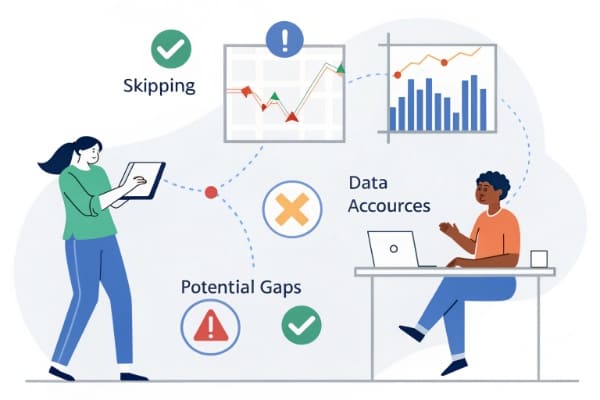
By not ordering samples, you might get items that don’t match your expectations. You could end up with products that are subpar or entirely different from what you wanted. I always take the time to sample before committing to bulk production.
How to Identify Low-Quality Samples Quickly?
Knowing how to spot low-quality samples can save you time and money. I’ve developed a checklist for this.
Look for red flags such as poor craftsmanship, incorrect specifications, and discrepancies between the sample and what was promised.
I pay close attention to details when I receive a sample. If something feels off, I don’t hesitate to ask for clarification. Poor communication from the supplier can also be a sign that they may not deliver quality products in bulk.
What Should You Do If the Sample Is Bad?
Receiving a bad sample can be frustrating. However, it is part of the sourcing process.
If the sample is unsatisfactory, communicate with the supplier immediately. Share your concerns and request adjustments or new samples based on your feedback.

When I faced this issue, I reached out to the supplier and detailed what was wrong. They were receptive to my feedback and worked on a new sample. Clear communication is crucial in these situations.
How to Protect Yourself Before Mass Production?
Protecting yourself before mass production is essential.
Request detailed written specifications, a signed sample agreement, and ensure you have digital records of all communications.12 This will support you in case of disputes.
I always keep thorough documentation of my agreements and communications. If issues arise, I can refer back to those records. It’s a smart way to safeguard my interests in the sourcing process.
Conclusion
Ordering product samples from China can be safe if you follow the right steps. Take the time to verify suppliers, use secure payment methods, and document everything.
"China - Distribution and Sales Channels", https://www.trade.gov/country-commercial-guides/china-distribution-and-sales-channels. Official trade and consumer-protection guidance supports the general proposition that cross-border sourcing risks can be reduced through supplier due diligence, secure payment practices, and written documentation. Evidence role: general_support; source type: government. Supports: Ordering product samples from China can be safe when buyers follow appropriate precautions.. Scope note: This would support risk reduction practices, not prove that every sample order from China is safe. ↩
"Perform Due Diligence - International Trade Administration", https://www.trade.gov/perform-due-diligence. Government export/import guidance identifies supplier verification, payment risk controls, and clear written communications as standard risk-management measures in international trade transactions. Evidence role: expert_consensus; source type: government. Supports: Supplier verification, secure payment, and clear communication are important risk controls when ordering samples internationally.. Scope note: The guidance is general to international trade and may not address product samples specifically. ↩
"[PDF] Model Quality Assurance System for Procurement Agencies", https://sites.bu.edu/qualityofmedicalproducts/files/2017/06/2.-Ravinetto-GMP-PQ-MQAS-10.07.17-Final-Draft.pdf. Procurement and quality-management literature treats pre-production samples and approval samples as part of supplier qualification and product-conformance processes before larger purchasing commitments. Evidence role: expert_consensus; source type: paper. Supports: Ordering samples is a standard or important step in importer quality assurance.. Scope note: The source may describe common quality-assurance practice rather than state that samples are universally essential for all imports. ↩
"[PDF] Evaluation of Early Supplier Involvement in Product Development", https://docs.lib.purdue.edu/cgi/viewcontent.cgi?article=1029&context=techmasters. Quality-assurance references describe sample inspection and prototype evaluation as methods for assessing whether goods conform to specifications before committing to full production or purchase. Evidence role: mechanism; source type: institution. Supports: Product samples help buyers assess quality and specification compatibility before larger orders.. Scope note: The support is procedural and does not quantify how often sampling prevents losses. ↩
"Chapter 4 -Specifications | Procurement | Finance Division", https://procurement.gwu.edu/chapter-4-specifications. Quality-control standards and procurement guidance recognize sampling, inspection, and specification review as tools for verifying whether products conform to buyer requirements. Evidence role: mechanism; source type: institution. Supports: Importers use samples to verify quality, specifications, and conformity with requirements.. Scope note: A general quality-control source would support the role of sampling but may not address Chinese suppliers specifically. ↩
"[PDF] Managing Quality: Modeling the Cost of Quality Improvement", https://www.cameron.edu/storage/departments/business/Journals/Vol-12-Managing-Quality.pdf. Research on cost of quality and defect prevention supports that detecting nonconformities earlier in the production or procurement process is generally less costly than correcting failures after production or delivery. Evidence role: mechanism; source type: paper. Supports: Ordering samples before bulk production can reduce later costs by identifying defects early.. Scope note: The evidence would support the general economic principle of early defect detection, not a specific cost saving for every sample order. ↩
"China - Distribution and Sales Channels", https://www.trade.gov/country-commercial-guides/china-distribution-and-sales-channels. International trade due-diligence guidance commonly advises buyers to verify a supplier’s legal registration, licensing status, physical address, and contact information before transacting. Evidence role: expert_consensus; source type: government. Supports: Checking business licenses, company registration, and contact details helps reduce fake-supplier risk.. Scope note: This supports the due-diligence method generally; it does not guarantee that verified records eliminate fraud. ↩
"Does Alibaba Gold Supplier Mean Verified Quality - Maple Sourcing", https://www.maplesourcing.com/does-alibaba-gold-supplier-mean-verified-quality.html. Platform documentation and marketplace-risk discussions explain that verification badges, supplier profile information, and buyer feedback can provide contextual signals about seller identity and transaction history. Evidence role: general_support; source type: other. Supports: Marketplace verification indicators and customer feedback can be used as preliminary supplier-screening signals.. Scope note: Badges and reviews are platform-specific signals and should not be treated as independent proof of legitimacy. ↩
"Methods of Payment", https://www.trade.gov/methods-payment. Trade-finance and consumer-protection sources describe escrow, payment services with dispute processes, and letters of credit as mechanisms that can reduce counterparty or non-delivery risk compared with direct unsecured transfers. Evidence role: mechanism; source type: institution. Supports: Escrow, payment platforms with buyer protection, and letters of credit can reduce payment risk in sample orders.. Scope note: The relative safety depends on transaction terms, platform rules, and whether the buyer follows dispute procedures. ↩
"What To Do if You Were Scammed - FTC Consumer Advice", https://consumer.ftc.gov/articles/what-do-if-you-were-scammed. Consumer-fraud authorities warn that direct transfers to individuals are difficult to reverse and are commonly associated with scams or non-recoverable losses. Evidence role: expert_consensus; source type: government. Supports: Full upfront transfers to personal accounts increase the risk of unrecoverable losses.. Scope note: The warning is about payment-risk patterns generally, not specifically about Chinese product samples. ↩
"Supply chain disruptions and resilience: a major review and future ...", https://pmc.ncbi.nlm.nih.gov/articles/PMC7792559/. Quality-management research links inadequate inspection or failure to detect nonconforming products with rework, financial losses, customer dissatisfaction, and reputational harm. Evidence role: mechanism; source type: paper. Supports: Skipping sample evaluation can expose buyers to quality failures, financial waste, and reputational damage.. Scope note: The source would support the quality-risk pathway generally, not quantify the risk for a particular importer or product category. ↩
"[PDF] 104-06 NOTICE AND RECORDKEEPING June 2014", https://www.dot.ny.gov/main/business-center/contractors/construction-division/construction-repository/CAM_Sect104-06.pdf. Contracting and international-sales guidance emphasizes that written specifications, agreed terms, and retained communications help establish evidence of obligations and performance in commercial disputes. Evidence role: mechanism; source type: institution. Supports: Written specifications, signed agreements, and communication records help protect buyers before mass production.. Scope note: Documentation strengthens evidentiary position but does not ensure successful dispute resolution across jurisdictions. ↩