
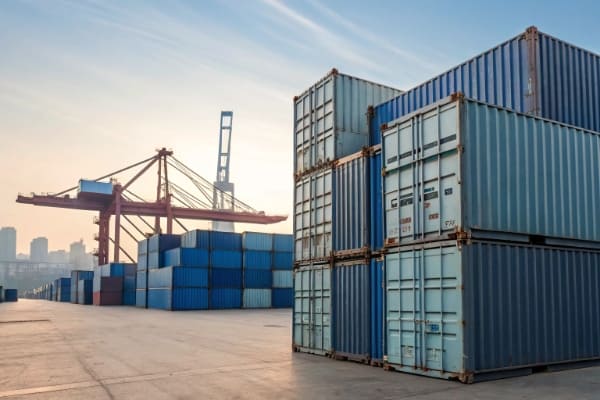
Struggling with unpredictable shipping costs from China? These surprise fees can ruin your budget, making it hard to price your products and stay profitable. This guide gives you clear answers.
Shipping from China to the UAE can cost from $2.2 per kg for air freight1 to around $900 for a 20ft sea container. Express couriers are about $11-$13 per kg, while shared container space (LCL2) costs roughly $18 per cubic meter.
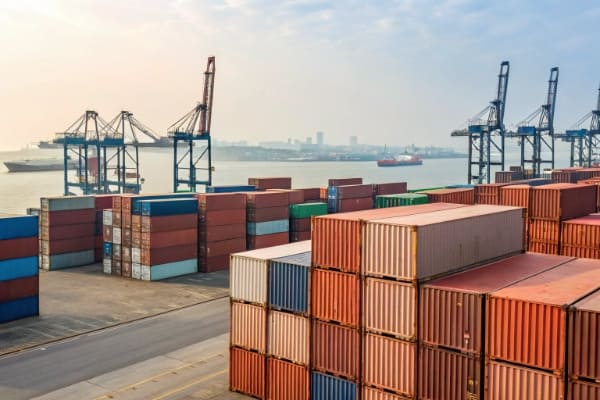
Getting a handle on your shipping budget3 is one of the most important parts of importing. I've seen too many businesses get a great product price, only to lose all their margin on transport fees they didn't see coming. It's a painful lesson. But once you understand what drives the costs, you can start making smarter decisions that protect your bottom line. Let's break it down so you can ship with confidence.
What Factors Affect Shipping Costs from China to UAE?
Do shipping quotes4 seem completely random? It feels impossible to create a stable budget when prices change with every shipment. Let's look at what really moves the price needle.
The biggest factors are the shipping method5 (air or sea), your shipment's weight and volume, the specific ports you use, and the time of year. The type of goods and your chosen shipping terms (Incoterms6) also play a major role in the final cost.
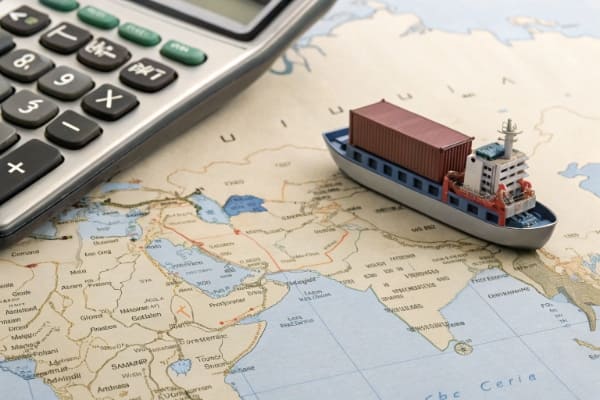
When we prepare a quote for a client, we have to look at several key details. It's not just about weight. Airlines and shipping lines use a concept called "chargeable weight7," which considers both the actual weight and the volume of a shipment. The bigger and lighter your product is, the more you might pay based on its size. Seasonality is another big one. Shipping right before Chinese New Year or major holidays in the UAE will always cost more due to high demand. Finally, the service level matters. A door-to-door (DDP) service will cost more upfront than a port-to-port service, but it includes all the destination fees that often surprise importers later.
| Factor | How It Affects Cost |
|---|---|
| Shipping Mode | Air freight is much more expensive per kilogram than sea freight8. |
| Weight & Volume | Heavier and larger shipments cost more. Carriers charge based on whichever is greater. |
| Seasonality | Prices increase by 10-25% during peak seasons like holidays and major sales events. |
| Ports of Origin/Destination | Using major ports like Jebel Ali can be cheaper due to higher competition and efficiency. |
| Type of Goods | Hazardous, oversized, or high-value goods require special handling and insurance, adding costs. |
| Incoterms6 | DDP (Delivered Duty Paid) has a higher initial cost but includes all fees to your door. |
How Do Air Freight and Sea Freight Prices Compare?
Trying to decide between speed and cost? Choosing the wrong shipping method5 can mean missing a deadline or spending way too much money. Here’s how to pick the right one.
Air freight is fast but expensive, best for small, urgent, or high-value shipments. It generally costs $2.2 to $4.5 per kg. Sea freight is much cheaper for larger volumes but takes longer, making it ideal for stock replenishment and bulk goods.
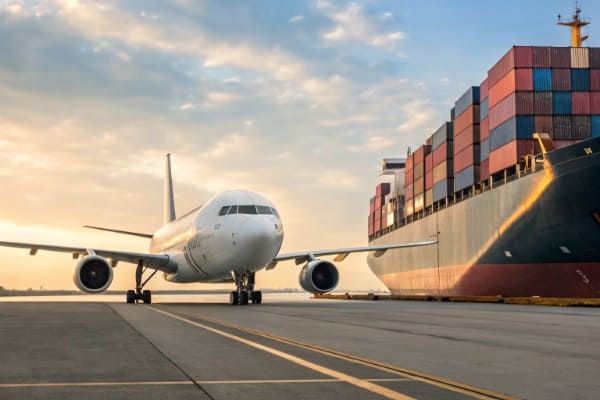
The choice between air and sea freight8 is a classic trade-off. I always ask my clients: "How quickly do you need it, and what's your budget?" If you're launching a new product and need samples fast, or if you have a small, high-margin order, air freight1 makes sense. For example, a 100 kg shipment might be manageable by air. But if you're shipping heavy goods or stocking up your warehouse, sea freight8 is the only economical option. The cost per kilogram drops dramatically as your shipment size increases. Express couriers like DHL or FedEx are a third option. They are even faster than standard air freight1 but also more expensive, usually around $11-$13 per kg, which is perfect for very small parcels or important documents.
| Method | Typical Cost | Transit Time | Best For |
|---|---|---|---|
| Sea Freight | ~$18/CBM (LCL2) or ~$900/20ft (FCL9) | 14 - 30 days | Large, heavy, non-urgent goods |
| Air Freight | $2.2 - $4.5 / kg | 3 - 7 days | Urgent, high-value, lightweight goods |
| Express Courier | $11 - $13 / kg | 2 - 5 days | Small parcels, samples, documents |
Is LCL2 or FCL9 More Cost-Effective for My Shipment?
You're shipping by sea, but you don't have enough to fill a whole container. Paying for empty space feels wasteful, but is sharing a container really cheaper? Let's clarify this.
FCL9 (Full Container Load) is for your exclusive use and is cheaper per cubic meter for large shipments. LCL2 (Less than Container Load) lets you share space, making it cost-effective for smaller volumes, but the per-unit cost is higher.
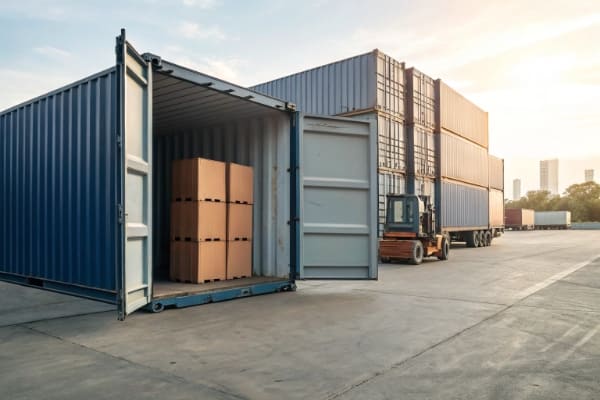
This is a question of volume. A 20ft container costs around $900 and holds about 33 cubic meters (CBM). A 40ft container is about $2,000 and holds around 67 CBM. LCL2 sea freight8 costs are calculated per CBM, typically around $18. The math shows a tipping point. Once your shipment gets to be around 15 CBM, it's often cheaper to book your own 20ft FCL9 container, even if you don't fill it completely. FCL9 also has other benefits. Your goods are handled less, which reduces the risk of damage, and it can be slightly faster since there's no need to consolidate and deconsolidate cargo from multiple shippers at the port. For my clients with smaller, recurring orders, we often consolidate their goods at our warehouse until they have enough for an FCL9 shipment to maximize their savings.
| Feature | LCL2 (Less than Container Load) | FCL9 (Full Container Load) |
|---|---|---|
| Cost Structure | Priced per cubic meter (CBM) or per ton. | Flat rate per container (20ft, 40ft, etc.). |
| Best For | Small shipments, typically under 15 CBM. | Large shipments, over 15 CBM. |
| Handling | More handling at origin and destination. | Less handling; sealed at origin, opened by you. |
| Transit Time | Can be slightly longer due to consolidation. | Generally faster and more direct. |
| Security | Higher risk of damage or loss due to mixing goods. | Very secure, as the container is exclusive to you. |
What Are the Hidden Charges in UAE Shipping?
Did your final shipping invoice come in much higher than the original quote? These unexpected fees can destroy your profit margins and cause major headaches. Let's uncover these common charges.
Hidden charges often include destination terminal handling (THC), customs inspection fees10, and penalties like demurrage11 for delays. Always ask your forwarder for a fully itemized, all-inclusive quote to avoid surprises when shipping to the UAE.

I can't tell you how many times new clients come to us after getting burned by hidden fees. They get a cheap port-to-port quote and think they've found a great deal. But then the bill arrives. At the destination port in the UAE, you'll face Terminal Handling Charges (THC), documentation fees, and import service fees. If customs decides to inspect your container, you pay for that too. And if you're slow to clear your goods, you'll be hit with demurrage11 (for using the port's space) and detention (for keeping the container too long). This is why we often recommend DDP (Delivered Duty Paid) shipping. While the initial quote is higher, it includes all these variables. We handle the customs, pay the duties, and manage all the destination logistics. It gives you one final, guaranteed price for delivery to your door.
How Can I Reduce My Shipping Costs?
Are high shipping costs eating into your profits? It can feel like you have no control over rising freight rates. But there are practical steps you can take to save money.
To reduce costs, plan shipments far in advance to use sea freight8, consolidate orders to fill containers, and work with a partner who can negotiate rates and ship during off-peak seasons.

The number one way to save money on shipping is to plan ahead. Rushing leads to expensive decisions, mainly choosing air freight1 when sea freight8 would have worked with better timing. My most successful clients map out their inventory needs months in advance. This allows us to use sea freight8, which is the cheapest option by far. We also help them by consolidating orders. If you have three small orders from different factories, shipping them separately is expensive. We can collect all three at our warehouse and ship them together as one larger LCL2 or FCL9 shipment, saving you a lot on freight and destination fees. Finally, optimizing your packaging is crucial. Reducing the size and weight of your cartons, even by a little, can lead to significant savings over time, especially with air freight1 where every gram counts.
Here are a few more tips:
- Ship Off-Peak: Avoid the weeks before major holidays in China and the UAE.
- Choose the Right Port: Shipping to a major port like Jebel Ali in Dubai is often more efficient and cost-effective than smaller ports.
- Get a Reliable Partner: A good sourcing partner in China, like us at Toncentlink, has established relationships with forwarders and can negotiate better rates than you could on your own.
Conclusion
Understanding shipping costs from China to the UAE12 is key to your success. With careful planning, smart choices, and a reliable partner, you can control your budget and ensure smooth delivery.
Learn about air freight to see if it's the right choice for your urgent shipments. ↩
Find out how LCL shipping can save you money on smaller shipments. ↩
Get tips on creating a shipping budget to manage your costs effectively. ↩
Discover how to obtain accurate shipping quotes to avoid surprises. ↩
Explore different shipping methods to find the best fit for your needs. ↩
Learn about Incoterms to understand your responsibilities and costs in shipping. ↩
Understand chargeable weight to better estimate your shipping costs. ↩
Discover the advantages of sea freight for larger shipments and cost savings. ↩
Understand the benefits of FCL shipping for larger volumes and exclusive use. ↩
Find out how to navigate customs fees to keep your shipping costs down. ↩
Learn about demurrage to avoid extra charges when shipping to the UAE. ↩
Explore this link to understand the various shipping costs and options available for your business. ↩