

Shipping products internationally can be a confusing process. Many factors influence the cost. Let's explore the specifics of shipping from China to Germany in 2026.
In 2026, shipping rates from China to Germany have changed due to global market fluctuations and new regulations1. This has made understanding these costs crucial for businesses.

Shipping costs can be tricky to navigate. They vary significantly based on different factors. If you want to save money and make informed decisions, you must understand what affects these rates.
Why Have Shipping Rates to Germany Changed in 2026?
The shipping industry is always changing. In 2026, numerous factors have influenced rates from China to Germany. A major reason is global supply chain disruptions2. These disruptions have led to a shortage of shipping containers3. This shortage raised shipping prices. Additionally, new regulations in the EU have impacted costs. The removal of the EUR 150 customs duty exemption threshold4 is expected to raise costs for many low-value parcels.
The cost of shipping from China to Germany has increased due to global supply chain issues and new EU regulations. This affects many importers and their budgets.
As businesses adapt to these changes, they must stay informed. Understanding how the political and economic landscape shifts can help you plan better.
Dive deeper into the reasons behind changing shipping rates. Factors such as demand and supply cycles, fuel prices, and geopolitical tensions all play a part. It’s important to recognize that seasonal trends can also impact costs. For instance, shipping rates often rise during peak seasons when demand is high5. Furthermore, as the EU tightens regulations, importers may find themselves facing additional hurdles. Keeping abreast of these shifts is essential for any business that relies on importing goods from China.
What Is the Air Freight Cost from China to Germany?
Air freight is a popular choice for many businesses. It offers speed and reliability. However, it comes at a higher price. In 2026, the cost of air freight from China to Germany typically ranges from USD 4 to 15 per kg6. This price varies based on factors like shipment size and transit speed.
Air freight costs from China to Germany can range from USD 4 to 15 per kg, depending on various factors. This speed comes at a premium.
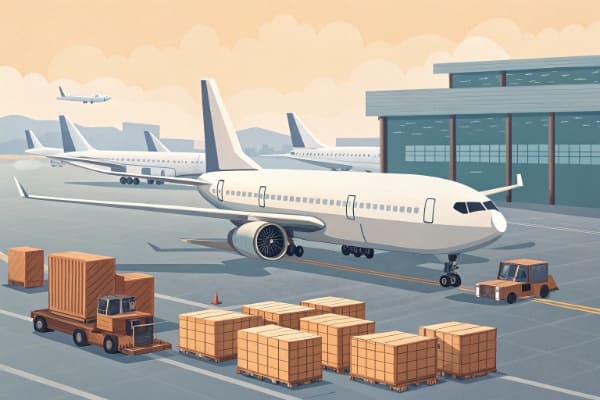
Choosing air freight means faster delivery times. However, businesses must weigh this against their budgets. For large shipments, air freight can quickly become expensive.
If you consider air freight, it's good to know that costs can fluctuate7. They often depend on demand for cargo space. During peak times, prices can rise unexpectedly. You should also consider the size of your shipment. Larger shipments may see different pricing tiers. In some cases, combining your shipments to maximize weight can help lower costs.
What Is the Sea Freight Cost from China to Germany?
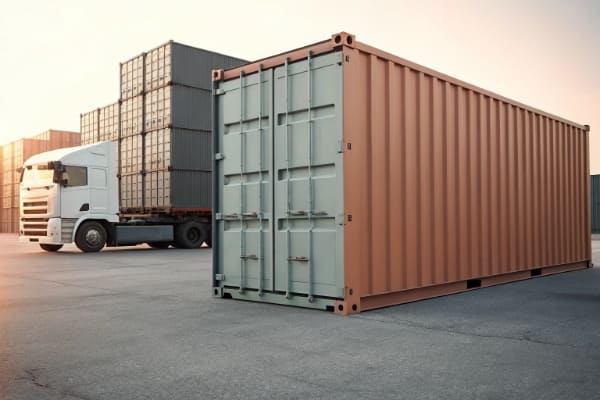
Sea freight is generally the most economical choice for larger shipments8. For cargo over about 500 kg, it’s usually the way to go. A 20ft FCL shipment costs about USD 1,500 to 3,000, while a 40ft FCL typically costs about USD 2,500 to 5,8509.
Sea freight is the cheapest option for larger shipments, with 20ft containers costing around USD 1,500 to 3,000 and 40ft containers costing about USD 2,500 to 5,850.

For smaller shipments, Less than Container Load (LCL) shipping is available. LCL shipping is usually priced per cubic meter10, with typical rates around USD 150 to 250 per CBM. This option allows you to ship smaller quantities without paying for a full container.
Understanding these costs is vital for businesses. Sea freight can be more affordable. However, it takes longer to get your products to Germany. For companies that need speed, air freight might still be necessary. Weighing your options can help make the best choice for your business needs.
Is Rail Freight Cheaper Than Air Freight?
Many businesses wonder about rail freight as an option. Rail freight can be a middle ground between sea and air freight. It’s generally cheaper than air freight but faster than sea freight11.
Rail freight can be a cost-effective alternative, usually cheaper than air freight while offering faster transit times than sea options.

In 2026, rail costs can vary significantly based on routes and demand. They often provide a good balance for companies that are looking to save on shipping costs while still needing timely delivery.
Rail freight has been gaining popularity in recent years. It often provides quicker service than sea freight, but at a much lower price than air freight. If your supply chain can accommodate the slightly longer transit times, rail can be a solid choice. Like all shipping methods, understanding the specifics of your shipment and cargo type is essential for making the right decision.
What Additional Charges Should Importers Expect?
When calculating shipping costs, additional charges can catch you off guard. For shipments to Germany, customs charges can be based on the Cost, Insurance, and Freight (CIF) value12. This means duties and taxes may apply to the goods plus the shipping cost.
Importers should consider customs charges, import VAT, and other fees when estimating total shipping costs to Germany.

Import VAT and customs clearance fees should be factored in when estimating the total landed cost. In 2026, the removal of the EUR 150 customs duty exemption will likely raise costs for many low-value parcels.
It’s important to be aware of these additional costs before making decisions. Sometimes, lightweight but bulky items can be more expensive to ship due to dimensional weight considerations. Knowing this can help you choose the right products for your shipment.
How Can You Reduce Shipping Costs to Germany?
Reducing shipping costs is a priority for many businesses. There are several strategies you can use. First, shipping larger quantities can lead to lower costs per unit. For sea freight, opting for a full container load (FCL) can be more economical than less than container load (LCL).
To reduce shipping costs, consider shipping larger quantities, using sea freight for bulk items, and keeping an eye on freight rates.
Another strategy is to build strong relationships with freight forwarders. They often have insights into market trends and can negotiate better rates. Keeping track of shipping schedules and planning ahead can also help reduce costs.
Finally, consider the packaging of your products. Efficient packaging can minimize dimensional weight, thus lowering costs. All these strategies can help your business save money while ensuring timely deliveries.
Conclusion
In conclusion, understanding shipping costs from China to Germany in 2026 requires awareness of multiple factors, from rates to additional charges. With the right strategies, you can manage these costs effectively.
"Identifying the significant drivers of containerized freight rates - PMC", https://pmc.ncbi.nlm.nih.gov/articles/PMC13099089/. A shipping market index or institutional trade brief should document recent freight-rate volatility on Asia–Europe routes and identify regulatory changes affecting EU imports; this would support the claim as contextual evidence rather than prove every China–Germany lane rate. Evidence role: general_support; source type: institution. Supports: Shipping rates from China to Germany have changed due to global market fluctuations and new regulations.. Scope note: Route-level China-to-Germany 2026 rates may not be available from public institutional sources, so Asia–Europe or China–Northern Europe data may be the closest neutral proxy. ↩
"[PDF] The impact of container shipping costs on import and consumer prices", https://www.oecd.org/content/dam/oecd/en/publications/reports/2025/08/the-impact-of-container-shipping-costs-on-import-and-consumer-prices_dfc467b3/957f0c0c-en.pdf. A UNCTAD, OECD, or World Bank analysis of maritime logistics disruptions should support the statement that global supply-chain shocks can affect shipping capacity and freight prices; it may not specifically isolate China–Germany shipments. Evidence role: mechanism; source type: institution. Supports: Global supply chain disruptions have influenced shipping rates from China to Germany.. Scope note: The evidence is likely to describe the general mechanism linking disruption to shipping costs, not a direct calculation for this article’s route. ↩
"Identifying the significant drivers of containerized freight rates - PMC", https://pmc.ncbi.nlm.nih.gov/articles/PMC13099089/. A maritime economics paper or institutional report on container imbalance should substantiate that shortages or imbalances in container availability can constrain capacity and raise freight rates; the support is contextual if it refers to global container markets rather than Germany-bound cargo specifically. Evidence role: mechanism; source type: paper. Supports: Supply chain disruptions have led to a shortage of shipping containers that raised shipping prices.. Scope note: Container shortages may vary by port and period, so the source should be used to support the mechanism, not a universal shortage in all 2026 lanes. ↩
"150 EUR customs duty exemption threshold to be removed as of 2026", https://taxation-customs.ec.europa.eu/news/e-commerce-150-eur-customs-duty-exemption-threshold-be-removed-2026-2025-11-13_en. An official European Commission or EU customs reform source should confirm the proposal or implementation status concerning the EUR 150 customs-duty exemption for low-value consignments; if the measure is proposed rather than enacted, the citation should clarify that status. Evidence role: historical_context; source type: government. Supports: The removal of the EUR 150 customs duty exemption threshold is expected to raise costs for many low-value parcels.. Scope note: EU policy timelines may change, so the source must distinguish between adopted law, proposal, and expected implementation. ↩
"Seasonality in Freight Rates - Academia.edu", https://www.academia.edu/83231148/Seasonality_in_Freight_Rates. A logistics research source or transport economics paper should support the general relationship between seasonal demand peaks and higher freight rates; this would be general market evidence rather than a route-specific 2026 price observation. Evidence role: mechanism; source type: paper. Supports: Shipping rates often rise during peak seasons when demand is high.. Scope note: Seasonal effects differ by transport mode and commodity, so the source may not prove the magnitude of increases for China–Germany shipments. ↩
"Shipping from China to Germany [Updated May 2026 ] | Freightos", https://www.freightos.com/shipping-routes/shipping-from-china-to-germany/. An air-cargo rate index or market benchmark for China–Europe lanes should support the approximate per-kilogram range stated for air freight; it should be treated as a market snapshot because rates vary by date, airport pair, weight break, and service level. Evidence role: statistic; source type: other. Supports: In 2026, the cost of air freight from China to Germany typically ranges from USD 4 to 15 per kg.. Scope note: Public rate benchmarks may cover China–Europe or China–Germany airport pairs broadly and may not include all surcharges or forwarder margins. ↩
"[PDF] Inbound air freight prices go sky high in the midst of pandemic", https://www.bls.gov/opub/btn/volume-10/pdf/air-freight-prices.pdf. An IATA or air-cargo market analysis should support that air freight prices fluctuate with capacity, demand, fuel, and service conditions; it would support the pricing mechanism rather than the exact price range in the article. Evidence role: mechanism; source type: institution. Supports: Air freight costs can fluctuate, often depending on demand for cargo space.. Scope note: General air-cargo market analyses may not isolate the China–Germany route. ↩
"Essentials of Freight Forwarding and Supply Chain Logistics", https://training.american.edu/training-programs/essentials-of-freight-forwarding-and-supply-chain-logistics/. A freight transport textbook, logistics research source, or government trade guide should support the general principle that ocean freight has lower unit costs than air freight for bulky or heavy shipments; this is comparative guidance, not proof for every shipment size or service option. Evidence role: expert_consensus; source type: education. Supports: Sea freight is generally the most economical choice for larger shipments.. Scope note: Economy depends on cargo dimensions, urgency, surcharges, and inland transport costs, so the source should be used for general comparative support. ↩
"Service Expertise - World Container Index - 14 May - Drewry", https://www.drewry.co.uk/supply-chain-advisors/supply-chain-expertise/world-container-index-assessed-by-drewry. A container freight-rate index for Shanghai or China to Northern Europe should support whether the stated 20-foot and 40-foot FCL ranges are plausible for the relevant period; if the index reports only 40-foot equivalent rates, the citation should note that conversion to 20-foot rates is approximate. Evidence role: statistic; source type: other. Supports: A 20ft FCL shipment from China to Germany costs about USD 1,500 to 3,000, while a 40ft FCL typically costs about USD 2,500 to 5,850.. Scope note: Spot container indices often exclude origin, destination, customs, trucking, and carrier-specific surcharges, so they may not represent total landed shipping costs. ↩
"How to Calculate Ocean Freight Charges (FCL & LCL) - iContainers", https://www.icontainers.com/help/how-to-calculate-ocean-freight-charges/. A logistics reference or freight-forwarding education source should support that LCL ocean freight is commonly quoted by volume, often per cubic meter or by weight/measure rules; this supports the pricing basis, not the exact market rate. Evidence role: definition; source type: education. Supports: LCL shipping is usually priced per cubic meter.. Scope note: Actual LCL billing can use weight-or-measure calculations and minimum charges, so per-cubic-meter pricing is a simplified description. ↩
"Fathoming Shipping Costs: An Exploration", https://documents1.worldbank.org/curated/en/099436104042241280/pdf/IDU0c20d2ae90046304ca009ab508217e50747bd.pdf. A rail freight corridor study or international transport institution report should support that China–Europe rail services generally occupy an intermediate position between air and ocean freight in cost and transit time; this is a modal comparison rather than a guarantee for all routes. Evidence role: expert_consensus; source type: institution. Supports: Rail freight is generally cheaper than air freight but faster than sea freight.. Scope note: Rail competitiveness varies with route availability, border delays, sanctions, capacity, and cargo type. ↩
"[PDF] Customs Valuation", https://taxation-customs.ec.europa.eu/system/files/2019-03/06_taxud_ucc_customs_valuation_quick_info_en.pdf. An official EU customs valuation source should confirm that customs value for imported goods commonly includes the price paid plus transport and insurance costs to the EU border; this supports the valuation principle but not the tariff rate for any specific product. Evidence role: definition; source type: government. Supports: For shipments to Germany, customs charges can be based on the Cost, Insurance, and Freight value.. Scope note: Exact duty treatment depends on commodity classification, origin, customs procedure, and applicable valuation adjustments. ↩