
The journey of an Amazon seller often begins with sourcing products from overseas. Yet, many sellers skip the crucial step of ordering samples. This can lead to costly mistakes.
Samples are essential for Amazon sellers. They allow you to evaluate quality, branding, and packaging before you commit to a bulk order1. By ordering samples, you can avoid surprises and ensure your product meets your standards.
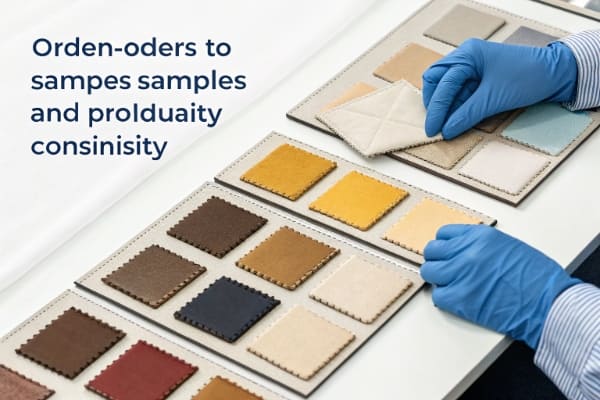
Many sellers overlook the importance of product samples. It is vital to have firsthand experience with the items you plan to sell. Without samples, you might face issues with quality or compliance2. This can lead to negative reviews and damaged brand reputation3. In this post, I’ll guide you on how to successfully order product samples from China.
Why Should Amazon Sellers Never Skip Sampling?
Skipping product samples can be a huge mistake. Many sellers fall into the trap of assuming that images and descriptions are enough. I understand the desire to move quickly. However, the risks of poor quality or misalignment with your brand are simply too high.
Ordering samples provides a concrete representation of your product. You get to see, touch, and test it before making a bulk investment4. This ensures you are making a sound decision that aligns with your brand vision.

Sampling helps you identify issues early5. You can assess materials, build quality, and even usability. This hands-on approach reduces the risk of selling subpar products. Many sellers might realize too late that their product does not meet their expectations. By ordering samples, you place quality at the forefront of your business strategy.
How to Source Samples from Alibaba Safely?
Sourcing samples from Alibaba can feel overwhelming, but it doesn't have to be. Start by searching for suppliers that offer the product you want. Use specific keywords related to your product to filter results effectively.
Contact multiple suppliers6 to discuss specifications, pricing, and sample availability. This ensures you gather enough information to make an informed choice.

When reaching out, be clear about what you need. Specify the quality level, material, and any customizations you require. This sets proper expectations. Remember, it is essential to pay for samples and shipping. Reputable suppliers charge for this service to show their commitment to quality.
Before confirming an order, review supplier ratings and customer feedback7. Choose suppliers with positive reputations. This will increase your chances of getting high-quality samples.
How Many Samples Should You Order Before Launching?
It is wise to order samples from multiple suppliers8. I recommend requesting samples from 3 to 5 suppliers. This allows you to compare quality firsthand before making a bulk order.
Ordering several samples gives you a broader perspective. You can evaluate the differences in quality, pricing, and overall presentation. Each sample provides valuable insights into what you might expect from a supplier's bulk product.

When you receive samples, take notes on each one. Look for specific qualities that are important to your brand. Assess aspects like texture, color consistency, and functionality. These details will inform your final decision when selecting a supplier.
How to Compare Multiple Suppliers Side by Side?
Once you have your samples, it's time to compare them. Set up a simple comparison chart. This can help you visualize the differences and similarities between each product.
Include factors like quality, price, and delivery times9. You can also add notes on your personal impressions. This organized approach makes it easier to determine which supplier meets your needs best.

During this comparison, consider each supplier's communication and responsiveness. Good communication is vital for a smooth business relationship10. You want a partner who is attentive and transparent.
Once you have a clear comparison, it will be easier to choose a supplier for your future orders.
What Packaging Details Should You Check?
Packaging is crucial. It affects both branding and product safety during shipping11. When you receive samples, pay attention to their packaging.
Check for durability, branding elements, and compliance with Amazon's packaging rules. Ensure the packaging reflects your brand's image and messaging.

Examine whether the packaging protects the product. Poor packaging can lead to damage during transit, resulting in unsatisfied customers. Additionally, consider if the packaging is eco-friendly. Sustainability is increasingly important to consumers today.
How to Test Product Quality Before Bulk Ordering?
Testing product quality is a critical step. Inspect the samples thoroughly to spot any defects or inconsistencies.
Conduct functionality tests. Use the products as your potential customers would. This hands-on approach can reveal issues that may not be visible at first glance.

Check for material quality, durability, and any potential hazards. If you notice any problems during testing, take notes. This information will be helpful for your supplier discussions.
A good supplier will be open to feedback and willing to address any issues. Raise any concerns before placing your bulk order.
What Red Flags Should Amazon Sellers Watch For?
As you navigate the sampling process, watch for red flags. These can indicate a supplier may not be reliable.
Look for suppliers who are unresponsive, avoid sharing details, or have inconsistent product descriptions. If their communication feels off, it’s a sign to tread carefully.

Also, check for negative reviews. They can provide insight into other sellers' experiences. If multiple customers report issues, consider this a warning sign.
It’s better to take your time and find a trustworthy supplier than to rush into a relationship that could harm your business.
How to Turn a Good Sample into a Profitable Product?
Once you find a suitable sample, it’s time to think about turning it into a profitable product. Start by retaining one approved sample. This will be your reference for future production batches.
Use this sample to communicate your expectations clearly to the supplier. Specify any customizations like branding or packaging that need to match your Amazon listing.
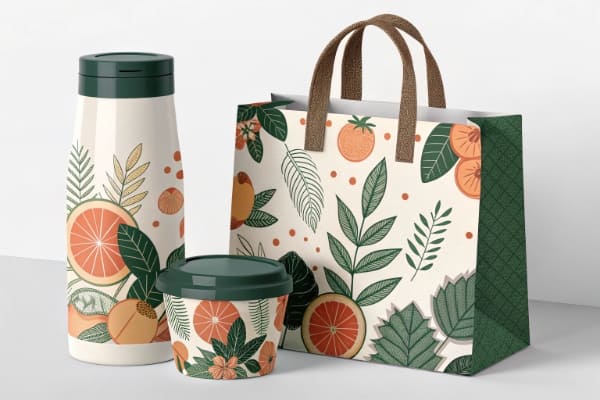
Continuously monitor product quality during production. Maintain open lines of communication with your supplier. This will help you address any concerns early on.
Use your network and feedback from customers to improve the product over time. Success often comes from adapting and responding to market needs.
Conclusion
Incorporating product samples into your sourcing strategy is essential. It helps ensure that you are making the right investment, reducing risks, and increasing your chances of success on Amazon.
Once your samples are approved and you’re ready to ship, check out our complete guide on how to ship products to Amazon FBA from China.
"[PDF] Resource Guide on Evaluation for New Product Development", https://sphhp.buffalo.edu/content/dam/sphhp/cat/kt4tt/pdf/resource-guide-on-evaluation-for-new-product-development.pdf. Quality-control guidance describes pre-production evaluation and sample review as ways to verify product specifications before larger-scale manufacturing, although such sources do not prove that every Amazon seller will avoid losses by sampling. Evidence role: mechanism; source type: institution. Supports: Samples allow sellers to evaluate quality, branding, and packaging before committing to a bulk order.. Scope note: Supports the quality-control rationale generally, not Amazon-specific financial outcomes. ↩
"Testing & Certification | CPSC.gov", https://www.cpsc.gov/Business--Manufacturing/Testing-Certification. Consumer product safety and import-compliance agencies identify product testing, labeling, and conformity requirements as part of bringing goods to market, supporting the need to check samples for compliance; this is contextual support and does not address all Amazon categories. Evidence role: general_support; source type: government. Supports: Skipping samples can expose sellers to quality or compliance issues.. Scope note: Compliance requirements vary by product type, marketplace, and jurisdiction. ↩
"Fake reviews on online platforms: perspectives from the US, UK and ...", https://pmc.ncbi.nlm.nih.gov/articles/PMC8294234/. Research on online reviews shows that negative reviews can affect consumer trust and purchase intentions, providing a basis for the reputational risk described here; the evidence is general e-commerce research rather than Amazon-seller-specific proof. Evidence role: expert_consensus; source type: paper. Supports: Quality or compliance problems can lead to negative reviews and damage brand reputation.. Scope note: Most studies examine online reviews broadly and may not isolate Amazon private-label products. ↩
"Conformity assessment | NIST", https://www.nist.gov/conformity-assessment. Product testing and inspection literature treats physical evaluation as a means of verifying whether goods conform to requirements before acceptance, supporting the value of hands-on sample review; it does not guarantee that later bulk production will match the sample. Evidence role: mechanism; source type: institution. Supports: Seeing, touching, and testing a sample helps sellers make a better-informed bulk-order decision.. Scope note: A sample may not represent every unit in a later production batch without ongoing quality controls. ↩
"Using Deep Learning to Detect Defects in Manufacturing - PMC", https://pmc.ncbi.nlm.nih.gov/articles/PMC7766692/. Quality management sources describe early detection of nonconformities as a way to reduce later correction costs and production risk, supporting the sampling rationale; this is a general quality-management principle rather than evidence from Amazon sellers. Evidence role: mechanism; source type: institution. Supports: Sampling helps identify product issues early.. Scope note: The source would support early defect detection generally, not the precise savings for marketplace sellers. ↩
"Supplier selection and order allocation: a literature review - PMC", https://pmc.ncbi.nlm.nih.gov/articles/PMC8127846/. Supplier-selection research commonly evaluates alternatives across criteria such as cost, quality, delivery, and service, supporting the practice of contacting multiple suppliers; it does not prescribe a specific number of suppliers for Amazon sellers. Evidence role: expert_consensus; source type: paper. Supports: Contacting multiple suppliers helps buyers compare options before choosing one.. Scope note: Supports comparative supplier selection generally, not a fixed outreach strategy for every product category. ↩
"The Price of Stars: The Economics of Online Ratings and Reviews", https://sites.lsa.umich.edu/mje/2023/11/27/the-price-of-stars-the-economics-of-online-ratings-and-reviews/. Studies of online reputation systems find that ratings and feedback can reduce information asymmetry in online marketplaces, supporting their use in supplier screening; ratings remain imperfect and may not verify actual factory capability. Evidence role: mechanism; source type: paper. Supports: Supplier ratings and customer feedback can help assess supplier reputation before ordering samples.. Scope note: Ratings can be incomplete, biased, or manipulated, so they should not be treated as conclusive proof of supplier quality. ↩
"Supplier Selection Using Multi-Criteria Decision-Making Methods", https://www.academia.edu/14244725/Supplier_Selection_Using_Multi_Criteria_Decision_Making_Methods. Procurement and supplier-selection literature supports comparing alternative suppliers against multiple criteria before awarding business, which contextualizes ordering samples from more than one supplier; it does not directly validate the article’s suggested range of suppliers. Evidence role: general_support; source type: paper. Supports: Ordering samples from multiple suppliers allows comparative evaluation before selecting a supplier.. Scope note: The evidence supports multi-supplier comparison in principle, not a universal optimal number of samples. ↩
"Assessing the Best Supplier Selection Criteria in Supply Chain ...", https://pmc.ncbi.nlm.nih.gov/articles/PMC9102987/. Supplier-selection reviews identify quality, cost or price, and delivery performance as recurring criteria in purchasing decisions, supporting their inclusion in a comparison chart; the relative importance of each criterion depends on the product and market. Evidence role: expert_consensus; source type: paper. Supports: Quality, price, and delivery times are relevant criteria when comparing suppliers.. Scope note: The criteria are broadly supported, but their weighting varies by sourcing context. ↩
"Examining collaborative buyer–supplier relationships and social ...", https://pmc.ncbi.nlm.nih.gov/articles/PMC9434505/. Supply-chain relationship research identifies communication quality and information sharing as important elements of buyer–supplier collaboration, supporting the emphasis on responsiveness; this is general relationship evidence rather than a guarantee of supplier performance. Evidence role: expert_consensus; source type: paper. Supports: Good communication is important for a smooth buyer–supplier relationship.. Scope note: Good communication is associated with collaboration but does not by itself ensure product quality or timely delivery. ↩
"CASE STUDIES ON PREDICTING DAMAGE FROM BUCKLING IN ...", https://d.lib.msu.edu/etd/52041. Packaging and logistics research explains that packaging protects goods from physical damage and environmental stresses during distribution, supporting the claim that packaging affects shipping safety; the degree of protection depends on product type and transport conditions. Evidence role: mechanism; source type: paper. Supports: Packaging affects product safety during shipping.. Scope note: The evidence supports packaging’s protective function generally, not a specific packaging design for the article’s products. ↩