
Rail freight and sea freight are two major shipping methods used for transporting goods between China and Europe. Each has its unique advantages and disadvantages. But which one is better for your needs? Let’s dive in.
The first paragraph, which uses PAS formula to grab the reader's attention (max 30 words). Choosing the right shipping method can be tricky. With options like rail and sea freight, each has pros and cons. But which one fits your business needs?
second paragraph at the beginning, answering the question posed by the title, this paragraph must be HELPFUL to the reader and will be used later to compete for Google's Featured Snippets. (max 50 words) Rail freight is faster than sea freight, taking 15-20 days compared to 30-45 days.1 Sea freight is often cheaper for large shipments.2 The choice depends on cargo type, urgency, and cost considerations.
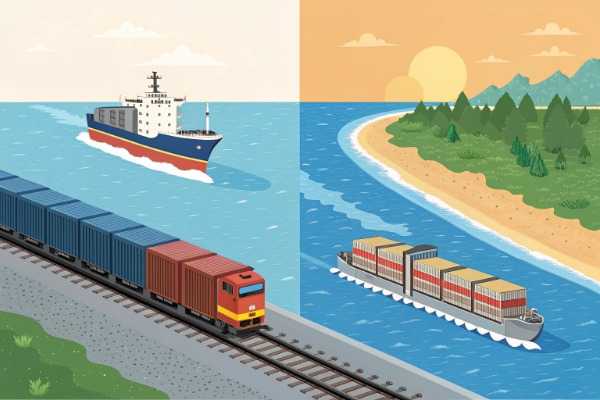
The shipping landscape has many choices. Yet, if you want to know what sets rail and sea freight apart, stay with me. Understanding these differences will help you make a better decision.
What Are the Main Differences Between Rail Freight and Sea Freight?
Rail and sea freight each serve specific needs. Rail freight can provide quicker transit times, while sea freight often costs less for large shipments. Knowing these differences is essential for anyone looking to ship goods internationally.
Rail freight typically takes 15-20 days.3 In contrast, sea freight can take 30-45 days.4 This difference is crucial for businesses that need faster deliveries. Sea freight, however, is generally less expensive for bulk shipments.
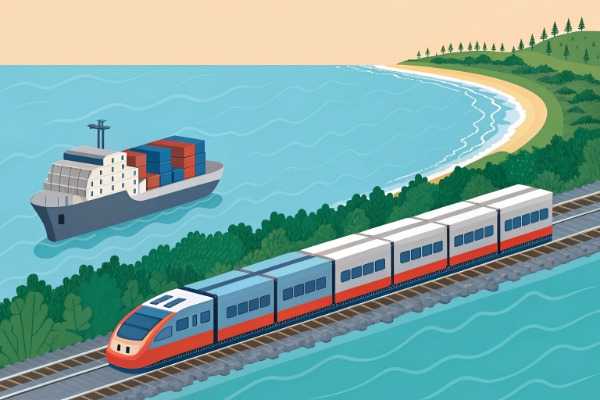
Let’s look at some key differences:
| Factor | Rail Freight | Sea Freight |
|---|---|---|
| Transit Time | 15-20 days | 30-45 days |
| Cost | Higher than sea | Generally lower |
| Best for | Time-sensitive goods | Large volume shipments |
| Cargo types | Containerized goods | Various types (reefer, oversized, etc.) |
The comparison helps companies align their shipping choices with their operational needs. If you need speed, rail may be the way to go. If you are handling large-volume cargo, sea freight might be the better option.
How Do Rail Freight and Sea Freight Compare in Cost?
Cost is a significant factor when choosing between rail and sea freight. Rail freight is generally more expensive than sea freight, but it is still cheaper than air freight.5 Understanding pricing structures helps businesses plan budgets effectively.
Rail freight is suitable for moderately time-sensitive containerized cargo. It might have higher costs, but these can be justified when speed is essential. On the other hand, sea freight typically supports a broader range of equipment and cargo types, making it more versatile.
When examining costs, consider the following:
| Shipping Method | Cost Implications |
|---|---|
| Rail Freight | Higher than sea, lower than air |
| Sea Freight | Cheaper for large volumes |
| Total Cost | Include hidden fees and delays |
Choosing the right method based on cost helps businesses avoid unexpected expenses. Keep in mind that the cheapest option isn’t always the best for your specific needs.
How Do Rail Freight and Sea Freight Compare in Transit Time?
Transit time can be a game changer for businesses. Rail freight typically takes 15-20 days, while sea freight takes about 30-45 days. This difference is essential for businesses that require quick replenishment.
Rail freight is particularly useful for time-sensitive shipments.6 It can significantly reduce pipeline inventory and stockout risk.7 Businesses can benefit when faster replenishment compensates for higher transport costs.
Here’s a breakdown of transit times:
| Shipping Method | Average Transit Time |
|---|---|
| Rail Freight | 15-20 days |
| Sea Freight | 30-45 days |
Knowing how each method stacks up in terms of time helps businesses plan their supply chains effectively. If delays can hurt your operations, rail may be the right choice.
Which Types of Goods Are Better Suited for Rail Freight or Sea Freight?
Not all goods are created equal. Some are more suited for rail freight, while others are better for sea freight. Rail is ideal for containerized cargo that needs quicker delivery.8 Sea freight supports a wider range of cargo types, like oversized items or dangerous goods.
Rail freight works best for moderately time-sensitive items, like electronics or fashion apparel. Sea freight is the go-to for heavy and bulky shipments.9
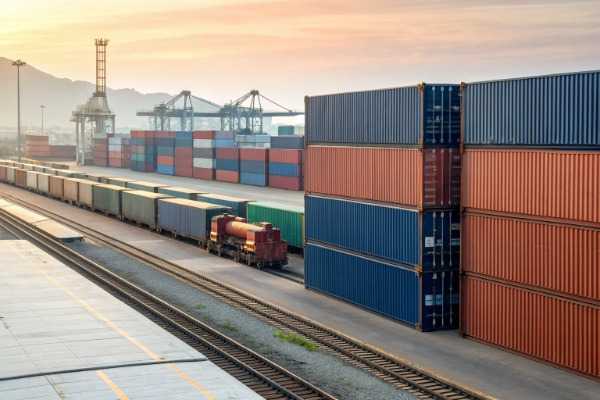
Here’s a quick guide on which method to choose based on cargo type:
| Cargo Type | Best Shipping Method |
|---|---|
| Time-sensitive goods | Rail Freight |
| Heavy machinery | Sea Freight |
| Containerized cargo | Both |
| Oversized items | Sea Freight |
Choosing the right method based on cargo type can save you money and time.
Choosing the right method based on cargo type can save you money and time.
"China - Europe Railway Express in Maritime Shipping", https://www.jusdaglobal.com/en/article/china-europe-railway-express-faster-than-maritime-shipping/. A neutral logistics or institutional source should document typical China-Europe rail and ocean freight transit-time ranges, supporting the comparative claim that rail is generally faster than maritime transport on this corridor. Evidence role: statistic; source type: institution. Supports: Rail freight between China and Europe is usually faster than sea freight, with indicative transit times of 15-20 days versus 30-45 days.. Scope note: Transit times vary by origin, destination, routing, port congestion, border procedures, and service provider schedules. ↩
"[PDF] Maritime Transportation Costs in the Grains and Oilseeds Sector (EN)", https://www.oecd.org/content/dam/oecd/en/publications/reports/2022/06/maritime-transportation-costs-in-the-grains-and-oilseeds-sector_1d1828de/b1cdf6b7-en.pdf. A transport economics source should support the general cost principle that maritime shipping has lower unit costs for high-volume, long-distance freight than faster modes such as rail or air. Evidence role: expert_consensus; source type: education. Supports: Sea freight is often cheaper than rail for large-volume shipments.. Scope note: The source may establish the general cost structure rather than provide current China-Europe spot rates, which fluctuate with fuel prices, capacity, and disruptions. ↩
"Rail Freight From China (2026) – Time, Rates, Routes & ...", https://ddpchain.com/rail-freight-from-china/. A railway corridor report or international transport institution should provide representative China-Europe rail freight transit times, supporting the stated 15-20 day range as an indicative benchmark. Evidence role: statistic; source type: institution. Supports: China-Europe rail freight typically takes about 15-20 days.. Scope note: Transit times differ across terminals and services, so the cited range should be treated as typical rather than guaranteed. ↩
"A Guide to International Freight Transit Times from Asia to USA - Dimerco", https://dimerco.com/blog-post/a-guide-to-international-freight-transit-times-from-asia-to-usa/. A maritime logistics or institutional source should document representative ocean transit times between China and Europe, supporting the 30-45 day estimate as a typical range. Evidence role: statistic; source type: institution. Supports: Sea freight between China and Europe can take around 30-45 days.. Scope note: The figure may exclude inland pickup, customs clearance, port dwell time, or disruptions, depending on the source methodology. ↩
"International transport costs: Why and how to measure them?", https://blogs.worldbank.org/en/transport/international-transport-costs-why-and-how-measure-them. A comparative freight-transport source should show the usual cost hierarchy among sea, rail, and air freight, supporting the claim that rail commonly sits between sea and air in price. Evidence role: expert_consensus; source type: research. Supports: Rail freight is generally costlier than sea freight but cheaper than air freight.. Scope note: The relationship is a general market pattern and may not hold for every lane, shipment size, surcharge period, or capacity shortage. ↩
"Air Freight vs Sea Freight: Core Differences - Globexship", https://globexship.com/resources/air-freight-vs-sea-freight-core-differences/. A supply-chain or transport-policy source should explain that rail freight can offer shorter transit times than maritime shipping at lower cost than air freight, supporting its use for moderately time-sensitive cargo. Evidence role: general_support; source type: research. Supports: Rail freight is useful for moderately time-sensitive shipments.. Scope note: The source may support the modal trade-off concept rather than prove suitability for all time-sensitive products or routes. ↩
"[PDF] Chapter 5. Inventory Systems - Logistics Systems Design", https://www2.isye.gatech.edu/~mgoetsch/cali/logistics_systems_design/inventory_systems/inventory_systems.pdf. A supply-chain management source should explain how shorter lead times reduce inventory held in transit and can lower stockout exposure, supporting the mechanism linking faster transport to pipeline inventory and service-level risk. Evidence role: mechanism; source type: paper. Supports: Faster rail transport can reduce pipeline inventory and stockout risk compared with slower modes.. Scope note: The effect depends on demand variability, replenishment policy, safety stock calculations, and transport reliability; faster transit alone does not guarantee lower stockouts. ↩
"China to Europe Shipping: Ocean vs Rail vs Air Cost & Time", https://unilogistics.com.cn/En/newsinfo/32.html. A transport-corridor or intermodal freight source should state that China-Europe rail services are primarily containerized and positioned between sea and air in speed, supporting their suitability for containerized goods requiring faster delivery than ocean freight. Evidence role: general_support; source type: institution. Supports: Rail freight is well suited to containerized cargo needing quicker delivery.. Scope note: The claim is strongest for standard containerized cargo on established rail corridors and may not apply to oversized, hazardous, or temperature-sensitive shipments without specialized arrangements. ↩
"Break Bulk and Project Cargo Shipping: What's The Difference?", https://www.seaofgravity.com/break-bulk-and-project-cargo-shipping/. A maritime transport source should describe ocean shipping’s role in carrying bulk, breakbulk, heavy-lift, and oversized cargo, supporting the general claim that sea freight is commonly used for heavy and bulky shipments. Evidence role: general_support; source type: institution. Supports: Sea freight is commonly preferred for heavy and bulky shipments.. Scope note: This supports common suitability, not an absolute rule; rail, road, or inland waterway may be preferable for some heavy cargo depending on geography and handling constraints. ↩