
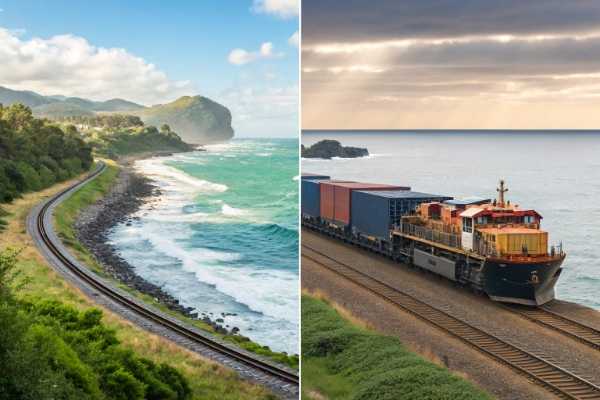
Sea freight and rail freight are two popular shipping methods. But which one is the best choice for your business needs? Let's explore the key differences and help you make a smart decision.
When deciding between sea freight and rail freight, consider factors such as cost, transit time, and cargo type. This helps ensure you choose the most effective shipping method.
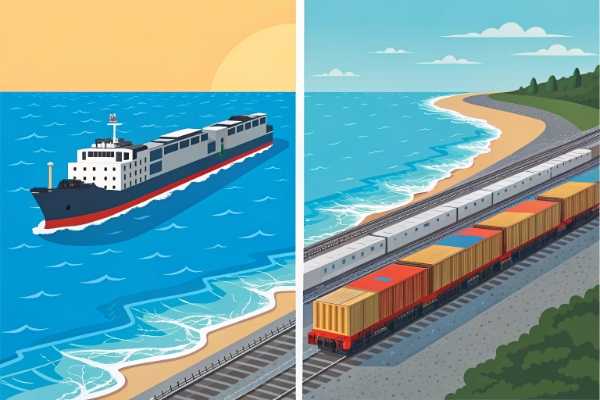
It can be hard to determine the best shipping option. Each method has its own set of benefits and drawbacks. Understanding these differences will help you make an informed choice. Let's dive deeper into this topic.
What Are the Main Differences Between Sea Freight and Rail Freight?
Sea freight and rail freight serve different needs in the shipping industry. Sea freight relies on large vessels that transport cargo across oceans. It is often the most economical option for bulk shipments1. On the other hand, rail freight uses trains on land, providing faster transit times between major cities2. Each method has unique strengths and weaknesses.
Sea freight is ideal for large-volume shipments, while rail freight excels in speed and efficiency for certain routes. Knowing these distinctions guides your shipping choices.
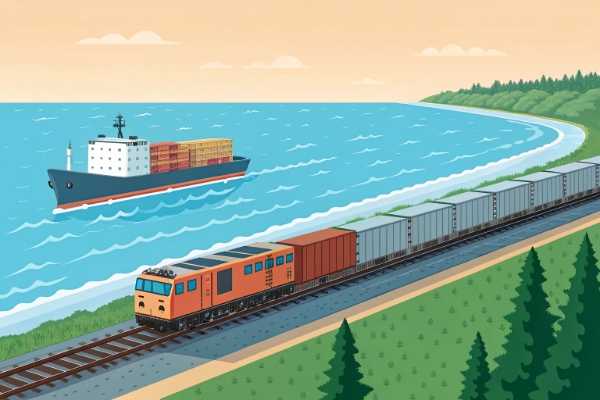
Sea freight typically offers lower costs per TEU (twenty-foot equivalent unit) for large shipments3. This is due to economies of scale4. It's a great option for bulk goods that are not time-sensitive. Conversely, rail freight can provide transit times that are 40-60% shorter on key China to Europe corridors5. This improved speed is crucial for time-sensitive shipments.
How Do Sea Freight and Rail Freight Compare in Cost and Transit Time?
When comparing costs and transit times, it’s important to look at the entire supply chain. Sea freight is generally cheaper, particularly for large volumes. However, rail freight may minimize the time it takes to get goods to market, which can justify its higher price for certain shipments.
Cost-effectiveness comes down to your specific needs. Sea freight is typically cheaper, but rail freight can save you time, making it worth the extra cost in some cases.
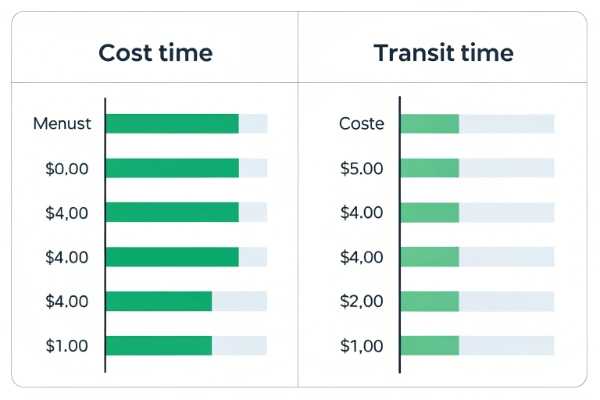
Total landed costs6 matter too. These include factors like handling, customs fees, insurance, and inventory carrying costs7. Simply comparing freight rates may not provide the full story. You must consider the complete picture to understand what will work best for your business.
Which Types of Cargo Are Best Suited for Sea Freight or Rail Freight?
Different types of cargo work better with each shipping method. Sea freight shines with bulk goods, heavy machinery, and non-urgent products. It is the most cost-effective choice for large shipments. Rail freight, however, suits high-value items, just-in-time inventory, and perishable goods that require quick delivery8.
Choosing the right shipping method depends on the nature of your cargo. Sea freight works for bulk and heavy items, while rail is better for high-value and time-sensitive goods.
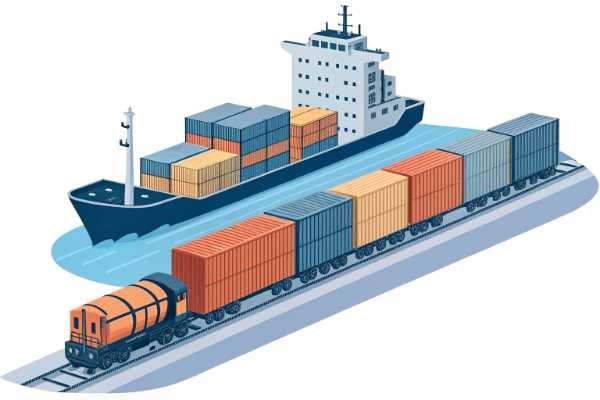
If your products are non-urgent and can wait, sea freight will usually save you money. But if you need to maintain a fast-moving inventory, rail freight’s speed may justify the higher cost.
What Are the Advantages and Disadvantages of Sea Freight vs Rail Freight?
Both shipping methods have their pros and cons. Sea freight is typically less expensive and works well for big shipments. However, it comes with longer transit times and potential delays due to port congestion9.
On the other hand, rail freight provides faster deliveries and higher reliability10. It is less affected by port issues, which can be a significant advantage for certain routes. But rail can be more expensive, especially if your route requires additional drayage and transshipment11, which can negate its transit time benefits.
Understanding the advantages and disadvantages of each method will help you make the right decision for your shipping needs.
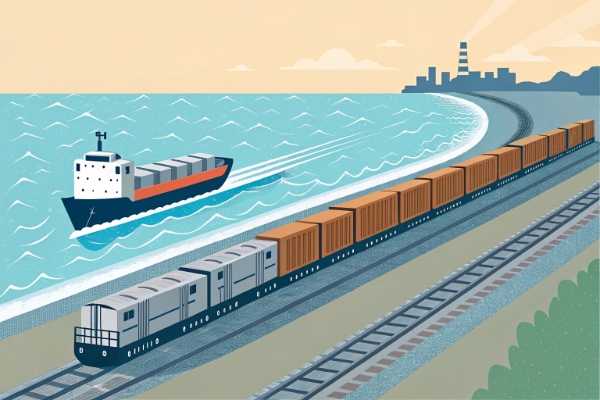
Determining which method is best for you depends on your specific requirements. If cost is your primary concern, sea freight is generally the way to go. But if your cargo is high-value or has strict delivery timelines, rail freight could be the better option.
Which Shipping Routes Benefit Most from Rail Freight?
Rail freight is particularly advantageous on well-established corridors, like those between China and Europe12. These routes have mature rail networks, making them efficient for transporting goods quickly. The reduced number of transshipments can lower the risk of damage and theft, providing better reliability for shippers.
On mature rail routes, rail freight can offer improved reliability and reduced risks, making it a smart choice for shippers.
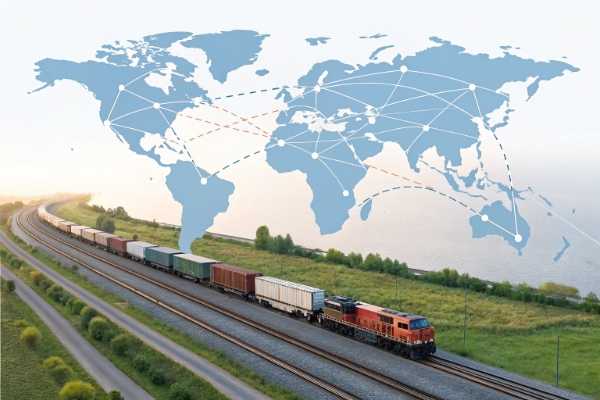
When rail networks are reliable, companies can manage their supply chains more effectively. They can maintain better control over inventory and improve their overall logistics. For businesses shipping in these areas, rail offers a strong alternative to traditional methods.
How Do You Choose Between Sea Freight and Rail Freight?
Choosing the right shipping method requires careful consideration of several factors. Start by analyzing your total landed costs. Look at handling fees, customs, and other expenses in addition to freight rates. Next, consider the nature of your cargo. Is it time-sensitive? How valuable is it?
Using a tailored approach to evaluate cost and transit time allows you to make the best decision for your specific shipping needs.
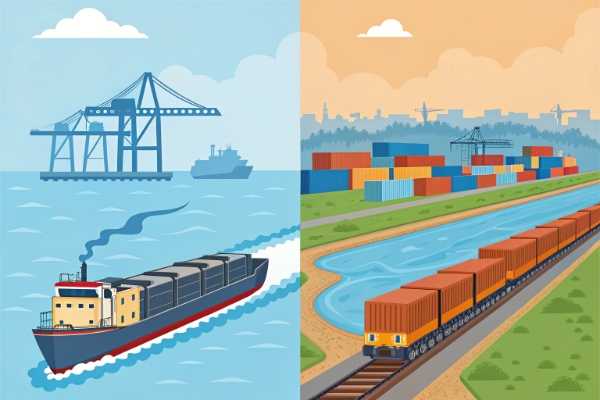
Also consider the shipping routes. If there are mature rail networks where you are shipping, it may be worth the investment. For larger, non-urgent shipments, sea freight could be the best choice. Ultimately, modeling different scenarios will help you assess costs and make informed decisions based on your unique business needs.
Conclusion
In conclusion, both sea freight and rail freight have their advantages and drawbacks. Analyzing your total landed costs, the nature of your cargo, and the specific shipping routes will help you choose the most cost-effective method.
"[PDF] Fathoming Shipping Costs: An Exploration - World Bank Document", https://documents1.worldbank.org/curated/en/099436104042241280/pdf/IDU0c20d2ae90046304ca009ab508217e50747bd.pdf. Transport-economics literature describes maritime shipping as having very low unit costs for large-volume cargo because vessel capacity spreads fixed costs across many containers or tonnes. Evidence role: general_support; source type: paper. Supports: Sea freight is often the most economical option for bulk shipments.. Scope note: The cost advantage depends on route, fuel prices, port charges, and inland transport costs. ↩
"[PDF] Rail Short Haul Intermodal Corridor Case Studies", https://railroads.dot.gov/sites/fra.dot.gov/files/fra_net/1649/Rail%20Intermodal%20Short%20Haul%20Corridor%20Case%20Studies.pdf. Intermodal freight studies report that rail can provide shorter inland and continental transit times than ocean-based routes where origin and destination are connected by established rail corridors. Evidence role: general_support; source type: institution. Supports: Rail freight provides faster transit times between major cities on suitable routes.. Scope note: This support is route-specific and does not imply rail is faster for every origin-destination pair. ↩
"[PDF] United States Merchant Marine Academy “Economies of Scale in ...", https://www.usmma.edu/sites/usmma.dot.gov/files/docs/CMA%20Paper%20Murray%201%20%282%29.pdf. Container-shipping research and maritime transport reports use TEU-based cost measures and show that larger vessels and higher shipment volumes can reduce average container transport costs. Evidence role: statistic; source type: research. Supports: Sea freight typically offers lower costs per TEU for large shipments.. Scope note: TEU costs vary substantially by trade lane, carrier capacity, fuel costs, and seasonal demand. ↩
"[PDF] Economies of Scale and Alliances in Container Shipping", https://economics.mit.edu/sites/default/files/inline-files/jmp_0.pdf. Economic analyses of maritime transport explain that larger ship capacity lowers average transport cost by spreading capital, crew, and fuel-related costs over more cargo units. Evidence role: mechanism; source type: paper. Supports: Sea freight’s lower large-shipment costs are due to economies of scale.. Scope note: Diseconomies can occur when port congestion, canal constraints, or low utilization offset scale benefits. ↩
"China-Europe freight transportation under the first wave of COVID ...", https://pmc.ncbi.nlm.nih.gov/articles/PMC9682051/. Studies of China-Europe rail services generally find rail transit times between those of air and ocean shipping and often substantially shorter than sea routes on selected corridors. Evidence role: statistic; source type: institution. Supports: Rail freight can provide transit times that are 40-60% shorter on key China to Europe corridors.. Scope note: The exact 40–60% reduction depends on the city pair, service schedule, border delays, and whether first-mile and last-mile trucking are included. ↩
"Landed Cost: Meaning, Formula & Examples for You | DHL Global", https://www.dhl.com/discover/en-global/logistics-advice/essential-guides/landed-cost-meaning-formula-calculation. Supply-chain and customs guidance defines landed cost as the full cost of goods delivered to their destination, including transport, duties, taxes, insurance, handling, and related charges. Evidence role: definition; source type: government. Supports: Total landed costs are the appropriate broader cost basis when comparing freight modes.. Scope note: Specific cost categories vary by accounting practice, Incoterms, and jurisdiction. ↩
"Carrying cost - Wikipedia", https://en.wikipedia.org/wiki/Carrying_cost. Operations and supply-chain literature identifies inventory carrying cost as a component of total logistics cost, including the capital, storage, service, and risk costs associated with holding inventory over time. Evidence role: definition; source type: education. Supports: Inventory carrying costs should be considered when comparing freight modes.. Scope note: The magnitude of carrying cost is firm- and product-specific and cannot by itself determine the best freight mode. ↩
"Analysis of Freight Movement Mode Choice Factors", https://www.fdot.gov/docs/default-source/rail/publications/studies/planning/modechoicefactors.pdf. Freight-mode choice research shows that shippers give greater weight to speed and reliability for high-value, time-sensitive, and perishable goods than for low-value bulk commodities. Evidence role: expert_consensus; source type: paper. Supports: Rail freight is better suited than slower modes for high-value, just-in-time, and perishable cargo requiring quick delivery.. Scope note: Mode suitability also depends on temperature-control availability, service frequency, security, and end-to-end route design. ↩
"[PDF] A Metric of Global Maritime Supply Chain Disruptions.", https://openknowledge.worldbank.org/bitstreams/f56eba44-aa9c-4f28-80af-d216fffd804d/download. Maritime transport reports document that ocean freight involves long sailing times and can be delayed by port congestion, vessel queues, and terminal capacity constraints. Evidence role: general_support; source type: institution. Supports: Sea freight has longer transit times and can face delays from port congestion.. Scope note: Congestion severity varies by port, season, labor conditions, and global demand shocks. ↩
"Mode Choice in Freight Transport", https://www.oecd.org/content/dam/oecd/en/publications/reports/2022/02/mode-choice-in-freight-transport_667ea2c1/3e69ebc4-en.pdf. Rail freight corridor assessments often evaluate rail as a scheduled land-transport mode with competitive transit times and reliability advantages on certain intermodal corridors compared with congested maritime-port routings. Evidence role: general_support; source type: institution. Supports: Rail freight can provide faster deliveries and higher reliability on suitable routes.. Scope note: Reliability depends on corridor capacity, border procedures, rail interoperability, and terminal performance. ↩
"[PDF] Measuring the Impacts of Freight Transportation Improvements on ...", https://rosap.ntl.bts.gov/view/dot/42464/dot_42464_DS1.pdf. Intermodal freight research notes that drayage and transshipment add handling time, cost, and coordination requirements, which can reduce the net advantage of a faster long-haul mode. Evidence role: mechanism; source type: paper. Supports: Additional drayage and transshipment can reduce or negate rail freight’s transit-time benefits.. Scope note: The impact depends on terminal proximity, service frequency, handling efficiency, and whether the shipment is door-to-door or terminal-to-terminal. ↩
"2024 Report on Combined Transport in Europe", https://uic.org/IMG/pdf/uic_uirr_report_2024-2.pdf. Institutional reports on Eurasian transport describe China-Europe rail freight services as established intermodal corridors connecting major Chinese and European logistics hubs. Evidence role: historical_context; source type: institution. Supports: Rail freight is particularly advantageous on well-established corridors such as those between China and Europe.. Scope note: Corridor maturity differs by route, and service levels have changed over time due to policy, infrastructure, and geopolitical conditions. ↩