
The shipping industry often confuses many with its terminology and calculations. This confusion can lead to unexpected costs for businesses.
Actual weight is the physical mass of a package, while volumetric weight is a calculated value based on size. Understanding these differences can help you save money on shipping.
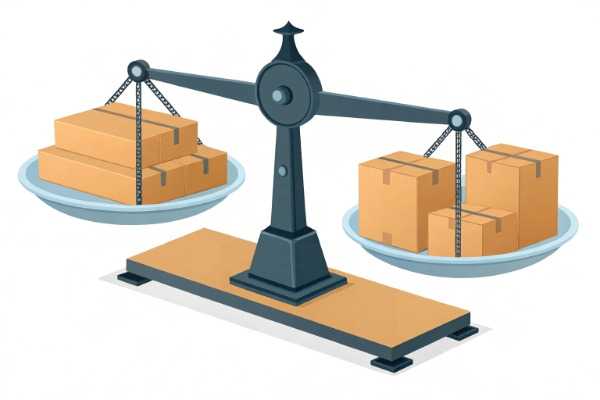
When it comes to air freight, knowing whether you are being charged based on actual weight or volumetric weight is essential. Understanding these concepts can save you from higher shipping costs.
What Is Actual Weight in Air Freight?
Actual weight refers to the physical weight of a package. It is measured using a scale and is expressed in either kilograms or pounds. This weight is straightforward and represents how heavy the package is.
When shipping, actual weight is critical as it is the most direct measurement of a package's mass.
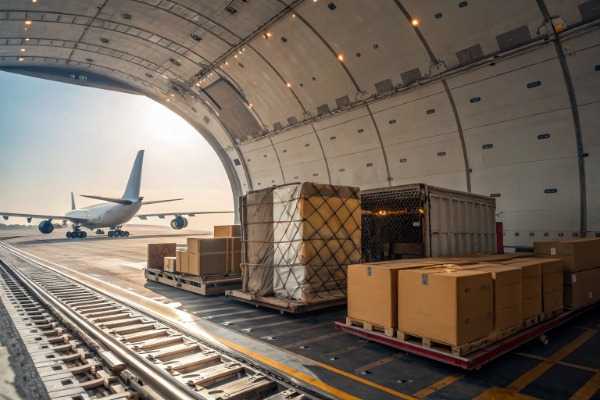
In air freight, actual weight becomes crucial for determining costs. Carriers often compare the actual weight against volumetric weight to decide which one results in higher charges.
What Is Volumetric Weight in Air Freight?
Volumetric weight, also known as dimensional weight, is a calculated figure that represents the volume a package occupies. This calculation considers the package's dimensions in relation to its weight.
Carriers use volumetric weight to ensure they charge fairly for the space a package takes up on an aircraft.

To calculate volumetric weight, you multiply the length, width, and height of the package and then divide that number by a divisor set by the carrier. Common divisors are 5000 for centimeters to kilograms and 139 for inches to pounds.
Why Do Airlines Use Volumetric Weight for Pricing?
Airlines use volumetric weight to optimize cargo space. When shipping goods, the space they take up can be just as important as their actual weight.
Light packages that take up significant space can still be costly for carriers to transport.

By charging based on volumetric weight, airlines can manage cargo loads better and maximize their profits. This practice ensures they do not lose money on lightweight but bulky shipments.
How Is Volumetric Weight Calculated in Air Freight?
To calculate volumetric weight, you need the dimensions of your package. Measure the length, width, and height in centimeters or inches.
Then, use the appropriate divisor to find the volumetric weight.

Here’s a quick example for better understanding:
- Measure your package: 60 cm x 40 cm x 30 cm.
- Calculate volume: 60 x 40 x 30 = 72000 cubic cm.
- Divide by the divisor (5000 for cm/kg): 72000 / 5000 = 14.4 kg.
So, the volumetric weight is 14.4 kg.
What Is the Difference Between Actual Weight and Volumetric Weight?
The main difference lies in how they are measured and calculated. Actual weight is straightforward; it is the weight of the package on a scale. Volumetric weight, however, is a calculation that considers the dimensions of the package.
Carriers typically charge for whichever weight is greater, known as the chargeable or billable weight.

Understanding this difference is vital for cost-effective shipping, as it influences your shipping charges directly.
Which Weight Is Used to Calculate Air Freight Charges?
Airlines use the greater of actual weight or volumetric weight to determine shipping costs.
Whichever is higher becomes the basis for charges.

For example, if a package's actual weight is 10 kg and its volumetric weight is 15 kg, the chargeable weight will be 15 kg.
How Do Package Dimensions Affect Air Freight Costs?
Package dimensions play a significant role in air freight costs. A larger package may incur higher volumetric weight charges, even if its actual weight is light.
Understanding this can help shippers choose sizes that minimize costs.
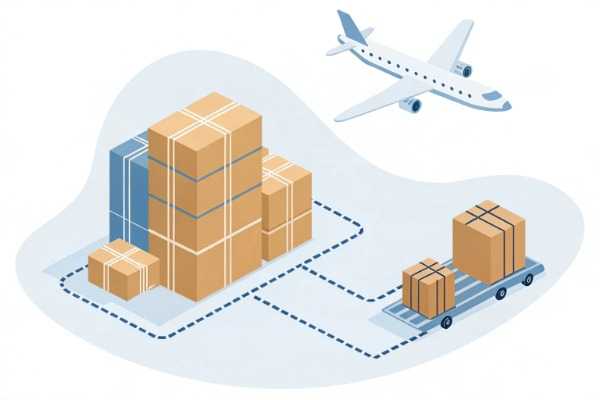
Carriers round up dimensions to the nearest whole unit. This rounding can create additional costs if the package is near a weight threshold.
How Can Importers Reduce Chargeable Weight?
Reducing chargeable weight can lead to significant savings on shipping costs. One effective method is by optimizing packaging.
Smaller and lighter packaging reduces volumetric weight.
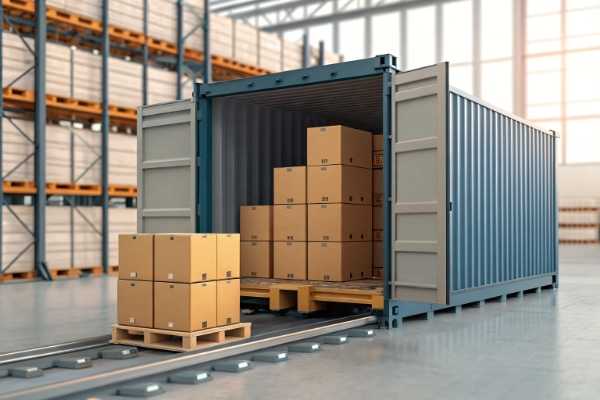
Another strategy is to use efficient packing techniques. This not only minimizes the space but also keeps shipping costs low. Understanding the balance between actual weight and volumetric weight can help importers plan shipments more effectively.
Conclusion
Knowing the difference between actual weight and volumetric weight helps businesses save on shipping costs.