The importance of a thorough factory audit checklist cannot be overstated. A comprehensive checklist helps ensure that the factories we partner with meet our quality standards and legal requirements.
A well-structured factory audit checklist helps identify potential risks, verify compliance, and enhance the overall quality1 of the products we source.

To ensure you don’t miss anything important, let’s break down the essential components of a factory audit checklist.
Why Is a Factory Audit Checklist Important?
Auditing a factory is a crucial step in the sourcing process. It provides peace of mind knowing that the factories we work with are capable and compliant. A checklist streamlines the audit process and ensures that we gather all necessary information.
Factory audits help identify potential issues before they become major problems2, ensuring that products meet quality and compliance standards.

It’s vital to have a clear framework guiding the audit to ensure that nothing is overlooked.
Dive deeper Paragraph: A factory audit checklist serves as a structured guide for evaluating compliance, quality, and efficiency. It highlights the areas that require attention, reducing the risk of sourcing from unreliable suppliers. During my audits, I always start with a checklist to establish a baseline understanding of the factory’s operations. This systematic approach saves time and ensures comprehensive documentation of findings. The costs associated with poor quality or non-compliance can be significant.3 Thus, a thorough checklist serves not only as a tool for assessment but also as a business safeguard. Ultimately, a detailed factory audit checklist is indispensable for any sourcing professional.
What Company and Legal Information Should Be Verified?
There are several key documents that should be checked during a factory audit. Start by verifying the factory's business license and registration documents4. This ensures that they are legally operating and recognized in their jurisdiction. Additionally, relevant certifications such as ISO 90015 must be checked to confirm their commitment to quality management.
Verifying company documents confirms the factory’s legitimacy and compliance with local and international standards.

Without this information, we risk partnering with companies that may not operate within legal frameworks.
Dive deeper Paragraph: During audits, I make it a point to review the factory's legal documents thoroughly. I ask for their business license, registration certifications, and quality management certifications to ensure they comply with regulations. This verification process provides insights into the factory's operational legitimacy. Checking certifications such as ISO 9001 is critical as they indicate adherence to quality management principles. I have encountered factories that lacked proper documentation, which raised red flags. These experiences reinforced my understanding of the importance of detailed verification as it helps in reducing sourcing risks. Ultimately, this step protects our brand’s reputation and ensures we work with credible partners.
How Should Production Facilities and Capacity Be Evaluated?
Assessing the production facilities and capacity is another essential aspect of the audit. Evaluate core manufacturing equipment to ensure it is suitable for the products being produced. This includes reviewing maintenance logs to confirm equipment is properly maintained6. Additionally, observe how production lines are organized and how effectively the workforce can handle order volumes.
A thorough evaluation of production facilities helps determine if the factory can meet our demands consistently.
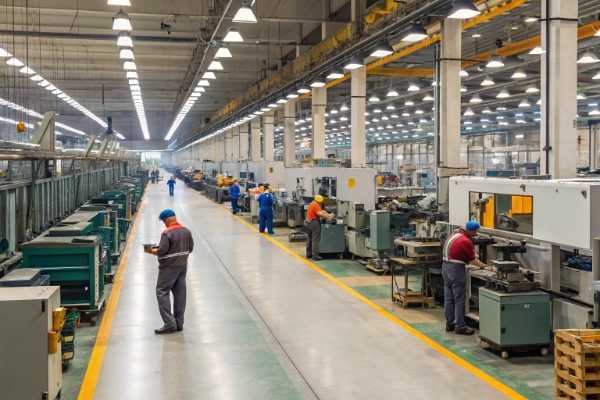
I always look into whether the factory has enough workforce to handle peak times effectively.
Dive deeper Paragraph: During my evaluations, I carefully examine the manufacturing setup and workforce organization. I check core equipment, maintenance logs, and the layout of the production line to ensure efficiency. By assessing the facility's production capacity7, I gain insights into their ability to meet our order volumes. For example, I ask about their contingency plans should equipment fail or workforce shortages occur. Understanding a factory’s production capabilities helps us avoid delays in fulfilling our orders. It also allows me to gauge if they can scale up operations if needed. In my experience, factories demonstrating organized production environments are usually more reliable partners.
What Quality Control Systems Should Be Audited?
Quality control is the backbone of any successful manufacturing process. During the audit, confirm that the factory conducts Incoming Quality Control (IQC) on raw materials8. Inspect records of these inspections to ensure they follow strict acceptance and rejection criteria. Also, check for in-process quality checkpoints during production. This includes monitoring critical process parameters and having non-conforming parts bins.
Auditing the quality control systems helps ensure that products are manufactured to meet our standards.

Final inspections should also follow a defined sampling plan with clear acceptance criteria9.
Dive deeper Paragraph: Quality control systems must be robust and documented. I always look for a documented Quality Management System that includes quality manuals and defined organizational responsibilities. This documentation shows that the factory takes quality seriously. During audits, I check for evidence of Incoming Quality Control (IQC) with clear records and acceptance criteria. I also evaluate if in-process quality checks exist and how they manage non-conforming products. Additionally, I ensure that they have a final inspection process aligned with recognized sampling plans. Testing equipment should also be regularly calibrated to ensure precision in production10. Through these checks, I can confidently assess the quality control measures in place.
What Social Compliance and Environmental Factors Should Be Checked?
Social compliance and environmental factors are critical in today’s sourcing landscape. Verify that the factory adheres to social compliance standards, ensuring fair labor practices and safe working conditions. Assess their environmental management systems to confirm they follow regulations. This can include waste management practices, emissions controls, and energy usage11.
Ensuring social compliance and environmental factors meet standards protects both workers and the environment.

I believe that responsible sourcing is essential to maintaining a positive brand image.
Dive deeper Paragraph: When I check for social compliance, I ask to see documentation that demonstrates adherence to labor laws. This includes reviewing records on working hours, wages, and employee benefits12 to ensure fair treatment. I also examine the factory’s policies on health and safety, ensuring they provide a safe working environment. Equally important are the environmental factors. I investigate how they manage waste and emissions to ensure compliance with environmental regulations. This approach reflects our commitment to responsible sourcing practices and helps to build trust with consumers. In my experience, factories that prioritize social compliance and environmental responsibility tend to be more dependable partners.
What Are the Most Common Audit Findings and Non-Conformities?
After conducting numerous audits, I’ve seen common findings that frequently arise. Inadequate documentation, lack of quality control measures, and non-compliance with labor standards are often reported. It’s crucial to address these issues promptly to avoid future complications.
Identifying common non-conformities helps factories improve their practices and align with our requirements.

These findings can serve as a roadmap for improvement and help build a better partnership.
Dive deeper Paragraph: I often encounter issues such as insufficient documentation during audits, leading to significant compliance risks. Lack of proper quality control measures is another common finding that can jeopardize product quality. Additionally, I see non-compliance with labor standards, which raises ethical concerns. These recurring issues highlight the importance of thorough audits and corrective actions. I encourage factories to develop action plans to address non-conformities promptly. By helping them improve, we build stronger partnerships based on mutual trust and improvement. In my experience, factories that actively work on resolving findings are more likely to maintain long-term relationships.
Conclusion
A comprehensive factory audit checklist is essential for ensuring compliance, quality, and risk management.
"ISO 19011: Guidelines for Auditing Management Systems - ASQ", https://asq.org/quality-resources/iso-19011?srsltid=AfmBOoqSnEyEefdStsLf7CF1laSVyDaYdWokhu5lq8QO9oZQucQVqYNy. ISO 19011 describes management-system auditing as a systematic process for obtaining evidence and evaluating conformity to audit criteria, supporting the claim that structured audits can identify risks and verify compliance. Evidence role: expert_consensus; source type: institution. Supports: A well-structured factory audit checklist helps identify potential risks, verify compliance, and enhance the overall quality of sourced products.. Scope note: The standard provides general audit guidance and does not prove that any specific factory checklist improves product quality. ↩
"Corrective action responses following internal audits | CQI | IRCA", https://www.quality.org/article/corrective-action-responses-following-internal-audits. Quality-audit literature and ISO 9001 guidance treat internal and supplier audits as tools for detecting nonconformities and enabling corrective action, which contextually supports the preventive role of factory audits. Evidence role: mechanism; source type: institution. Supports: Factory audits help identify potential issues before they become major problems.. Scope note: The evidence supports the audit mechanism generally, not the frequency or magnitude of problems prevented in a particular supply chain. ↩
"New Quality Cost Framework (QCF) Based on the Hybrid Fuzzy ...", https://pmc.ncbi.nlm.nih.gov/articles/PMC8979713/. Cost-of-quality research identifies internal failure, external failure, appraisal, and prevention costs as measurable economic consequences of quality problems, supporting the statement that poor quality can impose significant costs. Evidence role: general_support; source type: paper. Supports: Poor quality or non-compliance can create significant business costs.. Scope note: Cost levels vary by industry and firm, so the source would contextualize the claim rather than quantify costs for this article’s factories. ↩
"Permits & Licenses - CDTFA - CA.gov", https://cdtfa.ca.gov/services/permits-licenses.htm. Government business-registration guidance generally explains that registration and licensing establish a firm’s legal authorization to operate in a jurisdiction, supporting the relevance of checking these documents during supplier verification. Evidence role: definition; source type: government. Supports: Verifying business license and registration documents helps confirm that a factory is legally operating and recognized in its jurisdiction.. Scope note: Specific licensing requirements differ by country, industry, and locality. ↩
"ISO 9001:2015 - Quality management systems", https://www.iso.org/standard/62085.html. ISO states that ISO 9001 sets criteria for a quality management system, supporting its use as evidence that an organization has adopted a recognized quality-management framework. Evidence role: definition; source type: institution. Supports: ISO 9001 certification is relevant evidence of a factory’s quality management system.. Scope note: Certification indicates conformity to the standard at the time and scope of certification; it does not by itself guarantee product quality in every shipment. ↩
"Using data mining technology to explore causes of inaccurate ...", https://www.sciencedirect.com/science/article/abs/pii/S0950423023000931. Manufacturing maintenance research describes maintenance records as evidence for tracking equipment condition, maintenance history, and reliability activities, supporting their use in assessing whether equipment is maintained. Evidence role: mechanism; source type: paper. Supports: Reviewing maintenance logs helps auditors assess whether manufacturing equipment is properly maintained.. Scope note: Maintenance logs show documented maintenance activity but do not independently prove equipment performance without inspection or operational data. ↩
"Capacity Planning for Production - Aurora University", https://online.aurora.edu/capacity-planning/. Operations-management references define production capacity as the maximum output a system can achieve over a period, supporting its use in judging whether a factory can meet expected order volumes. Evidence role: definition; source type: education. Supports: Assessing production capacity helps determine whether a factory can meet order volumes.. Scope note: Capacity estimates require assumptions about product mix, labor availability, downtime, and scheduling, so the definition alone does not prove actual delivery performance. ↩
"Clause 8.4 Control of External Providers - 9000 Store", https://the9000store.com/iso-9001-2015-requirements/iso-9001-2015-operational-requirements/external-providers/. ISO 9001 requires organizations to control externally provided processes, products, and services, which contextually supports inspection or verification of incoming materials as part of a quality management system. Evidence role: mechanism; source type: institution. Supports: Factories should verify incoming raw materials as part of their quality control system.. Scope note: ISO 9001 does not prescribe the exact term “Incoming Quality Control” or a single inspection method for all factories. ↩
"[PDF] ISO 2859-1 - UNT Chemistry", https://chemistry.unt.edu/~tgolden/courses/iso2859-1.pdf. ISO 2859-1 and related acceptance-sampling standards provide procedures for lot-by-lot inspection using defined sampling plans and acceptance criteria, supporting the use of structured final inspection sampling. Evidence role: definition; source type: institution. Supports: Final inspections should use a defined sampling plan with clear acceptance criteria.. Scope note: Acceptance-sampling standards define statistical inspection procedures but do not determine which acceptance quality limit is appropriate for a specific product risk. ↩
"Measurements and Standards | NIST", https://www.nist.gov/standards-measurements. NIST metrology guidance explains that calibration compares measuring instruments with standards to establish measurement accuracy and traceability, supporting the role of regular calibration in reliable production measurements. Evidence role: mechanism; source type: government. Supports: Testing equipment should be regularly calibrated to support precision in production.. Scope note: Calibration supports measurement reliability, but production precision also depends on process control, operator practice, and environmental conditions. ↩
"Resources, Waste, and Emissions | US EPA", https://www.epa.gov/smm/resources-waste-and-emissions. ISO 14001 guidance describes environmental management systems as frameworks for managing environmental aspects, legal obligations, and performance, which contextually supports reviewing waste, emissions, and energy use during factory audits. Evidence role: expert_consensus; source type: institution. Supports: Waste management, emissions controls, and energy usage are relevant factors in assessing factory environmental management.. Scope note: ISO 14001 provides a management-system framework and does not itself verify compliance with every local environmental regulation. ↩
"International labour law - Wikipedia", https://en.wikipedia.org/wiki/International_labour_law. The International Labour Organization identifies wages, working time, and employment conditions as core areas of labor standards and labor inspection, supporting their inclusion in social-compliance document review. Evidence role: expert_consensus; source type: institution. Supports: Reviewing working hours, wages, and employee benefits helps assess labor-law and social-compliance performance.. Scope note: ILO standards provide international labor principles; applicable legal thresholds depend on national law and sector-specific rules. ↩