
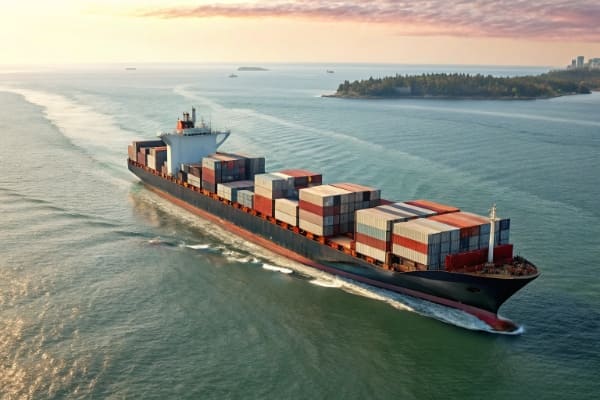
Struggling to choose a shipping method from China1? The wrong choice can lead to high costs or long delays. I'll help you find the perfect balance for your business needs.
The best shipping method from China1 to New Zealand depends on your priorities. Sea freight is the cheapest for large, non-urgent shipments. Air freight offers a good balance of speed and cost for valuable goods. Express shipping is the fastest option for small, urgent parcels and samples.
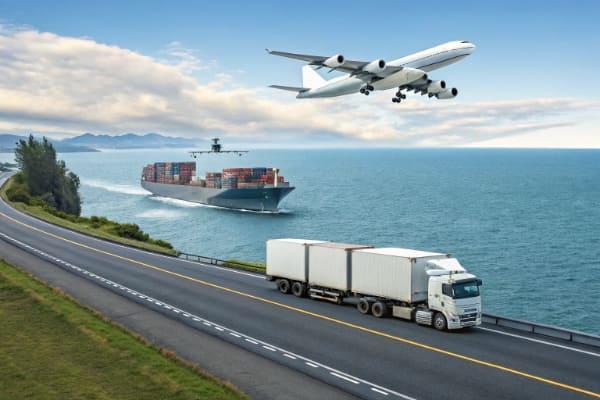
Choosing how to get your products from China to New Zealand can feel complicated. You have to think about cost, speed, and the size of your order. Getting this right is key to keeping your customers happy and your business profitable. Let's break down the options so you can make the best choice every time.
What are the main shipping methods from China to New Zealand?
Confused by all the shipping terms you see online? You might worry that picking the wrong one will hurt your budget. I'll explain the three main options in simple terms.
The three primary shipping methods are sea freight2, air freight3, and express couriers. Sea freight is for large volumes, air freight3 is for time-sensitive cargo, and express services like DHL4 or FedEx5 are for small, urgent packages. Each one solves a different problem for your business.
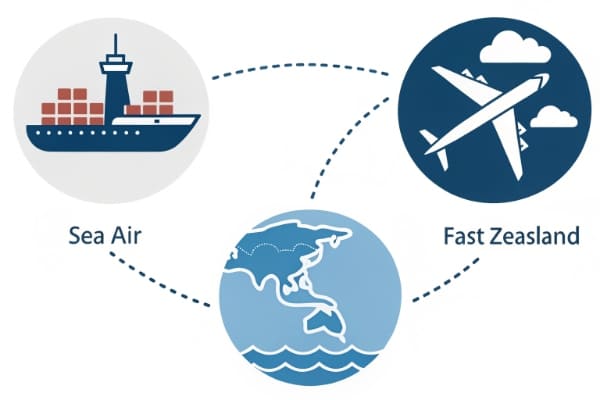
When I first started helping clients import from China, understanding these three methods was the most important step. Each one is a tool, and you need to know which tool to use for which job. Let's look at them more closely.
1. Sea Freight
This is the workhorse of global trade. You use it for big, bulky, or heavy shipments that are not needed urgently. It’s by far the most cost-effective way to move large quantities of goods. Think of it as the slow but steady option that saves you the most money on big orders.
2. Air Freight
This is your middle-ground option. It's much faster than sea freight2 but also more expensive. I recommend air freight3 for goods that are high-value, time-sensitive, or have a shorter shelf life. It gets your products to New Zealand quickly without the premium price tag of an express courier.
3. Express Shipping
This is the fastest method available. Companies like DHL4, FedEx5, and UPS6 specialize in this. It’s a door-to-door service7 that is perfect for small parcels, product samples, or last-minute orders. The convenience is unmatched, but it's also the most expensive per kilogram.
| Shipping Method | Best For | Speed | Cost (per kg) |
|---|---|---|---|
| Sea Freight | Large, heavy, non-urgent orders | Slow (25-40 days) | Low |
| Air Freight | Medium-sized, valuable, time-sensitive orders | Medium (5-10 days) | Medium-High |
| Express | Small, lightweight, urgent parcels & samples | Fast (2-5 days) | High |
When should you choose sea freight2 over air freight3?
Are shipping costs8 eating into your profits? If you're moving a lot of product, you need a cheaper way. Sea freight could be the answer you're looking for.
You should choose sea freight2 when your shipment is large, heavy, or not on a tight deadline. Its cost per kilogram is much lower than air freight3, making it the best choice for bulk inventory orders where maximizing profit is the top priority.
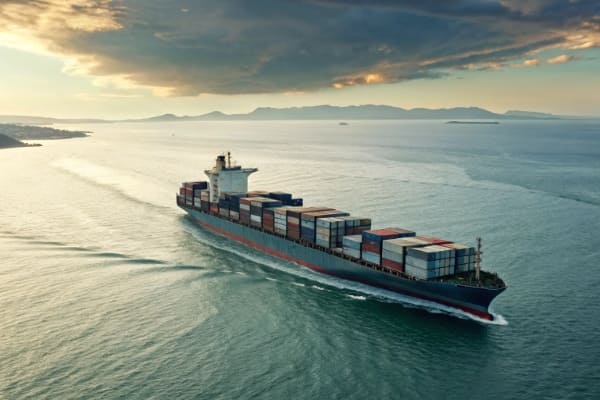
I always advise my clients to use sea freight2 for their main inventory orders. For example, a client who sells branded drinkware needs to order 5,000 units at a time. Shipping these by air would be incredibly expensive and destroy their profit margin. By planning ahead and using sea freight2, they keep their costs low. The main trade-off is time. You have to be prepared to wait 25 to 40 days for your goods to arrive.
Another benefit of sea freight2 is its environmental impact. It has a much lower carbon footprint than air freight3. For brands that promote sustainability, this can be an important factor. If you can plan your inventory needs a couple of months in advance, sea freight2 is almost always the smartest financial and logistical choice for large-scale imports.
What is the difference between LCL and FCL shipping9?
You might hear the terms LCL and FCL when getting a sea freight2 quote. Choosing the wrong one can cost you money and add delays. Let me make it clear.
FCL stands for "Full Container Load," where you pay for an entire container for your goods. LCL, or "Less than Container Load," means your goods share space with other importers in one container. FCL is generally faster and more secure, while LCL is better for smaller shipments.
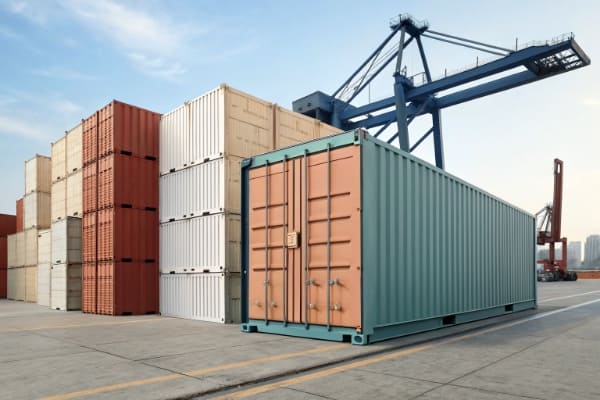
Let's break this down because it's a crucial decision in sea freight2. I guide my clients through this choice on almost every order.
FCL (Full Container Load)
With FCL, you are renting a whole 20-foot or 40-foot container. It doesn't matter if you fill it completely or not; you pay a flat rate for the entire space.
- Best for: Shipments that are typically larger than 15 cubic meters (CBM).
- Pros: It's more secure because your goods are not handled as much. Once your container is sealed at the factory, it stays sealed until it reaches you. It's also slightly faster because it doesn't need to be consolidated at the origin port or deconsolidated at the destination port.
- Cons: You pay for the whole container, so it’s not cost-effective for small shipments.
LCL (Less than Container Load)
With LCL, you only pay for the volume (CBM) or weight of your goods in a shared container.
- Best for: Smaller shipments, usually between 2 and 15 CBM.
- Pros: It's a very flexible and affordable way to use sea freight2 without needing a large order.
- Cons: Your goods are handled more, which slightly increases the risk of damage. It can also take a bit longer due to the extra steps of consolidating and deconsolidating the container with goods from other shippers.
For a client's first trial order of custom bags, we used LCL because they only ordered 5 CBM of product. Once they saw the demand and scaled up to 20 CBM per order, we switched to FCL to reduce the per-unit shipping cost.
How long does shipping from China to New Zealand take?
Are you anxiously waiting for your products to arrive? Not knowing the real shipping time can mess up your entire business plan. Here are the timelines you can realistically expect.
Shipping from China to New Zealand takes about 25-40 days by sea, 5-10 days by air freight3, and 2-5 days by express courier. These are transit times, so you must also account for production, customs clearance10, and final delivery at each end.
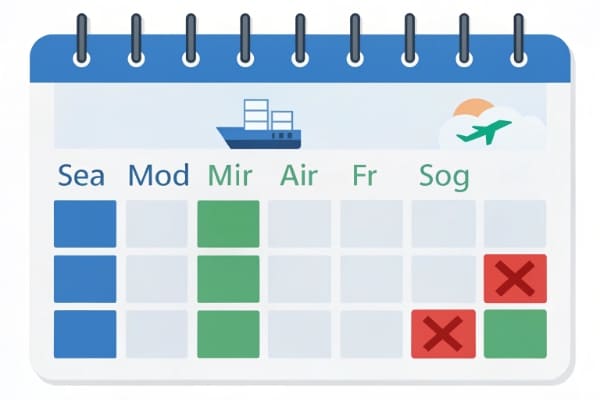
Understanding the total timeline is critical. The "transit time" quoted by shippers is only one part of the journey. I always make sure my clients understand the full door-to-door picture.
Here's a more detailed breakdown of what to expect:
Sea Freight: 25-40 Days
This is the port-to-port travel time. You need to add about one to two weeks to this estimate. This extra time covers transport from the factory to the port in China, customs clearance10 at both ends, and final delivery from the port in New Zealand to your warehouse. Things like port congestion or customs inspections can add further delays.
Air Freight: 5-10 Days
This is typically the airport-to-airport transit time. Like sea freight2, you need to add a few days for customs clearance10 and ground transport. However, the process is much faster overall. Air freight is less likely to face the long delays you might see with sea ports.
Express Shipping: 2-5 Days
This is the fastest and simplest option. The 2-5 day estimate is usually for the full door-to-door journey. Express couriers manage the entire process, including customs clearance10, which is why it's so quick and convenient.
| Shipping Method | Port-to-Port/Airport-to-Airport | Estimated Total Door-to-Door Time |
|---|---|---|
| Sea Freight | 25-40 days | 35-55 days |
| Air Freight | 5-10 days | 8-15 days |
| Express | N/A (Door-to-door) | 2-5 days |
I always tell my clients to build a buffer into their schedule. Especially around big holidays like Chinese New Year, shipping lanes get very busy and delays are common. Planning for the worst-case scenario helps avoid stress and disappointed customers.
Is express shipping11 suitable for small shipments?
Do you need to get a few samples or a small order to New Zealand quickly? You might be worried about the high cost of fast shipping. Express could be the perfect fit.
Yes, express shipping11 is perfect for small, lightweight shipments (usually under 100 kg) that are needed urgently. Couriers like DHL4, FedEx5, and UPS6 provide a fast, door-to-door service7 that is ideal for product samples, important documents, or high-value, low-volume goods.
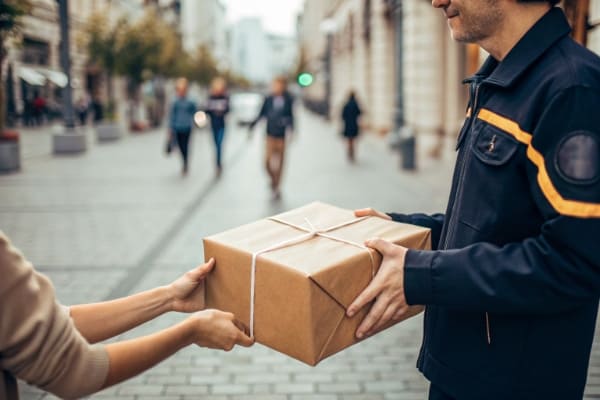
I use express shipping11 for my clients all the time, especially in the early stages of product development. When a client in Auckland needed urgent samples of a new promotional product for a trade show, we sent them with DHL4. They arrived in just three days. This would have been impossible with any other shipping method.
The key advantage of express is its simplicity. The price you are quoted is for a door-to-door service7. The courier handles pickup from the factory, international transport, customs clearance10, and final delivery to your address. While you are still responsible for paying New Zealand's 15% GST and any applicable duties, the process is seamless. For shipments under 100 kg, the total cost of express can sometimes be similar to or even cheaper than standard air freight3 once you factor in all the separate fees (like ground transport and terminal handling) that air freight3 requires.
How do you choose the best shipping method for your business?
Feeling overwhelmed with all the shipping options? Making the wrong choice can be a costly mistake. Let me give you a simple way to decide every time.
To choose the best method, you need to balance three things: your budget, your deadline, and your shipment's size and weight. Use sea freight2 for large, low-cost needs; air freight3 for a balance of speed and cost; and express for small, urgent deliveries.
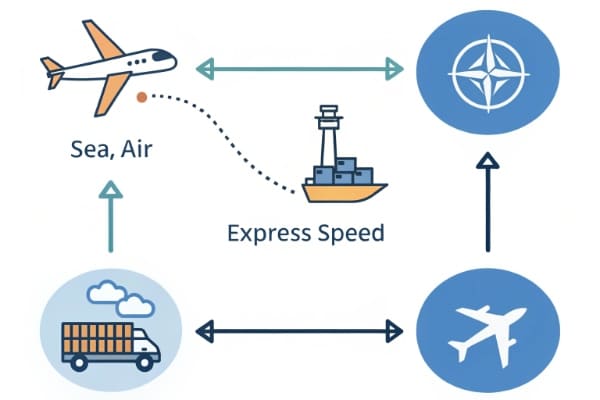
I walk my clients through a simple decision-making process for every order. It removes the guesswork and ensures we pick the right shipping strategy12. Here are the steps you can follow:
Step 1: Evaluate Your Shipment
First, know your numbers. What is the total volume of your goods in cubic meters (CBM)? What is the total weight in kilograms (kg)? This is the most important factor.
Step 2: Consider Your Timeline
How quickly do you need the goods? Is your launch date fixed, or do you have some flexibility? If you need the products for a specific event or holiday season, speed will be a top priority. If you are just restocking your inventory, you can likely wait longer.
Step 3: Analyze Your Budget
What is your total budget for shipping? More importantly, how does the shipping cost affect the final landed cost of each product? Sometimes, a faster shipping method is worth the extra cost if it allows you to start selling sooner.
Here is a simple guide to help you choose:
| If your shipment is... | And your deadline is... | Then choose... |
|---|---|---|
| Small (< 100 kg) | Urgent (under 1 week) | Express Shipping |
| Medium (100-500 kg) | Time-Sensitive (1-2 weeks) | Air Freight |
| Large (> 500 kg or > 2 CBM) | Flexible (> 1 month) | Sea Freight (LCL or FCL) |
Remember to also factor in the value of your goods. For very high-value items, the security and speed of air freight3 can be worth the extra cost to minimize risk. Working with a sourcing partner13 like us at Toncentlink can help you consolidate shipments from different suppliers, which can further cut costs and simplify your logistics.
Conclusion
Choosing the right shipping method from China1 to New Zealand comes down to balancing your needs for cost, speed, and volume. By understanding your options, you can build a reliable supply chain.
Explore this link to understand various shipping methods and their benefits for your business. ↩
Learn why sea freight is the most cost-effective option for large shipments and how it can save you money. ↩
Discover the benefits of air freight for time-sensitive shipments and how it balances speed and cost. ↩
Learn about DHL's shipping services and how they can meet your urgent delivery needs. ↩
Discover how FedEx can provide reliable and fast shipping solutions for your business. ↩
Explore UPS's shipping options and how they can cater to your logistics needs. ↩
Learn about the convenience of door-to-door shipping services and their benefits. ↩
Get insights on how to effectively calculate and manage your shipping costs. ↩
Understand the key differences between LCL and FCL to make informed shipping decisions. ↩
Learn about the customs clearance process and its significance in international shipping. ↩
Find out how express shipping can expedite your deliveries and the costs involved. ↩
Find out how to create a shipping strategy that aligns with your business goals. ↩
Discover the advantages of working with a sourcing partner to optimize your shipping. ↩