If you import from China, pre-shipment inspection (PSI) is the last checkpoint between your factory and your customer — and for many importers, the most valuable one. A few hundred dollars spent before loading can prevent thousands of dollars in defective goods, returns, and disputes after the container leaves. This guide walks you through what a pre-shipment inspection is, what inspectors actually check, how long it takes, what it costs, and how to book one from China in 2026.
What Is a Pre-Shipment Inspection (PSI)?
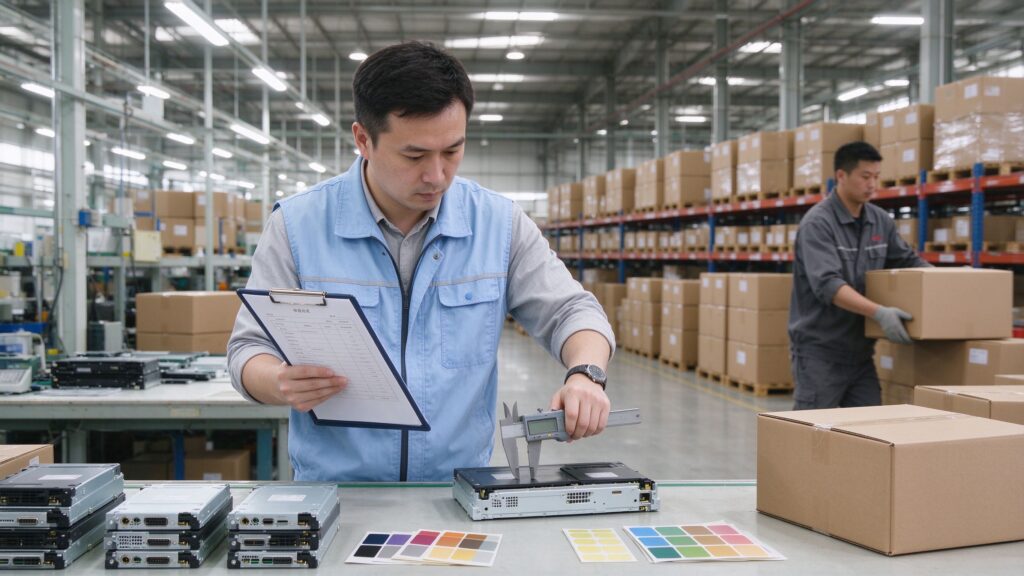
A pre-shipment inspection is an independent quality check carried out at the factory or warehouse after production is finished and before your goods are loaded for shipping. A third-party inspector verifies that the finished goods match your approved sample, your order specifications, and your commercial requirements. A standard PSI covers four core areas:
- Quantity: Are the correct number of units produced and ready to ship?
- Quality: Does the material, color, size, and workmanship match the approved standard?
- Packaging: Are inner packs and cartons correct, intact, and fit for transport?
- Labeling and marks: Are shipping marks, barcodes, and required compliance labels correct?
PSI is deliberately different from a factory audit, which evaluates the factory’s overall capability and compliance, or a mid-production inspection, which checks quality while goods are still being made. PSI is the final product-level check on the finished goods you are about to pay for and ship.
Why You Need a Pre-Shipment Inspection from China
Most importers already know why third-party inspection matters in principle, but the real reasons are practical:
- You cannot be on the factory floor. Distance, time zones, and language barriers make it impossible to verify quality in person for every order.
- Defects are expensive to discover late. If problems are found after arrival, the supplier has already been paid, the production line has moved on, and remedies are slow and costly. Freight, duties, and storage are sunk costs.
- Inspection gives you negotiating power. A professional report with photos and measurements is objective evidence you can use to demand rework, a discount, or a replacement before you release payment.
- It protects your reputation. For Amazon FBA sellers and e-commerce brands, one bad batch can mean negative reviews, suspensions, and lost listings — damage that costs far more than the inspection fee.
Combined with our China sourcing agent services, a pre-shipment inspection closes the loop from factory selection to final quality verification.
When Should You Book a PSI?
Book the inspection after production is complete but before the goods are loaded — usually the same week you plan to ship. Keep these points in mind:
- Give 3–5 business days’ notice so the inspector and the factory can agree on a convenient visit date.
- During peak season (September–November), inspectors’ calendars fill up quickly — book early.
- Confirm the inspection date with the factory first, then let the inspection company schedule the visit to avoid wasted trips.
What Does an Inspector Actually Check? (Full Checklist)
| Check area | What the inspector verifies | Typical failures found |
|---|---|---|
| Quantity | Full count or AQL random sampling against your order quantity | Short shipments, overages, wrong SKU mixes |
| Quality & workmanship | Material, color, size, finish vs. the approved sample and spec | Substandard material substitution, color deviation, poor finish |
| Functionality | Working tests for electronics, mechanical parts, and assemblies | Dead-on-arrival units, non-functional components |
| Packaging | Inner packs, carton strength, packing method, moisture protection | Weak cartons, incorrect packing, transit damage risk |
| Labeling & marks | Shipping marks, barcodes, warning and compliance labels | Wrong marks, missing barcodes, customs and retailer rejections |
| Loading (optional) | Container condition, loading method, cargo blocking and securing | Mixed products, overloading, in-transit damage |
Every finding is documented with photos and measurements, so you can see the evidence rather than rely on a verbal summary.
How Does Sampling Work? (AQL in Brief)
Inspectors rarely check every single unit. Instead, they use AQL (Acceptable Quality Limit) random sampling — an internationally recognized standard for deciding how many units to inspect and how many defects are acceptable. Defects are classified as critical, major, or minor, and the sample size and accept/reject thresholds depend on your order quantity. For a full explanation of how AQL works, see our guide to AQL in China product inspection.
How Long Does a Pre-Shipment Inspection Take?
- Small orders: 1–2 hours on site.
- Large orders or full containers: 4–8 hours, depending on sample size and the number of SKUs.
- Report: delivered within 24 hours of the visit, with a clear PASS/FAIL conclusion.
How Much Does a Pre-Shipment Inspection Cost in China?
Costs vary with scope, quantity, and factory location. For a typical small-to-medium order, expect to pay from roughly $150–$300; larger orders with multiple SKUs or additional testing cost more. In most cases the fee is under 1% of the shipment value — a fraction of the cost of one rejected container. See our breakdown of QC inspection costs in China for typical price ranges by service type.
How to Book a PSI: Step by Step
- Send your order details — product type, quantity, factory address, and inspection date.
- Confirm the scope — standard PSI, or a full inspection with functionality tests and special checks.
- The inspector visits the factory on the agreed date and performs the checks on site.
- Review the evidence — photos, measurements, and test results are collected throughout the visit. If you want to watch in real time, our production inspection with livestream lets you observe the process remotely.
- Get the report within 24 hours — with a clear PASS/FAIL result and objective evidence for supplier negotiations.
Need more than a product check? Our manufacture inspection service also covers container loading supervision, so the correct products are loaded in the right quantities with proper packing and securing.
FAQ
What happens if my goods fail the inspection?
The report will state the reasons with photo evidence. You can then require the supplier to rework the defective units and book a re-inspection before the goods ship. Because the report arrives before you release payment, you keep the leverage to enforce the fix.
Can I rely on the factory’s own QC report?
A factory’s internal QC is valuable, but it is not independent — the factory has an incentive to pass its own goods. Third-party inspection removes the conflict of interest and gives you evidence you can actually act on.
Do I need a PSI for every order?
Not necessarily, but it is strongly recommended for new suppliers, high-value orders, private-label products, and anything sold to end customers under your brand. If you are vetting a supplier for the first time, read our guide on how to find a reliable China sourcing agent. For repeat suppliers with a proven track record, many importers use a lighter check or audit the factory periodically instead.
What is the difference between a PSI and a factory audit?
A PSI checks the finished goods; a factory audit evaluates the factory itself — its management, equipment, capacity, and compliance. Most importers use audits to qualify a new supplier and PSI to verify each shipment. See our comparison of factory audits vs product inspections.
Can I combine inspection with loading supervision?
Yes. Many importers book a PSI and container loading supervision together so the same inspector verifies the goods and then confirms the correct cargo is loaded, blocked, and secured before the container is sealed.
Get a Pre-Shipment Inspection Quote
Toncent’s independent inspectors cover factories across China, with reports delivered within 24 hours and optional livestream viewing. Send us your order details and factory location, and we will confirm availability and a fixed quote within one business day. Contact us for a quote — or ask us to include inspection in your next freight and logistics plan.