
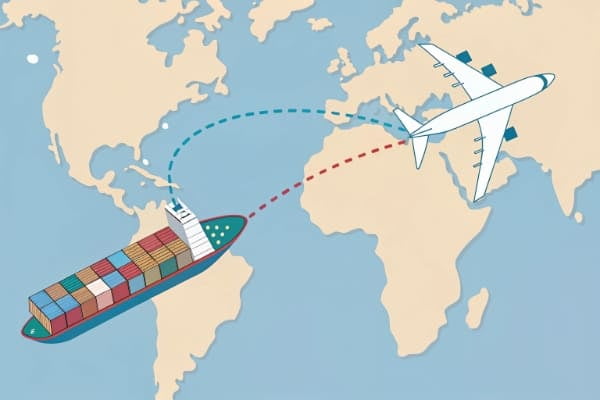
Struggling with the complexities of shipping from China to Qatar? Hidden fees and unexpected delays can quickly turn a profitable venture into a logistical nightmare, hurting your timeline and budget.
To choose the right freight forwarder1, verify their experience on the China-Qatar route, check carrier partnerships, and ensure transparent pricing. Confirm they handle customs clearance2 and offer real-time tracking. Compare multiple quotes and review customer feedback for reliability before making a final decision.
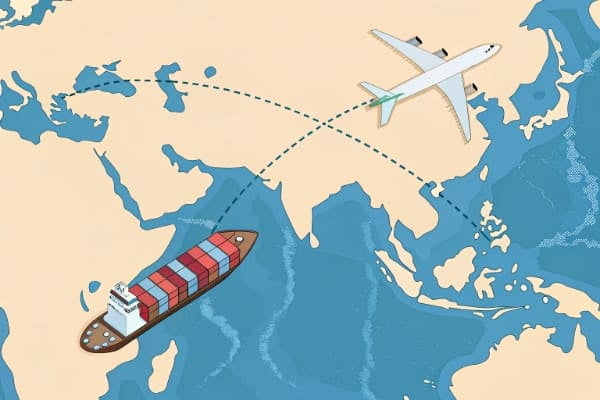
Choosing the right logistics partner3 is one of the most important decisions you'll make when importing from China. It can be the difference between a smooth, predictable process and a series of stressful problems. But with so many options, it's hard to know where to start. Let's break down what you need to look for to find a reliable partner who will get your goods to Qatar safely and efficiently.
What Does a Freight Forwarder Do for China–Qatar Shipping?
Managing international shipping feels like a full-time job. You have to find carriers, handle confusing paperwork, and clear customs. A freight forwarder1 takes all of this off your plate.
A freight forwarder1 acts as your logistics agent for shipping between China and Qatar. They book cargo space4 on planes or ships, prepare all necessary export and import documents, manage customs clearance2, and arrange transportation from the factory to your final address.
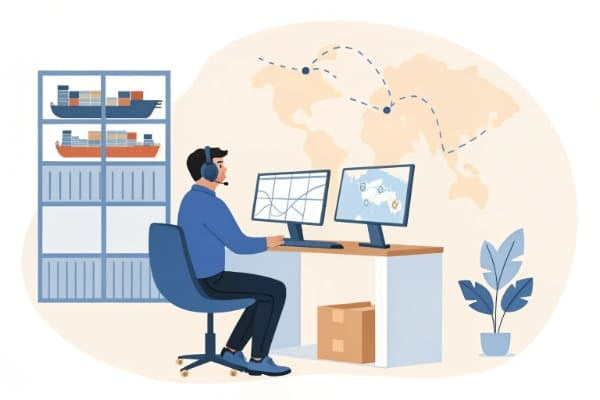
A good freight forwarder1 is your single point of contact for the entire shipping process. When I first started helping clients ship their promotional products, I saw how many moving parts there were. A client in Doha needed branded power banks for a trade show, and they were trying to coordinate with a factory in Shenzhen, a trucking company, an airline, and a customs broker5 in Qatar. It was a mess. This is the exact problem a freight forwarder1 solves. They act as the project manager for your shipment.
Here’s a breakdown of what they handle:
Key Responsibilities of a Freight Forwarder
- Booking Cargo Space: They have relationships with major air and sea carriers like Qatar Airways, Emirates, Maersk, and MSC. This allows them to find the best routes and prices for your shipment.
- Documentation: They prepare the essential paperwork, including the Bill of Lading6, Commercial Invoice, and Certificate of Origin7. This is critical for avoiding delays at customs.
- Customs Clearance: An experienced forwarder understands Qatari import regulations8. They handle the customs declaration process in both China and Qatar to ensure your goods clear without issues.
- Inland Transportation: They arrange for your goods to be picked up from the factory in China and delivered to your warehouse or office in Qatar. This is part of a "door-to-door" service.
- Consolidation: If you have a smaller shipment (LCL), they combine your cargo with others to save you money. We do this all the time for clients who need to ship smaller batches of custom merchandise.
Essentially, they are your boots on the ground, making sure every step is handled correctly.
Air Freight vs Sea Freight: Which Should You Choose?
Are you unsure which shipping method9 is right for your goods? Choosing the wrong one can cost you too much money or too much time, putting your entire project at risk.
Choose air freight10 for speed and high-value goods; it's faster but more expensive. Use sea freight11 for bulk shipments when cost is more important than speed; it's slower but much more economical for large volumes of goods.

The choice between air and sea freight11 is a classic trade-off between time and money. Your decision will depend entirely on your business needs, budget, and deadline. I had a client who needed 5,000 custom tote bags for an event in Doha in two weeks. For them, air freight10 was the only option. Another client orders large stocks of branded water bottles every quarter; they always choose sea freight11 to keep costs down.
To help you decide, let's compare the two methods directly.
Comparing Air and Sea Freight for Qatar
| Feature | Air Freight | Sea Freight |
|---|---|---|
| Transit Time | 3–7 days | 20–35 days |
| Cost | High | Low |
| Best For | Urgent, high-value, or lightweight goods (<500 kg) | Bulk, heavy, or non-urgent goods (>2 CBM) |
| Security | High security, less handling | Secure, but longer transit increases risk |
| Flexibility | More frequent departures | Less frequent schedules |
Think about your priorities. If you are launching a new product and need to get it to market quickly, the extra cost of air freight10 is often worth it. If you are restocking inventory and have a flexible timeline, sea freight11 is the most cost-effective solution. A good forwarder will help you analyze your specific shipment and recommend the best option.
How Much Does Shipping from China to Qatar Cost?
Are you worried about unpredictable shipping costs12 eating into your profits? Hidden fees and surprise charges are a common problem that can completely destroy your budget and turn a good deal sour.
Shipping costs from China to Qatar depend on your cargo's weight and volume, the shipping method9 (air/sea), and the service type (e.g., door-to-door). Always get a detailed quote that includes all potential charges to avoid surprises.
"How much will it cost?" is the first question every client asks. Unfortunately, there's no simple answer. The final price is based on several factors, and it's important to understand them so you can compare quotes accurately. The biggest mistake I see people make is choosing the cheapest initial quote, only to be hit with a dozen extra fees later. A transparent forwarder will break down all the costs for you.
Here are the main components that make up your total shipping cost:
Breakdown of Shipping Costs
- Main Freight Charge: For sea freight11, this is usually calculated per cubic meter (CBM). For air freight10, it's based on the "chargeable weight," which is the greater of the actual weight and the volumetric weight.
- Origin Charges: These are fees at the port of origin in China. They include trucking from the factory, customs export clearance, and terminal handling charges (THC).
- Destination Charges: These are fees at the port of arrival in Qatar. They include customs import clearance, duties and taxes, and local handling fees.
- Surcharges: Fuel surcharges (BAF), peak season surcharges (PSS), and other carrier-imposed fees can apply.
- Service Type: A door-to-door service13 will cost more than a port-to-port service14 because it includes all inland transportation and handling.
To get an accurate price, ask for a DDP (Delivered Duty Paid) quote. This all-inclusive price covers everything from the factory in China to your door in Qatar, including all duties and taxes. It gives you full cost certainty.
How Long Does Shipping from China to Qatar Take?
Do you need to get your goods to Qatar by a specific deadline? Unexpected delays can cause you to miss sales opportunities, disappoint customers, or fail to deliver for a critical event.
Air freight from China to Qatar typically takes 3-7 days for door-to-door delivery. Sea freight is much slower, taking around 20-35 days from port to port. These estimates do not include potential delays from customs clearance2 or port congestion.
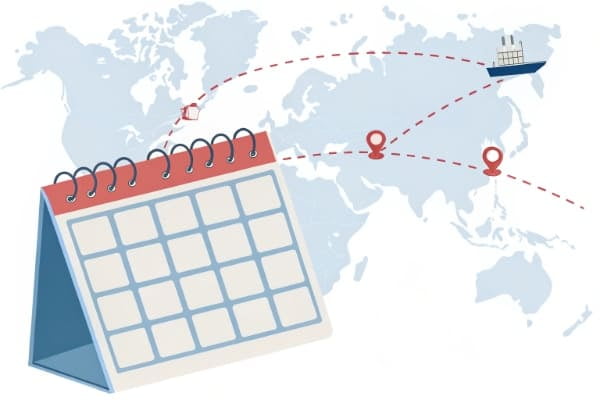
Understanding transit time15s is just as important as understanding costs. When you promise a delivery date to your customer or plan a product launch, you need reliable shipping timeline16s. The transit time15 is the time it takes for the cargo to travel from the port in China to the port in Qatar. However, you must also account for the time it takes to get the goods to the port, clear customs, and deliver them to the final destination.
Let’s look at some realistic timelines you can expect.
Estimated Shipping Durations
| Mode | From | To | Port-to-Port Time | Total Door-to-Door Time |
|---|---|---|---|---|
| Air Freight | Major China Airports (PVG, CAN) | Doha (DOH) | 1-3 days | 3-7 days |
| Sea Freight | Shanghai, Shenzhen | Hamad Port | 18-25 days | 25-35 days |
| Sea Freight | Ningbo, Guangzhou | Hamad Port | 20-28 days | 28-40 days |
These are just estimates. Several factors can cause delays:
- Customs Inspections: Random inspections can hold up a shipment for several days.
- Port Congestion: Busy ports can lead to waiting times for vessels.
- Holidays: National holidays in China (like Chinese New Year) or Qatar can shut down operations for a week or more.
An experienced freight forwarder1 can help you plan for these potential delays. They have up-to-date information on port conditions and carrier schedules, allowing them to give you a more accurate delivery window.
What Documents Are Required for Importing into Qatar?
Are you confused by all the paperwork required for international shipping? A single missing or incorrect document can get your entire shipment stuck at customs, leading to costly delays and storage fees.
The key documents for importing into Qatar include a Commercial Invoice, Packing List, Bill of Lading6 (sea) or Air Waybill (air), and a Certificate of Origin7. Your freight forwarder1 is responsible for helping you prepare and verify all this paperwork.
Dealing with customs paperwork is often the most intimidating part of importing. The rules can be strict, and Qatari customs officials are thorough. However, you don't have to be a legal expert. Your freight forwarder1 should act as your customs broker5, guiding you through the process and ensuring every document is correct before the shipment even leaves China. This proactive approach is what separates a great forwarder from an average one.
Here are the essential documents you will almost always need:
Essential Import Documents
- Commercial Invoice: This is the bill for the goods from the seller to the buyer. It must detail the buyer and seller information, a description of the goods, the value of the goods, and the currency.
- Packing List (P/L): This document itemizes the contents of your shipment. It should include the weight, dimensions, and number of cartons. It helps customs verify the cargo.
- Bill of Lading6 (B/L) or Air Waybill (AWB): This is the contract between you and the carrier. It acts as a receipt for the goods and a title document. You need the original B/L or a telex release to claim your goods.
- Certificate of Origin7 (C/O): This document, certified by a chamber of commerce in China, proves where the goods were manufactured. It is often required by Qatari customs to determine import duties.
- Import License: For certain restricted goods, you may need a special permit from the relevant Qatari ministry.
Working with a partner like us means we handle all this for you. We check every document to make sure it complies with Qatari regulations, so you can focus on your business, not on paperwork.
FCL vs LCL17: Which Option Is More Cost-Effective?
If you're shipping by sea, should you book a whole container or just part of one? Paying for a full container you don't need is a waste of money, but LCL can have its own downsides.
Choose FCL (Full Container Load) if your cargo is large enough (usually over 15 CBM) to justify a private container; it's faster and more secure. For smaller shipments, choose LCL (Less than Container Load) to share container space and only pay for what you use.
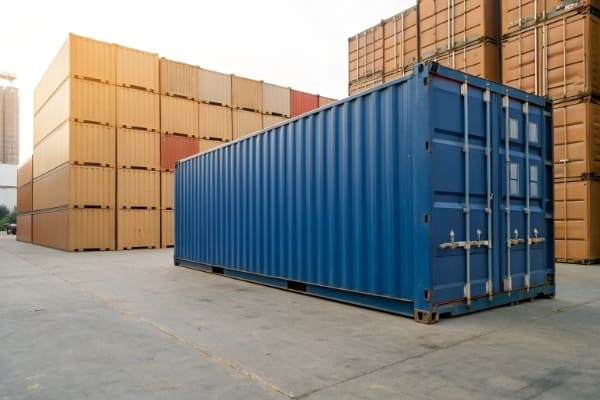
When you ship by sea, you're essentially renting space in a large steel box. You can either rent the whole box (FCL) or share space with other importers (LCL). The best choice depends on the size of your shipment. I always tell my clients to think of it like transportation: FCL is like hiring a private taxi, while LCL is like taking a shared bus. The taxi is faster and more direct, but the bus is cheaper for a single passenger.
Here is a comparison to help you decide which is better for your shipment to Qatar.
Comparing FCL and LCL Shipping
| Factor | FCL (Full Container Load) | LCL (Less than Container Load) |
|---|---|---|
| Cost Structure | Flat rate per container | Per cubic meter (CBM) or per ton |
| Best Volume | > 15 CBM | 1–15 CBM |
| Transit Time | Faster (no consolidation needed) | Slower (requires time for consolidation and deconsolidation) |
| Security | Higher (sealed at origin by your supplier) | Lower risk of damage/loss due to more handling |
| Cost-Effectiveness | Cheaper per CBM for large volumes | More economical for small volumes |
As a general rule, if your shipment is around 15 cubic meters or more, FCL is usually the cheaper and better option. Below that, LCL makes more financial sense, despite the slightly longer transit time15. A good forwarder can provide quotes for both and help you calculate the breakeven point for your specific goods. This is especially useful for our clients who are testing new promotional products and starting with smaller order quantities.
Door-to-Door vs Port-to-Port: Which Service Should You Pick?
How involved do you want to be in the shipping process? Arranging local transport and dealing with customs broker5s at both ends is a major hassle that takes time and expertise.
Choose port-to-port service14 if you have your own logistics team to handle pickup, delivery, and customs. For a completely hands-off and worry-free experience, select door-to-door service13, where your forwarder manages the entire journey for you.
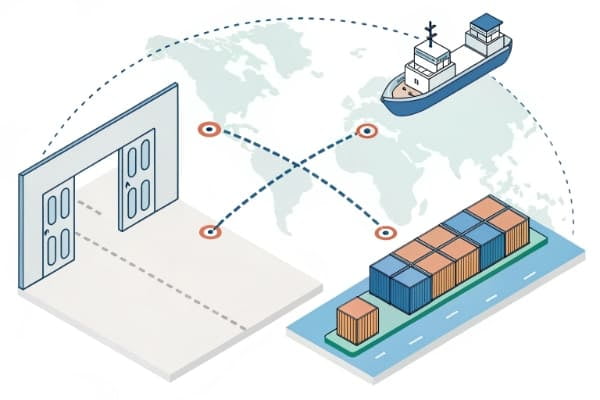
Your freight forwarder1 can offer different levels of service. The two most common are port-to-port and door-to-door. Think about how much responsibility you want to take on. A port-to-port service14 means the forwarder is only responsible for moving the container from the origin port in China to the destination port in Qatar. You have to arrange everything else. For most of our clients, especially those without a dedicated logistics department, this is not a practical option.
A door-to-door service is a comprehensive, all-in-one solution.
Service Level Responsibilities
| Task | Port-to-Port | Door-to-Door |
|---|---|---|
| Pickup from Factory | Your responsibility | Forwarder's responsibility |
| Export Customs (China) | Your responsibility | Forwarder's responsibility |
| Sea/Air Freight | Forwarder's responsibility | Forwarder's responsibility |
| Import Customs (Qatar) | Your responsibility | Forwarder's responsibility |
| Delivery to Final Address | Your responsibility | Forwarder's responsibility |
For almost all our clients, including brand managers, e-commerce sellers, and corporate buyers, a door-to-door DDP (Delivered Duty Paid) service is the best choice. It provides complete cost transparency and minimizes your workload. You get one invoice and one point of contact. This lets you focus on selling your products, not on managing logistics. It’s the simplest, most reliable way to ship from China to Qatar.
Conclusion
Choosing the right freight forwarder is vital for smooth shipping from China to Qatar. Prioritize partners with proven experience, transparent pricing, and comprehensive door-to-door services to protect your business.
Understanding the role of a freight forwarder can streamline your shipping process and save you time. ↩
Learn about customs clearance to avoid delays and ensure your goods arrive on time. ↩
Find out the key qualities of a reliable logistics partner to ensure smooth shipping. ↩
Learn about the process of booking cargo space to optimize your shipping. ↩
Understand how a customs broker can facilitate smoother customs clearance. ↩
Learn about the Bill of Lading to understand its role in shipping documentation. ↩
Find out how a Certificate of Origin can impact your import duties. ↩
Familiarize yourself with import regulations to ensure compliance and avoid issues. ↩
Get tips on selecting the best shipping method based on your needs. ↩
Discover why air freight might be the best option for urgent shipments. ↩
Understand the cost-effectiveness of sea freight for larger shipments. ↩
Explore the components of shipping costs to budget effectively for your imports. ↩
Explore the convenience of door-to-door service for hassle-free shipping. ↩
Learn about port-to-port service to determine if it's right for your logistics needs. ↩
Get insights on transit times to plan your shipping schedule accurately. ↩
Discover strategies to establish a dependable shipping timeline for your business. ↩
Understand the pros and cons of FCL and LCL to choose the best option for your shipment. ↩