
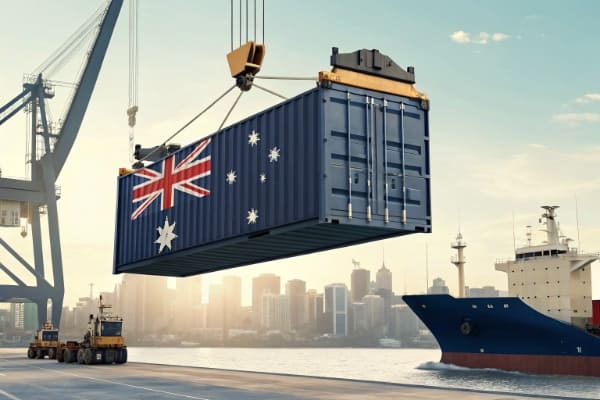
Confused by complex shipping quotes from China to Australia1? Unexpected fees can destroy your profit margins. Let's break down the real costs2 so you can budget accurately and confidently.
Sea freight for a 20ft container (FCL) costs about $1,035–$2,300 to major Australian ports. For smaller shipments (LCL)3, rates are $1.60–$115 per cubic meter. Air freight is much faster and costs $1.6–$8 per kg. These prices don't include Australian destination charges, customs4, or GST.
Getting a basic price is a good start, but it's only one piece of the puzzle. To really control your budget, you need to know what goes into that final number. Many different factors can change your bill, sometimes by a lot. Let's look closer at what influences these shipping costs so you can plan your next import with no surprises.
What factors affect China to Australia shipping costs?
Do your shipping costs seem to change with every new quote you get? This makes it impossible to plan your budget. Let's look at the key factors that determine your final bill.
The main factors are your shipping method5 (sea or air), cargo size and weight6, shipping terms (like FOB or EXW)7, the time of year, and your specific origin and destination. Fuel prices and carrier demand also play a big role in the final costs you pay.

When we prepare a quote for a client, several key details come into play. It's not just about getting from point A to point B; it's about the specifics of your cargo and the market conditions at that moment. Understanding these elements will help you see why one quote can be very different from another.
Cargo and Shipping Method
The size and weight of your goods are the most basic factors. For sea freight, cost is based on volume, measured in cubic meters (CBM). For air freight8, it's based on "chargeable weight," which is the greater of the actual weight or the volumetric weight. This is why optimizing your packaging to be as compact as possible can save you a lot of money. Also, choosing between a Full Container Load (FCL) and Less than Container Load (LCL) is crucial. If your shipment is over about 14 CBM, booking a whole 20ft container (FCL) is usually cheaper than paying per CBM for LCL.
Season and Surcharges
Shipping rates are not static. They change with demand. We see a "peak season" every year from around September to January, ahead of the holidays. During this time, rates can jump by 20-30% or more. Chinese holidays like the Lunar New Year can also cause delays and price hikes. On top of that, carriers add surcharges for things like fuel (Bunker Adjustment Factor - BAF) and currency changes, which can affect the final price.
| Factor | How It Affects Cost | Tip to Manage |
|---|---|---|
| Shipment Size | Larger volume/weight costs more. | Optimize packaging to reduce dimensions. |
| Shipping Method | Air freight is much more expensive than sea freight. | Use sea freight unless your shipment is extremely urgent. |
| Time of Year | Peak season (Sep-Jan) has the highest rates. | Plan ahead and ship during the off-season if possible. |
| Incoterms | EXW costs more for you than FOB. | Use FOB to make the supplier handle local China costs. |
| Fuel Prices | Carriers pass on fuel costs through surcharges. | This is hard to control, but be aware it's part of the cost. |
How do freight forwarders9 calculate shipping quotes?
Are freight forwarder quotes confusing and full of industry jargon? You might worry about hidden fees that were not included in the initial price. Let's demystify the quote so you know what you're paying for.
A freight forwarder combines the base freight rate10 from a carrier (like a shipping line or airline) with all the other service fees. A good quote breaks down costs like ocean/air freight8, origin charges11, destination charges12, customs4 clearance, and any optional services.
When I send a quote to a client like David in the US, I make sure it's as transparent as possible. The goal is to avoid surprises. A freight forwarder's job is to bundle many small costs into one clear, manageable invoice. Think of us as a project manager for your shipment. Our fee covers the coordination of many different parties, including truckers, customs4 agents, and the shipping line.
Base Freight and Local Charges
The biggest part of the cost is the base freight. This is what the airline or shipping line charges to move your goods from the origin port to the destination port. On top of that, you have origin and destination charges12. These include trucking from the factory to the port, terminal handling charges (THC), documentation fees, and customs4 clearance fees in both China and Australia. For Australia, you can expect to pay around $450–$750 for these destination charges12 on a typical shipment.
Our Service Fee
Finally, our freight forwarding fee13 is added. This is usually a small commission, around 5-10% of the total cost, or a flat management fee. This fee covers our work in finding the best carrier, booking the space, preparing all the paperwork, tracking the shipment, and solving any problems that come up along the way. While it might seem like an extra cost, our expertise and volume discounts often mean your total cost is lower than if you tried to manage it all yourself.
| Cost Component | What It Covers | Example Cost |
|---|---|---|
| Base Freight | The port-to-port or airport-to-airport transportation cost. | $1,500 for a 20ft container. |
| Origin Charges | Trucking, export customs4, port fees in China. | $200 - $500 |
| Destination Charges | Port fees, import customs4, quarantine in Australia. | $450 - $750 |
| Forwarder Fee | Our management, coordination, and customer service. | 5-10% of total cost. |
| GST & Duties | Taxes paid to the Australian government. | 10% GST on CIF value. |
What is the difference between EXW, FOB, and DDP14 shipping?
Do Incoterms like EXW, FOB, and DDP14 sound like a foreign language? Choosing the wrong one can lead to surprise costs and responsibilities you didn't expect. Here’s a simple guide to these common shipping terms.
EXW (Ex Works) means you handle all shipping from the factory door. FOB (Free On Board) means the supplier delivers the goods to the port in China. DDP (Delivered Duty Paid) means your forwarder handles everything, including delivery to your final address.
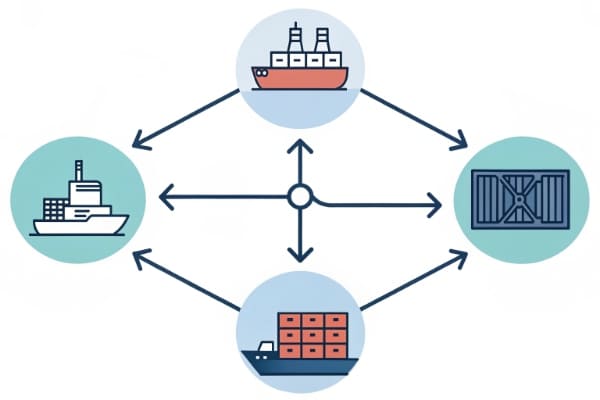
Choosing the right Incoterm is one of the first decisions you'll make when importing. It defines who is responsible for the goods, and at what point that responsibility transfers from the seller to you, the buyer. This choice directly impacts your costs and the amount of work you have to do.
FOB: The Most Common Choice
For most of our clients, we recommend FOB. With FOB, your supplier is responsible for getting the goods from their factory to the designated port in China. They handle local trucking and export customs4 clearance. Your responsibility (and your cost) begins once the goods are loaded "on board" the ship. This is a good balance because Chinese suppliers are usually very efficient at managing their local logistics. It saves you from having to arrange and pay for trucking inside China.
EXW and DDP: For Control or Convenience
EXW gives you maximum control, but also maximum responsibility. You are responsible for picking up the goods directly from the factory floor. This is only a good idea if you have a trusted agent on the ground in China. DDP is the opposite; it offers maximum convenience. With DDP, all costs and risks are handled for you, right up to your doorstep. We manage the entire process—shipping, customs4, duties, and final delivery. It's the simplest option for new importers, but the cost will be higher as it includes all services and risk management.
| Incoterm | Your Responsibility | Supplier's Responsibility | Best For... |
|---|---|---|---|
| EXW | Everything from the factory door onwards. | Making goods available at their factory. | Experienced importers with a team in China. |
| FOB | Everything from the China port onwards. | Getting goods to the port and clearing export customs4. | Most importers, offering a good cost/control balance. |
| DDP | Nothing. All costs and logistics are handled for you. | Delivering the goods to your final address, duty paid. | Beginners or those who want a simple, all-in price. |
How can you reduce shipping costs15 when importing from China?
Are high shipping costs eating into your product's profit margins? Every dollar you spend on freight is a dollar you can't reinvest in your business. Let's go over some practical strategies to lower your shipping expenses.
Plan ahead to ship by sea and avoid peak season. Optimize your product packaging to reduce its volume. Consolidate smaller orders into one larger shipment. Most importantly, work with a good freight forwarder who can find the best rates and routes for you.

I always tell my clients that the best way to save on shipping is to plan ahead. Rushed, last-minute shipments are always the most expensive. By thinking about logistics early in your production process, you can make smart decisions that have a big impact on your bottom line.
Plan and Time Your Shipments
The easiest win is to avoid air freight8 unless absolutely necessary. Sea freight is dramatically cheaper. Planning your production timeline to allow for the 16-30 day transit time by sea will save you thousands. Also, try to avoid shipping during the peak season from September to January. If you can place your orders to ship in the spring or summer, you will benefit from lower demand and better rates. Booking your shipment with us at least 3-4 weeks in advance gives us more options to find you a competitive rate.
Optimize and Consolidate Your Cargo
Pay close attention to your packaging. For LCL shipments, you pay by the cubic meter. I once had a client who saved 20% on their freight cost just by redesigning their product boxes to be more compact. If you are ordering from multiple suppliers, we can consolidate all your goods at our warehouse in China. Instead of paying for several small LCL shipments, we can combine them into one larger LCL or even an FCL shipment, which significantly reduces your cost per unit. Remember, if your total volume is more than 14-15 CBM, a 20ft FCL container is almost always the cheaper option.
Did you get a great shipping quote, only to find the final invoice was much higher? These "hidden" charges feel dishonest and can completely ruin your budget. Let's look at what to watch for to avoid these unpleasant surprises.
Yes, hidden charges can happen. They often include unexpected customs4 inspection fees, demurrage or detention for port delays, or surcharges not included in the first quote. A transparent freight forwarder will explain all potential costs to you upfront.

Nothing damages trust more than unexpected fees17. That's why we believe in being completely upfront about all potential costs, not just the guaranteed ones. Some charges are outside of anyone's control, but a good partner prepares you for them.
Common Unexpected Costs
The most common surprise is a customs4 exam fee. Customs authorities in Australia can randomly select any shipment for inspection. If your container is chosen, you are responsible for the costs of the exam, which can be several hundred dollars. Another common issue is demurrage and detention. These are fees charged by the shipping line if you don't pick up your container from the port or return the empty container on time. These can be avoided by making sure your customs4 paperwork is filed correctly and your delivery is arranged promptly.
How to Protect Yourself
The best protection is a detailed, itemized quote. Don't accept a simple "all-in" price. Ask for a breakdown of all the costs: ocean freight, fuel surcharge, terminal handling, customs4 clearance, duties/GST, and final delivery. Ask your forwarder: "What other charges could potentially apply to my shipment?" A trustworthy partner will be happy to explain the possibilities. For example, we always advise clients about the potential for customs4 exams and explain how having proper documentation, like a Certificate of Origin for ChAFTA, can make the process smoother.
| Potential Charge | What It Is | How to Avoid or Prepare |
|---|---|---|
| Customs Exam Fee | Fee for a physical inspection by Australian Border Force. | Cannot be avoided if selected, but proper paperwork reduces risk. |
| Demurrage/Detention | Fees for using port space or containers for too long. | Clear customs4 quickly and arrange prompt delivery. |
| General Rate Increase | A rate increase applied by the carrier after you book. | Work with a forwarder who can lock in rates. |
| Incorrect HS Code | Fines or delays from using the wrong product code. | Confirm the correct HS code with your forwarder or a broker. |
Is freight forwarding cheaper than booking directly with carriers?
You might be wondering if you can save money by cutting out the middleman and booking directly with a shipping line. But managing international logistics on your own can be a complex and time-consuming nightmare.
For most businesses, using a freight forwarder is cheaper and easier. Forwarders ship huge volumes, so they get better rates from carriers than small businesses can. They also manage all the complex paperwork, customs4, and coordination, saving you time and preventing costly errors.
It's a common question: why pay a forwarder when I can go direct? The answer comes down to volume, expertise, and service. While large corporations like Walmart might book directly with carriers, it's not practical or cost-effective for most small and medium-sized businesses.
The Power of Volume and Expertise
Think of us as a travel agent for cargo. Because we book thousands of containers every year, shipping lines give us significant volume discounts. We pass a large portion of these savings on to you. An individual business booking one or two containers simply doesn't have the leverage to get these rates. Beyond price, you are paying for our expertise. We know the best routes, the required documents, and how to navigate the complexities of customs in both China and Australia. For instance, we ensure our Australian clients have the correct China-Australia Free Trade Agreement (ChAFTA) Certificate of Origin, which can make their goods eligible for 0% import duty. This alone can save thousands of dollars.
A Single Point of Contact
When you book direct, you have to coordinate with many different parties: the factory, a trucker in China, the shipping line, a customs broker in Australia, and a delivery company. If something goes wrong, they often blame each other. When you work with us, we are your single point of contact. We manage all these moving parts. If there's a delay, we track it down and find a solution. This one-stop-shop service saves you countless hours and headaches, allowing you to focus on what you do best: running your business.
Conclusion
Shipping from China to Australia involves many variables, but understanding them gives you control. A good freight forwarder is your key partner for a smooth, cost-effective, and predictable process.
Explore this resource to gain insights into the complexities of shipping quotes and how to manage them effectively. ↩
This resource will help you break down the real costs involved in shipping, ensuring better budgeting. ↩
Find out the rates for LCL shipments to make informed decisions about your shipping options. ↩
Learn how customs fees can impact your overall shipping costs and how to prepare for them. ↩
Explore various shipping methods to choose the best option for your import needs. ↩
This resource explains how cargo dimensions influence shipping rates, helping you optimize costs. ↩
Understanding shipping terms is crucial for managing responsibilities and costs in international shipping. ↩
Explore the pros and cons of air freight to determine if it's the right choice for your shipping needs. ↩
Learn about the essential services provided by freight forwarders and how they can save you money. ↩
Understanding the base freight rate is key to comprehending your overall shipping costs. ↩
Explore the various origin charges that can affect your shipping budget and how to manage them. ↩
Get insights into destination charges to better prepare for your shipping costs. ↩
Understanding what a freight forwarding fee includes can help you assess its value. ↩
This resource clarifies the differences between these terms, helping you make informed shipping decisions. ↩
Learn practical strategies to lower your shipping expenses and improve your profit margins. ↩
Discover potential hidden charges in freight forwarding to avoid budget surprises. ↩
Learn about unexpected fees that can impact your shipping budget and how to avoid them. ↩