
Getting your products from China to Canada can feel complex and overwhelming. You worry about high costs, long delays, and confusing paperwork, which can easily derail your business plans.
Ocean freight1 is the most common method for shipping goods from China to Canada, involving cargo transport2 on vessels between major ports. A freight forwarder3 manages the entire process, including booking, customs clearance4, and final delivery, using either a Full Container Load (FCL)5 or Less than Container Load (LCL)6.
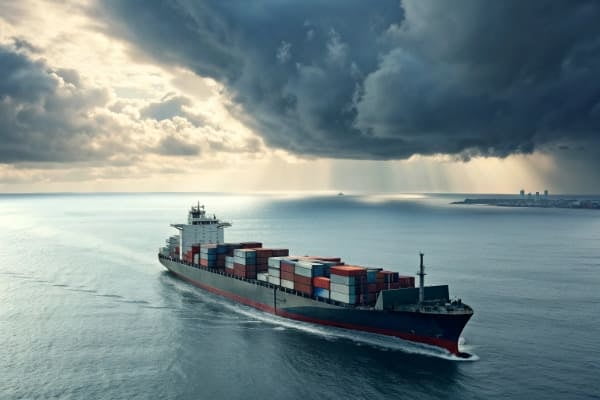
Navigating the world of international shipping might seem like a huge challenge, but it doesn't have to be. I've been helping businesses like yours move goods across the Pacific for years, and I've learned that understanding the basics makes all the difference. Let's break down how ocean freight works, step by step, so you can feel confident in your shipping strategy. I promise to make it simple and clear.
What Is Ocean Freight from China to Canada?
Shipping large volumes of goods across the world seems daunting. You worry about the cost and complexity of moving your products thousands of miles. But ocean freight is a reliable and cost-effective solution.
Ocean freight1 is the process of transporting goods by sea using large cargo ships7. For the China-to-Canada route, this means loading your products at major Chinese ports like Shanghai or Shenzhen and shipping them to Canadian ports like Vancouver or Montreal. It's the go-to method for bulk goods.
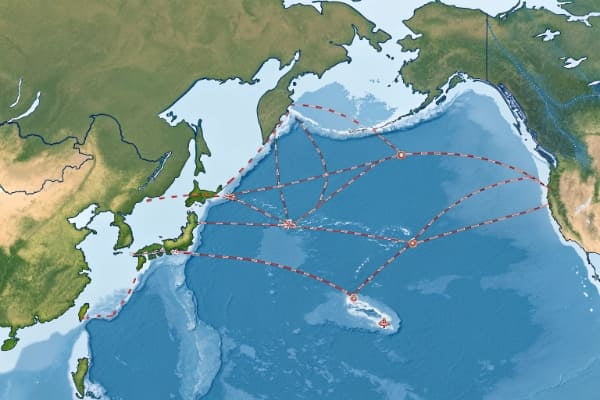
At its core, ocean freight is the backbone of global trade. I remember my first big order for a client in Toronto. We were shipping thousands of custom promotional items, and seeing that massive container get loaded onto the ship was a huge moment. It's how businesses move large quantities of products affordably. The process connects factories in manufacturing hubs like Guangzhou and Ningbo directly to your market in Canada. Your goods are packed into standardized steel containers, which are then loaded onto vessels that can carry thousands of containers at once. This massive scale is what makes it so cost-efficient. The most common routes connect China's busiest ports with Canada's west and east coasts, making it a well-traveled and predictable path for importers.
Key Trading Ports
| Port Type | Major Ports in China | Major Ports in Canada |
|---|---|---|
| Primary | Shanghai, Shenzhen | Vancouver, Montreal |
| Secondary | Ningbo, Guangzhou | Prince Rupert, Halifax |
When Should You Choose Ocean Freight Over Air Freight?
Deciding between shipping by sea or air is a common puzzle. If you choose wrong, you could end up overspending on shipping or missing your customer's deadline. Knowing when to use ocean freight saves money and stress.
You should choose ocean freight when your shipment is large, heavy, or not extremely urgent. It is significantly cheaper than air freight, making it ideal for bulk orders and items with lower profit margins. Air freight is best for small, high-value, or time-sensitive goods.
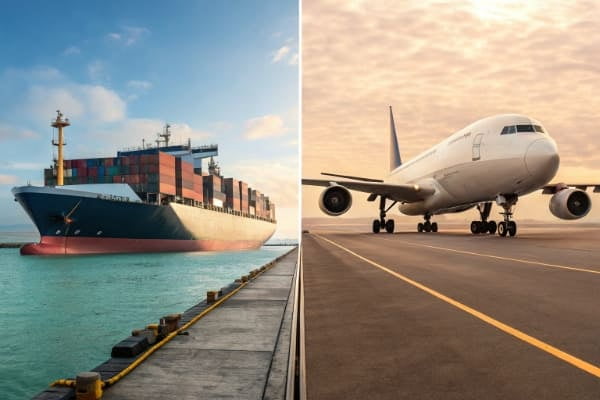
The decision really comes down to balancing three key factors: cost, speed, and volume. I always ask my clients, "How quickly do you need it, and how much can you ship at once?"
Cost vs. Speed
Ocean freight1 is the clear winner on cost. Shipping by sea can be 5 to 10 times cheaper than by air. However, you trade cost for time. A shipment by sea might take 30-40 days, while an air shipment could arrive in under a week. For a client planning inventory for a new season, that extra time is easy to build into the timeline.
Shipment Size and Weight
Air freight is priced based on chargeable weight, which gets very expensive for heavy or bulky items. Ocean freight1 is perfect for these goods. If you're shipping furniture, machinery, or a large quantity of promotional products (like 10,000 custom mugs), the sea is your only practical option.
Product Type
If your products are not time-sensitive and can handle a longer transit, ocean freight is the way to go. This applies to most manufactured goods, from apparel and electronics to custom-branded merchandise.
| Feature | Ocean Freight | Air Freight |
|---|---|---|
| Cost | Low | High |
| Speed | Slow (20-40 days) | Fast (3-7 days) |
| Capacity | Very high, ideal for bulk goods | Limited, best for small-medium shipments |
| Best For | Large, heavy, non-urgent shipments | Small, high-value, time-sensitive goods |
What Are the Key Steps in the Ocean Freight Process to Canada?
The shipping process from China can feel like a black box. You might be afraid of missing a crucial step, which could cause major delays and unexpected costs for your business. The process is actually a clear, manageable sequence.
The key steps are: booking with a freight forwarder3, trucking the cargo from the factory to the port, clearing export customs8 in China, ocean transit, clearing import customs9 in Canada, and arranging final delivery to your warehouse or facility. Your forwarder coordinates these stages.
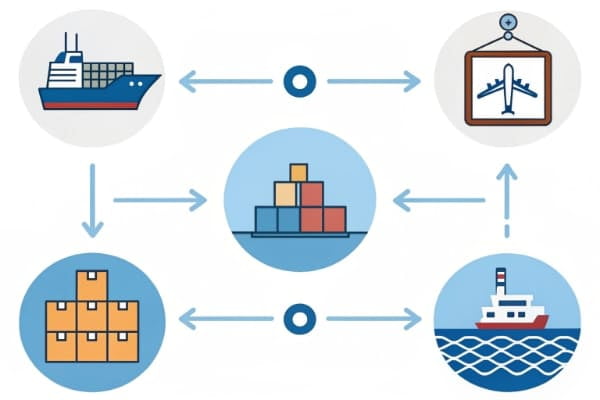
I've guided countless clients through this process, and breaking it down makes it much less intimidating. Think of it as a relay race where your freight forwarder3 carries the baton for you.
- Booking and Documentation: First, you book your shipment with a partner like us. We'll secure space on a vessel and help you prepare essential documents like the Commercial Invoice, Packing List, and Bill of Lading. Accuracy here is critical to avoid customs issues later.
- Export Haulage: We then arrange for a truck to pick up your finished goods from the factory in China and transport them to the designated port of departure.
- Export Customs Clearance: Before the container can be loaded onto the ship, it must be cleared by Chinese customs. We handle all the necessary paperwork and declarations to ensure a smooth exit.
- Ocean Transit: This is the longest part of the journey, where your container sails across the Pacific Ocean.
- Import Customs Clearance: Upon arrival in Canada, your shipment must be cleared by the Canada Border Services Agency (CBSA). We work with a customs broker in Canada to manage this, including paying any applicable duties and GST.
- Final Delivery: Once cleared, we arrange for the final leg of the journey—trucking the container from the Canadian port to your final destination, whether it's a warehouse in Vancouver or a distribution center in Montreal.
FCL vs LCL: Which Ocean Freight Option Is Right for You?
You're ready to ship, but you're not sure if your order is big enough for a full container. Paying for unused space feels wasteful, but sharing a container seems complicated or risky. Understanding FCL and LCL helps you choose perfectly.
Choose Full Container Load (FCL)5 if your cargo can fill most of a 20ft or 40ft container. For smaller shipments, Less than Container Load (LCL)6 is more cost-effective because you only pay for the space you use. FCL is generally faster and more secure.
I help clients make this choice every day. The right option depends entirely on the size of your shipment and your priorities.
FCL (Full Container Load)
With FCL, you rent an entire container for your exclusive use. The standard sizes are 20 feet and 40 feet. This is the best option if your cargo volume is over 15 cubic meters (CBM), as it becomes more economical than LCL at that point. A big advantage is security and speed. The container is sealed at your supplier's factory and isn't opened again until it reaches you. This means less handling and a lower risk of damage. It also avoids the delays of consolidating and de-consolidating goods that happen with LCL.
LCL (Less than Container Load)
If you have a smaller shipment—say, 2 to 13 CBM—LCL is your best bet. You share container space with other importers, and you're charged based on the volume your goods occupy. I had a client who wanted to test the market with an order of just 500 custom tote bags. LCL allowed them to do this without the cost of a full container. The tradeoff is that LCL can take a little longer due to the extra steps of grouping and separating shipments at warehouses in both China and Canada.
| Factor | FCL (Full Container Load) | LCL (Less than Container Load) |
|---|---|---|
| Volume | Best for 15+ CBM | Best for 2-13 CBM |
| Cost | Flat rate per container | Priced per cubic meter (CBM) |
| Speed | Faster (no consolidation delays) | Slower (due to consolidation/deconsolidation) |
| Security | Higher (sealed at origin) | Lower (more handling) |
| Best For | Large, single-shipper orders | Small orders, testing new products |
How Long Does Ocean Freight from China to Canada Take and How Much Does It Cost?
You need to budget for shipping time10 and cost to plan effectively. Unpredictable delays and surprise fees can completely ruin your project timeline and eat into your profit margins. Knowing the typical timelines and costs helps you plan with confidence.
Ocean freight1 from China to Canada generally takes 20 to 40 days port-to-port. A 40ft FCL container can cost between $2,500 and $6,000, but rates fluctuate. LCL is priced per cubic meter. Both time and cost depend on the route, season, and carrier.
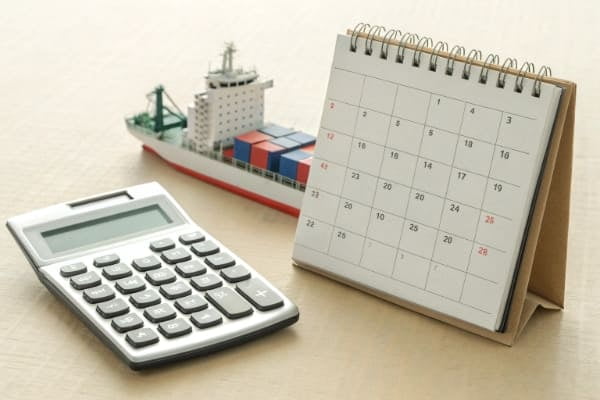
Let's look at the specifics so you can set realistic expectations for your business.
Transit Times
The port-to-port transit time is just one part of the equation. Shipping from Shanghai to Vancouver might take around 20 days on the water. However, door-to-door delivery takes longer. You need to add time for trucking in China, customs clearance4, and final delivery in Canada, which can add another 7-14 days to the total time. Factors like port congestion, bad weather, and peak seasons (like before Chinese New Year) can also cause delays. A shipment to an eastern port like Montreal will naturally take longer than to a western port like Vancouver because of the extra distance.
Shipping Costs
The cost of ocean freight is not just one number. For FCL, you pay a flat rate for the container, but other charges apply. These include terminal handling fees, customs clearance4 fees, and duties/taxes (like GST in Canada). For LCL, you're billed per cubic meter, but the same additional fees apply. Prices are not static; they change based on demand. During peak shipping season from August to October, rates can surge. It's important to get a detailed quote that breaks down all potential charges.
| Route | Estimated Port-to-Port Time | Estimated 40ft FCL Cost (Off-Peak) |
|---|---|---|
| Shanghai to Vancouver | 18-25 days | $2,500 - $4,000 |
| Shenzhen to Vancouver | 20-28 days | $2,800 - $4,500 |
| Ningbo to Montreal | 30-40 days | $4,000 - $6,000 |
How to Choose a Reliable Ocean Freight Forwarder from China to Canada?
You need a partner you can trust to handle your shipping. Choosing the wrong one can lead to lost cargo, endless delays, and a mountain of hidden fees that destroy your budget. A few key checks ensure you find a reliable forwarder.
To choose a reliable freight forwarder3, verify their experience on the China-Canada route, check their licenses, and read reviews. A good partner offers transparent pricing, responsive communication, and a complete suite of services, including customs brokerage and door-to-door delivery.

Finding the right freight forwarder3 is the single most important decision you'll make in your shipping process. They are your quarterback, your logistics expert11, and your problem-solver all in one. As a company based in China, we at Toncentlink act as our clients' local team on the ground, and that's the kind of partnership you should look for.
Here’s what I tell people to look for:
- Experience and Specialization: Do they have a proven track record shipping from China to Canada? Do they understand your product category, like promotional merchandise? Experience prevents common mistakes.
- Comprehensive Services: A great partner doesn't just book sea freight. They should offer an all-in-one solution: factory pickup, warehousing, consolidation, customs clearance4, and final-mile delivery (DDP). This simplifies the process for you immensely.
- Transparent Pricing: Ask for a detailed, itemized quote. A trustworthy forwarder will be upfront about all costs, including port fees, customs duties, and taxes. Beware of quotes that seem too good to be true.
- Excellent Communication: Are they responsive? Do they provide regular updates? You need a partner who communicates clearly and proactively, especially if problems arise.
- A Strong Network: A good forwarder has strong relationships with shipping lines, trucking companies, and customs brokers in both China and Canada. This network is what ensures your cargo moves smoothly.
Conclusion
Shipping from China to Canada by ocean is straightforward with the right partner. Understanding the process, costs, and options like FCL/LCL empowers you to make smart, cost-effective decisions for your business.
Explore this resource to understand the fundamentals of ocean freight and its significance in global trade. ↩
Learn about cargo transport methods and their role in international trade. ↩
Learn how to select a trustworthy freight forwarder to ensure smooth shipping operations. ↩
Understand the customs clearance process and its importance in international shipping. ↩
Discover the advantages of FCL shipping for large shipments and how it can save you money. ↩
Find out how LCL shipping works and when it is the best option for your business. ↩
Learn about different types of cargo ships and their specific uses in ocean freight. ↩
Understand the export customs process in China to facilitate smooth shipping. ↩
Explore the import customs process in Canada to avoid delays and ensure compliance. ↩
Learn about typical shipping times and how to plan your logistics accordingly. ↩
Explore the role of logistics experts in ensuring efficient shipping operations. ↩