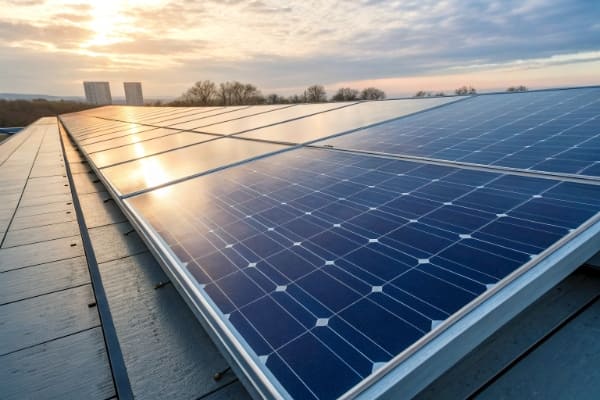
Building a solar farm seems complex and overwhelming. You worry about the massive scale, from finding the right land to connecting to the power grid. It’s a structured process we can break down easily.
A utility-scale solar farm1 is built by first selecting and preparing the land. Then, foundations and racking are installed, followed by solar panels and electrical systems. Finally, the entire system is tested and connected to the electrical grid to start generating power.
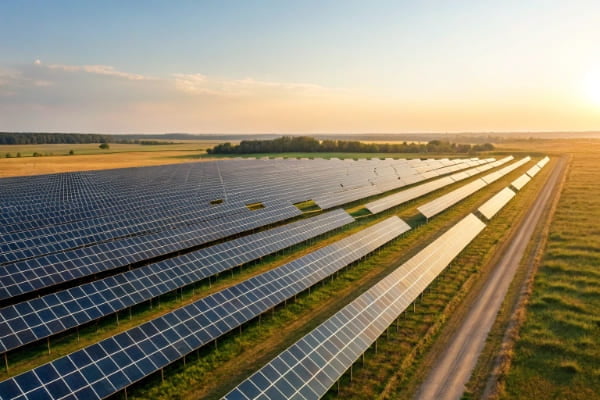
That's the quick overview. But the real magic is in the details. I've seen many large-scale projects in my line of work, and the planning phase is always the most critical part. It reminds me a lot of managing a complex supply chain—every piece has to fit perfectly. Let's dive deeper into how these massive power plants come to life, step by step. This process is fascinating and shows how big ideas become reality.
How Is Land Selected for a Solar Farm?
Choosing the wrong piece of land can completely ruin a solar project. You might face problems like low sunlight, difficult terrain, or being too far from the grid. A careful selection process helps you avoid these costly mistakes.
Land for a solar farm is selected based on key factors. These include high solar irradiance2 (lots of sun), flat and stable terrain, low land cost, and close proximity to grid interconnection points like substations and transmission lines.
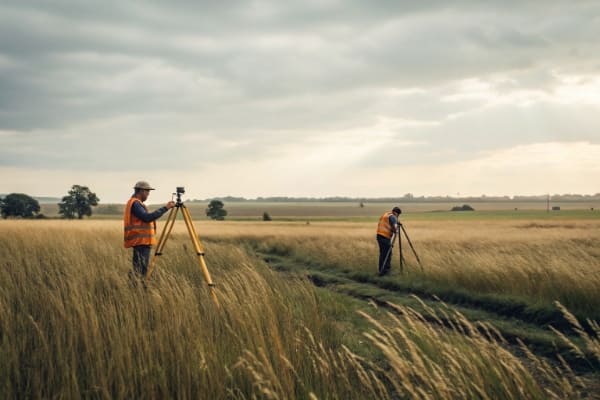
Finding the right site is the first and most important step. It's not just about finding a big, empty field. We have to think about several things to make sure the project is successful. I always tell my clients that preparation is 90% of the work, and this is a perfect example.
Key Site Selection Factors
| Factor | Description | Why It Matters |
|---|---|---|
| Solar Irradiance | The amount of solar energy that reaches the ground. | More sun means more electricity and a better return on investment. |
| Topography | The slope and condition of the land. | Flat land is cheaper and easier to build on. Steep or rocky terrain increases construction costs. |
| Grid Proximity | How close the site is to a substation or transmission lines. | Being close reduces the cost of building new lines to connect the farm to the grid. |
| Land Use & Zoning | Local rules about how land can be used. | The land must be zoned for industrial or energy use, or you'll face long delays getting permits. |
| Environmental Risks | Issues like floodplains, wetlands, or endangered species. | These can stop a project completely or add huge costs for mitigation and special permits. |
Developers use special software to analyze satellite data for solar irradiance2. They also conduct on-the-ground surveys to check the soil and look for any hidden issues. It's a detailed investigation that prevents major headaches later on.
How Much Land Does a Utility-Scale Solar Project Require?
You see these huge solar farms stretching for miles, but it's hard to picture the scale. You might wonder just how much land is needed to generate all that power. Luckily, there's a simple rule of thumb to help understand it.
A utility-scale solar project generally requires about 5 to 10 acres of land per megawatt (MW)3 of power capacity. For example, a 100 MW farm, which can power thousands of homes, could need anywhere from 500 to 1,000 acres.
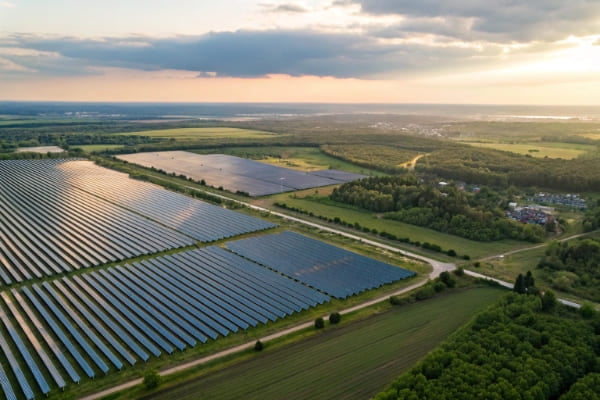
The "5 to 10 acres per megawatt" rule is a good starting point, but the exact amount of land depends on a few things. The technology you use and how you lay everything out make a big difference.
Factors That Determine Land Use
First, the efficiency of the solar panels matters. Higher-efficiency panels can produce more power in a smaller space. So, if you use better panels, you might only need 5 or 6 acres per megawatt. If you use older or less efficient technology, you might need closer to 10 acres.
Second, the site layout is important. You can't just pack the panels tightly together. The rows need to be spaced apart to prevent one row from casting a shadow on the one behind it. This is especially important in the morning and evening when the sun is low. You also need space for:
- Access roads for construction vehicles and maintenance trucks.
- Inverter pads and transformers that convert DC power to AC.
- A substation to step up the voltage and connect to the grid.
- Stormwater drainage systems to manage rain and prevent erosion.
All these extra things add up and require more land than just the area covered by panels.
What Is the Solar Farm Development Process?
A solar farm project can seem like a huge, messy undertaking. You might think it's just about putting panels in a field and plugging them in. In reality, it's a highly organized, multi-phase process that goes from an idea to an operating power plant.
The solar farm development process includes several key stages. It starts with site selection and feasibility studies, moves to permitting and financing4, then engineering, procurement, and construction (EPC), and finally commissioning5 and operation.
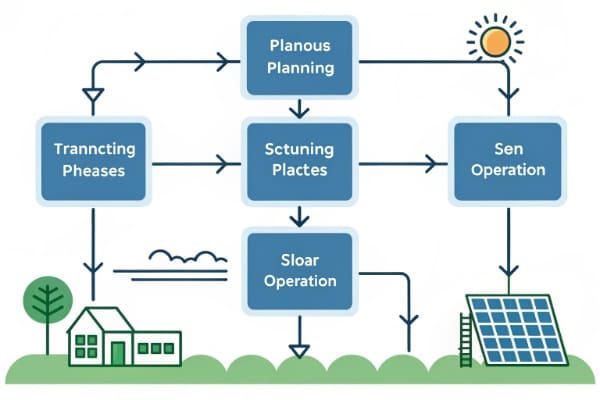
From my experience with large-scale manufacturing, I know that having a clear process is everything. You can't skip steps. A solar farm is no different. It’s broken down into logical phases to keep everything on track.
The Four Main Phases of Development
-
Phase 1: Development & Planning This is where the project is born. It involves finding a suitable site, studying its feasibility, and securing the rights to the land. The developer also has to find a buyer for the electricity, usually through a Power Purchase Agreement (PPA)6 with a utility company. This phase also includes early environmental studies and starting the long permitting process7.
-
Phase 2: Pre-Construction Once the project looks viable, the detailed work begins. Engineers create a full design of the solar farm, including the layout, electrical system, and foundation plans. The developer secures financing4 from banks or investors. This is also when the main contracts are signed, especially the Engineering, Procurement, and Construction (EPC)8 contract.
-
Phase 3: Construction This is the most visible phase. The site is cleared and graded. Foundations are driven into the ground, and the racking system is installed. Then, crews mount thousands of solar panels, wire them together, and connect them to inverters and transformers. Finally, the project's substation is built.
-
Phase 4: Commissioning & Operation After construction is complete, the entire system is tested to make sure it works safely and correctly. This is called commissioning5. Once it passes all tests and gets final approval, the switch is flipped, and the farm starts delivering power to the grid. The project then enters the long-term operation and maintenance (O&M) phase.
How Long Does It Take to Build a Solar Power Plant?
You might wonder about the timeline for such a massive project. Delays can be very costly and frustrating for everyone involved. The good news is that the total timeline can be broken down into predictable, though sometimes long, stages.
Building a solar power plant can take from a few months to several years. The actual construction phase9 for a large farm (50-100 MW) typically takes 6 to 12 months, but the entire development process, including permitting, can last 2 to 5 years.
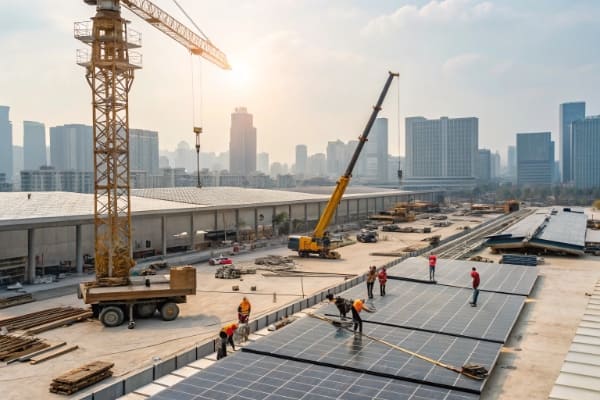
The biggest misconception is that construction is the longest part. In my experience, it's the paperwork and planning that take the most time. Just like sourcing a custom product, the upfront design and approval work takes much longer than the actual manufacturing.
A Typical Project Timeline
| Phase | Typical Duration | Key Activities |
|---|---|---|
| Development & Permitting | 2 - 5 years | Site studies, land agreements, PPA negotiation, environmental reviews, local/state/federal permits. |
| Engineering & Financing | 6 - 12 months | Detailed design, securing loans, ordering long-lead-time equipment like transformers. |
| Construction | 6 - 18 months | Site preparation, foundation installation, racking and panel mounting, electrical work. |
| Commissioning & Interconnection | 1 - 3 months | System testing, grid operator inspections, final energization. |
The first phase, development and permitting, is the most unpredictable. It can take years to get all the necessary approvals from different government agencies. The construction phase9 is much faster because it's a repeatable process. Crews often work in blocks, completing one section of the farm at a time, which makes the work very efficient. So, while you might see a solar farm go up in less than a year, the work to make that happen started years earlier.
How Much Does It Cost to Build a Utility-Scale Solar Farm?
The cost of a utility-scale solar farm1 seems like it would be astronomical. You're not sure what drives the budget for these huge energy projects. The cost can be understood by breaking it down into its key components.
The cost to build a utility-scale solar farm1 has fallen a lot. It now ranges from about $0.80 to $1.30 per watt. This means a 100 MW solar farm could cost between $80 million and $130 million to build.
The price per watt is the standard way to measure cost in the solar industry. This price includes everything from the panels themselves to the labor used to install them. It's helpful to split these costs into two main categories: hard costs10 and soft costs11.
Hard Costs vs. Soft Costs
Hard Costs are the physical things you buy for the project. These are the easiest to understand.
- Solar Modules (Panels): This is usually the single biggest expense, making up about 30-40% of the total cost.
- Inverters: These devices convert DC electricity from the panels to AC electricity for the grid.
- Racking and Mounting: The steel structures that hold the panels up.
- Balance of System (BOS): This includes all the wiring, combiner boxes, transformers, and the substation equipment.
Soft Costs are all the other expenses that aren't physical hardware. These can be just as significant as the hard costs10.
- Labor: The cost of the construction crews who build the farm.
- Permitting and Inspection Fees: The fees paid to governments and utilities.
- Engineering and Design: The cost of the engineers who plan the project.
- Financing and Legal Fees: The costs associated with getting loans and managing contracts.
Over the last decade, the cost of solar panels has dropped dramatically, which is the main reason solar farms are so much cheaper to build today.
What Permits and Regulations Are Required for Solar Projects?
Navigating the web of regulations for a big project can feel like a nightmare. You might fear getting stuck in government red tape for years on end. While the process is complex, it follows a clear path that developers must follow.
Solar projects require many permits from different levels of government. These include land use and zoning permits, environmental impact assessments, building permits, and grid interconnection agreements. The specific requirements vary by location.

Getting all the right permits is often the biggest challenge and the longest part of the entire development process. You can't just start building. A project must get approval from local, state, and sometimes federal authorities.
The Main Categories of Permits
-
Local and County Permits This is where it all starts. The project must comply with local zoning laws. If the land isn't zoned for energy production, the developer has to apply for a conditional use permit or a re-zoning, which can take a long time and require public hearings. They also need standard building permits, electrical permits, and grading permits.
-
State and Federal Regulations For larger projects, state and federal environmental laws come into play. A full Environmental Impact Statement (EIS)12 might be required, which studies the project's effect on wildlife, water, and historical sites. For example, in the U.S., developers must follow the National Environmental Policy Act (NEPA) and the Endangered Species Act. This can add years to the timeline if sensitive habitats or species are found on the site.
-
Utility Interconnection Agreements This isn't a government permit, but it's just as critical. The developer has to sign a formal agreement with the utility that owns the grid. This involves a series of technical studies to ensure the solar farm won't destabilize the grid. These studies can be expensive and reveal the need for costly grid upgrades, which the developer might have to pay for.
What Challenges Do Solar Farm Developers Face?
Building a solar farm isn't always sunny and straightforward. Developers face many hidden obstacles that can delay or even stop a project completely. Understanding these challenges is key to realizing why some projects succeed while others fail.
Solar farm developers face several major challenges. These include long and uncertain permitting timelines, delays and high costs for grid connection, supply chain disruptions13 for key components, and difficulty securing project financing4 and electricity buyers.

Even with the best plan, things can go wrong. Based on my work in global sourcing, I know that managing risk is a huge part of any big project. Solar development is full of risks that need to be managed carefully.
Top Challenges in Solar Development
-
Permitting and Regulatory Hurdles: As we discussed, this is often the biggest bottleneck. Public opposition from local communities ("NIMBY14" or Not In My Back Yard) can also create major delays or force developers to find a new site.
-
Grid Interconnection Issues: The electric grid in many places is old and wasn't built for large, decentralized power sources. There is often a long waiting list, or "queue," to get a project studied for interconnection. The studies might show that the grid needs expensive upgrades, and the developer may have to foot the bill, which can kill the project's economics.
-
Supply Chain and Logistics: A solar farm requires thousands of panels, miles of wiring, and heavy equipment like transformers. Disruptions in the global supply chain, like we saw in recent years, can cause huge delays and price increases. Managing the sourcing and delivery of all these components from different countries is a massive logistics challenge, very similar to the work we do at Toncentlink.
-
Financing and Contracts: A solar farm costs millions of dollars. To get a loan, developers must first prove their project is low-risk. This means they need to have a signed Power Purchase Agreement (PPA) with a reliable buyer for the electricity. Finding a utility willing to sign a 20-year contract can be very competitive.
Conclusion
Building a solar farm is a long and complex journey. However, a structured process of planning, engineering, and construction turns empty land and sunlight into a reliable source of clean energy.
Explore this link to understand the scale and impact of utility-scale solar farms on energy production. ↩
Learn about solar irradiance and its crucial role in solar energy generation. ↩
Learn about the measurement of power capacity in solar projects and its significance. ↩
Explore the various funding sources and financial strategies for solar energy projects. ↩
Learn about the final testing and approval steps before a solar farm starts operating. ↩
Discover how PPAs facilitate the sale of electricity from solar farms to utilities. ↩
Understand the steps and challenges involved in obtaining necessary permits for solar farms. ↩
Understand the key phases of solar farm development and the role of EPC contracts. ↩
Learn about the key activities and timeline involved in building a solar farm. ↩
Understand the tangible expenses involved in building a solar farm. ↩
Explore the non-physical expenses that can significantly impact solar project budgets. ↩
Learn about the assessments required to evaluate the environmental effects of solar farms. ↩
Understand the challenges that can arise from supply chain issues in solar development. ↩
Learn about the public opposition that can impact solar farm development and site selection. ↩