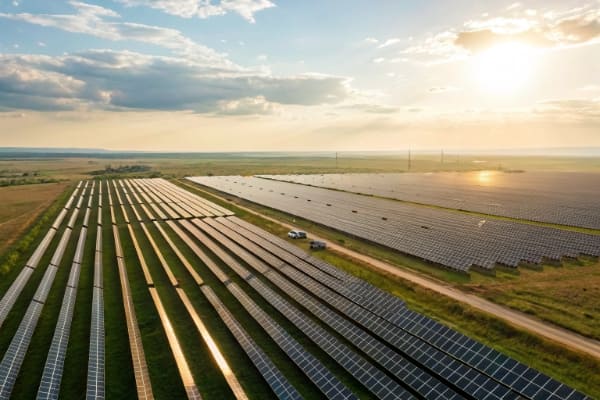
Struggling to understand the solar boom? You see massive solar farms everywhere, but the reasons are not always clear. Let's uncover the key drivers behind this incredible energy revolution.
Utility-scale solar1 is growing fast because of falling costs, government support, and new technology. Economies of scale make it cheaper, while the need for clean energy and stable corporate investments push its expansion. This combination makes it a powerful energy source for the future.
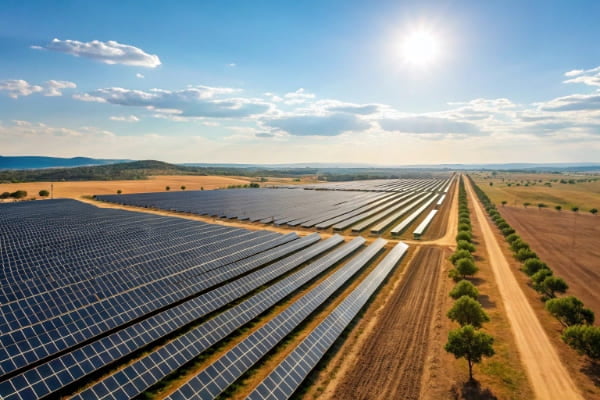
The rapid growth is impressive, but it’s the specific advantages that truly make it a game-changer for our power systems. The momentum behind solar is built on solid economic and environmental foundations. Let's look closer at why so many are turning to the sun for power.
What Are the Advantages of Utility-Scale Solar Energy?
Wondering if large solar farms are actually worth it? The costs can seem high, and the land use is huge. But the long-term benefits for energy production are massive.
The main advantages are economic and environmental. Solar farms generate electricity at a very low cost once built. They also produce clean energy, reduce carbon emissions, and create local jobs, making them a win-win for both the economy and the planet.
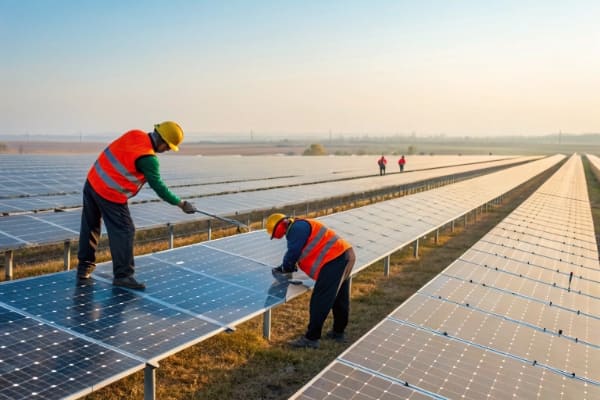
From what I've seen, the benefits of large-scale solar projects are clear and compelling. The economic arguments are often the first thing that gets a project approved. The biggest advantage is the incredibly low and stable cost of the electricity it produces over its lifetime. Once a solar farm is built, its fuel—sunlight—is completely free. This creates predictable energy prices for decades, which is a huge relief compared to the volatile prices of fossil fuels. This stability is why so many large companies are eager to sign long-term power purchase agreements. They can lock in their electricity costs for 20 or 30 years. This is made possible by two key factors:
Key Economic Drivers
| Factor | Description |
|---|---|
| Falling Panel Costs | The price of solar photovoltaic (PV) panels has dropped dramatically over the past decade, making the initial investment much more affordable. |
| Economies of Scale | When you build a huge project, you can buy panels and equipment in bulk, which lowers the cost per unit. Construction is also more streamlined. |
Why Is Solar the Fastest Growing Energy Source?
Confused why solar is outpacing other energy sources? Wind and hydro are powerful, but solar's growth is unmatched. Let's break down the unique factors fueling this rapid expansion.
Solar is the fastest-growing energy source due to a perfect storm of factors. Falling costs2 make it economically competitive, strong government incentives encourage investment, and urgent climate goals demand a rapid shift to clean energy. Technology is also getting better every day.
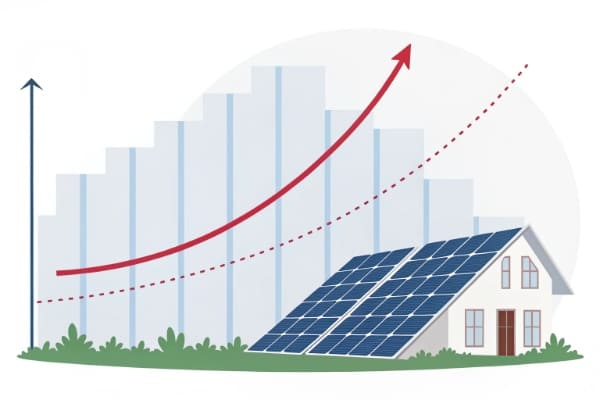
The speed of solar adoption is truly amazing to watch. I believe it's not just one single thing, but a combination of powerful forces all working together at the same time. Government policies have played a huge role. Around the world, leaders are creating policies to encourage renewable energy. These include tax credits for developers and rules that require utilities to get a certain percentage of their power from clean sources. This creates a stable and predictable market for solar investment. At the same time, the corporate world is stepping up. I've seen a massive trend of companies wanting to power their operations with 100% renewable energy. They sign Power Purchase Agreements (PPAs)3 directly with solar developers. This guarantees a steady income for the solar farm and helps the company meet its sustainability goals. It’s a powerful partnership that is funding thousands of new projects.
How Does Utility-Scale Solar Strengthen the Power Grid?
Worried about power grid blackouts? Our aging infrastructure often struggles to meet modern demand. Large-scale solar offers a surprising solution to make our grid more resilient and reliable.
Utility-scale solar1 strengthens the grid by diversifying energy sources and providing power where it is needed. When paired with battery storage, it can supply electricity even when the sun is not shining. Smart grid integration4 also helps balance supply and demand more effectively.
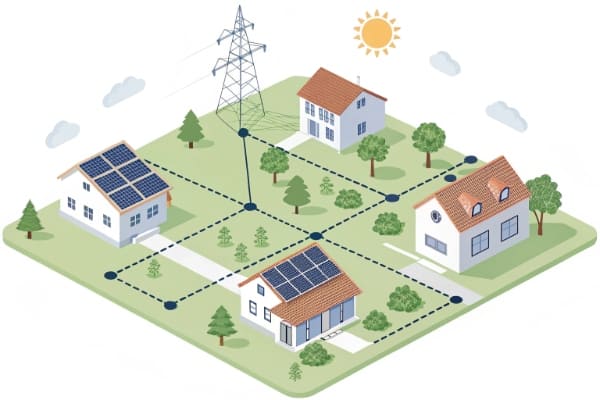
I used to think of solar as an unstable power source, but that idea is quickly becoming outdated. Modern solar farms, especially when paired with new technologies, are actually making our power grid stronger. Traditional grids rely on a few massive power plants. If one of them goes offline, it can cause widespread problems. Solar farms are more spread out, creating a more decentralized and resilient system. A problem in one area is less likely to affect the entire grid. The real game-changer, in my opinion, is the rise of large-scale battery storage. These giant batteries can store excess solar energy produced during the middle of the day. Then, they can release that power in the evening when demand is high but the sun has set. This smooths out the power supply and makes solar a reliable, 24/7 resource. It transforms solar from an intermittent source into a dependable one.
What Are the Environmental Benefits of Solar Farms?
Concerned about climate change? Fossil fuels are polluting our planet at an alarming rate. Solar farms offer a clean, powerful, and scalable alternative to protect our environment.
The biggest environmental benefit is that solar farms produce electricity with zero carbon emissions. This directly fights climate change. They also reduce air and water pollution, conserve water resources compared to traditional power plants, and can help restore land in some cases.
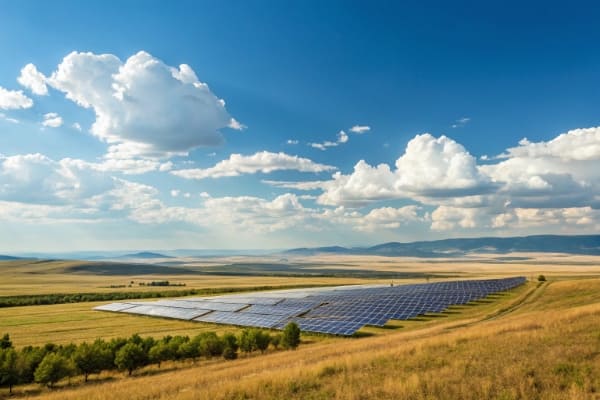
The environmental case for solar is undeniable, and it's one of the main reasons I'm so passionate about this technology. The most important benefit is the massive reduction in greenhouse gas emissions. Every single megawatt of electricity generated by a solar farm is a megawatt that did not come from burning coal, oil, or natural gas. This directly attacks the root cause of climate change. Beyond carbon emissions, solar farms also help create cleaner air. Traditional power plants release pollutants like sulfur dioxide and nitrogen oxides, which cause smog, acid rain, and respiratory problems. Solar panels produce no air pollution at all. Another huge benefit is water conservation. Fossil fuel and nuclear power plants use enormous amounts of water for cooling. Solar farms use virtually no water to operate. This is a critical advantage, especially since many of the sunniest places in the world are also the driest.
Are Utility-Scale Solar Projects Safe for Communities?
Hear concerns about large solar farms near your town? People sometimes worry about safety and property values. Let's look at the facts and address the common myths about these projects.
Yes, utility-scale solar projects are very safe. They do not produce harmful emissions or noise. They are built to strict safety standards to handle extreme weather. Proper planning also ensures they have minimal impact on local wildlife and the surrounding environment.

Safety is always a top concern for any big infrastructure project, and solar is no exception. From all the research I've done, these projects have a very strong safety record. The most obvious safety benefit is what they don't do: they don't burn anything. This means there are no smokestacks pumping pollutants into the air that nearby communities breathe. There is also no hazardous waste to store or dispose of. The operational risks are also extremely low. Solar panels are solid-state devices with no moving parts, so they are quiet and reliable. The risk of a fire or chemical spill is practically zero. I also think it's important to address how these projects interact with the local ecosystem. Responsible developers work hard to make sure their projects fit into the environment. This can include planting native, pollinator-friendly plants under the panels or designing the layout to allow wildlife to pass through safely.
What Are the Challenges of Large Solar Installations?
Think building a giant solar farm is easy? While the benefits are clear, the process is full of hurdles. Let's explore the real-world challenges that developers must overcome.
The main challenges are land use, intermittency, and grid integration. Finding enough suitable land can be difficult. Solar only works when it is sunny, so energy storage is needed. And upgrading the grid to handle the new power source can be complex and expensive.
It is important to be realistic. While I am a huge supporter of solar energy, these projects are not without their difficulties. The first and most obvious challenge is land. Utility-scale solar1 farms need a lot of it. This can create conflict with other land uses, like farming or conservation. I've seen that the best projects are often built on land that is less useful for other purposes, like deserts, brownfields, or former industrial sites. The second major hurdle is intermittency. The sun doesn't shine at night, and clouds can reduce output during the day. This variability has to be managed. The main solution is battery storage, which adds a significant cost. Finally, our electrical grid wasn't designed for this. The grid was built for a few large power plants, not for hundreds of solar farms spread across the country. We need to build more high-voltage transmission lines to move solar power from sunny areas to the cities where it's needed most.
What Is the Future of Utility-Scale Solar Energy?
Wondering what is next for solar power? The growth has been amazing, but this is just the beginning. The future holds even more exciting innovations for utility-scale solar energy.
The future of utility-scale solar is bright. Expect more efficient panels, cheaper and larger battery storage, and better integration with smart grids. We will also see solar farms combined with agriculture and built in more creative locations.
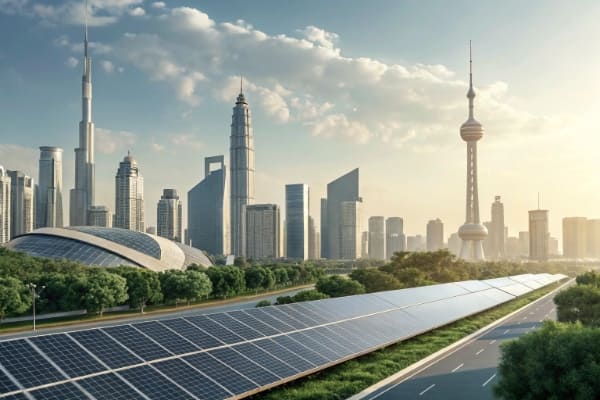
I believe we are on the cusp of an even bigger solar revolution. The technology is advancing at an incredible pace, and it is going to unlock even more potential. We will see solar panels become much more efficient. New materials like perovskites promise to capture more sunlight and could be cheaper to produce than the silicon used today. I also think we will see much better and cheaper energy storage, which will solve the intermittency problem once and for all. The grid itself will get smarter. Artificial intelligence will be used to predict weather patterns and energy demand, optimizing how solar power is generated, stored, and distributed. We will also get more creative about where we put solar panels. The concept of "agrivoltaics," where crops are grown in the partial shade under solar panels, is a brilliant way to use land for both food and energy. We are just scratching the surface of what is possible.
Conclusion
Utility-scale solar1 is growing fast due to lower costs, better technology, and strong demand for clean energy. It is a key solution for a sustainable and reliable energy future.
Understanding utility-scale solar is crucial for grasping the future of energy production and its impact on sustainability. ↩
Explore how decreasing costs are making solar energy more accessible and competitive in the energy market. ↩
Learn how PPAs facilitate the growth of solar projects and provide financial stability for developers. ↩
Explore how smart grid technology optimizes energy distribution and enhances grid resilience. ↩