
The first step to successful importing is ensuring a reliable supplier. A factory audit can help you uncover crucial information about potential partners.
A factory audit is an assessment that verifies a supplier's compliance with industry standards, quality control, and operational practices.1 This process helps importers make informed decisions, ensuring they partner with legitimate factories.
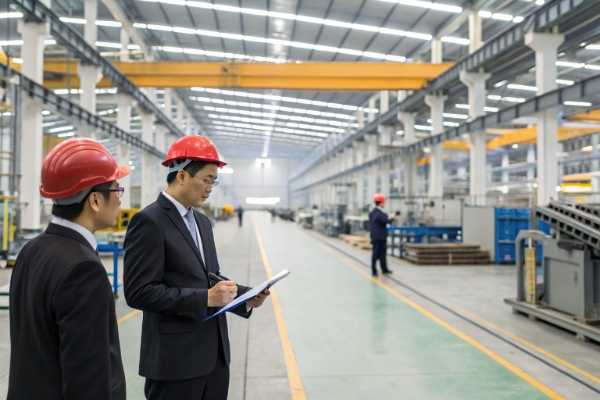
Conducting a factory audit is one of the best ways to manage risks in your supply chain. It provides insights that can make or break your business relationships. So, let’s dive deeper into the world of factory audits in China.
What Is a Factory Audit in China?
Factory audits are extensive evaluations done on manufacturing facilities. They assess various aspects, including production processes, quality control, labor conditions, and legal compliance2. The goal is to gather data that helps importers understand their suppliers better.
A factory audit in China is a thorough review of a manufacturing facility's operations, compliance, and quality control practices. It offers insights into the supplier’s ability to meet your product standards and business requirements.

These audits can reveal genuine issues that may not be obvious from initial discussions3. They are crucial in avoiding costly mistakes later in the importing process.
Diving deeper into factory audits, it's essential to emphasize the importance of verifying legitimacy. This can be done through business licenses, export records, and even a physical walkthrough4 of the production floor. You want to ensure you're not just relying on glossy profiles or fancy presentations.
Why Should Importers Conduct a Factory Audit Before Ordering?
The import process can be fraught with challenges. Conducting a factory audit helps mitigate those risks. It allows importers to assess the credibility of a supplier before making any commitments.
Importers should conduct factory audits to ensure suppliers meet quality and compliance standards, which minimizes risks related to product quality, legal liabilities, and supply chain disruptions5.
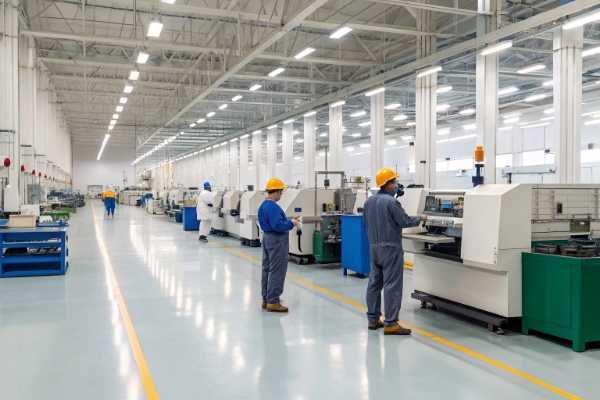
Before investing time in sampling products, ensure that the supplier can deliver what they promise. This proactive step can save you from potential issues down the line.
Furthermore, treat unusually low prices as a risk signal6. They can often indicate corners being cut somewhere in the production process. Always prioritize quality over cost when it comes to your brand's reputation.
What Types of Factory Audits Are Available in China?
There are several types of factory audits available, each serving a specific purpose. Some common types include:
- Legal Registration Audit: Verifies the factory's business license and legitimacy.
- Quality Control Audit: Assesses the quality management systems7 in place.
- Social Audit: Looks into labor practices and working conditions8.
- Environmental Audit: Checks for compliance with environmental standards9.
- Process Audit: Evaluates production processes, traceability, and calibration records.
The types of factory audits available in China include legal registration, quality control, social, environmental, and process audits10, each designed to assess different aspects of supplier compliance and reliability.

Each type of audit focuses on a different area, helping you build a comprehensive understanding of your potential supplier. By combining these audits, you can create a robust risk management strategy.
How Is a Factory Audit Conducted Step by Step?
Conducting a factory audit involves several key steps:
- Planning: Define the scope and objectives of the audit.
- Document Review: Collect necessary documents like business licenses and certifications.
- On-Site Inspection: Visit the factory to assess operations, processes, and working conditions.
- Interviews: Speak with management and staff to understand practices and issues.
- Reporting: Create a detailed report outlining findings and recommendations.
A factory audit is conducted through planning, document review, on-site inspections, interviews, and reporting11. This structured approach provides a comprehensive overview of the supplier's operations.

Each step in this process is critical, ensuring you cover all bases. Implementing a three-layer audit structure can enhance your effectiveness. This includes a factory audit for legal registration, a process audit for production line organization, and a social/ethical audit for working conditions.
What Are the Most Common Risks and Red Flags Found During Audits?
Understanding risks is vital for importers. Here are some common red flags to look out for during audits:
- Lack of Certifications: Ensure the supplier holds relevant certifications like ISO 9001 or FDA approval.
- Inconsistent Production Practices: Disorganization on the production floor can indicate bigger issues.
- Poor Working Conditions: Signs of labor issues or unethical practices can lead to reputational damage.
- Hidden Costs: Always clarify pricing to avoid unexpected expenses.
Common risks and red flags found during factory audits include lack of certifications, inconsistent production practices, poor working conditions, and hidden costs. Identifying these issues helps protect your business.
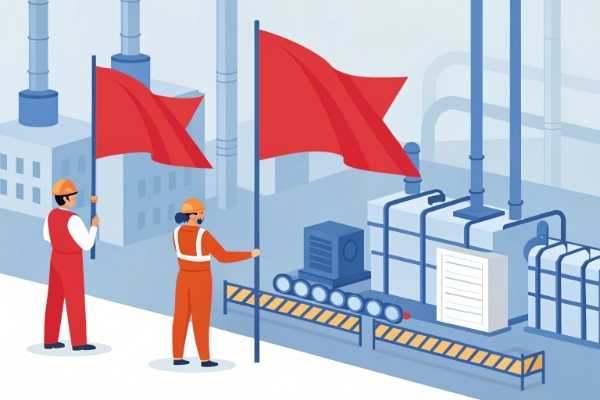
The more thorough your audit, the better prepared you will be to manage these risks. Always cross-check certifications with issuing bodies12 to ensure legitimacy.
How Much Does a Factory Audit Cost in China?
The cost of factory audits can vary widely. Factors affecting the price include the type of audit, location, and the complexity of the factory operations. Generally, you can expect to pay anywhere from a few hundred to several thousand dollars for a comprehensive audit.
Factory audit costs in China vary depending on the type of audit, factory location, and complexity, typically ranging from a few hundred to several thousand dollars for comprehensive assessments.

While it may seem like an added expense, the investment can save you money in the long run by preventing costly mistakes. Always weigh the audit costs against potential risks and losses.
How Can Factory Audits Improve Supplier Risk Management?
Factory audits play a crucial role in supplier risk management. They provide a structured way to assess and monitor supplier capabilities and compliance.
Factory audits improve supplier risk management by identifying potential issues before they escalate, ensuring compliance with standards, and fostering transparency in supplier relationships.

Implementing regular audits can help you catch issues early. Schedule annual or semi-annual reviews to stay updated on supplier conditions. This proactive approach enables you to address potential risks effectively before they impact your business.
Conclusion
Factory audits are essential for importers. They ensure supplier reliability and quality, saving you headaches down the road.
"ISO 19011:2018 - Guidelines for auditing management systems", https://www.iso.org/standard/70017.html. ISO auditing guidance describes audits as systematic processes for obtaining evidence and evaluating conformity with defined criteria, supporting the article’s characterization of factory audits as compliance and operational assessments. Evidence role: definition; source type: institution. Supports: A factory audit verifies a supplier’s compliance with standards, quality controls, and operational practices.. Scope note: ISO 19011 provides general audit-management guidance rather than a China-specific factory-audit definition. ↩
"Due diligence for responsible business conduct - OECD", https://www.oecd.org/en/topics/sub-issues/due-diligence-guidance-for-responsible-business-conduct.html. Supplier-assessment and social-compliance guidance from international institutions identifies production capacity, quality systems, labor conditions, and legal compliance as common areas reviewed in supplier audits. Evidence role: general_support; source type: institution. Supports: Factory audits commonly assess production processes, quality control, labor conditions, and legal compliance.. Scope note: The source may describe supplier audits broadly and may not enumerate every item in the article’s list for China specifically. ↩
"Supplier Risk Assessment—A Quantitative Tool for the Identification ...", https://pmc.ncbi.nlm.nih.gov/articles/PMC12026463/. Research on supplier evaluation and due diligence explains that document review and on-site assessment can identify operational and compliance risks not evident from self-reported supplier information. Evidence role: mechanism; source type: paper. Supports: Factory audits can reveal supplier issues that are not apparent from initial discussions.. Scope note: Such research supports the general due-diligence mechanism, not the outcome of any particular factory audit. ↩
"U.S. Export Licenses: Navigating Issues and Resources", https://www.trade.gov/us-export-licenses-navigating-issues-and-resources. Trade and business-registration guidance for China indicates that company registration records and official licenses are key means of verifying legal existence, while on-site visits are commonly used in supplier due diligence to corroborate operational capacity. Evidence role: mechanism; source type: government. Supports: Supplier legitimacy can be checked through business-license verification, export or registration records, and physical inspection of the facility.. Scope note: Official registration sources verify legal status, but they do not by themselves prove manufacturing capability or ethical compliance. ↩
"Risk factors in the assessment of suppliers - PMC - NIH", https://pmc.ncbi.nlm.nih.gov/articles/PMC9342744/. Supply-chain risk management literature describes supplier assessment and monitoring as controls for quality, compliance, and continuity risks, supporting the use of audits as a risk-reduction tool. Evidence role: expert_consensus; source type: paper. Supports: Factory audits can reduce risks related to product quality, legal exposure, and supply-chain disruption.. Scope note: The literature supports risk mitigation in general; it does not guarantee that an audit will prevent all quality defects, legal liabilities, or disruptions. ↩
"[PDF] OECD Checklist for protecting competition when managing the risks ...", https://www.oecd.org/content/dam/oecd/en/topics/policy-sub-issues/fighting-bid-rigging-in-public-procurement/oecd-checklist-for-protecting-competition-when-managing-the-risks-of-very-low-tenders.pdf. Procurement guidance on abnormally low tenders treats unusually low prices as a potential indicator of underestimated costs, noncompliance, or performance risk, providing contextual support for treating very low supplier pricing as a warning sign. Evidence role: general_support; source type: institution. Supports: Unusually low supplier prices can be a risk signal in procurement decisions.. Scope note: Public-procurement guidance is not identical to private importing from China, so it supports the risk logic rather than proving that every low factory quote reflects corner-cutting. ↩
"ISO 9001:2015(en), Quality management systems", https://www.iso.org/obp/ui/#iso:std:iso:9001:ed-5:v1:en. ISO 9001 specifies requirements for quality management systems and is commonly used as the reference standard for assessing whether an organization has formalized quality processes. Evidence role: definition; source type: institution. Supports: A quality control audit assesses the quality management systems in place.. Scope note: ISO 9001 certification indicates that a quality-management system has been audited against the standard; it does not independently prove the quality of every product shipment. ↩
"An ILO Convention on Labor Standards in Global Supply Chains", https://cjil.uchicago.edu/print-archive/hiding-plain-sight-ilo-convention-labor-standards-global-supply-chains. ILO guidance and international labor standards identify working conditions, wages, hours, occupational safety, and labor rights as central subjects of labor and social-compliance assessment. Evidence role: definition; source type: institution. Supports: A social audit examines labor practices and working conditions.. Scope note: ILO standards define labor principles broadly; a specific social audit protocol may operationalize them differently. ↩
"Frequent Questions About Environmental Management Systems - EPA", https://www.epa.gov/ems/frequent-questions-about-environmental-management-systems. ISO 14001 sets requirements for environmental management systems, providing a recognized framework for evaluating whether an organization manages environmental responsibilities systematically. Evidence role: definition; source type: institution. Supports: An environmental audit checks a factory’s compliance with environmental standards.. Scope note: ISO 14001 addresses management-system requirements and does not by itself confirm compliance with every applicable local environmental law. ↩
"What is an Audit? - Types of Audits & Auditing Certification - ASQ", https://asq.org/quality-resources/auditing?srsltid=AfmBOoqXQWNRgtgHAoyzY0U80fm_pNo2MY37jD2pgGDoM7wxZdtMpguS. Audit and assurance frameworks distinguish among legal or compliance audits, quality-management audits, social-compliance audits, environmental audits, and process audits, supporting the article’s taxonomy of factory-audit types. Evidence role: definition; source type: institution. Supports: Factory audits can be categorized as legal registration, quality control, social, environmental, and process audits.. Scope note: Different audit providers and standards use varying terminology, so the categories may not be universally exhaustive or named identically. ↩
"Internal Audit Process - University of Toledo", https://www.utoledo.edu/offices/internalaudit/Internal_Audit_Process.html. Audit guidance such as ISO 19011 describes audit programs as involving planning, review of documented information, evidence collection through interviews and observation, and reporting of audit findings. Evidence role: mechanism; source type: institution. Supports: A factory audit is conducted through planning, document review, on-site inspection, interviews, and reporting.. Scope note: The cited guidance is a general management-system audit framework and may not prescribe the exact sequence used by every factory-audit provider. ↩
"Accreditation Bodies - IAF", https://iaf.nu/en/accreditation-bodies/. Accreditation and conformity-assessment bodies advise verifying certificates through the issuing certification body or accreditation records, supporting the practice of checking supplier certifications rather than relying on copies supplied by the vendor. Evidence role: mechanism; source type: institution. Supports: Importers should cross-check supplier certifications with the issuing bodies to confirm legitimacy.. Scope note: Verification confirms the existence and scope of a certificate but does not prove ongoing production quality or compliance outside the certified scope. ↩