Quality concerns can keep you up at night, especially when sourcing products from China. How do you ensure that what you receive meets your standards?
China QC inspection is a systematic process of checking products before, during, or after production to ensure they meet buyer specifications, industry standards, and regulatory requirements.1
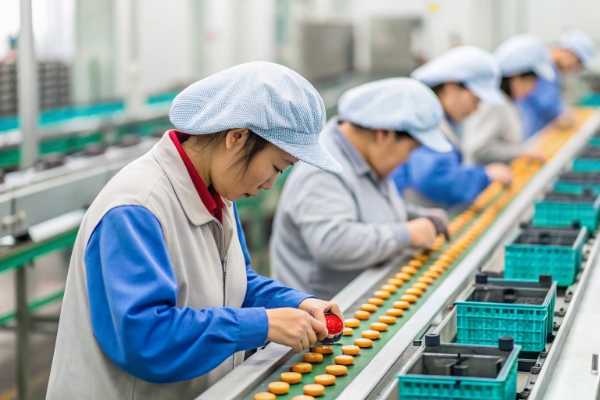
Quality Control (QC) inspections are vital for anyone sourcing from China. They act as a safety net, catching potential defects before they reach your warehouse. By integrating QC inspections into your sourcing strategy, you can significantly reduce the risk of product defects and delivery delays2. This proactive approach ensures you receive the high-quality products you expect, while also maintaining your reputation in the marketplace.
LOOP START
Why Is Quality Control Essential When Sourcing from China?
Sourcing from China can be a double-edged sword. On one hand, you have access to a vast array of products at competitive prices3. On the other, quality control is often a concern. Without proper QC, you risk receiving goods that do not meet your specifications. This can lead to unhappy customers, returns, and a damaged brand reputation4.
Quality control is essential when sourcing from China because it ensures product consistency, compliance with regulations, and prevention of costly mistakes.
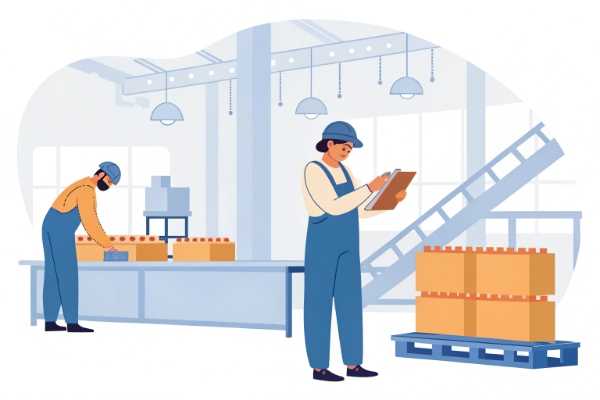
Diving deeper into the importance of QC, it’s crucial for several reasons. First, inspections help catch defects early in the production process, preventing issues down the line. Second, they ensure that products meet national laws and regulations, such as CE, FDA, and FCC compliance5. This is particularly important for those selling on platforms like Amazon or in industries with strict regulations.
Here is a breakdown of key reasons why QC is essential:
| Reason | Description |
|---|---|
| Consistency | Ensures that all products meet the same quality standards. |
| Regulatory Compliance | Confirms adherence to government and industry regulations. |
| Cost Savings | Reduces returns and chargebacks due to defective products. |
| Brand Reputation | Maintains a positive image by delivering quality products. |
LOOP END
What Are the Different Types of QC Inspection?
The types of QC inspections can vary widely based on your needs. Common types include pre-production inspections, in-process inspections, and final inspections6.
Understanding the different types of QC inspections is essential to ensuring that your products meet the required standards at various stages of production.

- Pre-production Inspection: Conducted before production starts to check raw materials and confirm specifications.
- In-process Inspection: Carried out during production to monitor quality and make adjustments as needed.
- Final Inspection: Done when production is complete to ensure that the finished products meet your standards before they are shipped.
Each inspection type serves a unique purpose and provides specific insights into the production process, helping you maintain control over product quality from start to finish.
LOOP START
When Should You Schedule a QC Inspection?
Timing is crucial when it comes to QC inspections. It's important to schedule inspections at strategic points throughout the production process.
You should schedule QC inspections before production begins, during production, and after production to ensure that products meet your quality standards at every stage.

Scheduling inspections before production starts can help confirm that your factory has the right materials and capabilities7. During production, in-process inspections allow for real-time adjustments8, which can save time and costs. Finally, final inspections let you verify that everything is as expected before shipment.
Here’s an overview of when to schedule inspections:
| Inspection Stage | Timing |
|---|---|
| Pre-production | Before production starts |
| In-process | During production |
| Final | After production is complete |
LOOP END
How Does the China QC Inspection Process Work?
The QC inspection process typically involves several steps. First, you need to hire a reliable inspection company. Then, you will define your quality standards and inspection criteria.
The China QC inspection process works by assessing products at different stages of production and providing detailed reports on their quality status.

Once the inspection begins, inspectors will evaluate the products based on the criteria you have set. They look for defects, verify compliance with specifications9, and provide photographic evidence of their findings. After the inspection, you’ll receive a detailed report summarizing the results, allowing you to make informed decisions.
The key steps in the QC inspection process include:
- Hiring an Inspection Company: Choose a reputable third-party inspection service.
- Setting Quality Criteria: Define your specific quality standards and requirements.
- Conducting Inspections: Inspectors evaluate products based on your criteria.
- Receiving Reports: Get detailed reports that help you understand the quality status.
LOOP START
What Is the AQL Standard in Product Inspection?
AQL, or Acceptable Quality Level, is a statistical measurement used in quality control. It helps determine the maximum number of defective items that can be considered acceptable in a batch10.
The AQL standard in product inspection helps importers understand the acceptable levels of defects in their shipments, making it easier to manage quality expectations.

AQL is particularly important for importers because it provides a clear guideline on what is deemed acceptable. For instance, an AQL of 2.5 means that in a batch of 100 items, up to 2.5 defective items may be allowed11.
Here’s a simple AQL table to better understand the concept:
| AQL Level | Defective Items Allowed (per 100) |
|---|---|
| 0.65 | 0.65 |
| 1.0 | 1 |
| 2.5 | 2.5 |
| 4.0 | 4 |
LOOP END
How Much Does QC Inspection Cost in China?
The cost of QC inspection in China can vary widely based on several factors, including the type of inspection, the size of the order, and the inspection company you choose.
Costs for QC inspection services in China typically range from $200 to $800, depending on the complexity and scope of the inspection required.
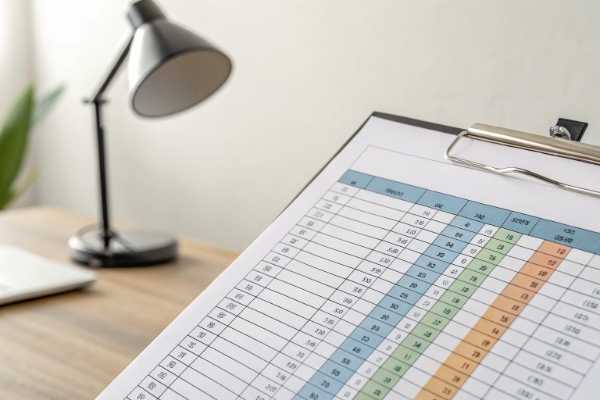
Investing in QC inspections is often worth it. The potential savings from avoiding defective products and maintaining a strong brand reputation can far outweigh the costs associated with inspections.
Here’s a rough breakdown of QC inspection costs:
| Inspection Type | Estimated Cost |
|---|---|
| Pre-production | $150 - $300 |
| In-process | $200 - $500 |
| Final | $300 - $800 |
LOOP END
What Should You Do If an Inspection Fails?
If a QC inspection fails, it’s essential to act quickly. You’ll need to address the issues identified to prevent defective products from reaching your customers.
When an inspection fails, communicate with your supplier to resolve the identified issues before proceeding with shipment.

- Communicate with the Supplier: Discuss the inspection results and identify the root causes of the failures.
- Implement Corrections: Work with the supplier to make necessary adjustments or improvements.
- Schedule a Re-inspection: Once corrections are made, schedule another inspection to ensure compliance.
Taking these steps can help mitigate the impacts of a failed inspection and ensure you maintain quality in your product offerings.
LOOP START
How Do You Choose a Reliable Inspection Company?
Selecting a reliable inspection company is crucial for successful import operations.
To choose a trustworthy inspection company, look for positive customer reviews, certifications, and experience in your industry.

Here are some tips for selecting the right inspection company:
- Research and Recommendations: Look for companies with strong reviews and ask for recommendations from peers.
- Check Certifications: Ensure the company has relevant certifications and experience in your industry12.
- Request Sample Reports: Ask to see sample inspection reports to evaluate the thoroughness of their work.
By following these guidelines, you can find an inspection partner that suits your needs and helps maintain product quality.
LOOP END
Frequently Asked Questions About China QC Inspection
Many importers have questions about QC inspections in China. Here are some common queries:
What is the purpose of a QC inspection? The purpose is to ensure that products meet quality standards and specifications before shipment.
How long does a QC inspection take? The duration varies based on the inspection type but typically takes a few hours to a few days.
Can I attend the QC inspection? Yes, many inspection companies allow clients to attend the inspection or provide live updates.
What happens if I disagree with the inspection results? You can discuss the findings with your inspection company and the supplier to seek resolution.
By addressing these FAQs, you can help demystify the QC inspection process for potential clients.
Conclusion
In conclusion, investing in QC inspections is essential for anyone sourcing from China, as it helps ensure product quality, reduces risks, and protects your brand reputation.
"ISO 9000 family - Wikipedia", https://en.wikipedia.org/wiki/ISO_9000_family. Quality inspection is commonly defined as an activity that evaluates whether products, processes, or services conform to specified requirements, supporting the article’s description of QC inspection as conformity checking across production stages. Evidence role: definition; source type: institution. Supports: China QC inspection is a systematic process of checking products before, during, or after production to ensure they meet buyer specifications, industry standards, and regulatory requirements.. Scope note: The source may define inspection generally rather than China-specific inspection practice. ↩
"Artificial Intelligence-Based Smart Quality Inspection for Manufacturing", https://pmc.ncbi.nlm.nih.gov/articles/PMC10058274/. Quality-management literature describes inspection and process control as methods for detecting nonconformities and preventing defective products from moving forward in production, which supports the risk-reduction mechanism described here. Evidence role: mechanism; source type: paper. Supports: Integrating QC inspections into a sourcing strategy can significantly reduce the risk of product defects and delivery delays.. Scope note: This supports the general mechanism of defect reduction; it does not quantify the degree of risk reduction for China sourcing specifically. ↩
"Manufacturing, value added (current US$) - World Bank Open Data", https://data.worldbank.org/indicator/NV.IND.MANF.CD. International trade data identify China as one of the world’s largest exporters of manufactured goods, providing contextual support for the statement that buyers can source a broad range of products from China. Evidence role: historical_context; source type: institution. Supports: Sourcing from China gives buyers access to a vast array of products at competitive prices.. Scope note: Export volume and product diversity support the general sourcing context but do not directly prove that every product category is competitively priced. ↩
"Consumers blame both manufacturer and retailer when products fail ...", https://mendoza.nd.edu/news/consumers-blame-when-products-fail/. Consumer-behavior and quality-management research links product defects and poor perceived quality with customer dissatisfaction, returns, and negative effects on brand equity, supporting the business-risk connection made in the article. Evidence role: general_support; source type: paper. Supports: Receiving goods that do not meet specifications can lead to unhappy customers, returns, and damaged brand reputation.. Scope note: The evidence is likely to be general retail or consumer-products research rather than specific to imports from China. ↩
"Importing FDA Regulated Products", https://www.fda.gov/industry/import-program/importing-fda-regulated-products. Regulatory sources describe CE marking, FDA requirements, and FCC equipment authorization as compliance frameworks that may apply to products placed on the EU or U.S. market, supporting the article’s examples of regulatory checks in product inspection. Evidence role: definition; source type: government. Supports: QC inspections may help verify whether products meet applicable regulatory requirements such as CE, FDA, and FCC compliance.. Scope note: The specific requirements depend on product category and market; the source would not show that every China-sourced product requires all three forms of compliance. ↩
"The Complete Guide to Quality Inspection: Types, Processes, and ...", https://doug-machine.com/feeds/blog/quality-inspection. Quality-control references commonly distinguish inspection activities before production, during production, and after production, supporting the article’s categorization of inspection types by production stage. Evidence role: definition; source type: institution. Supports: Common QC inspection types include pre-production inspections, in-process inspections, and final inspections.. Scope note: Terminology can vary across industries and inspection providers, so the source may use equivalent rather than identical labels. ↩
"What is Supplier Quality Management? Supplier Selection Criteria", https://asq.org/quality-resources/supplier-quality?srsltid=AfmBOorhMN_YpTZcW3Ee7Snl6Tn6lOHFA9Bl8Y5M6FSpR7ICvODJbS93. Quality-planning and supplier-quality literature describes early verification of materials, equipment, and supplier capability as a way to reduce nonconformities before full production begins, supporting the stated role of pre-production inspection. Evidence role: mechanism; source type: paper. Supports: Scheduling inspections before production starts can help confirm that the factory has the right materials and capabilities.. Scope note: This supports the rationale for early verification generally, not the effectiveness of a specific factory inspection in every case. ↩
"[PDF] in process inspection procedure", https://campaigns.dmu.edu/browse/ynXtpe/6AD192/InProcessInspectionProcedure.pdf. Statistical process control and in-process inspection research describes monitoring during production as a means of detecting process variation and enabling corrective action before completion, supporting the article’s claim about real-time adjustment. Evidence role: mechanism; source type: paper. Supports: During production, in-process inspections allow real-time adjustments that can save time and costs.. Scope note: The source would support the principle of in-process monitoring, while actual speed and effectiveness depend on factory processes and decision authority. ↩
"Conformity Assessment Basics | NIST", https://www.nist.gov/standardsgov/conformity-assessment-basics. Conformity-assessment standards characterize inspection as examination of products or processes to determine conformity with specified requirements, supporting the article’s description of inspectors checking defects and specifications. Evidence role: definition; source type: institution. Supports: Inspectors evaluate products by looking for defects and verifying compliance with specifications.. Scope note: This supports the formal inspection function but not the detailed practices of any individual inspection company. ↩
"6.2.3.1. Choosing a Sampling Plan: MIL Standard 105D", https://www.itl.nist.gov/div898/handbook/pmc/section2/pmc231.htm. ISO 2859-1 and related sampling-inspection references define AQL as a quality level associated with acceptance sampling plans, supporting the article’s explanation that AQL is used to set acceptable defect levels for lot inspection. Evidence role: definition; source type: institution. Supports: AQL helps determine the maximum number of defective items that can be considered acceptable in a batch.. Scope note: AQL is not simply a guaranteed maximum defect count; it is a statistical parameter used with sampling plans and acceptance criteria. ↩
"[PDF] ISO 2859-1 - UNT Chemistry", https://chemistry.unt.edu/~tgolden/courses/iso2859-1.pdf. Acceptance-sampling references explain that an AQL value such as 2.5 is used with lot size, inspection level, and sampling tables to determine acceptance and rejection numbers, providing context for the article’s simplified example. Evidence role: mechanism; source type: institution. Supports: An AQL of 2.5 indicates an acceptable defect level used to manage batch acceptance decisions.. Scope note: The article’s wording is an oversimplification; AQL 2.5 does not literally mean that exactly 2.5 defective units are allowed in every 100-unit batch. ↩
"ISO/IEC 17020 Inspection Body Accreditation | ANAB", https://anab.ansi.org/accreditation/inspection-body-accreditation/?srsltid=AfmBOoqlisz6xNAPu5eqe_bVQX12h1B4VRjgNmVYCiDwiUE-Kk0VxuRA. ISO/IEC 17020 sets competence and impartiality requirements for inspection bodies, supporting the relevance of formal accreditation or certification and sector competence when assessing an inspection provider. Evidence role: expert_consensus; source type: institution. Supports: A trustworthy inspection company should have relevant certifications and experience in the buyer’s industry.. Scope note: Accreditation supports organizational competence and impartiality but does not by itself guarantee performance in a specific inspection engagement. ↩