
Your supply chain feels fragile, and a crisis in the Middle East could snap it. Understanding the impact of a Hormuz disruption is the first step to protecting your business.
A disruption to the Strait of Hormuz1 would cause massive delays and cost spikes for China-Europe shipping2. Vessels would be forced to reroute around Africa, adding weeks to transit times, while freight rates3 and insurance premiums would surge, severely impacting global trade and your bottom line.
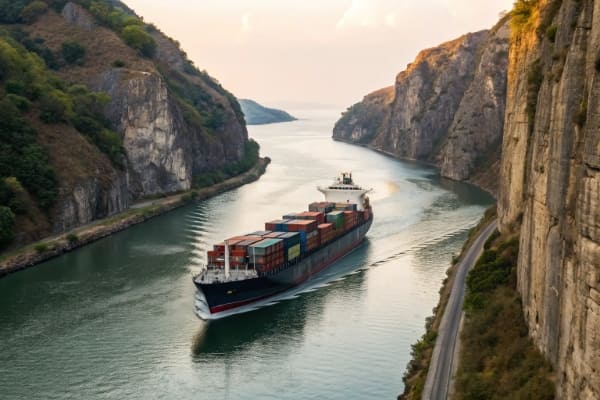
The situation is more complex than just longer shipping times. We've seen how regional conflicts can send shockwaves through global logistics, and the Strait of Hormuz1 is a critical chokepoint that many businesses overlook until it's too late. The ripple effects of a closure would be felt in every corner of your supply chain, from the factory floor in China to your warehouse in Europe. Let's break down exactly what this means for your business, starting with our reliance on these critical routes.
How dependent is China–Europe trade on Middle East shipping routes?
Think your shipments are safe? Many common sea routes pass through volatile regions. A single closure can create a domino effect, putting your inventory, deadlines, and entire business plan at risk.
China-Europe trade is heavily dependent on these routes. The Suez Canal4, accessed via the Red Sea and near the Strait of Hormuz1, is the primary maritime highway. Any disruption forces a massive rerouting effort, showing just how fragile this vital connection is for global commerce.
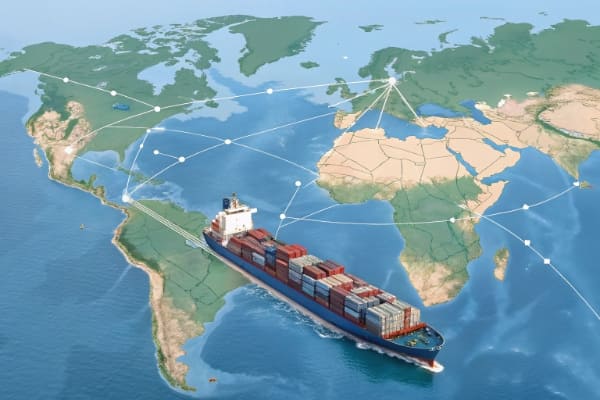
When we talk about shipping from China to Europe, most people picture a single, straight line. The reality is a chain of interconnected waterways, and the Middle East is central to the most efficient path. The vast majority of container traffic5 travels from Chinese ports like Shanghai and Shenzhen, across the Indian Ocean, through the Bab-el-Mandeb Strait, up the Red Sea, and into the Mediterranean via the Suez Canal4.
The Strait of Hormuz1, while not directly on this path, is the gateway for the Persian Gulf. Its stability is linked to the entire region. A conflict that closes Hormuz almost certainly destabilizes the nearby Red Sea corridor. We've already seen regional tensions cause shipping traffic to plummet. For China, the stakes are even higher, as 30-50% of its oil imports pass through Hormuz. A disruption here isn't just about moving products; it's about the energy needed to make them in the first place. The dependence is not just theoretical; it's a fundamental pillar of modern global trade that is surprisingly easy to break.
What happens to transit time if routes are rerouted via Cape of Good Hope6?
Are your delivery dates set in stone? A sudden route change can add weeks to your shipping schedule. This unexpected delay can ruin product launches, miss seasonal sales, and disappoint your customers.
Rerouting from China to Europe via the Cape of Good Hope6 adds approximately 10-14 days to the journey. This extends the typical 30-day transit time by about 30-50%, creating significant delays for inventory replenishment and project deadlines.

For years, we've helped clients plan their production and shipping schedules with precision. A typical journey from Shanghai to Rotterdam via the Suez Canal4 covers about 10,000 nautical miles and takes around 30 days. It's a timeline businesses have built their entire operational models around.
When that route becomes unavailable, the only viable sea alternative is to go south around Africa's Cape of Good Hope6. This detour adds over 3,000 nautical miles to the trip. It's not just a small detour; it's a massive logistical shift.
Impact of Rerouting on Transit Time
| Route Aspect | Via Suez Canal4 | Via Cape of Good Hope6 | Difference |
|---|---|---|---|
| Distance | ~10,000 NM | ~13,500 NM | +3,500 NM |
| Est. Transit Time | ~30 Days | ~42 Days | +12 Days |
| Impact | Standard, predictable | Major delays, schedule chaos | High |
This extra travel time has a cascading effect. A vessel that takes 12 extra days to reach its destination also takes 12 extra days to return for its next load. This effectively removes shipping capacity7 from the market, creating backlogs at Chinese ports and making it even harder to secure space for your cargo. For a business waiting on a time-sensitive order of promotional products8 for an event, a two-week delay is not an inconvenience—it's a disaster.
How will freight costs change on China–Europe shipping lanes?
Worried about rising costs? Unforeseen shipping disruptions can destroy your budget. Hidden fees and surcharges can suddenly appear overnight, eating into your profits and making your products uncompetitive.
Freight costs will surge significantly. Longer routes mean higher fuel consumption, increased crew wages, and steep war risk insurance9 premiums. Expect container spot rates to double or even triple, with additional surcharges becoming standard as carriers pass on the expenses.

From my experience managing thousands of shipments, I can tell you that freight rates3 are the first thing to react in a crisis. A disruption in the Strait of Hormuz1 triggers several cost escalations simultaneously. The final price you pay is not just about the distance; it's about risk, capacity, and fuel.
First, there's the fuel. A longer journey of 3,500 nautical miles means burning hundreds of tons of extra marine fuel, which can add hundreds of thousands of dollars to a single voyage. Carriers will immediately pass this on to customers through an Emergency Bunker Surcharge.
Second, operational costs increase. A ship at sea for an extra 10-14 days incurs more crew wages, provisions, and maintenance costs.
Third, and most critically, is the issue of risk and capacity.
- War Risk Insurance: Premiums for any vessel transiting near a conflict zone skyrocket.
- Peak Season Surcharges: With ships tied up on longer routes, vessel capacity tightens dramatically. This creates an artificial peak season, and carriers will apply surcharges as demand for limited space intensifies.
I've seen a standard 40-foot container rate go from $2,000 to over $8,000 in a matter of weeks during past disruptions. For businesses importing goods, this kind of volatility can erase profit margins instantly.
Which industries are most affected by route disruptions?
Is your industry vulnerable? Some businesses will feel the impact of shipping delays10 more than others. A disruption could mean your competitors get ahead while you wait for stranded cargo.
Industries with time-sensitive supply chains are most affected. This includes fast fashion, consumer electronics11, and automotive manufacturing12. Perishable goods and businesses relying on just-in-time inventory13 models face the highest risk of financial loss and production shutdowns.
A two-week shipping delay doesn't affect every business equally. For some, it’s a minor inconvenience. For others, it’s an existential threat. Over the years, I've worked with clients across many sectors, and I've seen firsthand who gets hit the hardest.
Vulnerability by Industry
- Fast Fashion & Apparel: This industry runs on seasons. A two-week delay means a shipment of spring jackets might arrive in summer, forcing immediate markdowns and destroying profitability.
- Consumer Electronics: Tech products have a short shelf life. A delay in a new smartphone launch gives competitors a huge advantage and makes the product seem dated upon arrival.
- Automotive: Many auto plants use a "just-in-time" (JIT) manufacturing model. They don't stockpile parts. A delay in a single container of components can shut down an entire assembly line, costing millions per day.
- Promotional Products: This is our specialty, and the deadlines are often absolute. I've had clients needing branded merchandise for a specific trade show or product launch. If the shipment is late, the opportunity is gone forever. The goods are effectively worthless.
The common thread here is time-sensitivity. Any business that relies on speed-to-market or operates with minimal inventory is extremely vulnerable to the kind of delays caused by a Hormuz-level disruption.
What are the long-term impacts on global supply chains?
Is this a temporary problem or a new reality? Relying on old supply chain models could be a losing game. Businesses that don't adapt to this new era of uncertainty risk being left behind.
The long-term impacts include a major push for supply chain diversification14. Companies will accelerate their exploration of near-shoring, multi-sourcing strategies, and alternative transport modes like rail. This crisis will speed up the move away from single-point dependency on specific shipping routes.
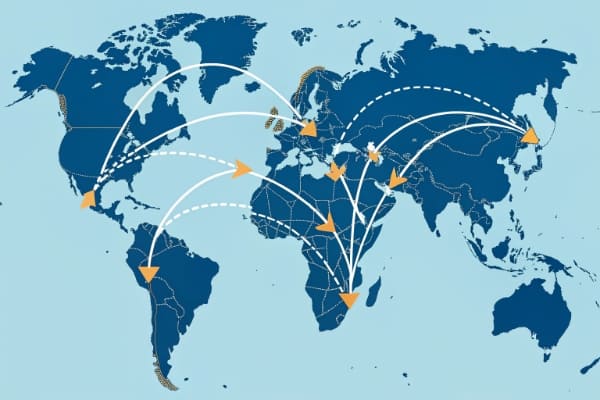
Events like the Suez Canal4 blockage in 2021 and the current Red Sea tensions are not isolated incidents. They are stress tests that reveal the weaknesses in our global supply chain. A disruption in the Strait of Hormuz1 would be the most severe test yet, forcing a permanent change in how companies think about sourcing.
For decades, the strategy was simple: find the cheapest manufacturing source (often in China) and ship it via the most cost-effective sea route. This crisis will prove that the cheapest option is not always the best one if it carries too much risk.
We will see a major acceleration of a few key trends:
- From "Just-in-Time" to "Just-in-Case": Companies will start holding more inventory (buffer stock15) to protect against delays. This means more warehousing costs but less risk of stock-outs.
- The Rise of Alternative Routes: Land-based routes, like the China-Europe rail corridor (the "New Silk Road"), will gain immense strategic importance. While more expensive than sea freight in normal times, they become a vital and reliable alternative during a maritime crisis.
- Regionalization and Near-shoring: Companies in Europe may look to source more from countries like Turkey or Eastern Europe to shorten supply lines and reduce dependency on long-haul routes from Asia. This is a fundamental rethinking of global manufacturing footprints.
What logistics strategies16 can reduce China–Europe shipping risk?
Feeling helpless about shipping risks? You don't have to be a victim of global events. Proactive planning and smart logistics strategies16 can protect your business from the worst effects of costly disruptions.
To reduce risk, you must diversify your suppliers and shipping routes, increase buffer stock15 for critical products, and use a mix of sea, air, and rail freight. Most importantly, partner with a logistics expert who provides real-time visibility17 and flexible solutions.

Sitting back and hoping for the best is not a strategy. At Toncentlink, we work with our clients to build resilient supply chains. This means being proactive, not reactive. When a crisis hits, the plans should already be in place.
Here are the practical strategies we help our clients implement:
1. Adopt a Multi-Modal Approach
Don't put all your eggs in one basket. Instead of relying 100% on sea freight, we can build a strategy that uses a mix of transport modes. For your most critical and time-sensitive products, we can use air freight or the China-Europe rail service. For less urgent goods, we can stick with sea freight but plan for longer transit times.
2. Strategic Warehousing and Buffer Stock
Instead of shipping directly to your final destination, we can help you hold buffer stock15 in a strategic warehouse. By keeping 4-6 weeks of extra inventory, you can weather a two-week shipping delay without any impact on your customers. We can manage this inventory for you, shipping it out as needed.
3. Proactive Planning and Visibility
The most important strategy is to have a partner on the ground who gives you a clear view of the situation. We provide our clients with real-time updates and work with them to map out their supply chain vulnerabilities. We identify the risks before they become problems and create contingency plans together.
How can freight forwarder18s ensure stable China–Europe shipments?
Is your current partner just reporting bad news? A reactive freight forwarder18 is a liability in a crisis. You need a proactive partner who actively finds solutions when things go wrong.
A good freight forwarder18 ensures stability through proactive communication, strong carrier relationships, and by immediately offering alternative solutions. They should provide route diversification options, secure cargo space in advance, and manage all documentation flawlessly to prevent any further delays.
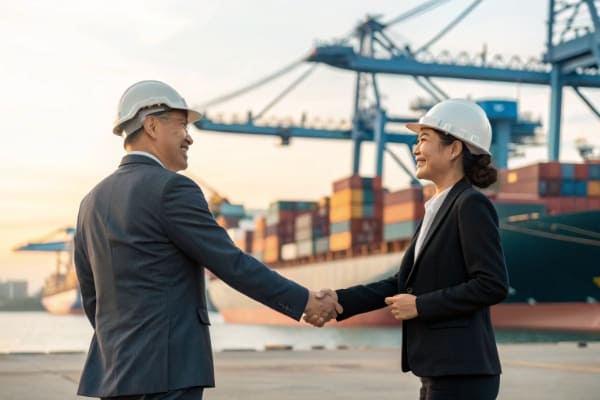
In a crisis, the difference between a good and a great logistics partner becomes crystal clear. A great partner doesn't just tell you there's a problem; they come to you with a solution already in hand. As your team on the ground in China, this is where we provide the most value.
What a Proactive Partner Does
- Leverages Strong Carrier Relationships: We have long-standing relationships with all major ocean and air carriers. When capacity gets tight, these relationships allow us to secure space for our clients when other shippers are being turned away.
- Provides Multi-Route Solutions: We don't just offer one route. We immediately analyze and present all viable options, including rerouting via the Cape, transshipping through hubs like Singapore, or switching the entire shipment to rail or air. We present the costs and transit times for each, so you can make an informed decision.
- Manages Consolidation: Our consolidation services become even more critical during a crisis. We can combine your smaller shipments with others to fill a container, making it more cost-effective and giving it a higher priority for loading onto a vessel.
- Offers Constant Communication: You will never have to wonder where your shipment is or what's happening. We provide clear, honest, and constant communication, acting as your eyes and ears on the ground.
A disruption in the Strait of Hormuz is a serious test, but it's one you can pass with the right preparation and the right partner.
Conclusion
A Hormuz disruption is a severe threat to China-Europe trade. However, proactive planning, transport diversification, and a strong logistics partner can help you navigate the uncertainty and protect your supply chain.
Understanding the implications of the Strait of Hormuz disruption is crucial for businesses relying on global trade routes. ↩
Explore how vital shipping routes impact trade between China and Europe, affecting your supply chain. ↩
Discover how freight rates fluctuate during crises and what it means for your shipping costs. ↩
Learn about the Suez Canal's significance and how disruptions can affect global logistics. ↩
Learn about the factors influencing container traffic and their implications for trade. ↩
Understand the challenges and delays associated with rerouting shipping through the Cape. ↩
Understand the factors that impact shipping capacity and how they affect your business. ↩
Understand the specific risks shipping disruptions pose to the promotional products industry. ↩
Understand the impact of war risk insurance on shipping costs during conflicts. ↩
Explore the consequences of shipping delays on business operations and customer satisfaction. ↩
Learn about the specific challenges faced by the consumer electronics industry during disruptions. ↩
Explore how shipping disruptions can severely impact automotive manufacturing operations. ↩
Learn about the just-in-time inventory model and its vulnerabilities during disruptions. ↩
Explore the importance of diversifying supply chains to reduce risks in global trade. ↩
Learn how buffer stock can protect businesses from supply chain disruptions. ↩
Find effective logistics strategies to protect your business from shipping disruptions. ↩
Discover how real-time visibility can enhance decision-making in supply chain management. ↩
Understand the critical role of freight forwarders in managing shipping logistics effectively. ↩