Are you curious about the technology behind those vast fields of solar panels powering our cities? The engineering seems complex, but it all comes down to a few key, powerful components.
Utility-scale solar power plants primarily use Photovoltaic (PV) technology1 with solar panels, inverters2, and trackers to convert sunlight into grid-ready electricity. Many now integrate large-scale Battery Energy Storage Systems (BESS)3 to provide reliable power even when the sun isn't shining.
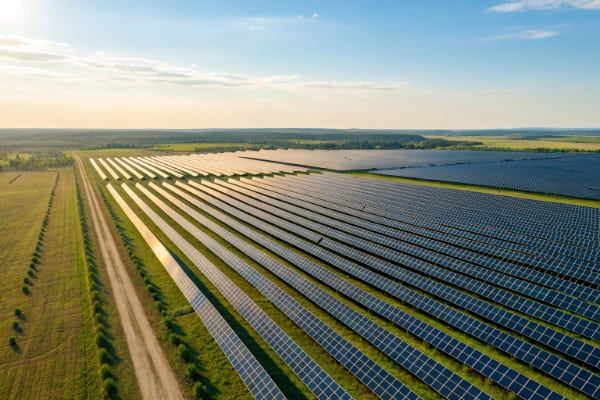
I've seen these projects up close, and they are incredible feats of engineering. At a high level, the process is simple: capture sunlight and send it to the grid. But the magic is in the specific components that make this happen efficiently and reliably on a massive scale. To really understand how it all works, we need to look at each piece of the puzzle. Let's break down the essential equipment that powers a modern solar farm.
What Equipment Is Used in Utility-Scale Solar Projects?
You see the endless rows of panels, but what else is there? A solar farm is much more than just panels, and knowing the other parts helps you understand the full picture.
The core equipment in a utility-scale solar project includes solar PV panels4 (modules), inverters2, mounting systems5 (often with trackers), step-up transformers6, a substation7 for grid connection, and increasingly, battery energy storage systems (BESS) for storing power.
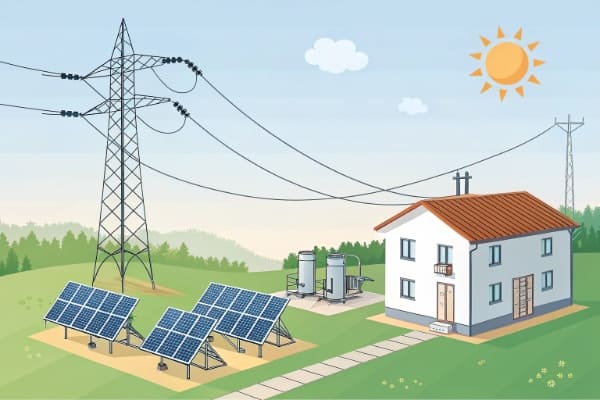
When I first analyzed a solar project's supply chain, I realized it's a complete, integrated system. Each component has a specific job, and they all have to work together perfectly. Think of it as an assembly line for electricity. It's not just a collection of parts, but a carefully orchestrated process to generate, convert, and deliver power.
The Power Generation Chain
The process starts with the most visible component and ends with connection to the national power grid. Every step is designed for maximum efficiency and reliability.
| Component | Primary Function |
|---|---|
| Solar Panels | Capture sunlight and convert it into Direct Current (DC) electricity. |
| Mounting & Trackers | Physically support the panels and orient them toward the sun. |
| Inverters | Convert the DC electricity from the panels into Alternating Current (AC). |
| Transformers | "Step up" the AC electricity to a much higher voltage for transmission. |
| Substation | Manages the high-voltage power and connects the farm to the grid. |
| BESS | Stores excess energy for later use, providing power at night. |
This entire operation is monitored and controlled by a SCADA (Supervisory Control and Data Acquisition) system. This is the digital brain of the plant, allowing operators to monitor performance in real-time, detect faults, and control output to meet grid demand.
What Types of Solar Panels Are Used in Solar Farms?
Are all solar panels the same? For a massive project, using the wrong type could mean lower efficiency and higher costs, so farms rely on specific, high-performance panel technologies.
Most modern solar farms use high-efficiency monocrystalline silicon panels8. Bifacial panels, which capture sunlight on both their front and back sides, are becoming the standard for new utility-scale projects to maximize energy generation per acre.
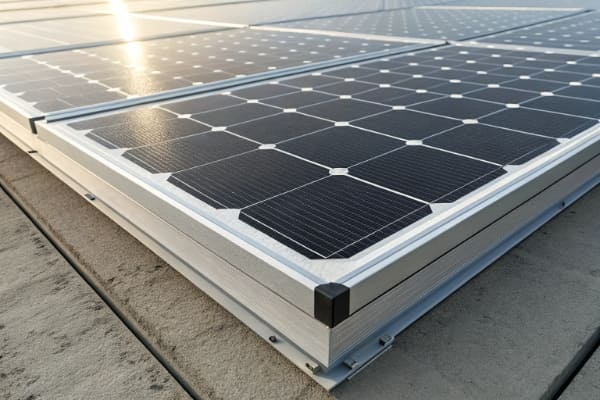
I've worked on sourcing plans where the choice of panel was the most critical decision. While cheaper polycrystalline panels were once common, the market has shifted. Today, the economics favor higher efficiency.
Monocrystalline Leads the Way
Monocrystalline panels are made from a single, pure silicon crystal. This structure allows electrons to move more freely, resulting in higher efficiency (typically 20-23%) compared to polycrystalline panels. While they cost slightly more to produce, their superior performance means you need fewer panels and less land to generate the same amount of power, a key factor in large projects.
The Rise of Bifacial Technology
The real game-changer in recent years has been the bifacial panel. These modules are designed with glass on both the front and back, allowing them to capture sunlight reflected off the ground (a phenomenon called 'albedo'). In a large solar farm where panels are mounted high off the ground with space between rows, this "bonus" energy capture can boost a panel's output by 5-15% or more. This significantly improves the project's overall energy yield and financial return, making it a clear choice for most new developments. We're also seeing new cell technologies like perovskite-silicon tandem cells in labs, which promise efficiencies over 30% in the future.
What Are Solar Inverters and Why Are They Important?
Solar panels create power, but it's not the kind of power our grid can use. Without the right conversion, all that generated solar energy is completely useless for mass distribution.
Solar inverters2 are critical devices that convert the Direct Current (DC) electricity from solar panels into Alternating Current (AC) electricity. This conversion is essential because the world's power grids and electrical systems operate on AC power.
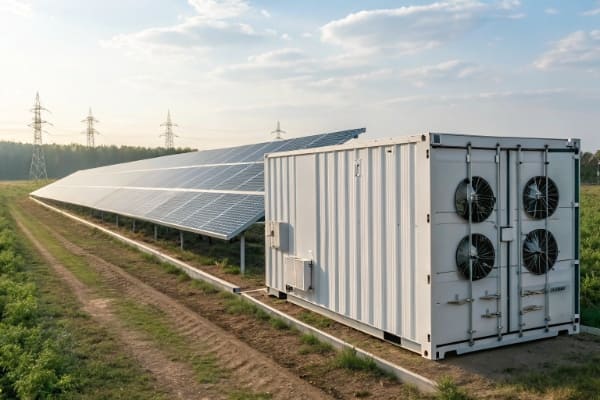
I like to think of the inverter as the heart and brain of the solar plant. The panels are the muscles, doing the heavy lifting of generating power, but the inverter is what makes that power usable and intelligent. Without it, you just have a field of panels producing electricity that has nowhere to go.
The Role of Central Inverters
In your home, you might have one small "string" inverter or even microinverters2 on each panel. But utility-scale projects operate differently. They use massive **central inverters9s]. These are often the size of a shipping container and can handle megawatts of power from thousands of panels at once. Using a few large central inverters9s] instead of thousands of small ones is far more cost-effective and simpler to maintain for a project of this size.
More Than Just Conversion
Modern central inverters9s] do much more than just convert DC to AC. They are smart devices that provide crucial grid-support functions. They precisely manage the voltage and frequency of the electricity they output to match the grid's requirements perfectly. They can also provide reactive power to help stabilize grid voltage, making the grid more resilient. They are packed with sensors and communication hardware that feeds data to the main SCADA control system, allowing for constant monitoring and optimization of the entire plant.
How Do Solar Trackers Increase Energy Production?
Stationary, fixed-tilt solar panels miss a lot of potential sunlight as the sun moves across the sky. This means losing a significant amount of potential energy and, for the plant owner, revenue.
Solar trackers are robotic mounting systems5 that automatically tilt the solar panels to follow the sun's path throughout the day. By keeping the panels pointed directly at the sun, they can increase annual energy production by 15-25% over fixed systems.
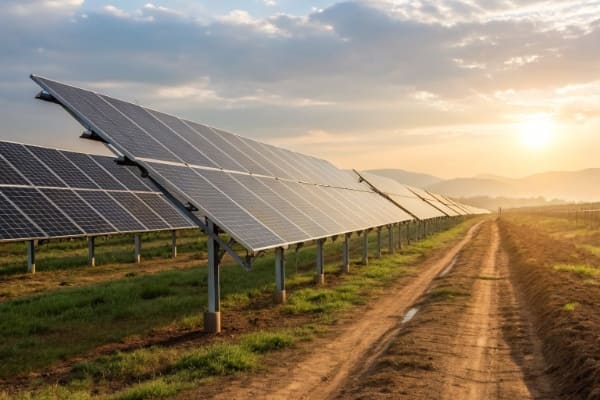
The first time I saw a field of trackers move in unison at sunrise, it was amazing. It looked like a field of giant flowers turning to face the sun. This simple movement has a massive impact on the economics of a solar project. That 15-25% boost in energy output can be the difference between a project being profitable or not.
Single-Axis vs. Dual-Axis
There are two main types of trackers used in the industry.
| Tracker Type | Movement | Energy Gain (Typical) | Cost & Complexity | Best Use Case |
|---|---|---|---|---|
| Single-Axis | Tilts on one axis, usually East to West. | 15-25% | Lower | Utility-Scale Farms |
| Dual-Axis | Tilts East-West and North-South. | 30-40% | Higher | Residential, Small Commercial |
For utility-scale solar farms, the single-axis tracker10 is the undisputed king. While a dual-axis tracker11 can capture slightly more energy, its higher cost, greater complexity, and increased maintenance needs don't usually justify the small additional gain in a massive field. The single-axis tracker10 provides the best balance of performance, cost, and reliability, delivering a huge production boost for a reasonable investment. This makes it the standard choice for nearly every large solar project built today.
What Role Do Transformers and Substations Play?
The electricity coming from the inverters2 is ready for use, but it's not ready for a long journey. Sending that power directly to the grid over long distances would result in huge energy losses.
Transformers and substation7s are essential for transmitting power efficiently. Transformers "step-up" the low-voltage AC power from inverters2 to extremely high voltage. The substation7 then manages this power and safely feeds it into the long-distance transmission grid.
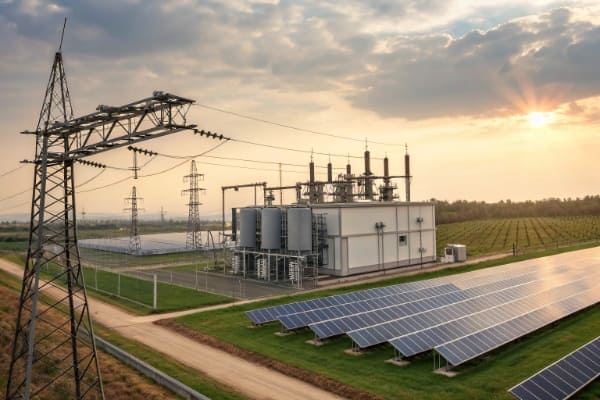
This part of the solar farm always felt the most like a traditional power plant to me. It’s where the generated solar energy gets its final preparation to join the main electrical highway. Without this step, most of the power would be lost before it ever reached a single home. It works on a simple principle of physics: it's much more efficient to move electricity at high voltage. Think of it like water in a pipe. It's easier to push a lot of water through a narrow pipe if you increase the pressure. In electricity, voltage is the pressure. The substation7 and transformers create that pressure.
The Journey to the Grid
First, the medium-voltage AC power from the central inverters9s] flows to large pad-mounted transformers12 located throughout the solar field. These step up the voltage significantly. From there, the power is aggregated and sent to the project's main substation7. Here, an even larger transformer steps the voltage up again to transmission levels—often 115,000 volts or higher. The substation7 is the final gateway to the grid. It contains circuit breakers, switches, and monitoring equipment to ensure the power is perfectly synchronized with the grid and can be safely disconnected if there's a problem.
How Do Battery Storage Systems Work with Solar Farms?
The biggest historical problem with solar power is that it only works when the sun is out. This makes it an intermittent, and sometimes unreliable, power source for a grid that needs power 24/7.
Battery Energy Storage Systems (BESS)3 solve this by storing excess solar energy generated during the day in large banks of lithium-ion batteries. This stored power can then be released to the grid at night or during peak demand, making solar a dispatchable, 24/7 resource.
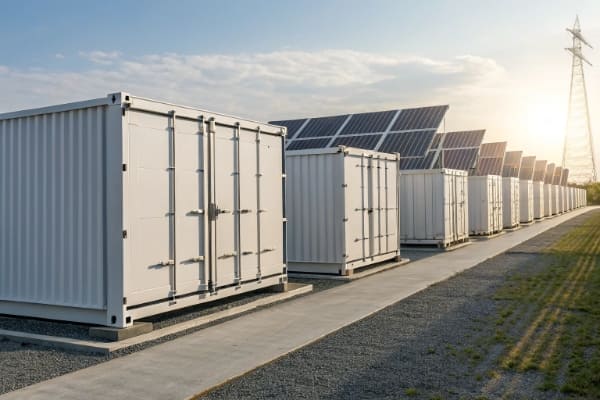
I consider the integration of battery storage to be the single most important evolution in solar technology in the last decade. It fundamentally changes the role of a solar farm. It's no longer just a power generator; it's a power bank. This turns solar from a simple intermittent resource into a firm, reliable power plant that can be called upon ("dispatched") by grid operators whenever it's needed.
Storing Sunshine for a Rainy Day
The process is straightforward. In the middle of a sunny day, the solar farm may be producing more electricity than the grid needs. Instead of shutting panels off, this excess power is used to charge the massive battery system. Then, as the sun sets and electricity demand peaks, the BESS begins to discharge, feeding its stored energy back into the grid to keep the lights on. This is known as "energy shifting13." Beyond that, these battery systems can also respond in milliseconds to stabilize the grid's frequency, preventing outages and improving overall power quality. This service, known as ancillary services14, provides another valuable revenue stream for the plant owner.
How Efficient Are Modern Utility-Scale Solar Technologies?
You often hear about solar panel efficiency15, but what do those numbers actually mean for a project? Low efficiency could make a project financially unviable, but modern tech has made solar highly profitable.
Modern utility-scale PV panels have a conversion efficiency of around 20-23%. However, the total system yield is much higher when factoring in gains from bifacial panels16 and solar trackers17, which can boost total energy output by over 30%.
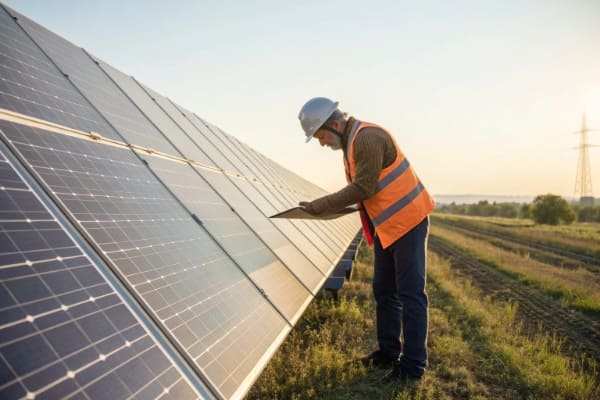
When I'm looking at a project's viability, I've learned that panel efficiency15 is only part of the story. You have to look at the efficiency of the entire system, from the photons hitting the panel to the electrons being delivered to the grid. It’s the combination of multiple technologies that makes today's solar farms so powerful.
Panel vs. System Efficiency
It's important to distinguish between two concepts. Panel efficiency is the percentage of sunlight hitting a panel that gets converted to DC electricity. A 22% efficient panel is standard today. But system efficiency18 or yield is the total energy the plant delivers over a year. This is where other technologies come in. Adding single-axis tracker10s might boost that yield by 20%. Using bifacial panels16 could add another 10%. Suddenly, your system is producing over 30% more energy than a simple fixed-tilt system using the same panels. This is why trackers and bifacial technology have become standard.
The Unseen Efficiency of Software
Finally, the biggest gains today are often coming from software. Advanced AI and machine learning19 algorithms are used to forecast weather and cloud cover, allowing the plant to optimize when to charge or discharge its batteries. Predictive maintenance software analyzes data from every component to identify potential failures before they happen, maximizing uptime. This operational efficiency, driven by data, is what truly separates a good solar plant from a great one.
Conclusion
From panels and inverters2 to trackers and batteries, modern solar farms are advanced systems that integrate multiple technologies to create clean, reliable, and increasingly efficient power for the grid.
Understanding PV technology is crucial for grasping how solar energy is converted into electricity. ↩
Inverters are key components that convert DC to AC power, making solar energy usable. ↩
BESS are vital for storing solar energy, making them essential for reliable power supply. ↩
Learn about solar PV panels to understand their role in converting sunlight into electricity. ↩
Mounting systems support solar panels and are crucial for optimizing energy capture. ↩
Step-up transformers are essential for increasing voltage for efficient power transmission. ↩
Substations manage high-voltage power and connect solar farms to the grid, ensuring efficiency. ↩
Monocrystalline panels are known for high efficiency, making them a popular choice in solar farms. ↩
Central inverters manage large amounts of power, making them crucial for utility-scale projects. ↩
Single-axis trackers are cost-effective solutions that enhance energy capture in solar farms. ↩
Dual-axis trackers provide maximum energy capture but come with higher costs and complexity. ↩
Pad-mounted transformers step up voltage for efficient power transmission from solar farms. ↩
Energy shifting allows solar farms to provide power even when the sun isn't shining. ↩
Ancillary services help stabilize the grid and improve power quality, adding value to solar projects. ↩
Panel efficiency affects the overall performance and viability of solar energy projects. ↩
Bifacial panels capture sunlight on both sides, increasing energy yield significantly. ↩
Solar trackers optimize panel orientation, boosting energy output significantly. ↩
System efficiency encompasses the total energy output, crucial for evaluating solar project success. ↩
AI and machine learning optimize solar plant operations, enhancing efficiency and reliability. ↩