
Struggling to choose a shipping method from China1? Picking the wrong one can destroy your profits with high costs and long delays. Understanding your options makes the choice simple.
The best shipping method from China1 to Australia depends on your budget, delivery speed, and shipment size. Sea freight offers the lowest cost for large cargo. Air freight provides a good balance of cost and speed. Express shipping is the fastest option for small, urgent parcels.
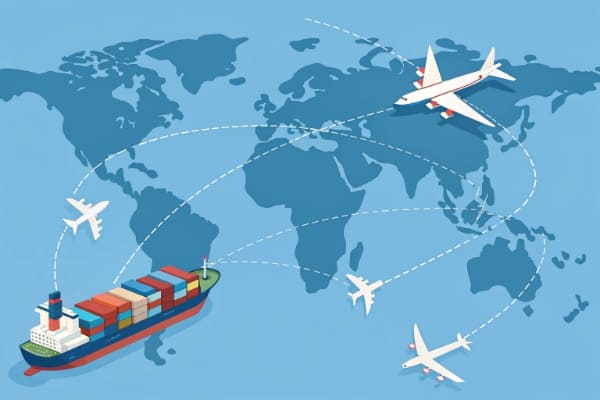
It seems simple, but I've seen clients lose thousands of dollars because they picked the wrong option. This decision impacts everything from your landed cost2 to your product launch3 date. Let's break down each method so you can avoid those mistakes and make the best choice for your business every time.
What are the main shipping methods from China to Australia?
Shipping from China feels complex with so many choices. You worry about picking an option that is too slow or too expensive. Here are the three main methods you need to know.
The three main shipping methods from China to Australia are sea freight4, air freight5, and express courier. Sea freight is for large, non-urgent shipments. Air freight is for faster, medium-sized cargo. Express is for small, time-critical parcels delivered directly to your door.
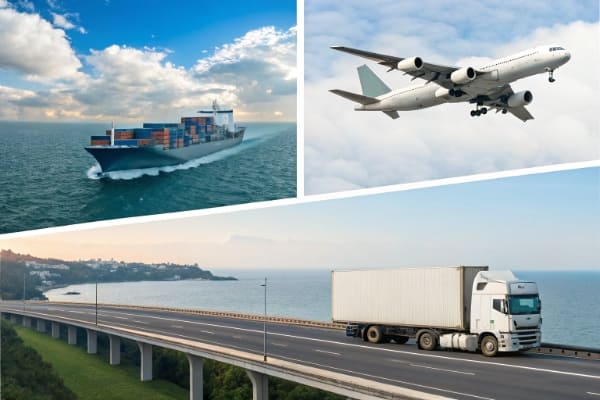
Each shipping method serves a different purpose. Choosing the right one depends entirely on your business needs. Sea freight is the backbone of global trade. It is slow, but it is incredibly cost-effective for bulk goods6. Think of shipping pallets7 of custom mugs or thousands of branded t-shirts for a corporate event. Air freight is the middle ground. It is faster than sea but also more expensive. It is great for high-value or time-sensitive products, like electronics for a product launch3 or seasonal promotional items that need to be on shelves quickly. Finally, express couriers like DHL, FedEx, or UPS are the speed demons. They deliver door-to-door in just a few days. This service is perfect for sending product samples, urgent documents, or small e-commerce orders. The cost per kilogram is high, but the convenience is unmatched.
| Method | Cost | Speed | Best For |
|---|---|---|---|
| Sea Freight | Low | 20-35 Days | Large, heavy, or bulk shipments |
| Air Freight | Medium | 3-7 Days | Time-sensitive, medium-sized cargo |
| Express | High | 1-3 Days | Small parcels, samples, urgent orders |
When should you choose sea freight4 instead of air freight5?
Your budget is tight, but you also have deadlines to meet. Choosing between sea and air freight5 can feel like a gamble. Let me show you when sea freight4 is the clear winner.
Choose sea freight4 when your shipment is large (over 2 cubic meters or 300 kg) and you are not on a tight deadline. Its low cost per unit makes it ideal for bulk promotional products, stock replenishment, and items where maximizing your profit margins is the top priority.
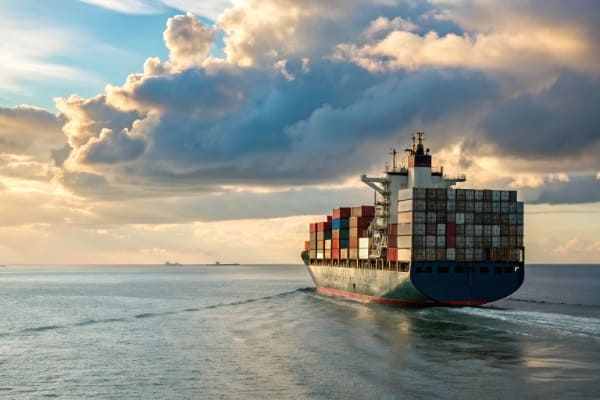
Sea freight is all about economies of scale. The cost to ship a full container is not much more than a half-full one, so the more you ship, the cheaper it gets per item. For example, shipping a 20ft FCL container from China to Sydney might cost around $1,800. If you can fill that, your per-unit cost becomes incredibly low. Air freight, on the other hand, is priced by either actual weight or dimensional weight (whichever is greater). Dimensional weight is calculated by volume, often (L x W x H in cm) / 6000. This means a light but bulky shipment can be surprisingly expensive via air. The general rule I give my clients is this: if your delivery timeline is flexible (over 30 days is okay) and your main goal is to lower your landed cost2, sea freight4 is almost always the right answer for any shipment larger than a couple of pallets.
What is the difference between LCL and FCL shipping8?
You want to use sea freight4, but you do not have enough goods to fill a whole container. You feel stuck paying for empty space. LCL and FCL shipping8 are the solutions to this problem.
FCL (Full Container Load) means you rent an entire container for your goods alone. LCL (Less than Container Load) means you share container space with other importers. FCL is faster and more secure, while LCL is more cost-effective for smaller shipments that do not require a full container.
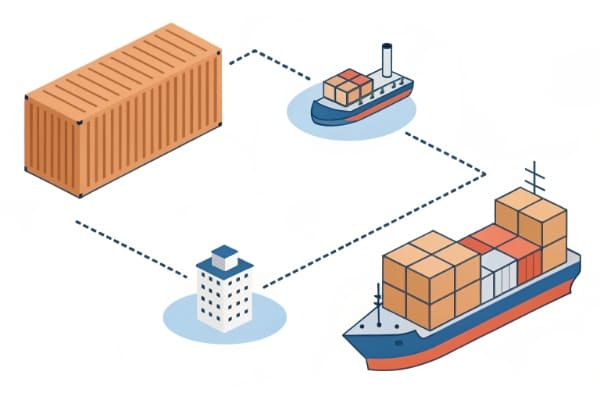
With FCL, you get a 20ft or 40ft container all to yourself. The factory seals it, and it stays sealed until it reaches your destination warehouse in Australia. This method is more secure and a bit faster because there is no time wasted consolidating or deconsolidating cargo at the ports. The transit time to major ports like Sydney or Melbourne is usually around 12-18 days. FCL is best for shipments over about 15 cubic meters. With LCL, your goods are combined with other importers' goods in a shared container. This is a great choice for smaller volumes, typically between 2 and 15 cubic meters. It is cheaper than FCL for these sizes, but it has some downsides. The total door-to-door transit time is longer, often 20-35 days, because of the extra handling at both ends. There is also a slightly higher risk of damage since your goods are handled more. We always make sure to pack LCL shipments extra carefully for our clients to prevent any issues.
How fast is air freight5 from China to Australia?
You have a product launch3 in Australia next week, but your inventory is still in China. The approaching deadline is causing major stress. Air freight can solve this problem for you quickly.
Air freight from China to major Australian cities like Sydney or Melbourne typically takes 3 to 7 days for door-to-door delivery. This includes pickup, customs clearance9 in China, the flight itself, and customs clearance9 in Australia. It is significantly faster than sea freight4's 20-35 day timeline.
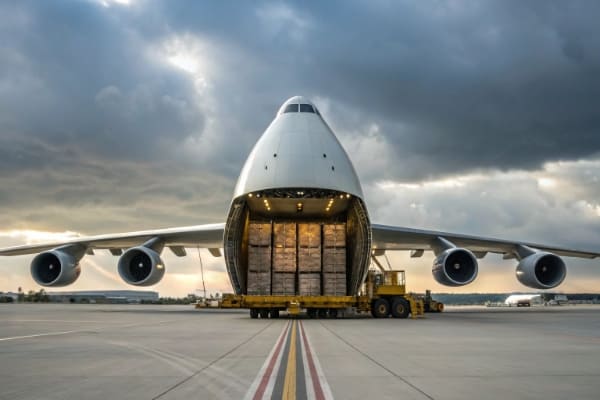
The 3-7 day window for air freight5 is a complete door-to-door estimate. The actual flight time is only about one day. The rest of the time is for ground handling and customs procedures. Here is a typical breakdown of the timeline:
- Day 1: We pick up the cargo from the factory and transport it to a major airport in China, like Guangzhou (CAN) or Shanghai (PVG).
- Day 1-2: The shipment goes through Chinese export customs clearance9.
- Day 3: The cargo is loaded onto a flight to an Australian airport, such as Sydney (SYD) or Melbourne (MEL).
- Day 4-5: Upon arrival, the goods clear Australian customs. Remember that customs duties, typically 5-10% of the goods' value, will be due.
- Day 5-7: After clearance, the cargo is sent for final delivery to your warehouse or business address. This speed is invaluable for time-sensitive campaigns, high-value electronics, or urgent stock replenishment when sea freight4 is just too slow.
Is express shipping10 worth it for small shipments?
You need to get product samples to your team in Australia fast. The high cost of express shipping10 makes you hesitate. But is the speed and convenience worth the price for small items?
Yes, express shipping10 is absolutely worth it for small, urgent shipments under 150 kg. Services like DHL or FedEx deliver door-to-door in just 1-3 days. While the cost per kilogram is high, ranging from $1.60 to $15, it is often the most economical and reliable option for samples or small orders.
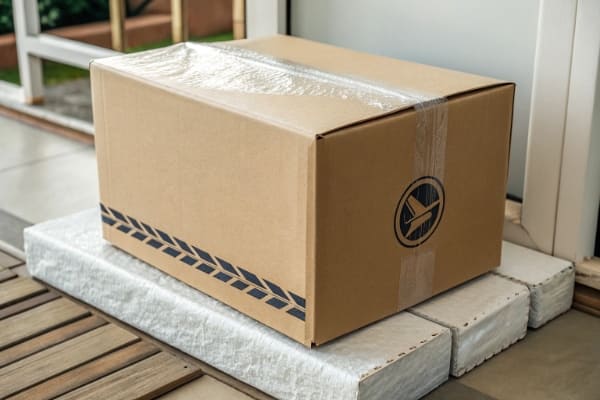
Think of express shipping10 as a complete, all-in-one service. The price you pay includes everything: pickup from the factory, international air transport, customs clearance9, and final door-to-door delivery. Trying to arrange standard air freight5 for a small box of samples would be a logistical headache. You would have to deal with separate fees for trucking, export clearance, freight, import clearance, and final delivery. With an express courier, it is one tracking number and one simple, streamlined process from start to finish. We use express services all the time for our clients to send pre-production samples for approval. The incredible speed allows them to make decisions quickly and keep their production schedule on track without any delays. For e-commerce sellers, express ensures a great customer experience with fast, reliable delivery. It is a premium service for premium situations.
How do you choose the best shipping method for your business?
You now understand the options, but you might still be unsure which one to pick. Making the wrong choice can still cost you money and time. Here is a simple framework to help you decide.
Choose your shipping method by balancing three key factors: cost, speed, and shipment size. For large, non-urgent goods, use sea freight4. For time-sensitive, medium-sized cargo, use air freight5. For small, urgent parcels like samples, use express. Always factor in your deadlines and budget.
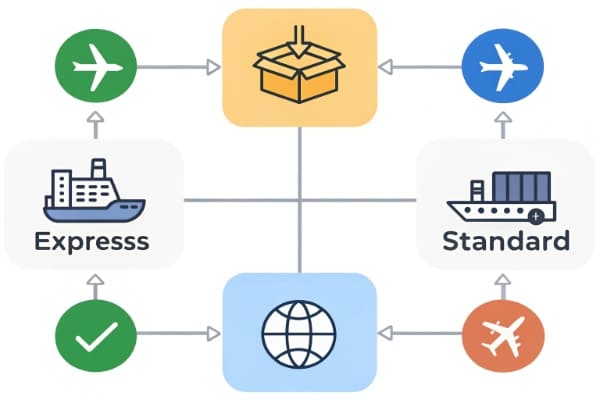
To make the right call every time, I walk my clients through these three simple questions:
- What is your deadline? If you need the products in Australia in under 10 days, your only realistic options are air freight5 or express. If you have over a month to spare, sea freight4 becomes a very attractive and cost-effective option.
- What is your budget? If keeping your landed cost2 as low as possible is your number one priority, you should lean towards sea freight4 whenever your timeline allows.
- What is your shipment size and weight? If it is just a few boxes, express is the easiest and often cheapest overall. If it is a few pallets, LCL sea freight4 or air freight5 are good options to compare. If you have enough goods to fill a container, FCL is the clear winner.
Sometimes, we even recommend a hybrid approach. For a new product launch3, we might air freight5 10% of the order for the initial release while the other 90% comes by sea to restock inventory. This gives you the best of both worlds: speed for your launch and low cost for your main stock.
Conclusion
Choosing the right shipping method from China1 to Australia comes down to balancing cost, speed, and size. With this guide, you can confidently select the best option for your business needs.
Explore various shipping methods to find the most cost-effective and timely options for your needs. ↩
Explore how to calculate landed costs to better manage your shipping expenses. ↩
Discover strategies for managing shipping logistics during a product launch to ensure success. ↩
Learn about sea freight's advantages for large shipments and how it can save you money. ↩
Discover the benefits of air freight for time-sensitive deliveries and its cost implications. ↩
Find out the most efficient shipping methods for transporting bulk goods internationally. ↩
Learn best practices for shipping pallets to ensure safe and cost-effective transport. ↩
Understand the key differences between LCL and FCL to choose the right shipping method for your cargo. ↩
Get insights into customs clearance processes and how they impact your shipping timeline. ↩
Find out why express shipping can be the best choice for urgent deliveries despite higher costs. ↩