
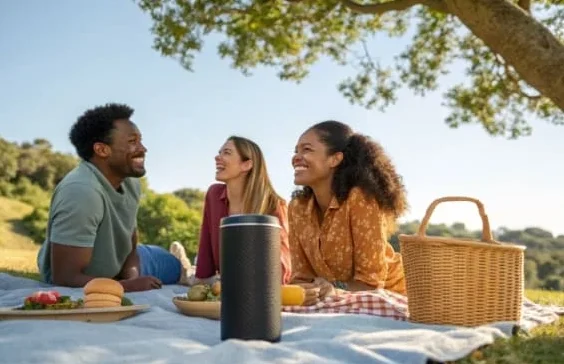
Want your music anywhere1, but hate dealing with messy wires? Tangled cables and being tied to one spot can ruin the vibe. Bluetooth speakers2 give you complete wireless freedom3, simply.
A Bluetooth speaker is a wireless loudspeaker that plays audio from a source like your phone, tablet, or computer. They are so popular because they are portable4, easy to connect, battery-powered5, and compatible with almost any modern device, offering good sound quality6 without any cables.
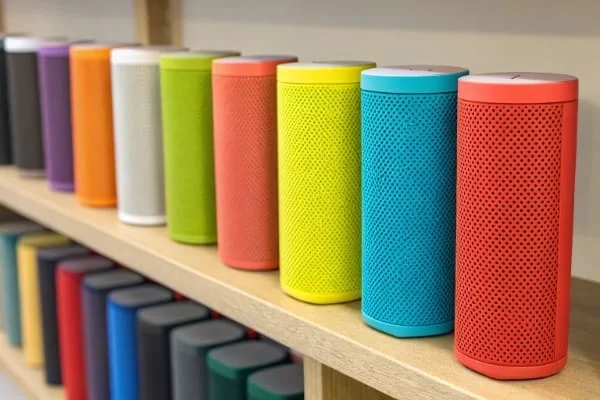
This simple idea of cutting the cord has completely changed how we listen to music, at home and on the go. But how does this wireless magic actually work, and what makes it a better choice for so many people compared to the old way of doing things? Let's dive in and explore why these little devices have become a must-have gadget for millions.
How Does a Bluetooth Speaker Work?
You can hear the music perfectly, but how does it travel from your phone to the speaker without any wires? It feels like magic, but not knowing can be confusing. It’s all about a simple and stable wireless connection7 that happens in seconds.
A Bluetooth speaker works by creating a short-range wireless network with your audio source. Your device sends a compressed digital audio signal to the speaker, which then decodes it, amplifies it, and plays the sound through its internal drivers.
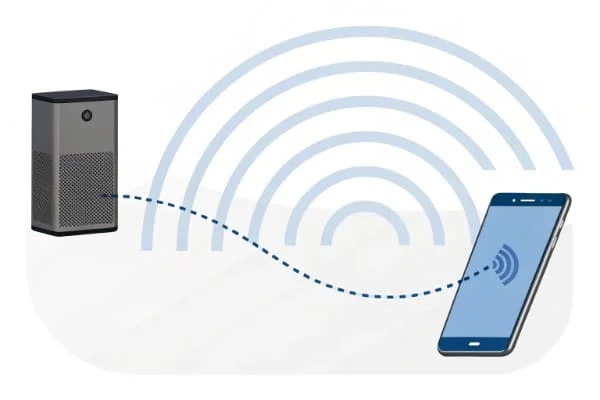
The process is more straightforward than it sounds. When we help our clients source and develop these products, we focus on making this process seamless for the end-user. It all starts with a "pairing handshake8," where your phone and the speaker agree to communicate. From there, your music is streamed wirelessly.
The Journey from Your Phone to Your Ears
- Pairing: First, you put the speaker in pairing mode. Your phone then discovers it and you confirm the connection. This only needs to be done once, as the devices will remember each other for the future.
- Transmission: Your phone uses a specific Bluetooth profile (usually A2DP9) to send the audio data. To make this transmission fast and efficient, the audio is compressed using a codec.
- Reception & Conversion: The speaker's Bluetooth chip receives this digital data. It then sends it to a Digital-to-Analog Converter (DAC)10, which turns the 1s and 0s back into an electrical audio signal.
- Amplification & Playback: This weak signal is boosted by an internal amplifier11, making it strong enough to power the speaker drivers—the parts that physically move to create the sound waves you hear.
| Step | Action | Technology Used |
|---|---|---|
| 1 | Connect Devices | Bluetooth Pairing |
| 2 | Send Music Data | A2DP9 Profile & Codecs (SBC, AAC) |
| 3 | Convert Data to Signal | Digital-to-Analog Converter (DAC)10 |
| 4 | Make Sound | Amplifier & Speaker Drivers |
This entire sequence happens almost instantly, giving you a wireless music experience that just works.
Why Have Bluetooth Speakers Replaced Traditional Wired Speakers?
Old wired speakers are bulky, complicated, and tie you down to one spot. You can't easily take your home stereo system to a barbecue or the beach. Bluetooth speakers2 offer a level of freedom and convenience that wired speakers just can't match.
Bluetooth speakers2 have largely replaced traditional wired speakers for everyday listening due to their unmatched portability, simplicity, and universal compatibility. They eliminate cable clutter and run on batteries, fitting modern, mobile-first lifestyles far better than stationary wired systems.

The biggest shift has been our source of music. A decade ago, we might have used CD players or complex home stereos. Today, our phones hold all our music. It only makes sense that our speakers should connect to our phones just as easily. In our work at Toncentlink, we've seen demand for wired-only speakers shrink while the market for portable4, battery-powered5 audio has exploded. The convenience factor has become the most important feature for the average consumer.
Convenience vs. Fidelity
For most people, the trade-off is simple. While a high-end wired system might offer slightly better audio fidelity12, the difference is often unnoticeable for casual listening. The ability to pick up a speaker and take it to another room, the backyard, or a friend's house is a massive advantage that outweighs any minor dip in sound quality.
| Feature | Bluetooth Speaker | Traditional Wired Speaker |
|---|---|---|
| Portability | Excellent (Battery-powered) | Poor (Requires wall outlet) |
| Convenience | Excellent (Pairs in seconds) | Fair (Requires cables & setup) |
| Compatibility | Universal (Works with any phone) | Limited (Depends on physical ports) |
| Footprint | Small and compact | Large and bulky |
| Use Case | Anywhere, anytime | Fixed location (e.g., living room) |
The rise of the smartphone as the center of our digital lives has made Bluetooth the default choice. It’s built into every phone, tablet, and laptop, making a wireless speaker the most logical accessory.
Who Should Buy a Bluetooth Speaker (and Who Shouldn’t)?
Are you thinking about getting a Bluetooth speaker but aren't sure if it's the right choice for you? You don't want to spend money on a cool gadget that ends up collecting dust on a shelf. Let's figure out if a Bluetooth speaker actually fits your lifestyle.
You should buy a Bluetooth speaker if you value portability, convenience, and want to easily play music from your phone anywhere. People who need music for outdoor activities13, travel, small gatherings, or just moving around the house will benefit most.
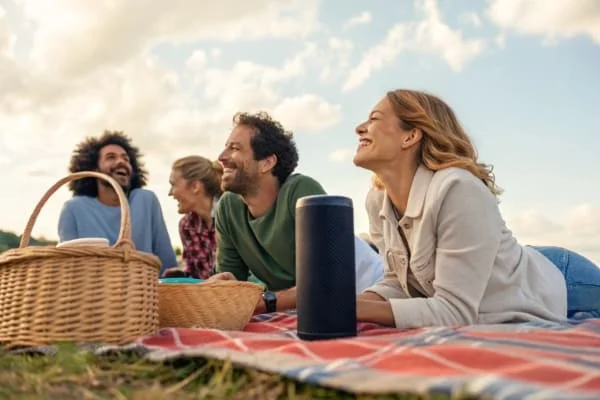
We help businesses source speakers for all kinds of customers, so we have a good sense of who loves them and who might need something different. The decision really comes down to how and where you plan to listen to your music.
The Ideal User vs. The Audio Purist
A Bluetooth speaker is a master of flexibility. It's designed for good sound in a convenient package, not for perfect, critical listening.
Who It's Perfect For:
- The Social Listener: You want to share music with friends at the park, on the beach, or during a backyard cookout. Portability is key.
- The Home Roamer: You listen to podcasts while cooking, music in the shower, or an audiobook in the garage. You need a speaker that can move with you.
- The Traveler: You want to bring better sound than your laptop speakers to a hotel room or Airbnb. A compact, durable speaker is your best friend.
- The Minimalist: You live in a small apartment or dorm and don't have space for a bulky stereo system with lots of wires.
Who Might Want to Skip It:
- The Audiophile: You are dedicated to hearing music exactly as the artist intended. You prefer lossless audio formats and the pristine signal of a wired connection.
- The Home Theater Enthusiast: You want an immersive, multi-channel surround sound14 experience for movies. A single speaker, no matter how good, can't replicate that.
- The Musician or DJ: You need a zero-latency connection for performing or mixing, which Bluetooth can't guarantee.
| User Profile | Key Need | Why It's a Fit |
|---|---|---|
| Student | Portability & Affordability | Easy to move between dorm, library, and park. |
| Outdoor Adventurer | Durability & Battery Life | Rugged, waterproof models are perfect for hiking. |
| Casual Home Listener | Simplicity & Versatility | One speaker for the kitchen, bathroom, and patio. |
Can Bluetooth Speakers Damage Hearing at High Volume?
Do you love blasting your favorite tunes at full volume, but have a nagging worry about what it's doing to your ears? Hearing damage is a permanent and very real concern for anyone who loves music. Understanding the risk is the first step to enjoying your speaker safely.
Yes, any speaker, including a Bluetooth model, can cause permanent hearing damage15 if played at a high volume for extended periods. The risk comes from the sound level (measured in decibels) and the duration of exposure, not from the Bluetooth technology itself.
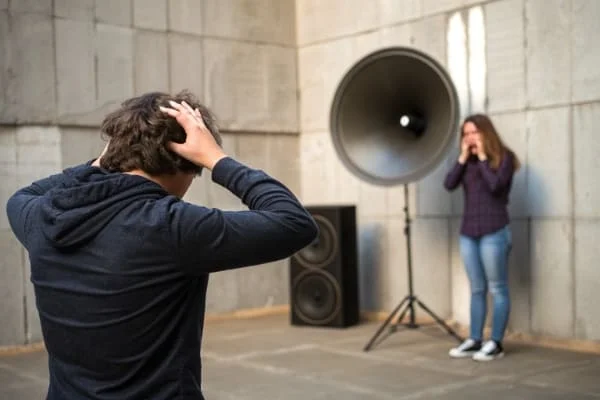
Sound is sound, whether it comes through a wire or through the air. Many modern portable4 speakers, especially the larger "party" models, can easily produce sound levels16 over 95-100 decibels (dB). For context, that's as loud as a motorcycle or a power lawnmower. Exposure to sound at that level can begin causing damage in less than 15 minutes. As a company involved in product safety and compliance, we always advise our clients to include clear warnings about safe listening habits.
How to Listen Safely
Protecting your hearing isn't about giving up loud music; it's about being smart. The key factors are volume and time. The louder the music, the less time you can listen safely.
| Sound Level (dB) | Maximum Safe Listening Time |
|---|---|
| 85 dB (Busy city traffic) | 8 hours |
| 91 dB (Subway train) | 2 hours |
| 97 dB (Power tools) | 30 minutes |
| 103 dB (Loud concert) | 7 minutes |
| 110 dB (Rock concert) | Under 2 minutes |
Here are a few simple rules to follow:
- The Two-Thirds Rule: Try not to listen at more than two-thirds of the maximum volume.
- Take Breaks: Give your ears a rest. For every hour of listening, take a 10-15 minute break in a quiet place.
- Watch for Warning Signs: If you have to shout to be heard by someone a few feet away, the music is too loud.
- Distance is Your Friend: The further you are from the speaker, the lower the decibel level reaching your ears.
Can One Bluetooth Speaker Replace a Home Audio System?
You want great-sounding music at home but feel overwhelmed by the thought of a complex, multi-component stereo setup. Traditional systems are often expensive, take up a lot of space, and come with a frustrating web of wires. A single, powerful Bluetooth speaker might be all you need.
For many people, a single high-quality Bluetooth speaker can absolutely replace a traditional home audio system17. It offers simplicity, saves space, and provides excellent sound for daily listening. However, it cannot replicate the true stereo separation or immersive surround sound of a multi-speaker setup.
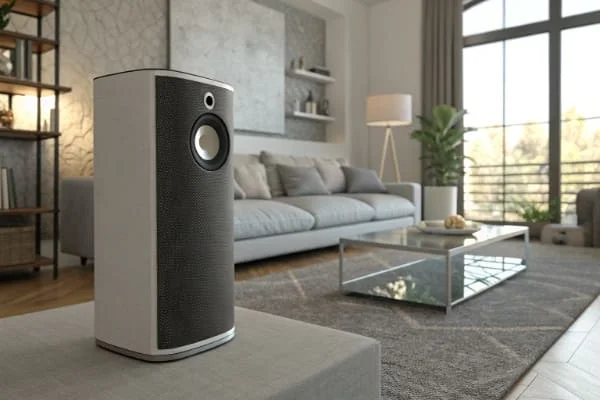
The answer depends entirely on what you're looking for. Are you a "background music18" person or a "sit-in-the-sweet-spot" critical listener? At Toncentlink, we've seen a huge trend in what we call "home portable4" speakers—large, powerful Bluetooth speakers2 designed to be the main sound source in a room, but still easy to move.
The Trade-Offs: Simplicity vs. Immersion
A single speaker is the king of convenience. You plug it in, pair your phone, and you're done. But a traditional stereo system, with two separate speakers placed apart, creates a "soundstage" that a single speaker can't. This gives music a sense of depth and direction.
| Listening Scenario | Single Bluetooth Speaker | Traditional Home Audio System |
|---|---|---|
| Background Music for a Party | Excellent (Fills a room easily) | Good (Can be overkill) |
| Watching a Movie | Fair (Lacks immersion) | Excellent (True surround sound) |
| Critical Music Listening | Good (Convenient) | Excellent (Superior stereo imaging) |
| Listening to a Podcast | Excellent (Clear and simple) | Excellent (Functionally the same) |
However, technology is closing the gap. Many brands now offer True Wireless Stereo (TWS)19 pairing, which allows you to link two identical Bluetooth speakers2 together. You can place one on the left and one on the right to create a proper stereo field, giving you the best of both worlds: wireless convenience and immersive sound.
Conclusion
Bluetooth speakers2 offer incredible convenience, portability, and surprisingly great sound. They have fundamentally changed how we listen, making it easier than ever to enjoy our favorite music anywhere1, anytime.
Explore the freedom of listening to music anywhere with portable Bluetooth speakers. ↩
Explore the latest and top-rated Bluetooth speakers to find the perfect fit for your music needs. ↩
Discover how Bluetooth technology allows for a truly wireless music experience. ↩
Learn why portability is a key feature for modern music lovers. ↩
Find out how battery-powered speakers enhance your listening experience on the go. ↩
Understand the elements that ensure high sound quality in Bluetooth speakers. ↩
Understand the technology behind wireless connections in audio devices. ↩
Learn about the pairing handshake process that connects your devices seamlessly. ↩
Explore the A2DP profile and its role in high-quality audio streaming. ↩
Discover the importance of DACs in converting digital audio signals to sound. ↩
Learn how amplifiers enhance sound output in Bluetooth speakers. ↩
Explore the concept of audio fidelity and its significance for music enthusiasts. ↩
Discover the top Bluetooth speakers designed for outdoor use and adventures. ↩
Learn how multi-channel surround sound creates an immersive listening experience. ↩
Understand the risks of hearing damage from loud music and how to listen safely. ↩
Learn about safe sound levels to protect your hearing while enjoying music. ↩
Explore whether a Bluetooth speaker can serve as a replacement for traditional audio systems. ↩
Find tips on using Bluetooth speakers effectively for background music at events. ↩
Discover how TWS technology allows for a true stereo experience with Bluetooth speakers. ↩