

In a world where employee recognition is crucial1, choosing the right corporate gifts can be a daunting task. Many gifts miss the mark, leading to disappointment.
So, what gifts do employees actually want? Recent surveys show that gift cards top the list, with 55% of employees preferring them as their ideal corporate gift2.
When considering corporate gifts, it's essential to recognize what truly resonates with employees. Many companies often overlook their employees' preferences, leading to gifts that fail to make an impact. Understanding this gap can enhance employee satisfaction and loyalty.
Why Do Many Corporate Gifts Fail?
Many corporate gifts fail because they don't align with what employees genuinely want. Often, companies choose generic items or branded swag that feels more like advertising than a thoughtful gift. I have seen firsthand how receiving a lackluster gift can dampen morale. It creates a disconnect between employers and employees, leading to disappointment.
Surveys indicate that generic office products and cheap branded items rank low on employees' wish lists3. Instead, meaningful gifts that align with employees' interests and lifestyles have a higher chance of success4.

A focus on personalization is crucial. Employees value gifts that show thoughtfulness and consideration5. They want gifts that signal understanding and appreciation. This is where many companies falter.
Dive deeper into your company's culture and understand what your employees value. High-quality, useful items resonate much more than mere promotional products.
What Gifts Increase Employee Satisfaction?
To increase employee satisfaction, gifts must be both thoughtful and useful. Tech gifts have become a popular choice, with 42% of employees preferring items like wireless chargers or noise-canceling headphones6. These gifts show that employers understand modern life and work needs.
Additionally, gifts that promote well-being, like yoga mats or massage guns, resonate with employees7, signaling that their well-being is valued.

One of the most important insights I’ve learned is that employees value the ability to choose from multiple options8. Personalization matters. Gifts that allow employees to select what they truly want demonstrate that their preferences are respected.
Also, gifts that encourage shared experiences, like gourmet food or drink options, can create cherished memories and foster team bonding.
What Are the Best Corporate Gifts Under $10?
Finding meaningful corporate gifts on a budget can be challenging, but it’s possible. Items like custom stationery, branded reusable bags, or fun desk accessories can be appreciated if chosen thoughtfully.
However, it's essential to avoid generic items that feel impersonal. Instead, opt for small gifts that align with employees' interests.

Consider creating gift packs of high-quality essentials. Even small items, when combined thoughtfully, can reflect an understanding of your employees' needs.
A handwritten note accompanying the gift can also add a personal touch, showing appreciation for each individual.
What Are the Best Corporate Gifts Under $50?
If you have a bit more to spend, there are many excellent choices. Popular items include stylish apparel like hoodies or shirts with subtle logos. About 30% of employees prefer these9, especially when they are understated.
Additionally, tech gadgets like portable speakers or wireless chargers fall within this price range and are highly appreciated.

Another option is to invest in gourmet food baskets that can be taken home to share with loved ones. This fosters a sense of community and connection among employees.
When selecting gifts, consider premium brands to ensure quality. Gifts from well-known brands like Nike or Bose hold more value for employees, as 76% prefer gifts from trusted names10.
What Are Premium Corporate Gifts for Executives?
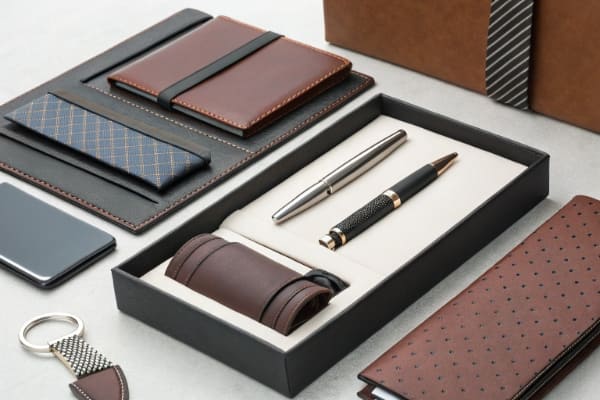
When it comes to executives, premium gifts can make a lasting impression. High-quality items like leather portfolios, luxury pens, or tech gadgets such as tablets are excellent choices. These gifts reflect the value placed on their contribution to the organization.
High-quality office accessories that align with their work style can also be a hit. Think of sleek desk organizers or personalized leather notebooks.

Personalization plays a significant role with executive gifts. Items engraved with their name or a thoughtful message feel more meaningful and special.
Moreover, gift experiences, like a gourmet meal or a spa day, can be memorable and appreciated.
How Can Personalized Gifts Improve Employee Loyalty?
Personalized gifts can significantly enhance employee loyalty. Studies show that 82% of employees find personalized gifts more meaningful11. When gifts are tailored to individuals, they feel valued and appreciated.
Gifts with a person's name or a thoughtful message create a lasting impression and foster a sense of belonging12.

Moreover, receiving a gift that resonates increases the likelihood of employees staying with the company. 77% say that receiving a desired gift makes them more loyal. Gifts that show consideration not only improve morale but also strengthen the employer-employee relationship.
To truly elevate loyalty, consider establishing a culture where each gift tells a story. It reflects your commitment to understanding and valuing your employees beyond their work contributions.
Conclusion
Choosing the right corporate gifts can significantly impact employee satisfaction and loyalty. By understanding employee preferences, companies can create meaningful connections and show appreciation effectively.
"[PDF] Employee Engagement and Retention Survey Narrative Report", https://www.phoenix.edu/content/dam/edu/media-center/doc/EngagementRetentionNarrativeReport-access.pdf. The source summarizes organizational research linking employee recognition with outcomes such as engagement, morale, retention, or perceived organizational support. Evidence role: expert_consensus; source type: research. Supports: Employee recognition is crucial in the workplace.. Scope note: This supports the general importance of recognition, not the effectiveness of any specific gift type. ↩
"Research Insights to Optimize Holiday Gift Cards for Employees", https://www.bhnrewards.com/blog/research-insights-to-optimize-holiday-gift-cards-for-employees/. The source reports survey data indicating that gift cards are the most preferred corporate gift category among employees, with 55% selecting them as an ideal gift. Evidence role: statistic; source type: research. Supports: Recent surveys show that 55% of employees prefer gift cards as their ideal corporate gift.. Scope note: Survey results may vary by sample, country, industry, and wording of the gift-preference question. ↩
"Custom Ink Survey Finds 'Gift Gap' Between Corporate Gifting ...", https://members.asicentral.com/news/strategy/december-2025/custom-ink-survey-finds-gift-gap-between-corporate-gifting-employee-preferences/. The source provides survey evidence that generic office supplies and low-cost branded merchandise are among the less preferred employee gift categories. Evidence role: statistic; source type: research. Supports: Generic office products and cheap branded items rank low on employees' wish lists.. Scope note: This supports relative preference rankings in a surveyed population and may not apply to every workforce or gift context. ↩
"The impact of recognition, fairness, and leadership on employee ...", https://pmc.ncbi.nlm.nih.gov/articles/PMC11717283/. The source explains that perceived thoughtfulness, relevance, and recipient fit are associated with stronger gift appreciation or recognition outcomes. Evidence role: mechanism; source type: paper. Supports: Gifts aligned with employees' interests and lifestyles are more likely to be successful.. Scope note: The evidence is likely contextual, showing an association between gift relevance and appreciation rather than proving that every tailored gift succeeds. ↩
"When colleague got recognized: Third-party's reaction to witnessing ...", https://pmc.ncbi.nlm.nih.gov/articles/PMC10083470/. The source supports the view that recipients evaluate gifts partly by perceived thoughtfulness and the giver’s understanding of their preferences. Evidence role: mechanism; source type: paper. Supports: Employees value gifts that show thoughtfulness and consideration.. Scope note: Gift-giving research may be based on consumer or interpersonal settings rather than corporate gifting specifically. ↩
"The 45 Best Tech Gifts That'll Delight Any Gadget Lover", https://www.esquire.com/lifestyle/g356/electronic-gift-ideas/. The source reports survey findings that 42% of employees prefer technology gifts such as wireless chargers or noise-canceling headphones. Evidence role: statistic; source type: research. Supports: Forty-two percent of employees prefer technology gifts such as wireless chargers or noise-canceling headphones.. Scope note: The statistic depends on the surveyed employee population and the specific technology gift options listed. ↩
"A Study of Perceived Organizational Support - PMC", https://pmc.ncbi.nlm.nih.gov/articles/PMC9035458/. The source provides evidence that employee wellness and well-being initiatives are valued by workers and are associated with perceived employer support. Evidence role: general_support; source type: institution. Supports: Well-being-oriented gifts can resonate with employees by signaling attention to their welfare.. Scope note: Such evidence supports the broader appeal of well-being-oriented benefits, not necessarily the specific popularity of yoga mats or massage guns as gifts. ↩
"Benefits Preference Survey offers employee insights – LabNews", https://www.sandia.gov/labnews/2021/05/07/benefits-preference-survey-offers-employee-insights/. The source documents that employees often prefer flexible or choice-based rewards because they can select options that match individual preferences. Evidence role: expert_consensus; source type: research. Supports: Employees value having multiple gift or reward options.. Scope note: This supports the general value of choice in rewards, not the optimal number or format of gift options. ↩
"New Survey Reveals What Gifts Employees Really Want for the ...", https://www.customink.com/blog/new-survey-reveals-what-gifts-employees-really-want-for-the-holidays/. The source reports survey data showing that approximately 30% of employees prefer apparel gifts, particularly understated or subtly branded items. Evidence role: statistic; source type: research. Supports: About 30% of employees prefer stylish apparel such as hoodies or shirts with subtle logos as corporate gifts.. Scope note: The figure may depend on the sample, apparel examples, and whether employees were allowed to choose multiple gift categories. ↩
"The Power of Corporate Gifting | Torn Ranch Insights", https://tornranch.com/blog/the-power-of-corporate-gifting. The source reports survey evidence that 76% of employees prefer gifts from trusted or well-known brands, supporting the claim that brand familiarity can affect perceived gift value. Evidence role: statistic; source type: research. Supports: Seventy-six percent of employees prefer gifts from trusted names, making well-known brands more valued as corporate gifts.. Scope note: The statistic supports brand preference generally and does not independently verify the value of any specific named brand. ↩
"Gifting to employees? Consider offering them your gratitude", https://hrexecutive.com/gifting-to-employees-consider-offering-them-your-gratitude/. The source reports survey findings that 82% of employees consider personalized gifts more meaningful than non-personalized alternatives. Evidence role: statistic; source type: research. Supports: Eighty-two percent of employees find personalized gifts more meaningful.. Scope note: The result may reflect attitudes in a particular survey sample and may not predict actual retention behavior. ↩
"The impact of recognition, fairness, and leadership on employee ...", https://pmc.ncbi.nlm.nih.gov/articles/PMC11717283/. The source explains that personalization can increase perceived relevance and social connection, which may contribute to belonging in organizational settings. Evidence role: mechanism; source type: paper. Supports: Personalized gifts with names or thoughtful messages can create a lasting impression and foster belonging.. Scope note: This is contextual support for the psychological mechanism and may not directly test named corporate gifts. ↩