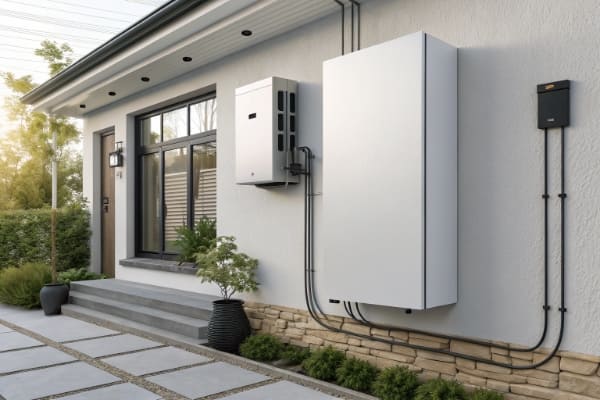
Are you tired of your solar panels1 becoming useless during a power outage? A hybrid inverter2 might be the solution you need to keep your home powered and independent.
A hybrid solar inverter is a smart device that combines a solar inverter and a battery inverter into one unit. It manages power from your solar panels1, solar batteries, and the utility grid, giving you backup power3 during outages and optimizing your energy use.
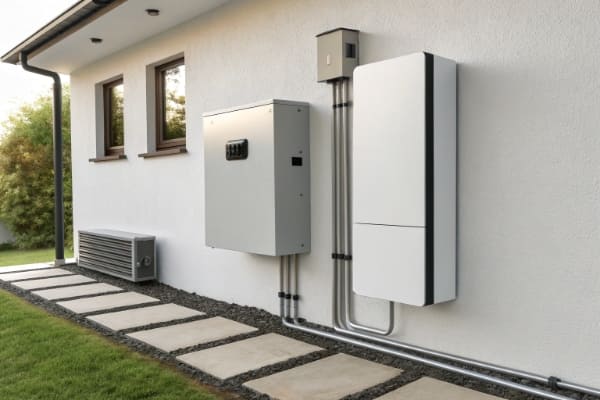
I've worked with many clients exploring solar options, and the conversation always turns to energy security4. You invest in a solar system to gain control over your power, but then the grid goes down and so do your panels. It’s frustrating. This is where hybrid inverter2s change the game. They bridge the gap between simple grid-tied systems and complete off-grid independence, offering a flexible and powerful solution for modern homeowners. Let’s break down what that really means for you.
Top Advantages of Hybrid Solar Inverters for Homeowners?
Want to get the most out of your solar panel investment? Just sending excess power back to the grid can feel like you're not using your system to its full potential.
The main advantages are reliable backup power3, increased energy self-consumption5, and future-proof flexibility. A hybrid inverter2 lets you store and use your own solar energy, giving you more control and saving you money on electricity bills, especially during peak hours.

In my experience, the biggest "aha" moment for homeowners is realizing a hybrid system does more than just provide backup. It actively manages your home's energy flow. This smart management is key to maximizing your return on investment. The inverter's brain decides the cheapest and most efficient way to power your home at any given moment. It can pull from the panels when the sun is shining, use stored battery power when electricity rates are high, or draw from the grid when it's cheapest. This optimization is what truly sets it apart from a standard inverter.
Here’s a deeper look at the benefits:
| Advantage | How It Helps You |
|---|---|
| Backup Power | Seamlessly switches to battery power during a grid outage, keeping your essential appliances running without interruption. |
| Energy Self-Consumption | Prioritizes using your own solar power first, then stored battery power, before drawing from the grid. This reduces your reliance on the utility company. |
| Flexible Battery Integration | You can install the hybrid inverter2 now and add batteries later. This allows you to spread out the cost of your solar-plus-storage system. |
| Centralized Monitoring | You get a single app or platform to monitor your solar generation, battery status, and grid usage. It simplifies tracking your system's performance. |
| Optimized System Sizing | The smart controls can smooth out power demand, potentially allowing you to install a slightly smaller battery bank than you would with a less integrated system, saving money. |
Disadvantages and Considerations When Installing Hybrid Inverters?
Hybrid inverters sound amazing, but are there any hidden downsides? Making a big investment without knowing the full picture can lead to costly regrets down the road.
The primary disadvantages are the higher upfront cost6 for both the unit and installation, and the fact that it creates a single point of failure7. If the inverter fails, you lose both your solar production and your battery backup at the same time.

I always advise clients to weigh the costs carefully. A hybrid inverter2 is more expensive than a standard grid-tied inverter. You're paying for advanced technology, including the battery charger and transfer switch, all packed into one box. This initial cost is a significant factor. Another point I stress is the "single point of failure7" risk. With separate components, if your solar inverter fails, your battery system might still work (and vice-versa). With a hybrid, one fault can take down the whole system. This is a trade-off for the convenience and streamlined design. You also need an installer who understands the more complex configuration8 required to get the most out of its smart features.
Let's break down the key considerations:
| Disadvantage | What You Need to Know |
|---|---|
| Higher Upfront Cost | Expect to pay significantly more for a hybrid inverter2 and its installation compared to a standard string inverter. The technology is more complex. |
| Single Point of Failure | Since the solar inverter and battery management are in one device, a malfunction can disable your entire system—no solar generation and no battery backup. |
| Retrofitting Challenges | If you already have a solar system with a standard inverter, adding a hybrid inverter2 can be inefficient and expensive. An AC-coupled battery solution is often better. |
| Complex Configuration | These inverters have many settings and operating modes. Proper setup requires a knowledgeable installer to optimize performance for your specific needs. |
| Regulatory Uncertainty | The financial benefits can depend on net metering and export tariff policies, which can change. This adds a layer of economic uncertainty to long-term payback calculations. |
How Hybrid Inverters Provide Energy Independence During Blackouts?
The storm is raging and the power goes out, leaving you in the dark. Even worse, your standard solar system shuts down too, right when you need it most.
A hybrid inverter2 provides energy independence9 by instantly detecting a grid failure and automatically disconnecting from it. It then immediately begins drawing power from your connected battery to keep your home's essential circuits running, creating your own personal power grid.
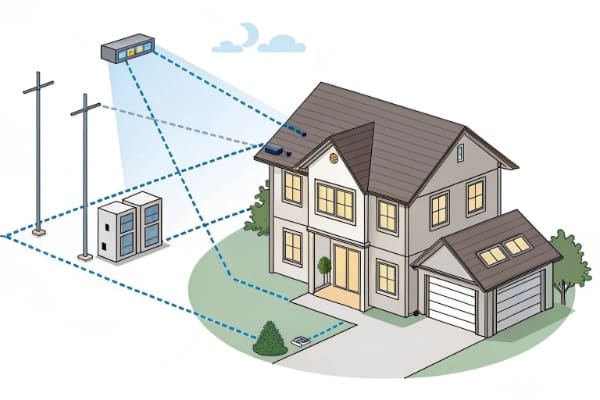
The magic of a hybrid inverter2 is its built-in transfer switch. This is what makes the transition from grid power to battery power seamless. In a normal grid-tied system, the inverter has to shut down during an outage for safety reasons—it prevents your system from sending power back into the grid while utility workers are trying to fix it. This is called "anti-islanding." A hybrid inverter2 also performs this safety function, but it does one better. After disconnecting from the grid, it creates a stable, independent power bubble for your home using the energy stored in your battery. The switch happens so fast, you often won't even notice the flicker of a light. This gives you true peace of mind, knowing your lights, refrigerator, and Wi-Fi will stay on no matter what's happening outside.
Here is the step-by-step process during a blackout:
- Grid Failure: The utility grid goes down.
- Instant Detection: The hybrid inverter2 senses the loss of grid power within milliseconds.
- Safety Disconnection: It immediately opens its connection to the grid to prevent back-feeding and ensure safety (anti-islanding).
- Switch to Battery: The internal transfer switch flips, and the inverter starts drawing DC power from your solar battery.
- Power Your Home: The inverter converts the battery's DC power into AC power to run your home's designated backup loads. Your lights and appliances stay on.
Are Hybrid Solar Inverters Worth the Investment for Your Home?
Is the extra thousand dollars or more for a hybrid inverter2 actually worth it? You don't want to overspend on advanced features if a simpler, cheaper system will meet your needs.
A hybrid inverter2 is worth the investment if you live in an area with frequent power outages, have high electricity rates, or want the flexibility to add batteries in the future. For those seeking energy security4 and maximum self-sufficiency, the benefits often outweigh the higher cost.

I help people answer this question every day. The answer really depends on your personal situation. If you rarely lose power and your utility has a great net metering program, a standard inverter might be more cost-effective. But, if you're like a recent client of mine who works from home and can't afford any downtime, the backup power3 function alone makes it a worthwhile investment. You also have to think about the future. Electricity rates are not going down. The ability to store your cheap solar energy and use it during expensive peak evening hours can lead to significant long-term savings. This practice, known as "load shifting10," is one of the most powerful financial benefits of a hybrid system.
Consider these factors to decide if it's right for you:
| Ask Yourself This... | If You Answer "Yes," a Hybrid Is a Good Fit | If You Answer "No," a Standard Inverter May Be Better |
|---|---|---|
| Do you experience frequent or long power outages? | The backup power3 feature provides immense value and peace of mind. | The extra cost for backup might not be justified. |
| Are your utility's electricity rates high, especially during peak hours? | You can use stored battery power to avoid high rates, saving you money. | The savings from load shifting10 will be minimal. |
| Do you plan to add a battery to your solar system in the future? | A hybrid inverter2 is "battery-ready," making future installation simple and cost-effective. | You'd need a more complex AC-coupled solution to add a battery later. |
| Do you want to maximize the use of your own solar energy? | A hybrid system helps you use more of your own power, increasing self-sufficiency. | A standard system focused on exporting to the grid may suffice. |
| Is energy independence9 a primary goal for you? | The combination of solar and storage managed by a hybrid inverter2 is the key to independence. | Your main goal is likely just reducing your electricity bill. |
What You Need to Know About the Maintenance of Hybrid Solar Inverters?
Are you worried that a complex hybrid inverter2 will be another headache to maintain? The last thing you want is a high-tech device that requires constant and costly attention.
Hybrid inverter maintenance is surprisingly minimal. It mainly involves keeping the unit clean and ensuring its air vents are clear for proper cooling. Occasional software updates and a professional check-up every few years are also recommended to ensure optimal performance.
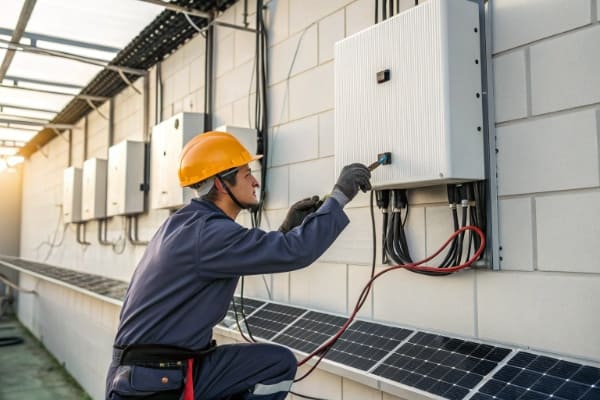
From what I've seen in the field, these units are designed to be largely self-sufficient. They are solid-state devices with no major moving parts, which greatly reduces the need for physical maintenance. Most of the "maintenance" is just monitoring. The app that comes with your inverter will be your best friend. It will tell you if anything is wrong and track performance over time. The most important physical task for you as a homeowner is to simply keep the area around the inverter clean and unobstructed. Dust and debris can clog the cooling fans or heat sink, which can cause the unit to overheat and reduce its efficiency and lifespan. A quick visual check once a month is usually all it takes to stay ahead of any issues.
Here is a simple maintenance schedule you can follow:
| Frequency | Task | Who Does It |
|---|---|---|
| Monthly | Visual Inspection: Check for any physical damage. Wipe down the exterior to remove dust. Ensure air vents are not blocked by debris or storage items. | Homeowner |
| Quarterly | Performance Check: Use the monitoring app to review your energy production and consumption data. Look for any unexpected drops in performance. | Homeowner |
| Annually | Software/Firmware Check: Check with your installer or the manufacturer's website to see if any firmware updates are available. These can improve performance and security. | Homeowner / Installer |
| Every 3-5 Years | Professional Inspection: Have a qualified solar technician inspect all electrical connections, test performance, and perform a thorough cleaning of internal components if necessary. | Professional Installer |
Conclusion
Hybrid inverters offer powerful benefits like backup power3 and energy independence9, but they come at a higher initial cost and introduce a single point of failure7.
Learn how solar panels integrate with hybrid inverters for optimal energy management and savings. ↩
Explore this resource to understand how hybrid inverters can enhance your energy independence and efficiency. ↩
Find out how hybrid inverters ensure reliable backup power during grid failures. ↩
Discover the importance of energy security and how hybrid inverters can provide peace of mind during outages. ↩
Understand how maximizing energy self-consumption can lead to significant savings on electricity bills. ↩
Understand the factors contributing to the higher upfront cost of hybrid inverters and their long-term benefits. ↩
Learn about the risks associated with single points of failure in hybrid inverter systems. ↩
Find out how proper configuration can maximize the efficiency of your hybrid inverter. ↩
Discover how hybrid inverters can help you achieve energy independence during power outages. ↩
Learn how load shifting can lead to significant savings on your electricity bills. ↩