
Struggling with high costs and long waits for your shipments? Getting products from China to New Zealand can be complex, leaving your business behind schedule and over budget.
The most efficient way to ship from China to New Zealand depends on your needs. Use sea freight1 for large, non-urgent orders to save money. Choose air freight2 for small, high-value, or time-sensitive goods. Comparing quotes from reliable freight forwarders3 is key to finding the best balance of cost and speed.
Finding the right shipping strategy4 feels overwhelming. You have to balance speed, cost, and reliability. One wrong choice can lead to lost profits and unhappy customers. I've been there, trying to figure out the best way to get my branded merchandise from factories in China to my clients in New Zealand without breaking the bank. It took a lot of trial and error, but I learned how to navigate the system. Let me walk you through what I discovered so you can make smarter, more efficient shipping decisions for your business.
Why Is Shipping from China to New Zealand Important for Businesses?
Feel like you're missing out on a huge market? Many New Zealand businesses rely on China for manufacturing, but the distance and logistics can feel like a major barrier to entry.
This trade route is vital. It gives New Zealand companies access to a massive range of customizable products at competitive prices. From promotional items to retail goods, sourcing from China5 allows businesses to scale, increase profit margins, and stay ahead of the competition.

For years, I've helped New Zealand brands bring their ideas to life. They come to us because China's manufacturing power is unmatched. You can get almost anything made, from custom-branded drinkware for a marketing campaign to unique tech gadgets for an e-commerce store. This direct access to factories opens up incredible opportunities. It allows businesses to create unique products that stand out in the local market. The cost advantages are also significant. By producing in China, companies can achieve better profit margins, which they can then reinvest into growth, marketing, or developing new product lines. This strategic partnership is not just about saving money; it's about enabling innovation and giving New Zealand businesses a competitive edge on a global scale. It's the engine that powers many successful brands.
Which Shipping Method Should You Choose: Air Freight vs. Sea Freight?
Confused about whether to ship by air or sea? Choosing the wrong one can either drain your budget with high costs or cause frustrating delays that hurt your business timeline.
Your choice depends on your cargo's size, weight, and urgency. Air freight is fast but expensive, best for urgent or valuable goods. Sea freight is much cheaper for large volumes but takes significantly longer. LCL (Less than Container Load)6 sea freight1 is a good middle ground for smaller shipments.
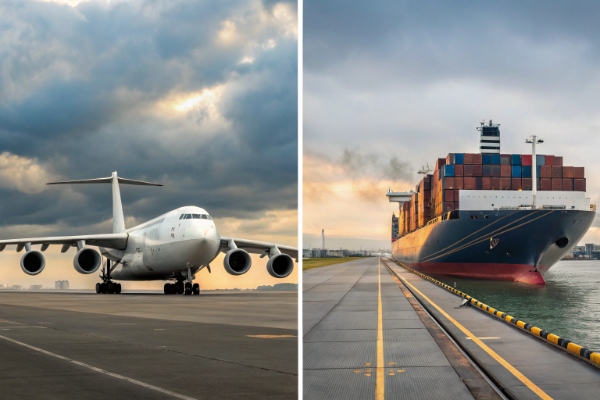
When I first started, I almost always defaulted to the cheapest option, which was sea freight1. But I quickly learned that's not always the best move. You have to think about what you're shipping. For a large order of promotional t-shirts over 500 kg with a flexible deadline, Full Container Load (FCL)7 sea freight1 is unbeatable on cost. But what if you have a smaller order, say 15 cartons of custom notebooks? Less than Container Load (LCL) is perfect. You share container space with others, keeping costs down. For a last-minute event giveaway or a high-value electronics order, air freight2 is the only way to go. The speed justifies the cost. And for tiny, urgent samples, an express courier like DHL is fastest.
Here’s a simple breakdown to help you decide:
| Shipping Method | Best For | Transit Time | Cost |
|---|---|---|---|
| Air Freight | Urgent, high-value, or lightweight goods | 4-11 days | High |
| Express Courier | Very small, time-sensitive parcels/documents | 1-3 days | Very High |
| Sea Freight (FCL) | Large shipments (over 15 CBM) | 30-45 days | Low |
| Sea Freight (LCL) | Smaller shipments (under 15 CBM) | 35-50 days | Moderate |
How Long Does It Take to Ship Goods from China to New Zealand?
Are you tired of waiting forever for your shipment to arrive? The uncertainty of transit times can disrupt your entire business plan, from marketing campaigns to product launches.
Shipping from China to New Zealand can take anywhere from 1 day to 50 days. Express couriers are the fastest at 1-3 days. Air freight typically takes 4-11 days, while sea freight1 is the slowest, ranging from 30 to 50 days depending on the port and service.
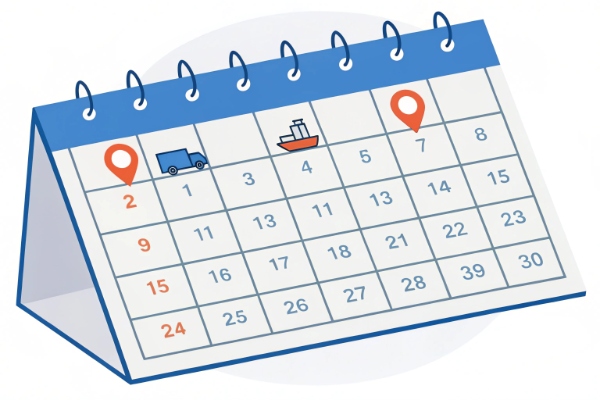
The delivery time you see quoted is not the whole story. It's the "port-to-port" or "airport-to-airport" time. You also need to account for the time it takes to get your goods from the factory to the port in China and from the port in New Zealand to your final destination. I learned this the hard way on an early project. We chose a 30-day sea freight1 service, but the total time from factory to warehouse was closer to 45 days. Why? It took a week for trucking and export customs in China. Then, after arriving in Auckland, it took another week for customs clearance8, biosecurity checks, and local delivery. Always add at least 7-14 days to the quoted transit time for a realistic delivery window. This buffer accounts for ground transport, customs procedures on both ends, and potential port congestion9.
What Are the Key Costs Involved in Shipping from China to New Zealand?
Worried about hidden fees that blow up your shipping budget? Unexpected charges can turn a profitable order into a loss, making it hard to price your products accurately.
The total cost includes more than just the freight charge. You must also budget for customs duties10, Goods and Services Tax (GST)11, biosecurity fees12, port charges, and local delivery fees. Using the correct HS code13 for your products is crucial to avoid overpaying.
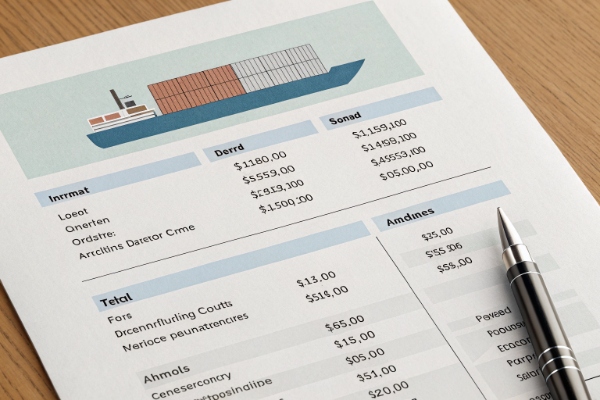
Let's break down the costs you need to plan for. First, there's the main freight cost from your forwarder. For air freight2, this is often calculated using dimensional weight for bulky, light items, so be careful. Next, you have charges in China, like trucking and export documentation. Once the goods arrive in New Zealand, the real fun begins. You'll face port or airport terminal handling charges. Then comes New Zealand Customs. You'll pay customs duty based on your product's HS code13 and GST, which is 15% of the total value (cost of goods + shipping + insurance). Don't forget the biosecurity inspection fees from MPI, especially for wood or plant-based products. Finally, you have to pay for customs clearance8 brokerage and local trucking to your warehouse. I always advise clients to get an all-inclusive DDP (Delivered Duty Paid) quote to avoid these surprises.
How to Avoid Common Shipping Delays and Ensure Timely Delivery?
Are shipping delays14 from China constantly ruining your deadlines? These holdups create stockouts, frustrate customers, and damage your brand's reputation for reliability.
To avoid delays, ensure your paperwork is perfect, especially the commercial invoice15 and packing list16. Use correct HS code13s and comply with New Zealand's strict biosecurity rules. Partnering with a reliable freight forwarder who can manage this process is your best defense against delays.

From my experience, most delays are preventable. The number one cause is incorrect or incomplete documentation. A simple typo on the commercial invoice15 can hold up your shipment in customs for weeks. I now have a system where we triple-check every document before it's submitted. The second major hurdle is New Zealand's biosecurity. MPI is serious about protecting the country. If you're shipping products with wood packaging, like pallets, they must be properly fumigated and stamped. Forgetting this can lead to your goods being fumigated at a high cost, or even destroyed. Another tip is to plan around peak seasons. Shipping right before Chinese New Year or Christmas is a recipe for delays and high prices. I often consolidate smaller shipments for my clients and schedule them during off-peak times to save them money and ensure a smoother journey through customs.
Conclusion
In short, choosing between sea and air freight2, preparing correct documents, and working with a trusted partner are key to efficient, cost-effective shipping from China to New Zealand17.
Learn about the cost benefits and efficiency of sea freight for large shipments. ↩
Discover when air freight is the best option for urgent or high-value goods. ↩
Find tips on selecting a freight forwarder that meets your shipping needs effectively. ↩
Discover how to develop an effective shipping strategy tailored to your needs. ↩
Explore the advantages of sourcing from China to enhance your product offerings. ↩
Understand how LCL can save costs for smaller shipments and optimize your logistics. ↩
Explore the advantages of FCL for large shipments and how it can reduce costs. ↩
Explore the customs clearance process to ensure smooth entry of your goods. ↩
Learn about factors contributing to port congestion and how to mitigate delays. ↩
Learn how customs duties work to better prepare for your shipping expenses. ↩
Understand the impact of GST on your total shipping costs and budgeting. ↩
Discover the importance of biosecurity fees and how to comply with regulations. ↩
Understand the significance of HS codes in customs duties and shipping. ↩
Find strategies to prevent delays and ensure timely delivery of your shipments. ↩
Learn about the critical role of the commercial invoice in international shipping. ↩
Get tips on creating an accurate packing list to avoid customs issues. ↩
Explore this resource to understand the nuances of shipping logistics and optimize your supply chain. ↩