
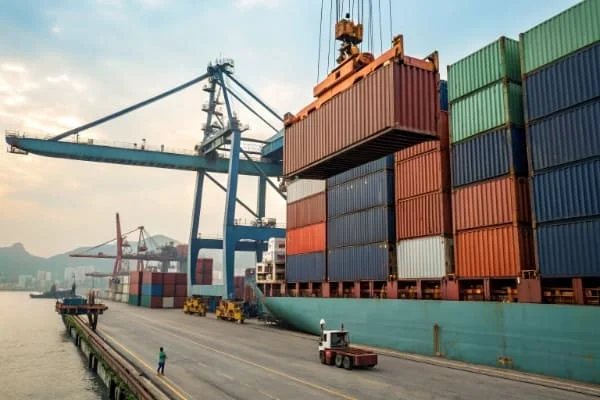
Confused by shipping rates from China to Germany1? Hidden fees can ruin your budget. Let's break down the real costs for sea, air, and rail freight2 right now.
Current sea freight3 for a 40ft container from China to Germany is $3,000-$4,850. Air freight averages $3.35-$6 per kg, while rail costs $7,000-$9,500 for a 40ft container. These rates vary based on route, season, and shipment volume.
Getting the headline numbers is one thing, but understanding which option is right for your business is the real challenge. It's not just about the price tag; it's about speed, reliability, and your overall supply chain strategy4. Let's dive deeper into each method to find the best fit for you.
Which Shipping Method from China to Germany Is Cheapest or Fastest?
Torn between saving money and getting your goods fast? The wrong shipping choice can hurt your business. Here’s a simple breakdown to help you pick the right option.
Sea freight is the cheapest option for shipping from China to Germany, but it is also the slowest (30-40 days). Air freight is the fastest (4-8 days) but most expensive. Rail freight offers a good balance between cost and speed (15-22 days).
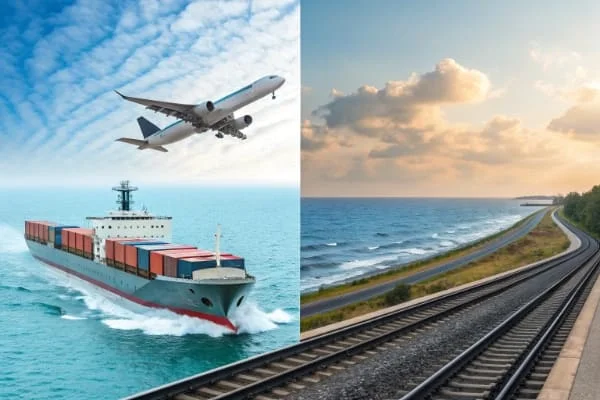
Choosing your shipping method5 is a classic trade-off between cost, speed, and volume. I always tell my clients to think about their inventory needs first. If you're shipping large, heavy goods and have plenty of time, sea freight3 is unbeatable on price. You can move a massive amount of product for a relatively low cost per unit. For smaller shipments, LCL (Less than Container Load)6 sea freight3 can be as low as $10 per cubic meter, plus fees. However, if you need products to launch a new marketing campaign or restock a popular item quickly, waiting over a month is not an option. That's where air freight7 shines. It's expensive, but it gets your products to Germany in about a week. Rail freight sits perfectly in the middle. It's about twice as fast as sea and often 40-60% cheaper than air, making it a fantastic and increasingly popular choice.
Cost vs. Speed at a Glance
| Method | Typical Cost (40ft Container / High Volume) | Typical Speed (Door-to-Door) | Best For |
|---|---|---|---|
| Sea Freight | $3,000 - $4,850 | 30 - 40 days | Bulk goods, low-value items, non-urgent stock |
| Rail Freight | $7,000 - $9,500 | 15 - 22 days | Time-sensitive goods, higher-value items |
| Air Freight | ~$4.00 / kg | 4 - 8 days | Urgent shipments, samples, high-value electronics |
How Long Does Shipping from China to Germany Take by Sea, Air, and Rail?
Can't get a straight answer on shipping times? Unpredictable delays cause stockouts and stress. Let's look at the actual door-to-door transit times for each shipping method5.
Shipping from China to Germany by sea takes 30-40 days. Rail freight is much faster, with transit times of 15-22 days. Air freight is the quickest option, delivering your goods in just 4-8 days from door to door.
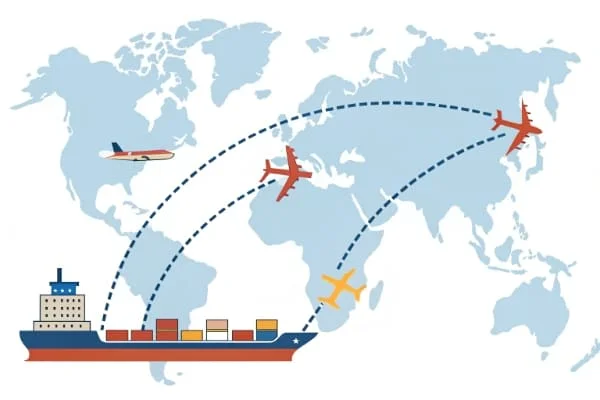
When we talk about transit time, it's important to understand it's more than just the time on the water, tracks, or in the air. The total time covers the entire journey from the factory door in China to your warehouse door in Germany. This includes several stages, and each one can add time. First, there's the "first mile" transport from the factory to the port or rail terminal. Then you have customs clearance8 in China, which can take a day or two if all paperwork is in order. The main transit is the longest part. After arriving in Germany, your shipment goes through import customs clearance8. Finally, the "last mile" delivery gets the goods from the port or terminal to your final destination. Delays can happen at any stage, from port congestion and bad weather to customs inspections or public holidays like Chinese New Year. That's why the timelines are always a range.
Breakdown of Total Transit Time
| Stage | Sea Freight | Rail Freight | Air Freight |
|---|---|---|---|
| First Mile & Export | 3-5 days | 2-4 days | 1-3 days |
| Main Transit | 25-30 days | 10-15 days | 1-3 days |
| Import & Last Mile | 3-5 days | 3-4 days | 2-3 days |
| Total Estimated Time | 30-40 days | 15-22 days | 4-8 days |
Is Rail Freight from China to Germany a Better Alternative to Sea Freight?
Tired of slow sea freight3 and port delays? Waiting over a month for your products ties up your cash. Rail freight offers a compelling alternative you should seriously consider.
Yes, for many importers, rail freight2 is a better alternative. It's about twice as fast as sea freight3, with a transit time of 15-22 days, and significantly cheaper than air freight7. This makes it ideal for time-sensitive or higher-value goods.
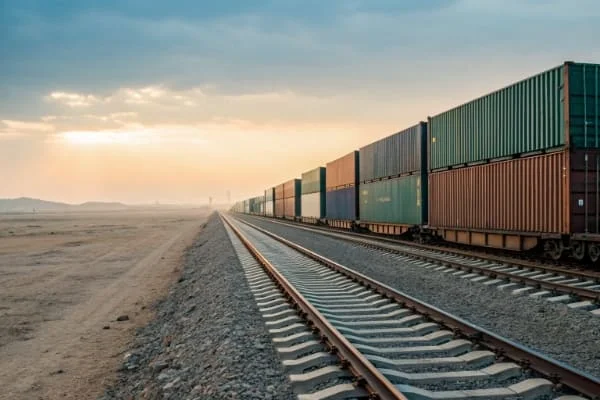
For years, the choice was simple: cheap and slow (sea) or fast and expensive (air). The "New Silk Road" rail network has completely changed the game. I've seen many of my clients switch part of their shipping strategy to rail, and they love the results. The key benefit is predictability. Rail schedules are much more reliable than sea freight3, which can be affected by port congestion, container shortages, or weather. This stability helps you manage your inventory and cash flow better. While it costs more than sea freight3—a 40ft container by rail is around $7,000-$9,500 compared to sea's $3,000-$4,850—the extra cost is often justified. If you're selling seasonal products, electronics, or anything with a short product life cycle, getting it to market two weeks earlier can make a huge difference in sales and profit. It's the perfect middle ground that gives you speed without the huge expense of air cargo.
Rail vs. Sea: Key Differences
| Feature | Sea Freight | Rail Freight |
|---|---|---|
| Cost | Lowest | Medium (higher than sea, lower than air) |
| Speed | Slowest (30-40 days) | Medium (15-22 days) |
| Reliability | Moderate; subject to port delays | High; follows a fixed schedule |
| Best For | Heavy, bulky, non-urgent goods | Time-sensitive, medium-to-high value goods |
How Much Are Import Duties, VAT, and Customs Costs in Germany?
Worried about surprise customs fees in Germany? Unexpected taxes and duties can turn a profitable import into a loss. I'll explain the key costs you need to budget for.
When importing into Germany, you must pay Value Added Tax (VAT)9 at the standard rate of 19%. Import duties vary by product HS code, typically ranging from 0% to 17%. You also need to budget for customs brokerage fees10 for processing your declaration.
Calculating your total landed cost11 is crucial for understanding your true profit margin. The two main government charges you'll face in Germany are import duties12 and VAT. The import duty rate depends entirely on your product's Harmonized System (HS) code. This is a universal code that classifies products, and you must get it right. Some products have 0% duty, while others can be 17% or higher. VAT is simpler; it's almost always the standard German rate of 19%. A critical point to remember is how these are calculated. You pay duty on the "CIF" value, which is the cost of your goods plus the cost of insurance and freight. Then, you pay VAT on the CIF value plus the duty you just paid. It’s a tax on a tax. On top of this, you’ll have a customs brokerage fee from your logistics partner for handling the paperwork.
Calculating Your Landed Cost: An Example
Let's say you import goods with a value of $20,000.
| Cost Item | Calculation | Amount |
|---|---|---|
| Product Value | - | $20,000 |
| Shipping & Insurance | - | $4,000 |
| Customs Value (CIF) | $20,000 + $4,000 | $24,000 |
| Import Duty (e.g., 5%) | $24,000 x 5% | $1,200 |
| VAT Base | $24,000 + $1,200 | $25,200 |
| VAT (19%) | $25,200 x 19% | $4,788 |
| Total Import Taxes | $1,200 + $4,788 | $5,988 |
How Do You Ship from China to Germany Door to Door (DDP or DAP)?
Feel overwhelmed managing shipping, customs, and delivery? A single mistake can get your cargo stuck for weeks. Door-to-door shipping simplifies the entire process for you.
Door-to-door shipping means your freight forwarder13 manages the entire journey. Under DDP (Delivered Duty Paid)14 terms, the seller or their agent pays for all transport, customs, duties, and taxes. With DAP (Delivered at Place)15, they handle transport, but you pay for German customs and taxes.
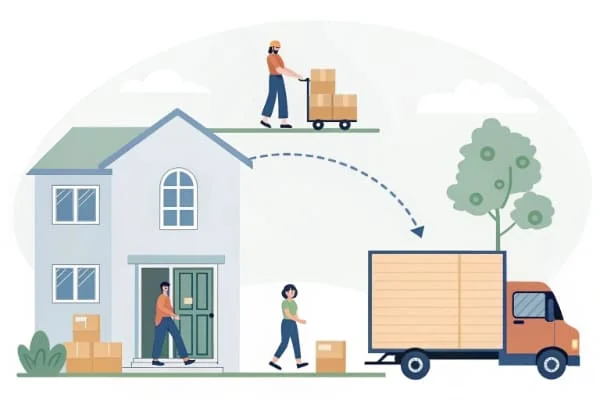
Door-to-door shipping is exactly what it sounds like. We handle everything from the moment your products leave the factory in China until they arrive at your address in Germany. It’s the easiest, most hassle-free way to import. The most common term for this is DDP, or Delivered Duty Paid. When you get a DDP quote from a company like ours, that price includes everything: pickup, trucking in China, export clearance, sea/air/rail freight2, insurance, import clearance in Germany, all duties and VAT, and final delivery to your door. There are no surprise costs. This is perfect for businesses that want a fixed, predictable budget. Another option is DAP (Delivered at Place)15, which is similar, but the buyer is responsible for paying the import duties12 and VAT upon arrival. DDP is the ultimate "set it and forget it" solution, and it’s what most of our clients prefer because it lets them focus on their business, not on logistics.
The DDP Shipping Process Step-by-Step
- Factory Pickup: We arrange a truck to pick up your goods from the supplier in China.
- Export Clearance: We handle all the export documentation and clear the goods with Chinese customs.
- Main Freight: Your goods are transported to Germany via your chosen method (sea, air, or rail).
- Import Clearance: Our partners in Germany manage all the import paperwork.
- Duties & VAT Paid: We pay the German customs duties and VAT on your behalf.
- Final Delivery: Once cleared, your goods are trucked from the port/terminal to your final address.
Conclusion
Choosing the right shipping method5 from China to Germany depends on your budget, speed, and needs. Balancing cost, time, and duties is the key to a successful import strategy.
Understanding the latest shipping rates helps you budget effectively and avoid hidden fees. ↩
Discover the advantages of rail freight as a cost-effective and timely shipping method. ↩
Explore the benefits and challenges of sea freight to make informed shipping decisions. ↩
Learn how shipping choices affect your overall supply chain efficiency and costs. ↩
Explore various shipping methods to find the best fit for your business needs. ↩
Find out how LCL can save you money on smaller shipments and optimize your logistics. ↩
Learn why air freight might be the best option for urgent shipments despite its cost. ↩
Understanding customs clearance can help you avoid delays and ensure smooth shipping. ↩
Learn about VAT implications to avoid unexpected costs when importing goods. ↩
Explore how customs brokerage fees can impact your overall shipping costs. ↩
Mastering landed cost calculations is essential for accurate pricing and profitability. ↩
Understanding import duties is crucial for calculating your total landed cost and profit margins. ↩
Learn how a freight forwarder can simplify your shipping process and save you time. ↩
Understand DDP to simplify your shipping process and avoid surprise costs. ↩
Learn the differences between DAP and DDP to choose the best shipping option for your needs. ↩